
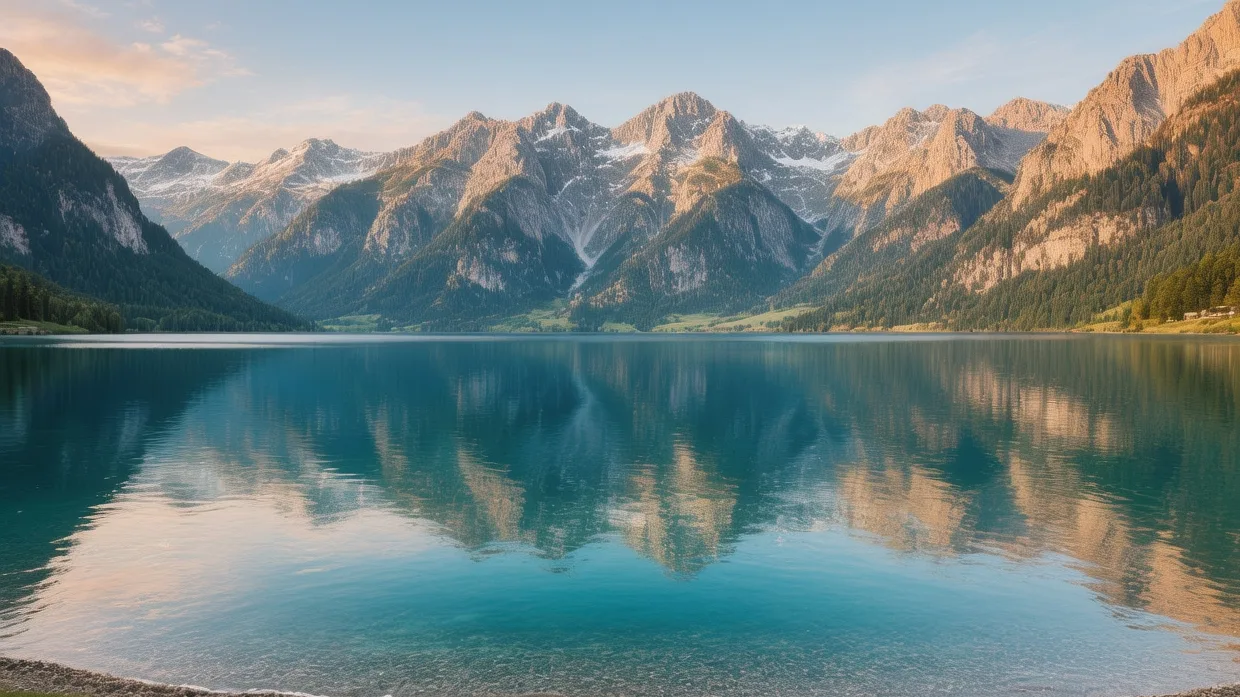
Walensee Lake Fjord-like Depths Meet Alpine Silence
At 6:00 AM, the air above the Walensee lake hangs cool at 419 meters (1,375 feet) elevation, carrying the scent of damp limestone and pine needles from the steep slopes of the Churfirsten. You hear it before the sun crests the Selun peak—the gentle lap of water against the stone embankment in Walenstadt, a rhythmic pulse that has defined this basin since the glaciers retreated 10,000 years ago. This is not merely a body of water; it is a geological fjord spanning 14 kilometers in length between St. Gallen and Glarus cantons. The water possesses a specific quality—opaque yet luminous, colored by suspended rock flour that scatters light into shades of turquoise and emerald. In 2026, as natural waterways face pollution and algal blooms, the Walensee lake matters more than ever: it represents a rare convergence of pristine hydrology and protected access, where the silence isn't empty but full of restoration, demanding you slow down to match the mountain's ancient pace.
Why Walensee Lake Embodies Pristine Alpine Hydrology
The Walensee lake solves a fundamental environmental problem: how to maintain water purity amidst increasing tourism pressure. When the first steamship navigated these waters in 1837, conservationists recognized the fragility of the ecosystem. Today, the infrastructure has evolved into a model of minimal impact. The shoreline is protected by a 50-meter no-construction zone, enforced by the St. Gallen Cantonal Office for Nature since 1985. This engineering addresses a deeper need: the demand for authenticity in a commercialized world. The lake's color isn't artificial; it's caused by glacial flour—fine sediment particles measuring less than 0.002 millimeters—suspended in the water column, scattering blue light more effectively than other wavelengths.
Historically, the region fulfilled a need for strategic transit. The lake sits within the path of the Roman road Via Mala, which connected Chur to the north. This preservation creates a unique historical classroom. The water temperature remains cold year-round, averaging 19°C (66.2°F) in summer, preventing bacterial growth without chemical treatment. The resort addresses a craving for natural purity: no motorized boats are permitted in certain sections, and swimming is restricted to designated zones to protect nesting birds. With 24.2 square kilometers of surface area and a maximum depth of 152 meters, the facility operates like a natural reservoir. This isn't just recreation; it's a testament to Swiss conservation, where access is granted only to those who respect the fragile balance between human enjoyment and ecological integrity. The railway itself, upgraded in 2019, uses hydroelectric power, minimizing carbon footprint while maximizing access.
The Best Time to Experience Walensee Lake
For optimal swimming conditions: June 20–September 10 offers the warmest water temperatures. Daytime air temperatures range from 20–26°C (68–78.8°F) at lake level; nights drop to 10–14°C (50–57.2°F). Water temperatures peak at 20–22°C (68–71.6°F) during late July. For photography: July 1–August 15 provides the clearest skies. Sunrise occurs at 5:45 AM; arrive by 6:00–7:30 AM for glass-like reflections without wind disturbance.
Avoid August 1–20 (European summer holidays)—parking lots in Walenstadt reach 100% capacity by 9:00 AM, and shoreline space becomes limited. Also avoid November 1–February 28 if you seek swimming; water temperatures drop below 8°C (46.4°F), and access paths may be snow-covered. Winter walking is possible, but swimming is prohibited for safety.
For specific experiences: arrive at the Walenstadt boat landing by 8:00–9:00 AM to secure a spot before the influx. The lake is least crowded on weekdays (Tuesday–Thursday). Check live weather and webcam conditions at walensee.ch or call the tourism office at +41 81 730 00 30. Note that water levels fluctuate slightly by season; spring melt raises levels by 1–2 meters in June.
Approximate Budget for a 7-Day Trip (2026)
Pricing methodology: Costs reflect mid-range travel (4-star hotels, mix of self-catering and restaurant dining, public transportation) during peak summer season (July 2026). All prices include Switzerland's 7.7% VAT. Prices adjusted for 3.5% inflation projected for 2026. Currency is Swiss Francs (CHF).
Accommodation: CHF 240–CHF 420 per night for double room in 4-star hotel in Walenstadt/Unterterzen; CHF 160–CHF 260 in guesthouses in nearby Murg. Budget hostels: CHF 65–CHF 95 per person.
Food: CHF 75–CHF 115 per day per person
- Breakfast: CHF 18–CHF 28 (hotel buffet with muesli, cheese, bread)
- Lunch: CHF 28–CHF 42 (lake kiosk sandwich CHF 18, restaurant salad CHF 32)
- Dinner: CHF 38–CHF 58 (restaurant: cheese fondue CHF 42, pasta CHF 40)
Transportation:
- Train Zurich to Walenstadt: CHF 92 one-way (1.5 hours, direct)
- Swiss Travel Pass (8 days): CHF 436 for unlimited trains/buses
- Local bus within region: free with Guest Card
- Taxi from station to hotel: CHF 25 (2 kilometers)
Attractions:
- Boat Cruise (Full Day): CHF 65
- Swimming Access: Free (included with Guest Card)
- Guided Nature Walk: CHF 45 per person
- Cable Car to Maschgenkamm: CHF 68 round-trip
Miscellaneous:
- Souvenir: Local honey CHF 18, postcard set CHF 10
- Travel insurance (7 days): CHF 55–CHF 95
- Beach towel rental: CHF 15
- Lockers at boat station: CHF 10 per day
Total for 7 days (mid-range): CHF 2,600–CHF 3,600 per person (excluding international flights)
7 Essential Walensee Lake Experiences
- Swim in the Designated Zone: Enter the water at the main bathing area in Walenstadt by 10:00 AM. The depth drops gradually to 3 meters over 20 meters of distance. The water feels silky due to mineral content. Wear water shoes—the bottom is rocky in sections. Stay for 30 minutes to acclimate to the 20°C temperature. Lifeguards are on duty 10:00 AM–6:00 PM during July and August. Showers are available at the kiosk (CHF 2 for 5 minutes). Dry off on the wooden sun decks—towels are required to reserve spots.
- Cruise the Entire Length: Board the MS Walenstadt at 9:00 AM. This 2-hour journey traverses the full 14 kilometers of the lake. The route includes stops at Unterterzen and Murg. Sit on the upper deck for best views of the Churfirsten. The boat operates hourly; tickets cost CHF 65 full day. Stop at Betlis to access hiking trails. The vessel is historic; photography through windows is permitted but watch for reflections.
- Hike the Churfirsten Trail: The 10-kilometer path along the north shore is steep and well-marked. Start at 8:00 AM when birds are most active. The path is packed gravel, suitable for sneakers. Interpretive panels explain the geology every kilometer. Stop at the viewpoint platform near Maschgenkamm for panoramic shots. The trail is marked with yellow signs; do not deviate into the forest reserve. Dogs are prohibited on this trail to protect wildlife.
- Watch the Sunrise from the Dock: Arrive at the eastern dock in Unterterzen by 5:45 AM in July. The sun rises over the Säntis peak, casting golden light on the water. Bring a warm jacket—temperatures drop to 10°C (50°F) before dawn. The lake is often misty at this hour, creating ethereal conditions. Photography tripods are allowed but cannot obstruct the path. Stay for 30 minutes to see the mist burn off. The kiosk opens at 8:00 AM for coffee.
- Picnic on the Grass Terraces: Located on the southern shore, these terraces offer designated eating areas. Arrive by 11:30 AM to secure a table. Bring your own food—no cooking fires allowed. The kiosk sells ice cream (CHF 5) and drinks. Dispose of all waste in recycling bins—there are no trash cans along the trail. The area is shaded by pine trees in the afternoon. Quiet hours are enforced between 1:00–3:00 PM for relaxation.
- Visit the Tourism Center: Located at the lake entrance, this small museum opens 10:00 AM–4:00 PM. Entry is free with Guest Card. Exhibits explain the glacial history and local flora. Guides offer talks at 11:00 AM and 2:00 PM (German/English). The center has interactive displays for children. Restrooms are located here—clean and free. Combine with a visit to the adjacent playground for families.
- Winter Walk on the Shore: When snow covers the valley (usually January–February), shore paths remain open. Check signs at the entrance daily. The surface is groomed for walking shoes (no skates). Temperatures range from -5–5°C (23–41°F). Wear crampons for safety on icy patches. The view of snow-covered pines is spectacular. Hot chocolate is available at the kiosk (CHF 6). Access is via the winter trail from Walenstadt town center.
3 Hidden Gems Most Travelers Miss
- The Murg Waterfall: While crowds flock to Walenstadt, this waterfall 5 kilometers west remains quieter. Access via PostBus line 851 from Walenstadt (15 minutes). The 1-kilometer walking loop requires no guide. The path follows the historic water channel from 1900. Look for the old mill wheel—still intact. The path is less maintained, offering a wilder feel. Best visited Wednesday mornings when tour groups are absent. No swimming allowed here—protected bird sanctuary.
- The Secret Forest Bench: On the northern trail, 3 kilometers from Unterterzen, lies a solitary wooden bench facing the water. It's unmarked on maps. This spot receives direct sunlight from 10:00 AM–12:00 PM. Most hikers walk past it without noticing. It's ideal for 20 minutes of silent meditation. Bring a book or simply breathe. The air here is infused with pine resin. Best used during weekdays. No facilities nearby—carry water. The bench was installed by a local carpenter in 1990.
- Betlis Chapel: At 600 meters above the lake, this high-alpine chapel offers a rugged alternative. Access via cable car to Maschgenkamm (CHF 68), then 30-minute hike. The view includes 20+ peaks over 2,000 meters. The path is steep (200m elevation gain). Bring hiking boots. The area is exposed to wind—wear layers. Best visited late afternoon when light hits the stone. No facilities—carry all food and waste. It's a 2-hour round trip from Unterterzen. The chapel dates to 1750.
Cultural & Practical Tips
- Swimming Rules: Swimming is only allowed in designated zones—this is strictly enforced. Diving from rocks is prohibited (depth varies). Violations incur CHF 200 fines. Lifeguards monitor behavior; reckless swimming results in expulsion. Children under 10 must be accompanied by an adult. No inflatable boats allowed without permission.
- Environmental Etiquette: Do not feed wildlife—ducks and swans become aggressive. Pick up all trash—including biodegradable items like apple cores. Dogs are prohibited on the main trail and swimming areas (leashed only in parking zones). Noise levels should be kept low; this is a relaxation zone. Smoking is prohibited within 50 meters of the water.
- Language Basics: The region speaks German (Swiss dialect). Learn: "Grüezi" (GRUE-ts-i) = hello; "Danke" (DAN-kuh) = thank you; "En Guete" (en GUE-teh) = enjoy your meal. English is widely spoken in hotels and kiosks. Signage appears in German and English. Staff appreciate efforts to use local greetings.
- Safety Considerations: Water temperatures can cause cold shock—enter slowly. No lifeguards outside summer season. The lake depth drops unexpectedly in sections. Wear life jackets when boating. Weather changes rapidly—seek shelter if thunderstorms approach. The path can be slippery after rain—wear grippy shoes.
- Photography Guidelines: Drones are prohibited without special permits (apply 4 weeks ahead via walensee.ch). Tripods are allowed on trails but cannot obstruct traffic. Respect privacy—do not photograph other guests without permission. The best light for photography is 6:00–8:00 AM and 5:00–7:00 PM when shadows define the trees.
- Accessibility: The main trail is wheelchair accessible (gravel surface). Restrooms are equipped for disabled access. Boats are not adapted for mobility issues. Parking includes designated disabled spots (20 spaces). The kiosk has a ramp entry. Wheelchair rental available at tourism office (CHF 30 per day).
- Payment Methods: Cash (CHF) is preferred at the kiosk and boat rental. Cards accepted for amounts over CHF 50. No ATMs at the lake—withdraw money in Walenstadt. Prices are fixed; tipping is not expected but appreciated (round up). Guest Card provides discounts on boat rental (10%).
Conclusion: Travel with Reverence, Not Just Recreation
The Walensee lake doesn't need more visitors—it needs more guardians. Those who understand that the turquoise color isn't just a backdrop but a signal of geological health. Those who recognize that the silence isn't inconvenience but a resource as valuable as the water itself. Those who accept that swimming here isn't entitlement but privilege granted by decades of conservation effort. In 2026, as natural wonders face degradation from overtourism, Walensee stands as a reminder: purity is fragile, not infinite.
Your Guest Card fee funds trail maintenance and water quality testing. Your choice to stay on marked paths protects nesting birds and shoreline vegetation. Your willingness to learn the rules, respect the silence, and leave no trace—this is the currency of sustainable tourism. So when you dip your toes into water colored by 10,000-year-old glaciers, remember: you're not consuming a view but borrowing a moment. Slow down. Listen to the wind. Respect the lake. The water will remain turquoise in 2036, 2046, beyond—if we choose to preserve it.