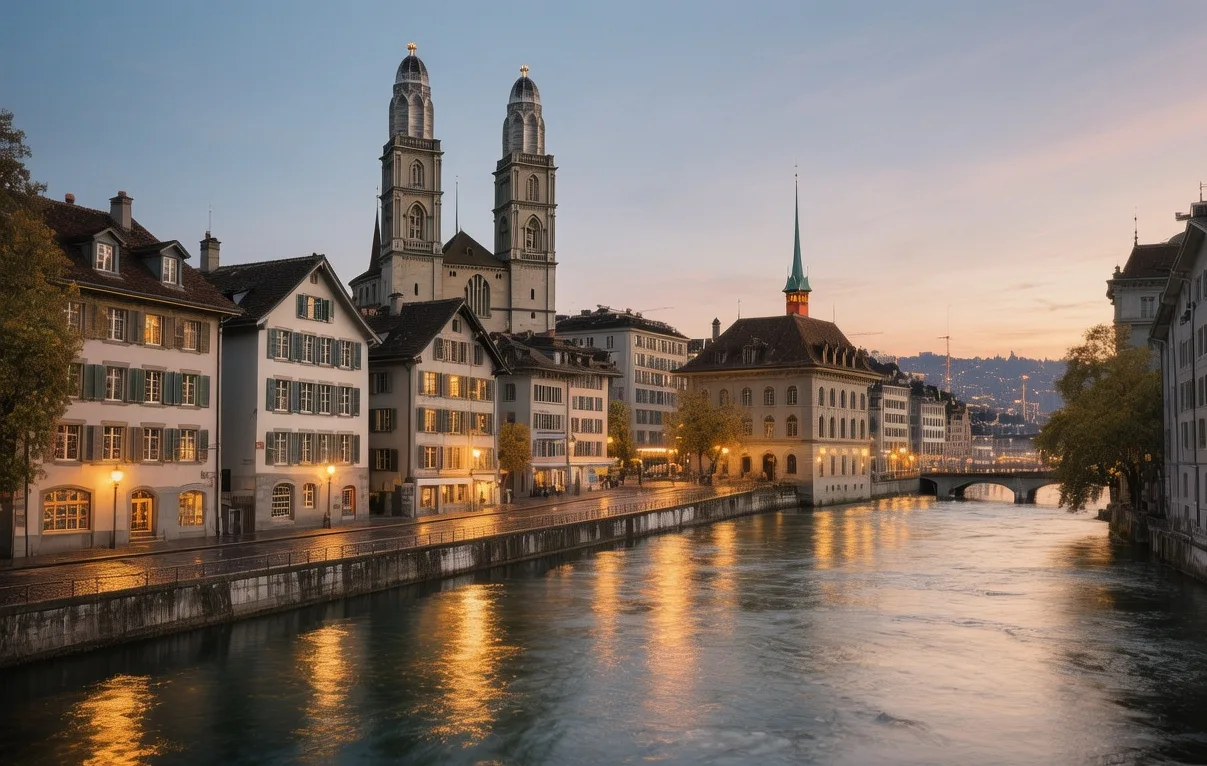
Zurich: Where Ancient Stones Meet a Modern River
I stood on the Lindenhof hill at half past eight on a sunny morning. The Limmat River ran clear and fast below. A tram glided across the Münsterbrücke. I watched light hit the twin towers of Grossmünster. The air smelled of fresh bread and damp stone. A man walked by with a briefcase and a bicycle. He nodded as he passed. This is not a museum frozen in time. People live and work here every day. The city stretches from the lake up to wooded hills, compact enough to cross on foot, large enough to hold surprises.
Why Zurich Matters
Zurich began as a Roman customs post called Turicum, guarding where the Limmat leaves Lake Zurich. By the 13th century it grew into a free imperial city. In 1519 Huldrych Zwingli arrived at Grossmünster and set the Swiss Reformation in motion, reshaping religious practice across Europe. Guilds ruled for centuries, and their influence shows in the carefully maintained streets and strong sense of public order. In 1916 Cabaret Voltaire opened here, giving birth to the Dada movement that challenged every artistic convention. Today it ranks as a global financial hub, home to major banks and institutions. The tension between wealth and creativity, tradition and change, defines the city. It also feels expensive and sometimes reserved. Locals keep to themselves more than in other European cities. Visitors expecting easy warmth may feel overlooked. The famous cleanliness can feel cold. And while world-class art exists, much of it sits behind high museum entry fees.
The Best Time to Experience Zurich
Spring arrives mid-March through May. Temperatures range from 7°C to 18°C (45°F to 64°F). Trees leaf out along the river and blossoms appear in parks. April can bring rain and grey days. Summer runs June through August, with highs around 20°C to 25°C (68°F to 77°F). The lake warms enough for swimming. Days stay long, sunset after nine in the evening. Hotel prices peak in August, especially during Street Parade when rates double. September offers the best balance. Temperatures hold at 12°C to 21°C (54°F to 70°F), crowds thin, and the lake stays warm. October cools quickly, from 8°C to 15°C (46°F to 59°F). Winter from November through February brings 0°C to 6°C (32°F to 43°F). Days grow short and fog often settles. Christmas markets brighten December but shops close early and outdoor options shrink. Arrive before ten in the morning any day of year to see the city at its calmest.
Approximate Budget for a 7-Day Trip
- Accommodation: 910 CHF — Clean three-star hotel within walking distance of the center
- Food: 455 CHF — Bakeries, market lunches, casual dinners; coffee and snacks included
- Transport: 210 CHF — Zurich Card covering trams, buses, trains, and lake ferries
- Attractions: 175 CHF — Museum entries, tower climbs, occasional guided visit
- Miscellaneous: 140 CHF — Drinks, postcards, unplanned small purchases
Total: 1890 CHF
Lake cruises cost nearly double what a simple ferry ticket costs, and the view from the boat matches what you see from the shore promenade. Skip the two-hour sightseeing cruise and take the regular ferry instead. It travels the same water for a fraction of the price.
Essential Zurich Experiences
- Walk the Old Town — Start at Hauptbahnhof and wind through Niederdorf past narrow lanes and painted facades. Notice how the street pattern shifts from medieval curves to straight planned avenues as you go. Skip this if walking on cobblestones causes pain.
- Climb Uetliberg — The local mountain rises just twenty minutes by train from the center. The view stretches over the city, the lake, and on clear days the Alps. The summit stays busy but trails nearby feel quiet.
- Visit Grossmünster — The Romanesque church anchors the city center. Climb the Karlsturm tower for a different perspective on the streets below. The stairs are steep and narrow.
- Follow the Limmat to the lake — Walk from the station down to Bürkliplatz and continue along the western shore. The promenade runs flat and wide, with benches and shade trees all the way.
- Explore Cabaret Voltaire — The birthplace of Dada sits in a quiet lane. Entry costs little and the small museum explains the movement that changed modern art. It feels less like a tourist stop and more like a living memory.
- Swim or sit by the water — In summer locals gather at Badis, the public swimming spots along river and lake. Even if you do not swim, watching the city relax here shows daily life better than any landmark.
Hidden Gems Most Travelers Miss
- The Old Botanical Garden sits behind the Schanzengraben canal. It holds tropical greenhouses, quiet paths, and almost no tour groups. You can sit undisturbed for an hour.
- Im Viadukt occupies old railway arches in Zurich West with independent shops and cafés. It feels more authentic than the main shopping streets, though the food market lines can grow long at midday.
- The Lindenhof plateau offers a free panoramic view right in the center. It was once a Roman fortress and later hosted imperial diets. Locals gather here to play chess. It sits right above the busy river but stays strangely quiet.
- The famous Bahnhofstrasse parade feels overrated. The shop windows look impressive from a distance but the atmosphere feels cold and transactional. The real charm lies in the smaller streets branching off it.
Cultural & Practical Tips
- Validate your tram ticket before boarding. Inspectors make random checks and the fine is one hundred francs. No exceptions are made.
- Do not use Euros for small purchases. The exchange rate offered will be poor and you will receive change in francs. Withdraw local currency from an ATM instead.
- Keep voices low on trams and in quiet zones. Locals value calm and loud conversation draws unwanted attention.
- Most shops close by six in the evening and stay shut all day Sunday. Only the train station and airport shops remain open. Plan grocery shopping accordingly.
- Tap water from public fountains is safe to drink. Carry a reusable bottle and refill as you go. It costs nothing and tastes excellent.
- Tipping is not mandatory here. Service charges appear already included in prices. Rounding up a small amount shows appreciation but leaving a large tip is unnecessary.
Essential Visitor Information
Location & Access: Zurich, Switzerland. GPS coordinates 47.3769° N, 8.5417° E. Fly into Zurich Airport ZRH, ten minutes by direct train from Hauptbahnhof. Travel by rail to Hauptbahnhof, Switzerland’s largest station, connected to every major city in the country. Walk across the compact center; most sights sit within twenty minutes of each other on foot.
Tickets & Booking: City access is free. Individual museums and attractions set their own prices. Zurich Card costs 29 CHF for 24 hours, 56 CHF for 72 hours. No advance booking needed for most museums; popular exhibitions may require reservations.
Operating Hours: Shops Monday through Friday 09:00 to 18:30, Saturday 09:00 to 17:00. Nearly all closed Sunday. Museums typically open 10:00 to 17:00, some stay open until 20:00 one evening per week.
Visit Duration: Two days covers the main sights at a quick pace. Allow four to five days to explore neighborhoods, visit museums, and take one or two day trips without rushing.
Family Suitability: Strollers work well on trams and flat sidewalks. Most museums offer reduced rates for children and free entry for those under six. Restrooms appear at major squares, the main station, and museum sites.
Timing: Visit May through September for longest days and warmest weather. Arrive before 10:30 to avoid largest groups. Late afternoon brings softer light and thinner crowds.
Highlights: Old Town lanes, Grossmünster towers, Limmat waterfront, Uetliberg mountain view, Lake Zurich shoreline.
Nearby & Day Trip: Five minutes to Fraumünster church. Ten minutes by train to Rhine Falls, Europe’s largest plain waterfall. Thirty minutes by train to Lucerne and its lake. One hour to Mount Rigi for panoramic alpine views.
Conclusion: Travel with Curiosity, Not Just a Checklist
Zurich shows different faces to different people. Some see only wealth and polished streets. Others find the quiet lanes, the creative spirit, and the water that runs through everything. You do not need to spend a fortune to understand it. Walk slowly. Fill your bottle at the fountains. Sit on a bench and watch how people move through their day. What small detail will you remember longest when you leave?
Comments
Post a Comment