
Akihabara: Where Neon Wattage Meets Otaku Reverence
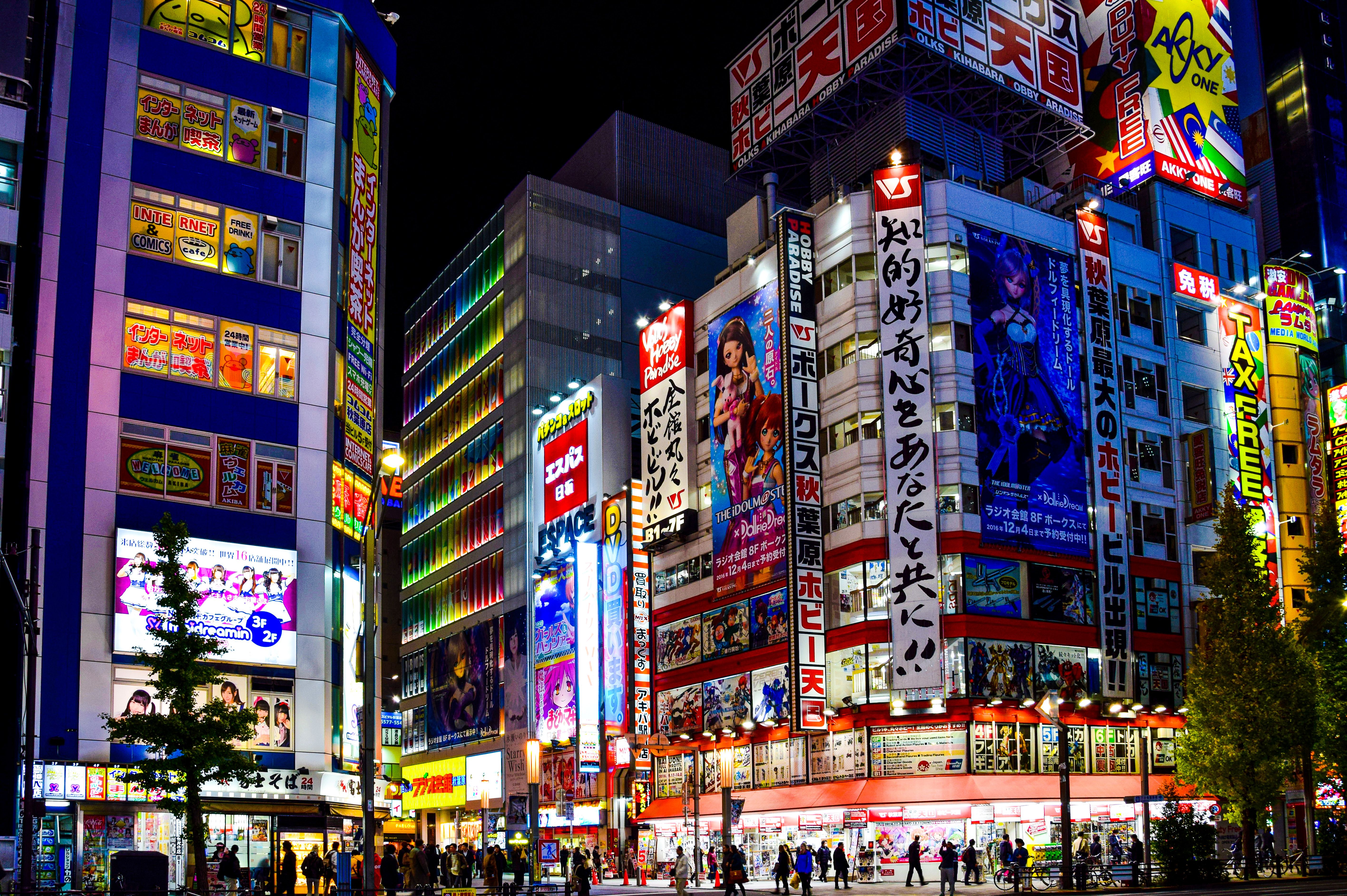
The JR train doors slide open at Akihabara Station's Electric Town Exit, and the decibel level shifts—not louder, but different. Electronic jingles from arcade floors mix with the polyphonic calls of anime theme songs, while a cosplayer in a pastel wig poses beneath a billboard four stories tall, featuring a wide-eyed character you almost recognize. This is Akihabara—"Akiba" to its disciples—a 1-square-kilometer district packing over 1,000 electronics shops, anime megastores, and themed cafes into the Chiyoda City grid . From its postwar origins selling black-market radio parts to today's pop-culture pilgrimage site, this neon-soaked labyrinth solves a very modern question: where does technology end and fandom begin? Here, retro game hunters with portable carts share alleyways with businessmen hunting for vacuum tubes, and maid cafe waitresses bow beside Shinto shrines that have guarded the neighborhood for 1,300 years. You have arrived at the altar of Japanese subculture, and everything has its place.
Why Akihabara Embodies Tokyo's Technological Soul
The district solves a preservation problem: how does a hub of constant innovation honor its past without becoming a museum? After World War II, this area became a sprawling black market for radio parts, earning the name "Electric Town" as legitimate shops followed the crowds . The solution here is layered integration. At Radio Kaikan—a 10-story landmark across from the station—you can buy the latest figurine of a seasonal anime waifu on the ground floor and source a discontinued vacuum tube for a 1970s amplifier on the third . Walk 500 meters south, and you'll reach the historic Kanda Myojin Shrine, founded in 730 AD—long before the first transistor—where tech workers still bring their smartphones for blessing against digital failure . This is Akihabara's genius: "Anime" sits comfortably next to "Electronics" on most store signs. The district doesn't abandon its legacy of hardware for software; it simply adds layers. When the iconic "Laox" megastores shifted from tax-free electronics to anime merchandise, they didn't tear down the past—they literally built figurine displays on top of the old TV boxes. That's Akiba's real lesson: tomorrow's culture stacks neatly on yesterday's hardware.
The Best Time to Experience Akihabara
To see Akihabara at its most electric—when the glow of a thousand screens bounces off every reflective surface—target a Friday or Saturday evening between 6:00 PM and 9:00 PM for the full neon experience. For crowd-free shopping without the sensory overload, arrive on a Tuesday or Wednesday morning (10:00 AM–12:00 PM), shortly after most stores open . The golden weather window is March through May (spring) or September through November (autumn), when temperatures average 15-23°C (59-73°F)—ideal for walking between the half-kilometer stretch of Chuo-dori and the back alley hideaways . Avoid late April to early May (Golden Week) and mid-August (Obon festival), when domestic travel crowds double the walking traffic . Winter offers a unique spectacle: from December 16–25, 2025, the "Akihabara Electric Town Christmas" lit the district with projection mapping, a trend likely to return . Sundays bring a different rhythm: from 13:00–18:00 (April–September) and 13:00–17:00 (October–March), Chuo-dori transforms into a pedestrian-only "Paradise," though many maid cafes close early .
Approximate Budget for a 7-Day Trip Including Akihabara
This breakdown treats Akihabara as a shopping-focused highlight within a broader Tokyo itinerary, assuming mid-range collecting preferences and average exchange rates. Prices in Japanese Yen (¥) and US Dollars ($), based on 2026 data.
- Accommodation: ¥9,000–¥16,000 ($60–$110) per night near Akihabara Station. The UNDER RAILWAY HOTEL AKIHABARA charges ¥5,000–¥7,000 per person, with a unique location literally beneath the train tracks of the JR line . Mid-range options near Suehirocho Station start at ¥10,000 ($67).
- Food: ¥2,500–¥5,500 ($17–$37) daily. Convenience store breakfast: ¥600 ($4). Lunch at a maid cafe: ¥1,500–¥3,000 ($10–$20) including show or photo . Dinner at a standing soba bar near the station: ¥600–¥900 ($4–$6). Akihabara specialty: Hayashi rice (beef stew) at traditional kissaten: ¥900–¥1,200 ($6–$8).
- Transportation: JR Yamanote Line single ride to Akihabara Station: ¥180 ($1.20). One-week Tokyo Metro pass: ¥1,500 ($10). The "Akihabara Electric Town Exit" is the primary access point .
- Attractions & Shopping: Strolling the district: FREE . Guided 2-hour anime walking tour: ¥5,000 ($33) . Arcade gaming: ¥500–¥2,000 ($3.30–$13) depending on crane game luck. Gachapon (capsule toy) machines: ¥200–¥500 ($1.30–$3.30) per spin. Small acrylic standee: ¥1,500–¥3,000 ($10–$20) . Nendoroid figure: ¥5,000–¥8,000 ($33–$53) .
- Miscellaneous: Retro game cartridge (Pokémon Red/Green, loose): ¥3,000–¥8,000 ($20–$53). Electronics repair/restoration at small shop: ¥3,000–¥15,000 ($20–$100). Kanda Myojin Shrine omamori (smartphone charm): ¥800 ($5) .
Total 7-day mid-range budget including Akihabara shopping: ¥90,000–¥120,000 ($600–$800) per person, excluding international flights. Serious collectors should double the misc shopping category—rare figurines can exceed ¥20,000 ($133).
7 Essential Akihabara Experiences
- Scale Radio Kaikan (10 Stories of Figurine Heaven): Directly across from the Electric Town Exit, this building is Akihabara's anchor. The ground floor is a rotating exhibit of seasonal promos; floors 3 through 7 contain glass cabinets of every anime, game, and vtuber character imaginable . Take the elevator to the top and work your way down. Pro tip: prices get cheaper as you go higher (tourists rarely venture past floor 5). Look for the "pre-owned" sections—Japan's "used" items are often mint in box, just retired from a collector's shelf. Don't touch the cabinets without asking; use the staff call button for assistance.
- Surrender to the Gachapon Hall (The Gaikan Exit): Turn left out of the station, and you'll find a massive hall housing 500+ capsule machines. For ¥200–¥500, you can get everything from realistic sushi keychains to miniature Shiba Inus in office worker cosplay. The etiquette: insert coin, turn the knob firmly, retrieve the egg, and move to a side table to open it—do not block the machines. Bring ¥1,000 coins; change machines are rare here.
- Pose with the Gundam Statue (Outside the UDX Building): While the life-sized Unicorn Gundam in Odaiba gets the attention, the UDX building near the station has an iconic life-sized Gundam foot and hand display perfect for quick photos . The surrounding plaza is also a top "street-view" spot for capturing the chaos of Chuo-dori . Visit at golden hour (4:30 PM in winter) for the best light.
- Visit the 1,300-Year-Old Kanda Myojin Shrine: A 10-minute walk north of the station, this shrine has become a spiritual home for otaku. It famously appeared in "Love Live!" and offers unique charms to protect electronics (¥800) and bring gaming victory . The wooden ema (votive tablets) here are covered not in prayers for family health, but for game localization and fan-art copyright safety . The shrine is open 24 hours for the grounds, but the shop closes at 5:00 PM .
- Enter a Maid Cafe (Even If You're Nervous): It’s the quintessential Akiba experience. Open chain "Maidreamin" is beginner-friendly with English menus . You'll be greeted with "Okaerinasaimase, goshujinsama" (Welcome home, Master). The protocol: no touching the maids, no photography unless you purchase a photo ticket (¥500), and be prepared for "cute" food (omurice with ketchup heart drawings) and a live stage performance. It's bizarre, wholesome, and distinctly Japanese—lean into the absurdity.
- See the Train Tracks Artisan Alley (2k540 AKI-OKA): Instead of walking on Chuo-dori, walk north towards Okachimachi under the elevated JR train tracks . This 1-kilometer hidden arcade, called "2k540," houses 50 artisanal shops—high-end leather workers, hand-painted ceramic studios, and traditional wagashi sweet makers . It's the polar opposite of the frantic anime megastores. Open 11:00 AM–7:00 PM (closed Wednesdays).
- Play Retro Games at a Revival Arcade (HEY or Taito HEY): Look for the large yellow "HEY" signage near the station. Inside a narrow doorway lies floors of arcade history: floor 2 for modern crane games, floor 3 for 2000s fighting games (Street Fighter IV), and floors 4/5 for actual retro cabinets from the 80s and 90s (Galaga, Pong) . Bring a ¥100 coin purse—most machines cost ¥100/play. It's loud, smoky (less so in 2026, but still present), and utterly authentic.
3 Hidden Gems Most Travelers Miss
- CHABARA AKI-OKA MARCHE (The Food Alley): Located in the same underpass as the artisan alley (2k540), "CHABARA" translates to "tea and food" and "challenge" . This is a food hall dedicated to regional specialties from all 47 prefectures. While tourists are eating crepes on the main drag, locals are here sampling rare soy sauces, pickling kits, and regional craft sodas. You can taste sake from Niigata and miso from Nagano in the same 10 meters. Open 10:00 AM–8:00 PM. Access: 5-minute walk north from the station toward Okachimachi .
- Mandarake's Escalator Shrines: Mandarake is famous for rare collectibles, but the hidden gem is in their less-trafficked Akihabara complex. Look for the non-descript escalators heading down to the basement. The walls of these escalator shafts are lined with hand-drawn shikishi (colored boards) signed by legendary mangaka who visited the store, including a rare sketch by Go Nagai (Devilman) and Leiji Matsumoto (Galaxy Express 999). Most shoppers rush past to the shelves; slow down, look up, and treat it like a free museum of manga signatures.
- Dai Nagoya Building – The No-Sign Ramen Bar: In the maze of buildings behind the main drag (near Suehirocho), look for an old, unmarked Showa-era building. On the second floor, a single red lantern hangs. This is Ramen Nagi, a shop famous only for its "Anchovy" broth (Niboshi). There is no sign in English, no pictures, and the menu is in Japanese only. There are only 8 seats, and the chef glares at phones. This is the best ramen in the district, and you'd never find it without looking up.
Cultural & Practical Tips
- The Sunday Pedestrian Paradise: Between 13:00–18:00 (April–September) and 13:00–17:00 (October–March), Chuo-dori closes to cars . It’s great for photography (no traffic), but the streets are packed. Many stores have longer queues due to the influx of locals. Note: It is often canceled in rain.
- Photography Rules Are Strict: Many smaller shops in Akihabara explicitly ban photography to prevent "price matching" or copying of rare collectibles . Always look for the "No Camera" sign. If you take a picture of a figure cabinet, be subtle and avoid flash. Conversely, "Maidreamin" cafes love photos—but only if you buy the official photo ticket (¥500) .
- Tax-Free Shopping for Tourists: Most large stores (Radio Kaikan, Yodobashi Camera, Sofmap) offer tax-free shopping for tourists spending over ¥5,000. Bring your passport. Items are usually sealed in a bag; do not open them in Japan (you can when you get home).
- Essential Japanese Phrases for Shopping: Ikura desu ka? (Ee-koo-rah dess kah?) — "How much is this?" Dore ga osusume desu ka? (Doh-reh gah oh-soo-soo-meh dess kah?) — "Which do you recommend?" Reshīto wa irimasen (Reh-shee-toh wah ee-ree-mah-sen) — "I don't need a receipt" (cash-only shops appreciate this).
- Did You Just Buy a Vacuum Tube? If you walk into a shop and see old men with magnifying glasses staring at tiny glass tubes, you've found the "real" Electric Town section (in the backstreets west of the station). These shops are the legacy of the 1950s—selling resistors, soldering irons, and tubes. It is astonishing. No English spoken, but the aesthetics are peak "cyberpunk retirement."
- Electric Town Currency: While major stores take credit cards, smaller stores and arcades are strictly cash-only. The nearby Aki-Oka hidden alley also prefers cash . Budget to have ¥5,000–¥10,000 ($33–$67) on you at all times. ATMs are available at 7-Eleven outside the Electric Town Exit.
- Cosplay Etiquette: You can dress up, but unless you are in a designated event or a studio, you cannot wear full-face masks or carry realistic weapons (metal swords) in public. If you want to photograph a cosplayer, always ask "Shashin o totte mo ii desu ka?" (Shah-sheen oh toht-teh moh ee dess kah?) first. Many are happy to pose; some are not.
Conclusion: Travel with Curiosity, Not Just Consumption
You came to Akihabara to buy rare figurines. You will leave with a deep respect for preservation. This district is not just a retail hub; it is a library of obsessive human passion. The salaryman searching for a 40-year-old record stylus is not a hoarder—he is an archivist. The teenager spending their allowance on a holographic card is not just shopping—they are investing in a community. Akiba does not judge your specific obsession. It merely provides the shelves, the lights, and the shrine to place it upon. When you leave the Electric Town Exit for the last time, listen one more time to the crosswalk signal (the famous "Akihabara Melody"—the same tune used in the video game 'Persona 5'), and realize you are walking through a living museum. Touch the walls. Play the game. Talk to the stranger about their keychain. This is where Japan's future dreams are incubated, one sparkling capsule toy at a time.