Basilica Cistern: Where Byzantine Engineering Meets Subterranean Mystery
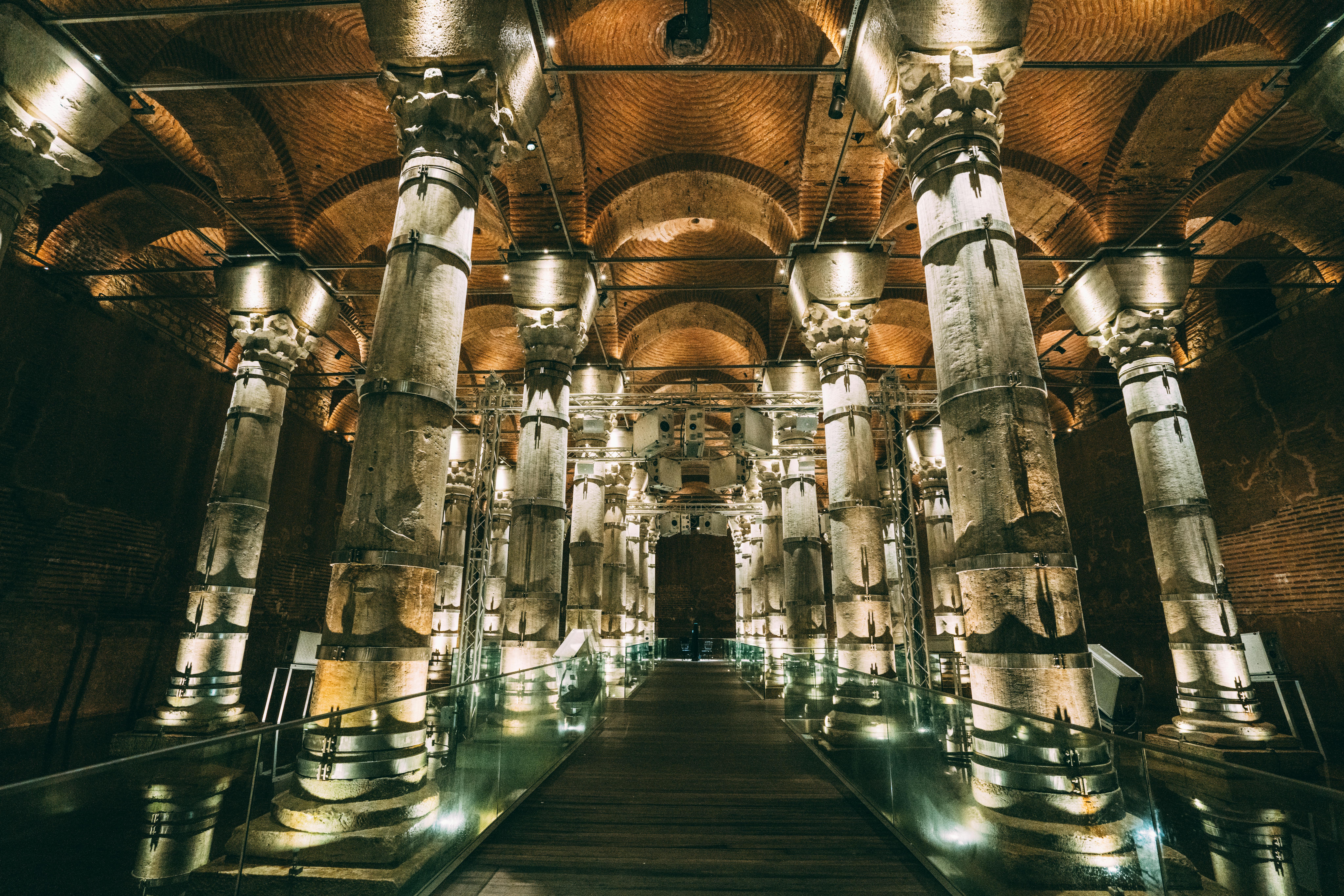
Basilica Cistern Istanbul with ancient marble columns reflected in still water, atmospheric lighting, underground Byzantine chamber

Basilica Cistern: Where Byzantine Engineering Meets Subterranean Mystery

Descending the worn stone steps into the Basilica Cistern, the bustling sounds of Sultanahmet fade into a hushed, otherworldly silence—broken only by the gentle drip of water and the soft echo of footsteps on wooden walkways. You enter a submerged forest of marble: three hundred and thirty-six columns, each rising nine meters (thirty feet) from still, dark waters that once held eighty thousand cubic meters of fresh water for Constantinople's Great Palace. Above, vaulted brick ceilings arch overhead, supported by columns scavenged from Roman ruins across the empire—some carved with intricate floral motifs, others bearing the tears of ancient quarries. Light filters through strategically placed fixtures, casting golden reflections on the water's surface and illuminating the famous Medusa heads, their stone gazes inverted and sideways, guarding the cistern's depths since the sixth century. This is not merely an ancient water reservoir; it is a masterpiece of Byzantine engineering, built in 532 AD under Emperor Justinian I to solve a critical need: ensuring a reliable water supply during sieges and droughts. Standing here today, surrounded by the cool, mineral-scented air and the whisper of history, you feel the ingenuity of a civilization that understood survival depends not just on swords, but on systems—on the quiet infrastructure that sustains life when the world above falls silent.

Why Basilica Cistern Embodies Byzantine Ingenuity

The Basilica Cistern—known locally as Yerebatan Sarnıcı ("Sunken Palace")—represents one of antiquity's most sophisticated solutions to a fundamental urban challenge: securing potable water for a metropolis of nearly half a million people in an era before pumps or pressurized pipes. Commissioned by Emperor Justinian I in 532 AD following the Nika Riots that devastated much of Constantinople, the cistern was engineered to store freshwater conveyed via the Valens Aqueduct from springs over 120 kilometers (75 miles) away. This massive underground reservoir solved the critical problem of water security during sieges, droughts, or aqueduct disruptions—ensuring the imperial court, military garrisons, and surrounding neighborhoods could survive extended isolation.

The cistern's construction showcases extraordinary engineering precision. Measuring approximately 138 meters (453 feet) long by 65 meters (213 feet) wide, the chamber spans nearly nine thousand square meters (97,000 square feet)—roughly the size of two football fields. Its ceiling, supported by 336 marble columns arranged in twelve rows of twenty-eight, employs a sophisticated system of brick vaulting that distributes weight evenly while allowing for slight seismic movement—a crucial feature in earthquake-prone Istanbul. Columns were repurposed from earlier Roman structures across the empire: porphyry from Egypt, green marble from Thessaly, granite from Asia Minor. The famous Medusa heads—two massive column bases carved with the Gorgon's visage—were likely placed upside down and sideways not for mystical reasons, but as practical spolia: convenient, durable foundations that happened to bear potent iconography.

Beyond its technical achievements, the Basilica Cistern fulfilled a profound symbolic need: demonstrating imperial power through infrastructure. By creating a subterranean palace of water—complete with reflective surfaces, carefully orchestrated lighting, and repurposed artistic treasures—Justinian transformed a utilitarian structure into a statement of cultural continuity and divine favor. The cistern remained in use through Byzantine, Ottoman, and early Republican periods, only falling into disuse in the nineteenth century before its rediscovery in 1945 by scholar Feridun Dirimtekin. Today, as visitors walk its illuminated pathways, the cistern continues to inspire awe—not just as an ancient utility, but as a testament to human foresight, adaptability, and the enduring beauty of functional design.

The Best Time to Experience Basilica Cistern

Timing your visit to the Basilica Cistern requires balancing atmospheric conditions with crowd levels. The optimal window runs from April 15–May 31 and September 15–October 31, when Istanbul's temperatures hover between 15–22°C (59–72°F), humidity remains moderate, and the cistern's cool interior (a constant 14°C/57°F year-round) provides refreshing refuge from mild outdoor weather. During these shoulder seasons, you'll experience the cistern at its most contemplative—crowds are manageable, photography lighting is ideal, and the wooden walkways feel less congested.

For the most immersive experience with minimal interruptions, arrive at 9:00–10:00 AM when the cistern opens. This is when the water's surface is calmest, creating perfect reflections of the columns, and you can appreciate the Medusa heads without jostling crowds. Alternatively, visit between 4:00–5:30 PM when late-afternoon light filters through entrance windows and tour groups have thinned. The cistern closes at 6:30 PM daily (last entry 5:45 PM), so plan accordingly.

Avoid June 15–August 31 if possible: temperatures soar to 28–35°C (82–95°F), cruise ship arrivals create queues exceeding 90 minutes, and the contrast between sweltering streets and the cistern's cool interior can cause condensation that fogs photography lenses. Also skip Turkish national holidays (April 23, August 30, October 29) and religious holidays when domestic tourism surges.

Winter months (December–February) offer atmospheric mist and fewer visitors, with outdoor temperatures of 3–8°C (37–46°F), but the cistern's constant coolness can feel chilly—bring a light jacket. For current information on opening hours, ticket prices, and conservation updates, visit: https://yerebatan.com/

Approximate Budget for a 7-Day Trip

Istanbul offers exceptional value for cultural travelers, with costs remaining moderate despite recent inflation. The following budget assumes mid-range travel with comfortable accommodations near Sultanahmet, quality Turkish cuisine, and comprehensive sightseeing including the Basilica Cistern. All prices reflect current rates in euros (€1 ≈ 35 Turkish Lira).

Accommodation: €50–€110 per night
• Budget pension in Sultanahmet: €25–€40/night
• Mid-range boutique hotel (3-star): €50–€80/night
• Upscale hotel with Bosphorus view: €110–€180/night
7 nights total: €350–€770

Food: €20–€40 per day
• Breakfast: €4–€7 (Turkish tea, simit, menemen, olives, feta)
• Lunch: €6–€12 (kebap, köfte, lentil soup, pide)
• Dinner: €10–€21 (mezze platter, grilled sea bass, lamb şiş)
• Street food/snacks: €2–€4 (simit, roasted chestnuts, Turkish coffee)
7 days total: €140–€280

Transportation:
• Istanbulkart (reloadable transit card): €2 initial fee
• Airport transfer (Havaist bus): €4 each way
• Tram/Metro/Bus rides: €0.50 per trip
• Ferry to Kadıköy: €0.75
• Taxi from Sultanahmet to Basilica Cistern: €3–€5
7 days total: €30–€45

Attractions:
• Basilica Cistern: €10
• Hagia Sophia: Free
• Blue Mosque: Free
• Topkapı Palace: €15 (Harem extra €10)
• Grand Bazaar: Free entry
• Galata Tower: €8
• Bosphorus cruise (2-hour): €12
Total: €45–€55

Miscellaneous:
• Turkish bath (hamam) experience: €30–€55
• Souvenirs (ceramics, textiles, spices): €25–€80
• Travel insurance: €35
• SIM card (10GB data): €12
Total: €102–€182

TOTAL 7-DAY BUDGET: €667–€1,332

7 Essential Basilica Cistern Experiences

1. Contemplate the Medusa Heads: Locate the two massive column bases in the northwest corner, each carved with the visage of Medusa, the Gorgon of Greek myth. One head rests upside down, the other sideways—a placement likely chosen for practical height adjustment rather than mystical protection. Stand quietly and observe how the stone features remain remarkably detailed after fifteen centuries. Visit early morning (9:00–9:30 AM) when lighting is softest and crowds thinnest, allowing uninterrupted contemplation of these enigmatic sculptures.

2. Walk the Illuminated Pathway: Follow the wooden boardwalk that winds through the cistern's central axis, flanked by still, dark water on both sides. The pathway is strategically lit to highlight column capitals carved with acanthus leaves, peacocks, and geometric patterns—many repurposed from Roman temples. Pause midway to turn off your phone flashlight and let your eyes adjust to the ambient glow; the water's surface transforms into a mirror, doubling the forest of columns above.

3. Study the Column Variety: Examine the three hundred and thirty-six columns closely: no two are identical. Some feature smooth shafts, others fluted; capitals range from simple Doric to ornate Corinthian. Look for the "Hen's Eye" column, decorated with tear-drop carvings said to commemorate the slaves who died building the cistern. Bring a small flashlight to illuminate intricate details in shadowed areas. The diversity reflects the cistern's construction during a period of resource scarcity, when builders scavenged materials empire-wide.

4. Listen to the Acoustics: Stand in the cistern's center and whisper or clap softly. The brick-vaulted ceiling and water surface create a gentle reverberation that lasts two to three seconds—a subtle acoustic effect that enhances the space's meditative atmosphere. This phenomenon was likely unintentional but contributes to the cistern's otherworldly ambiance. Visit during quiet hours (weekday mornings) to fully appreciate this sonic dimension.

5. Photograph the Reflections: Position yourself near the water's edge to capture the iconic image of columns mirrored in the still, dark surface. Use a slow shutter speed (1/15 second or slower) and rest your camera on the railing to avoid blur. The most dramatic reflections occur when the cistern is least crowded and water is undisturbed—aim for opening hour or late afternoon. Avoid flash photography, which disrupts the ambient lighting and other visitors' experiences.

6. Explore the Historical Displays: Near the exit, examine informational panels detailing the cistern's construction, rediscovery in 1945, and restoration efforts. Look for archaeological fragments displayed in glass cases: clay pipes from the Valens Aqueduct, Byzantine coins found during excavations, and photographs of the cistern when it was first drained. These exhibits provide essential context for appreciating the engineering marvel you've just experienced.

7. Exit Through the Gift Mindfully: As you leave, browse the small gift shop featuring books on Byzantine architecture, replicas of column capitals, and locally crafted ceramics. Consider purchasing a guidebook to deepen your understanding of Istanbul's underground heritage. Support local artisans by choosing handmade souvenirs over mass-produced imports. The shop's proceeds contribute to ongoing conservation efforts at the cistern.

3 Hidden Gems Most Travelers Miss

The Column with the Peacock Motif: Tucked in the southeastern section, one column capital features an exquisitely carved peacock—a symbol of immortality in Byzantine iconography. Most visitors rush past, but this detail represents the artistic sophistication of sixth-century stonemasons. Access: Follow the main walkway to the far end, then turn right along the eastern wall. Best viewed with a small flashlight at 10:00–11:00 AM when ambient light enhances the carving's depth.

The Original Brickwork Section: Near the entrance staircase, a short stretch of wall reveals the cistern's original sixth-century brick-and-mortar construction, untouched by later restorations. The herringbone pattern and mortar composition offer insights into Byzantine building techniques. Access: Look to your left immediately after descending the entrance stairs. This section is often overlooked because visitors focus on the columns ahead. Visit early to examine it without crowds blocking your view.

The Water Level Marker: On a column near the exit, a faint horizontal line indicates the cistern's historical water level—approximately two meters (6.5 feet) higher than today's maintained level. This subtle detail reveals how the cistern once appeared nearly full, creating an even more dramatic submerged forest effect. Access: Ask a staff member to point it out; it's easy to miss. Best observed during quiet afternoon hours when you can linger without holding up other visitors.

Cultural & Practical Tips

Dress for cool, damp conditions: The cistern maintains a constant 14°C (57°F) with high humidity. Wear comfortable, closed-toe shoes with non-slip soles—the wooden walkways can be damp. Bring a light jacket or shawl even in summer; the temperature contrast with Istanbul's streets is significant.

Photography etiquette: Photography is permitted without flash. Tripods and selfie sticks are prohibited to protect the ancient structure and ensure visitor flow. The phrase "Fotoğraf çekebilir miyim?" (foh-toh-raf cheh-keh-bee-leer mee-yim) means "May I take a photo?" Always ask before photographing other visitors.

Audio guides enhance understanding: Rent an audio guide (€5) at the entrance for detailed historical context in multiple languages. The narration explains engineering techniques, column origins, and the Medusa heads' history—transforming a visual experience into an educational journey.

Accessibility considerations: The cistern entrance involves descending stone steps; there is no elevator. The interior walkway is flat but narrow. Visitors with mobility challenges should contact staff in advance for assistance. Service animals are permitted with prior notification.

Learn essential Turkish phrases: "Teşekkür ederim" (teh-shek-kur eh-deh-rim) = Thank you; "Bu nedir?" (boo nee-dir) = What is this?; "Çok güzel" (chok gew-zel) = Very beautiful. Attempting Turkish shows respect and often sparks friendly conversations with staff.

Combine with nearby sites: The Basilica Cistern is a five-minute walk from Hagia Sophia and the Blue Mosque. Purchase a museum pass (€75) if visiting multiple sites—it includes the cistern and offers skip-the-line privileges at select attractions. Plan a half-day itinerary: cistern in the morning, then Hagia Sophia and lunch in Sultanahmet.

Respect the space: Speak softly to preserve the cistern's meditative atmosphere. Do not touch the columns or water—oils from skin accelerate stone degradation. Dispose of trash in designated bins; conservation depends on visitor cooperation.

Conclusion: Travel with Wonder, Not Just Checklist

The Basilica Cistern demands more than a quick photo—it invites wonder. As you stand beneath vaulted ceilings that have sheltered water for fifteen centuries, surrounded by columns that once supported Roman temples, remember that you are not merely a tourist but a witness to human ingenuity. This subterranean chamber offers a narrative of resilience: engineers who solved water scarcity with elegance, artisans who transformed utility into art, civilizations that preserved rather than demolished.

Travel here with curiosity. Pause to listen to the water's gentle rhythm. Trace the carvings on a column capital with your eyes, not your fingers. Ask staff about restoration efforts and how tourism revenue supports conservation. These small acts of engagement accumulate into something larger than sightseeing—they become participation in preserving a fragile link to our shared past.

The Basilica Cistern will outlast us all, its columns continuing to hold up the sky above while cradling history below. Your visit should honor that continuity, supporting the careful balance between access and preservation that allows future generations to experience this wonder. Slow down. Look closely. Let the cool, still air quiet your mind. That is how you truly experience the Basilica Cistern.

Post a Comment (0)
Previous Post Next Post