
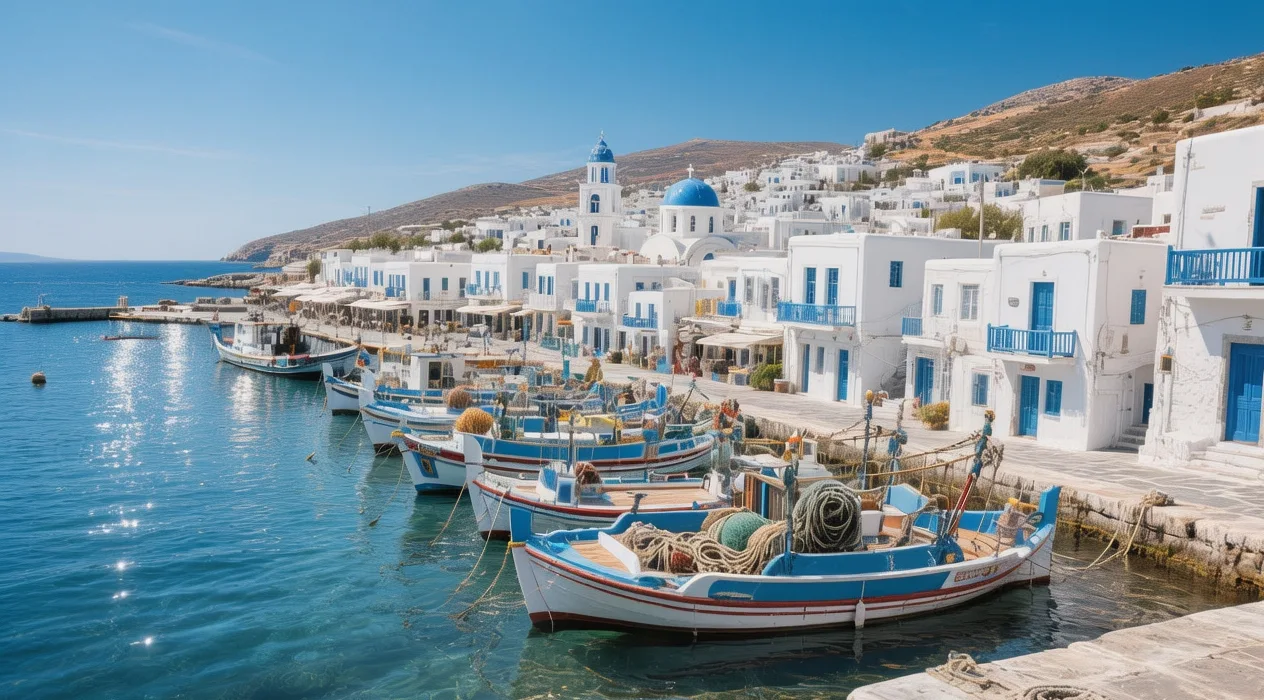
Paros Parikia Harbor: Where Whitewashed Stone Meets Aegean Waters
Golden light spills across marble-paved promenades as you stroll the harbor edge—sea breezes carry the scent of fresh basil and salt, while the gentle clink of rigging from colorful fishing boats creates a rhythmic underscore to your arrival. You stand within a living postcard of Cycladic architecture, where whitewashed buildings cascade down gentle slopes toward turquoise waters, their blue-domed churches reflecting in the calm harbor like inverted dreams. The Panagia Ekatontapiliani, one of Greece's oldest Christian churches founded in the fourth century, stands sentinel just steps from the waterfront, its Byzantine walls whispering prayers across seventeen centuries. This is Parikia harbor, the heart of Paros island, where ancient maritime traditions meet modern island life in perfect harmony—a port that has welcomed sailors since Minoan times and still pulses with the quiet energy of a community that measures time by ferry schedules and sunset colors. Parikia matters because it preserves not just beauty, but authenticity: a working harbor where fishermen still mend nets at dawn, where taverna owners greet guests by name, and where every cobblestone lane tells a story of island resilience beneath the endless Cycladic sky.
Why Paros Parikia Harbor Embodies Authentic Cycladic Life
Paros Parikia harbor represents one of the Cyclades' most enduring examples of adaptive maritime architecture—a working port that solves the fundamental challenge of balancing tourism growth with traditional island life. Settled continuously since the third millennium BCE, Parikia evolved from a Minoan trading post to a Byzantine ecclesiastical center, then a Venetian naval station, before becoming today's vibrant ferry hub connecting the Aegean archipelago.
Architecturally, the harbor showcases sophisticated Cycladic design principles adapted to coastal living. Whitewashed buildings—painted with lime-based asvesti that reflects harsh sunlight and possesses natural antiseptic properties—feature flat roofs for rainwater collection, thick stone walls that maintain interior temperatures between 18–22°C (64–72°F) year-round, and narrow lanes just 2–3 meters wide that channel cooling sea breezes through the town. The harbor's semicircular layout, spanning approximately 400 meters across, creates a natural breakwater that protects vessels while framing panoramic views of the Aegean.
Beyond aesthetics, Parikia fulfilled profound cultural needs: it served as a spiritual center through the Panagia Ekatontapiliani complex—featuring 99 visible doors plus one hidden entrance, symbolizing the path to divine mystery; it functioned as a commercial nexus where Parian marble, olive oil, and wine were exported across the Mediterranean; and it provided a defensive stronghold during Ottoman occupation, with Venetian-era fortifications still visible along the waterfront. Today, the harbor maintains its authenticity by limiting large cruise ships, prioritizing local fishing fleets, and preserving family-owned tavernas that have operated for generations. When you walk these marble-paved promenades, you're not just viewing a picturesque scene—you're experiencing a living tradition where every whitewashed wall and blue-domed cupola reflects centuries of adaptation, faith, and community.
The Best Time to Experience Paros Parikia Harbor
Timing your visit to Paros Parikia harbor requires balancing weather, lighting for photography, and seasonal programming. The optimal window runs from May 12 through June 20, when temperatures range 19–27°C (66–81°F) and wildflowers—bougainvillea, jasmine, and sea daffodils—cascade over harbor-side walls. During this period, sunset occurs between 7:50–8:20 PM, providing extended golden-hour light that bathes whitewashed buildings in warm amber tones perfect for photography.
A second exceptional season spans September 15 through October 25, with temperatures of 18–26°C (64–79°F) and clearer atmospheric conditions that enhance visibility across the Aegean. Sunset during this window falls between 6:50–7:35 PM, creating dramatic contrasts as the sun descends behind the distant silhouette of Antiparos.
For the most atmospheric experience, arrive at the harbor promenade by 7:00 PM during summer months to secure a prime waterfront table. The marble paving absorbs daytime heat and radiates warmth during sunset, creating a uniquely sensory dining experience. Midday visits between 12:00–4:00 PM should be avoided during July and August, when temperatures exceed 31°C (88°F) and the exposed harbor offers minimal shade.
Avoid visiting during peak ferry transit season (July 22–August 18) when day-trippers create congestion along the waterfront, limiting photography opportunities and creating long waits at popular tavernas. Winter months (November–February) bring frequent winds and temperatures of 11–17°C (52–63°F); while crowds thin dramatically, strong meltemi gusts can make harbor-side dining uncomfortable for extended periods.
For official information and island guidance: www.visitgreece.gr and www.paros.gr
Approximate Budget for a 7-Day Trip
Exploring Paros Parikia harbor as part of a Cycladic island itinerary offers exceptional value compared to Santorini or Mykonos, combining authentic island life with beach relaxation at accessible prices. The following breakdown assumes a mid-range travel style with comfortable accommodation in Parikia or nearby Naoussa, dining at traditional tavernas, and a mix of independent exploration and guided experiences.
- Accommodation: €45–€85 per night for boutique guesthouses or traditional Cycladic hotels in Parikia (near the harbor or Panagia Ekatontapiliani). Budget rooms start at €35; luxury sea-view suites reach €130.
- Food: €24–€34 per day. Breakfast €4 (Greek coffee, honey yogurt, fresh bread); lunch €9 (horiatiki salad, grilled octopus, house wine); dinner €14–€18 (fresh catch of the day, lamb kleftiko, local Assyrtiko wine).
- Transportation: Ferry from Athens (Piraeus) to Paros €32–€50 (3.5–5 hours, depending on vessel); local bus to beaches €1.80 each way; rental car €32/day (recommended for island exploration); scooter rental €14/day.
- Attractions: Parikia harbor exploration free; Panagia Ekatontapiliani church free; Ancient Paros archaeological site €4; guided island history tour €35; boat tour to Antiparos €22; combined Cycladic heritage experiences €20.
- Miscellaneous: Handmade Parian marble souvenirs €12–€30; local citron liqueur 500ml €10; traditional woven textiles €18; travel insurance €35/week; water/snacks at site €4.
Total for 7 days: €620–€820 per person (excluding international flights to Athens and ferry costs)
7 Essential Paros Parikia Harbor Experiences
- Witness sunset from the harbor promenade: Arrive at the waterfront by 7:00 PM during summer months to secure a position along the marble-paved walkway. As the sun descends toward the horizon, watch whitewashed buildings transform from brilliant white to warm gold, while fishing boats bob in waters reflecting amber and rose. Bring a wide-angle lens to capture both the architecture and the Aegean panorama; a tripod is permitted but must not obstruct pedestrian flow.
- Explore the Panagia Ekatontapiliani at sunrise: Visit this fourth-century Byzantine complex by 8:00 AM when morning light illuminates marble columns and frescoed chapels without crowds. The church's 99 visible doors plus one hidden entrance create a spiritual labyrinth; allow 30 minutes to absorb the meditative atmosphere. Dress modestly (shoulders and knees covered) and speak quietly to respect active worship spaces.
- Walk the old town's marble-paved lanes: Follow the narrow, winding streets behind the harbor where traditional Cycladic architecture remains intact. Look for carved marble doorframes, bougainvillea-draped balconies, and hidden courtyards. Visit mid-morning (9:00–10:30 AM) when angled light accentuates stone textures without harsh glare. Allow 45 minutes for leisurely exploration, stopping at artisan shops showcasing local crafts.
- Dine at a family-run harbor taverna: Reserve a waterfront table at a traditional taverna for sunset dining. Order fresh grilled fish or octopus paired with local Assyrtiko wine, and savor the experience as harbor lights begin to twinkle. Arrive by 6:30 PM to secure optimal seating; reservations recommended July–September. Many tavernas source ingredients from Parian farms—ask about daily specials featuring seasonal produce.
- Photograph the blue-domed churches: Focus on iconic Cycladic architecture: the Church of Agios Konstantinos near the harbor and smaller chapels tucked into hillside lanes. The best light for photography occurs mid-morning (10:00–11:30 AM) when side lighting reveals the texture of whitewashed walls against deep blue domes. Use a polarizing filter to enhance color saturation and reduce glare on sunlit surfaces.
- Attend the weekly harbor market: Every Tuesday and Friday morning, local vendors set up stalls along the harbor edge selling fresh produce, handmade crafts, and traditional sweets. Visit between 8:00–10:00 AM to browse olive oils, thyme honey, and embroidered textiles while interacting with Parian artisans. Bring small bills for purchases; many vendors prefer cash transactions.
- Take an evening boat tour from the harbor: Book a sunset cruise departing from Parikia port to explore nearby coves and the island of Antiparos. These 2.5-hour excursions typically include swimming stops, traditional meze, and views of the Cycladic coastline from the water. Departures usually begin at 5:30 PM; reserve 24 hours in advance during peak season. Bring a light wrap—sea breezes cool evenings even in summer.
3 Hidden Gems Most Travelers Miss
- The Venetian Castle Remnants: Tucked behind the Panagia Ekatontapiliani complex, weathered stone walls and arched gateways mark the site of a 13th-century Venetian fortress that once protected Parikia from pirate raids. Most visitors overlook this archaeological fragment because signage focuses on the church. Access via the pathway to the right of the church entrance; follow signs for "Kastro." Visit late afternoon (4:00–5:30 PM) when golden light illuminates the stonework's texture. Bring a macro lens to photograph carved Venetian coats of arms still visible on select blocks.
- The Hidden Fountain of Livadia: A short walk uphill from the harbor, this 18th-century stone fountain features intricate marble carvings and a natural spring that still flows with cool, fresh water. Locals traditionally collect water here, and the site offers peaceful respite from harbor bustle. Access via the unmarked path behind the Old Market; ask for "i vrysi tis Livadias." Visit mid-morning (10:00–11:00 AM) when light filters through surrounding olive trees. Bring a reusable bottle to refill; the water is safe to drink and wonderfully refreshing.
- The Secret Beach of Krios: Just 10 minutes' walk south of Parikia harbor, this small pebble beach sheltered by limestone cliffs offers crystal-clear waters and minimal crowds. Most tourists focus on the harbor and miss this refreshing escape. Access via the coastal path behind the ferry terminal; follow signs for "Paralia Krios." Visit late afternoon (4:00–5:30 PM) when sunlight warms the rocks while water remains refreshingly cool. Bring water shoes for the rocky entry and respect the fragile coastal ecosystem by removing all trash.
Cultural & Practical Tips
- Respect local customs: Parikia remains a living community with active religious sites. Dress modestly when entering churches (shoulders and knees covered for all genders), remove hats inside chapels, and speak quietly. Photography inside active worship areas requires explicit permission—ask "Boro na fotografía?" (Can I photograph?).
- Carry cash for small purchases: While many establishments accept cards, harbor-side vendors, market stalls, and family tavernas often prefer cash. Withdraw €50–€100 upon arrival; ATMs are plentiful in Parikia but may charge fees for international cards.
- Learn essential Greek phrases: "Yassou" (YAH-soo) = hello; "Efharisto" (ef-hah-REE-stoh) = thank you; "Poso kani?" (POH-soh KAH-nee) = how much?; "Nero parakalo" (neh-ROH pah-rah-kah-LOH) = water please; "Pou ine to limani?" (poo EE-neh toh lee-MAH-nee) = where is the harbor?
- Prepare for sun and wind exposure: The harbor promenade offers minimal shade and frequent meltemi breezes. Wear a wide-brimmed hat, apply SPF 30+ sunscreen, and carry a light windbreaker even in summer. Bring at least 1.5 liters of water per person; refill stations exist near the ferry terminal but are limited along the waterfront.
- Photography guidelines: Handheld photography is unrestricted throughout public harbor areas. Tripods are permitted but cannot obstruct pedestrian pathways or waterfront dining. Drone use requires written permission from the Hellenic Ministry of Culture (+30 210 8211000) and is rarely granted for populated heritage sites. Commercial shoots require permits obtained 48 hours in advance from the Cyclades Ephorate of Antiquities.
- Weather considerations: Strong meltemi winds can reach 40 km/h (25 mph) on the exposed harbor, especially July–August. Secure loose items and be cautious near unprotected waterfront edges. Afternoon thunderstorms develop rapidly in late summer; seek shelter immediately if you hear thunder—the marble paving becomes extremely slippery when wet.
- Accessibility considerations: Parikia's harbor promenade features relatively flat marble paving suitable for wheelchairs and strollers. However, old town lanes involve steps and uneven surfaces. Visitors with mobility issues can experience key harbor viewpoints from the main waterfront path. Request assistance at the Parikia tourist information office; staff can suggest accessible routes and seating areas.
Conclusion: Travel with Reverence, Not Just Sightseeing
Paros Parikia harbor asks for more than a quick photograph and a checklist mark—it invites reverence for the human resilience that transformed island stone into enduring community. This isn't merely a picturesque port; it's a living tapestry where fishermen mend nets at dawn, where taverna owners share recipes passed through generations, and where every whitewashed wall reflects centuries of adaptation to sea and sky. When you stroll these marble-paved promenades and watch sunset paint the Aegean in hues of amber and rose, you're not just viewing beauty—you're participating in a continuum of island life that has thrived for millennia.
Responsible travel here means understanding that you're a guest in a space where authenticity breathes through every cobblestone. It means moving quietly to preserve the meditative harbor atmosphere, supporting family businesses that sustain local traditions, and respecting the rhythms of a community that measures time by tides and seasons, not schedules. Purchase directly from Parian artisans, dine at tavernas sourcing ingredients from island farms, and leave only footprints on these ancient stones.
Slow down. Sit on a sun-warmed harbor bench and watch light shift across the water. Listen to church bells mingling with the gentle lap of waves against fishing boats. Share a glass of local wine with fellow travelers, letting Parikia's timeless charm inspire not just admiration, but stewardship. This harbor will endure—if we treat it not as a backdrop for selfies, but as a teacher of simplicity, a witness to community, a legacy to protect. Travel here with humility, and the Aegean will share its ancient song.