
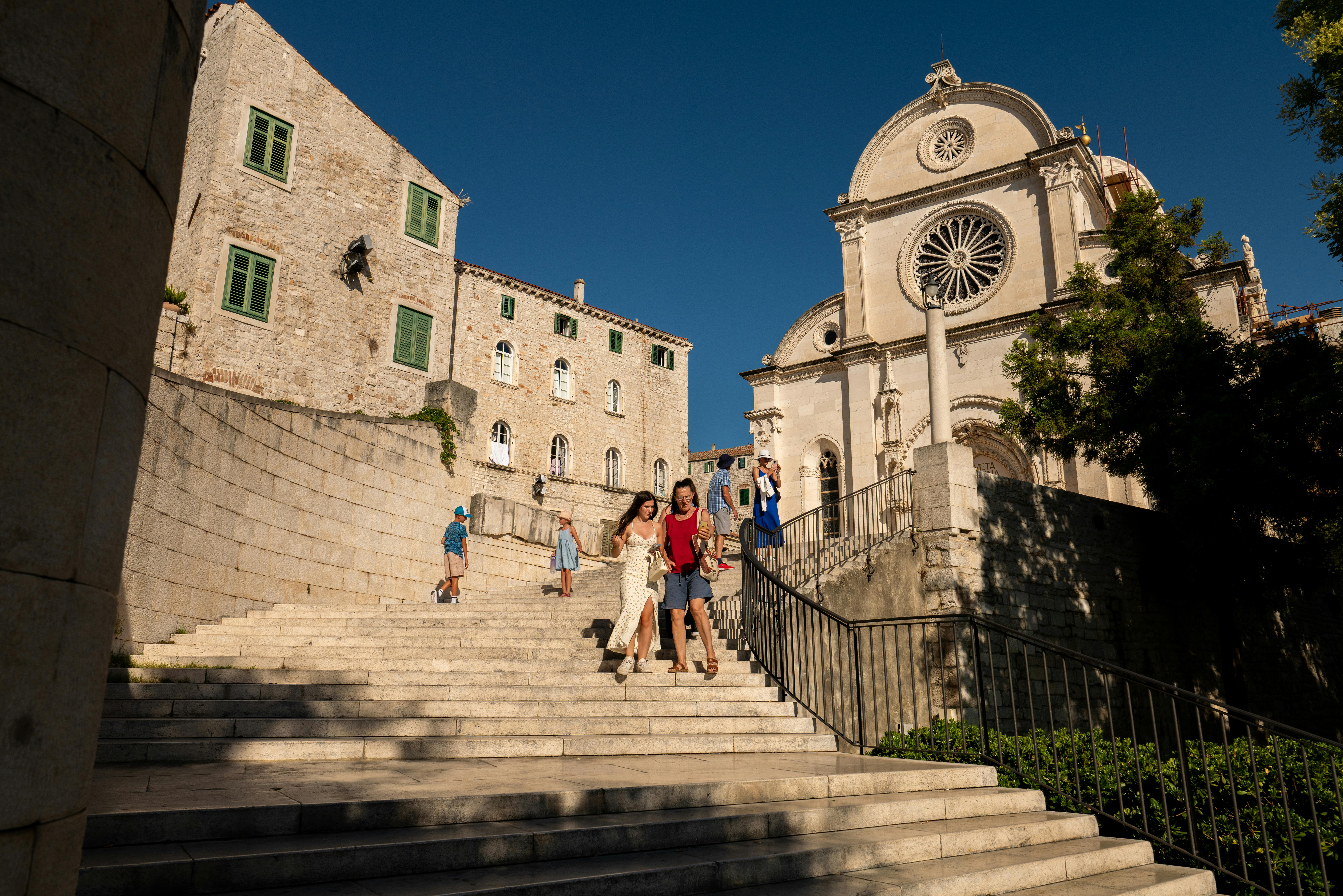
Šibenik St. James Cathedral: Where Renaissance Stone Meets Adriatic Light
The morning sun slants across limestone pavement as you approach the cathedral's western facade, where 71 sculpted heads—each carved with distinct personality—gaze down from a frieze that encircles the building like a stone crown. The air carries salt from the nearby Adriatic, the faint scent of wild rosemary from terraced gardens, and the distant murmur of Croatian echoing through narrow medieval streets. You hear the gentle clatter of footsteps on stone worn smooth by six centuries of pilgrims, the soft chirp of swallows nesting in cathedral eaves, and the occasional peal of bells from the campanile. This is the Cathedral of St. James in Šibenik—a masterpiece of Renaissance architecture built entirely of stone between 1431 and 1536, where master builders Juraj Dalmatinac and Nikola Firentinac solved an extraordinary engineering challenge: how to construct a barrel-vaulted nave and dome without wooden supports, using only local limestone and ingenious interlocking techniques. The cathedral matters because it preserves something increasingly rare: a monument where artistic vision and structural innovation converge, inviting visitors to witness not just beauty, but the very process of human creativity elevated to divine purpose.
Why Šibenik St. James Cathedral Embodies Dalmatian Artistic Heritage
The Cathedral of St. James in Šibenik represents one of Europe's most remarkable examples of Renaissance engineering, where architectural ambition met geological reality to create a structure unlike any other. Construction began in 1431 under the direction of local master builders, but the cathedral reached its definitive form between 1441 and 1536, when architects Juraj Dalmatinac (George of Dalmatia) and Nikola Firentinac incorporated revolutionary techniques: a barrel-vaulted nave constructed from interlocking stone slabs, a dome rising 32 meters (105 feet) without wooden centering, and an exterior frieze of 71 sculpted portraits that document the faces of Renaissance Šibenik.
Engineering ingenuity defined the construction. Local limestone—quarried from the nearby islands of Brač and Korčula—was cut into precise blocks bound with lime mortar that has hardened over centuries, creating structures resilient to seismic activity and coastal weather. The cathedral's famous vaulting system, where stone slabs interlock like a three-dimensional puzzle, eliminated the need for wooden scaffolding—a technique so advanced it influenced church architecture throughout the Adriatic. The dome, completed in 1475, was engineered with a double-shell design that distributes weight evenly while allowing light to filter through strategically placed windows.
Today, the cathedral serves as both active place of worship and UNESCO World Heritage site (inscribed 2000), managed by the Šibenik-Knin County Cultural Heritage Department in partnership with conservation experts. Approximately 250,000 visitors annually explore its interior and exterior, generating revenue that funds ongoing restoration using traditional techniques—master stonemasons still repair damage with hand-cut limestone and lime mortar. This living preservation model balances tourism access with structural integrity, ensuring that St. James Cathedral remains not a museum but a sanctuary where heritage breathes in daily life.
The Best Time to Experience Šibenik St. James Cathedral
Optimal conditions for visiting Šibenik St. James Cathedral occur during two distinct windows: May 12 through June 22 and September 8 to October 18. During these periods, temperatures range between 19-25°C (66-77°F), rainfall averages just 45-65mm monthly, and the Adriatic shimmers in brilliant blues that enhance photography from the cathedral's elevated position. Visit between 8:00-9:00 AM to experience soft morning light on limestone facades, minimal crowds, and the magical ritual of locals gathering for morning mass before tour groups arrive around 10:30 AM.
Summer months (July-August) present significant challenges: temperatures soar to 27-31°C (81-88°F), crowds peak with 1,500+ daily visitors, and afternoon heat can make the exposed stone plaza uncomfortable despite cathedral shade. Winter (November-February) brings cooler temperatures—9-14°C (48-57°F)—and occasional rain that makes limestone slippery; some interior areas may have reduced hours. Avoid visiting during midday in summer (11:00 AM-3:00 PM) when sun exposure is intense and the cathedral square becomes congested with cruise ship excursions.
For current opening hours, mass schedules, and conservation updates, visit https://www.sibenska-biskupija.hr/, the official tourism portal maintained by the Šibenik-Knin County Tourist Board. The website provides real-time updates on cathedral access, links to the official heritage site at katedrala-sv-jakova.hr, and detailed information about guided tours, organ concerts, and seasonal cultural festivals. The cathedral operates daily from 8:00 AM to 7:00 PM (April-September) and 8:00 AM to 4:00 PM (October-March), with mass times varying by season.
Approximate Budget for a 7-Day Trip
Šibenik offers exceptional value for a Dalmatian coastal destination, with costs approximately 25-35% lower than Western European cities. This breakdown assumes a mid-range travel style with comfortable accommodations, authentic local dining, and public transportation—walkability within Šibenik's old town significantly reduces transit costs.
- Accommodation: €58-€105 per night for a double room in a family-run pansion or three-star hotel in Šibenik's Old Town, Banj, or nearby Primošten
- Food: €29-42 per day total
- Breakfast: €5-9 (coffee, fresh burek, and local cheese at a pekara)
- Lunch: €10-14 (crni rižot—black cuttlefish risotto, or grilled sardines with olive oil)
- Dinner: €14-19 (slow-cooked lamb peka or fresh Adriatic fish with local Plavac Mali wine)
- Transportation:
- Šibenik bus day pass: €5 (covers city routes)
- Taxi from Split Airport: €45-55 one-way
- Inter-city bus to Split or Zadar: €12-20 round-trip
- Old Town is pedestrian-only; no car rental needed within core
- Attractions:
- St. James Cathedral entry: €6 adults, €3 children (7-18), free under 7
- St. Michael's Fortress: €8
- Šibenik City Museum: €5
- Krka National Park day trip: €40-60
- Guided old town walking tour: €15-25
- Miscellaneous:
- Souvenir lavender products: €7-18
- Local olive oil tasting: €10-16
- Maraschino liqueur tastings: €5-9
Total estimated cost for 7 days: €850-1,240 per person (excluding international flights)
7 Essential Šibenik Cathedral Experiences
- Sunrise Facade Photography: Arrive at 8:00 AM when the cathedral opens to capture the western facade in soft morning light. Position yourself in the plaza to photograph the famous frieze of 71 sculpted heads—each carved with unique expression—against the warm limestone. The quiet atmosphere allows you to appreciate architectural details often missed amid daytime crowds. Bring a telephoto lens to isolate individual portraits; allow 30 minutes for unhurried observation.
- Interior Exploration with Audio Guide: Rent the official audio guide (€4, available at entrance) to hear detailed narratives about the cathedral's construction, sculptural program, and liturgical history as you walk the nave. The guide includes accounts of Juraj Dalmatinac's innovative vaulting techniques and the symbolic meaning of the baptistery's reliefs. Allow 45 minutes for the full commentary; the cathedral's acoustics make it a venue for organ concerts during summer evenings.
- Baptistery Sculpture Study: Spend focused time in the cathedral's renowned baptistery, where Juraj Dalmatinac carved intricate reliefs depicting biblical scenes and local flora. The octagonal space, illuminated by a central oculus, showcases the master's fusion of Gothic detail and Renaissance proportion. Visit at 10:00-11:00 AM for optimal light filtering through the dome; bring a macro lens to capture the delicate stone carving.
- Campanile Summit Views: Ascend the cathedral's bell tower (when open for climbing, typically May-September) for panoramic views of Šibenik's terracotta rooftops, the Adriatic, and surrounding islands. The climb involves 150 stone steps; wear sturdy shoes for uneven medieval treads. Visit at 4:00-5:00 PM for golden-hour lighting; the summit offers a 360-degree perspective that contextualizes the cathedral's strategic coastal position.
- Evening Mass Experience: Attend vespers or evening mass (check schedule at entrance) to experience the cathedral as a living place of worship. The candlelit interior, Gregorian chant, and the scent of incense create a profoundly atmospheric encounter with the building's spiritual purpose. Dress modestly (shoulders and knees covered); photography without flash is permitted during non-liturgical moments.
- Plaza Aperitivo at Sunset: After cathedral exploration, enjoy aperitivo at a café in the adjacent plaza, ordering a glass of Prošek (Dalmatian dessert wine) with small bites of local cheese and olives. Watch as the setting sun illuminates the cathedral's dome and the Adriatic glows amber beyond. This is Dalmatian pomalo (taking it slow) at its finest.
- Guided Architectural Tour: Join the expert-led walk (offered daily at 11:00 AM and 3:00 PM, €12 supplement) to understand the cathedral's engineering innovations. Guides explain the interlocking stone vaulting system, the symbolic program of sculpted heads, and conservation efforts preserving the facade. The 60-minute tour deepens appreciation for the building's layered artistry.
3 Hidden Gems Most Travelers Miss
- Cathedral Treasury Museum: Tucked behind the main altar, a small museum houses liturgical artifacts, medieval manuscripts, and goldsmith work from the cathedral's history. Access via a discreet door near the sacristy; open Tuesday-Sunday 9:00 AM-5:00 PM, entry €4 included with cathedral ticket. The collection features a 15th-century reliquary and illuminated choir books rarely seen by casual visitors. Visit at 2:00 PM to avoid midday crowds; the cool, quiet space offers contemplative respite.
- Stone Carver's Workshop View: Behind the cathedral's eastern apse, a small courtyard occasionally hosts master stonemasons practicing traditional restoration techniques. Access via the alley behind the tourist information center; no formal hours—visit weekday mornings between 9:00-11:00 AM for best chance of observing work. The artisans, trained in centuries-old methods, often share insights about limestone selection and carving tools. Respectful observation appreciated; photography permitted without flash.
- Medieval Alley Staircase: Tucked behind the cathedral's northern side, a narrow stone staircase ascends through Šibenik's oldest residential quarter to a hidden viewpoint overlooking the cathedral dome and harbor. Access via Ulica Jurja Dalmatinca; look for the unmarked archway near the bishop's palace. The 10-minute climb rewards with panoramic views and photo opportunities without crowds. Visit at sunset for golden light; wear sturdy shoes for uneven medieval steps.
Cultural & Practical Tips
- Respect worship spaces: The cathedral remains an active church—keep voices moderate, avoid photographing during mass, and follow posted dress codes (shoulders and knees covered). Many visitors come for prayer, not tourism; respectful silence honors their purpose.
- Footwear essentials: Wear comfortable, flat shoes with good traction—the limestone pavement becomes slippery when wet or dusty. Avoid high heels; the uneven medieval stone requires stable footing. Comfortable walking shoes are essential for exploring the cathedral and adjacent old town.
- Hydration strategy: Carry a reusable water bottle; public fountains provide safe, cool drinking water. Small vendors sell beverages at elevated prices; refill for free throughout the day. Visit in morning or late afternoon to avoid peak heat exposure on the sun-baked plaza.
- Essential Croatian phrases: "Dobar dan" (DOH-bar dahn = good day), "Hvala" (HVAH-lah = thank you), "Oprostite" (oh-PROH-stee-teh = excuse me), "Gdje je...?" (gdyeh yeh = where is...?). Locals appreciate even basic efforts to speak Croatian.
- Photography guidelines: Drones require special permission from the Šibenik City Administration—contact sibeniktourism.hr at least 72 hours in advance. Respect other visitors' experiences; avoid blocking the main altar for extended shots during peak hours. Golden hour (8:00-9:00 AM, 5:00-6:30 PM summer) offers optimal light.
- Weather considerations: The Dalmatian coast can experience sudden bura (northeasterly) winds that make exposed plazas chilly even in summer. Pack a light windbreaker; check the Croatian Meteorological Service at dhms.hr before visiting. Rain is rare in summer but possible; a compact umbrella fits easily in a daypack.
- Accessibility information: The cathedral's main entrance features a ramp suitable for wheelchairs, though some interior areas involve steps. Contact +385 22 212 345 for accessibility guidance and adapted route suggestions; the ground floor nave is fully accessible.
Conclusion: Travel with Reverence, Not Just Sightseeing
Šibenik's St. James Cathedral asks something deeper than your camera lens—it invites your reverence for stone that has witnessed centuries of human faith, artistry, and resilience. As you walk beneath vaults built by hands long turned to dust, remember that you're experiencing not just a monument but a covenant: a promise that some places endure because communities choose to protect them. The cathedral matters because it reminds us that preservation is an active verb, requiring both visitor respect and local stewardship.
Responsible travel here means recognizing that this sanctuary belongs first to Šibenik's people and their heritage. It means walking mindfully to protect ancient limestone, supporting local artisans rather than mass-produced souvenirs, and understanding that your presence impacts a fragile balance between tourism and authentic community life. The stonemasons, guides, and residents who maintain this place aren't service providers—they're custodians of a story written in light, stone, and prayer.
Slow down. Feel the sun-warmed stone beneath your palm. Listen to the Adriatic whispering beyond the plaza. When you leave Šibenik, carry not just photographs of sculpted heads and soaring vaults but a commitment to value places where heritage breathes in daily life. That's the difference between visiting a cathedral and truly honoring a legacy.