
Stiniva Cove: Where Dramatic Limestone Cliffs Meet Pristine Adriatic Silence
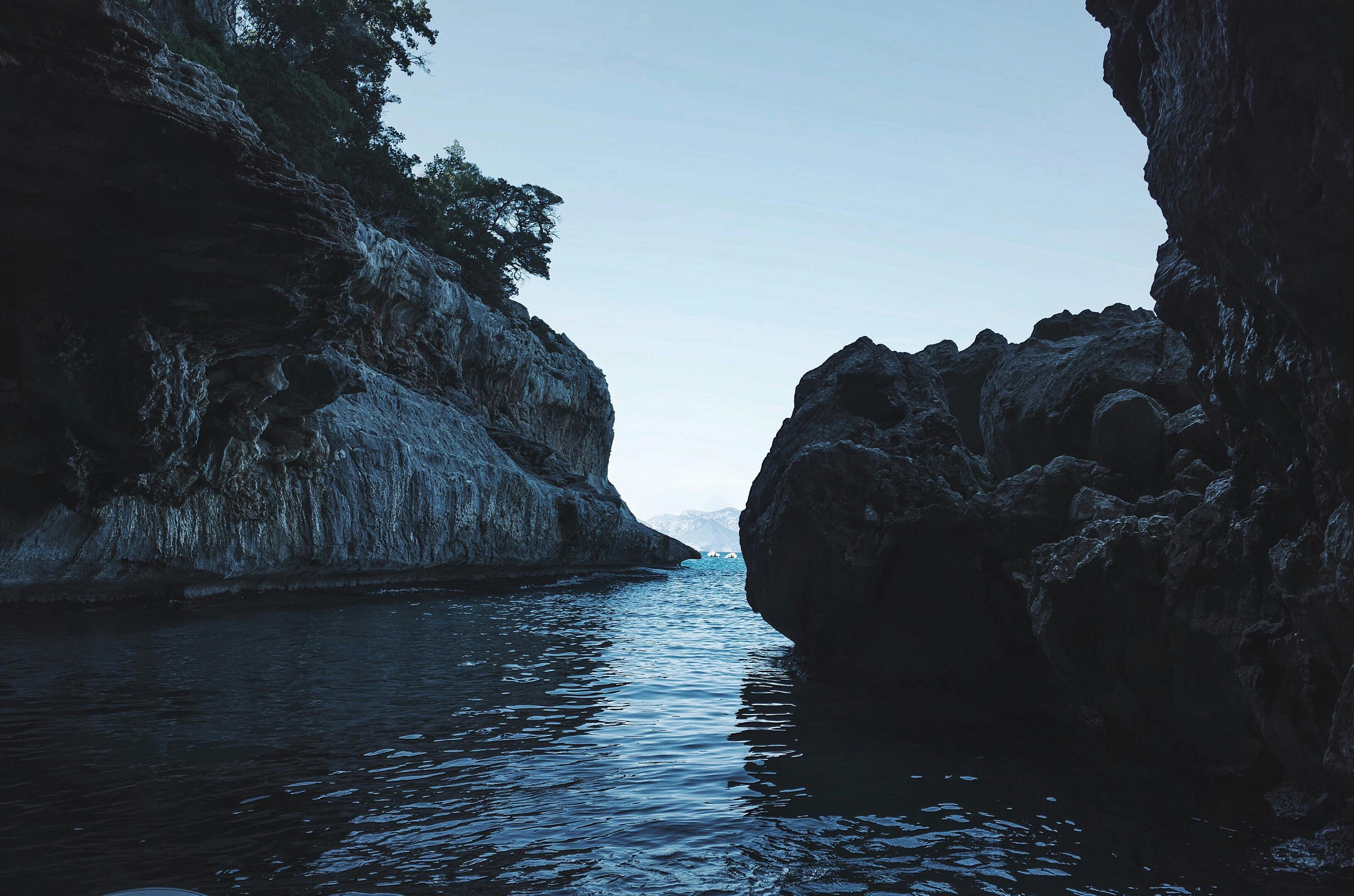
The diesel engine cuts to a idle, and the sudden absence of mechanical noise forces your ears to adjust. All that remains is the rhythmic slapping of wavelets against fiberglass and the piercing cry of a peregrine falcon echoing off the rock face ahead. You float in the shadow of a colossal, jagged gorge—a narrow slit in the island's southern coastline that measures barely 5 meters (16 feet) across at its narrowest point. The skipper gestures for silence as the bow nudges forward into the darkness of the canyon. Suddenly, the cliffs fall away, opening into a hidden, amphitheater-like bay. Sheer limestone walls, soaring 35 meters (115 feet) straight up into the glare, cradle a crescent of smooth, white pebbles. The water below is so transparent it appears as liquid glass, revealing a mosaic of polished stones beneath the surface. Stiniva Cove, once a secret refuge for Illyrian pirates evading Roman galleys, matters deeply today because it offers something increasingly rare on the Dalmatian coast: an uncompromised, geological sanctuary where human footprint is temporarily suspended by the sheer power of the rock.
Why Stiniva Cove Embodies Primal Seclusion
Stiniva Cove is not merely a beach; it is a monumental geological fault line that solves the ancient, existential problem of survival on a hostile sea. The cove was formed when a massive tectonic collapse severed a section of the island’s karst plateau, allowing the Adriatic to flood the resulting canyon. For early inhabitants, this tight maritime chokepoint served as a perfect defensive mechanism—the narrow entrance prevented hostile warships from entering, while the towering vertical walls neutralized the destructive force of the fierce southern jugo wind. In antiquity, local sailors utilized Stiniva as a natural hurricane hole; even today, when the open sea churns with 3-meter (10-foot) waves, the water inside the cove remains perfectly placid. The engineering of the space is entirely organic. The surrounding cliffs are composed of dense Cretaceous limestone, marked by sharp karren—the deeply furrowed ridges carved by centuries of acid rain. This porous rock absorbs the acoustic energy of the wind, transforming the cove into a natural anechoic chamber where sounds are muffled rather than amplified. It fulfills a profound modern psychological need, offering travelers a physical boundary that literally and metaphorically shuts out the chaos of the modern world.
The Best Time to Experience Stiniva Cove
To witness Stiniva Cove in its most transcendent state, plan your arrival between May 18–June 12. During this precise window, the morning air temperature rests at a comfortable 21°C–24°C (70°F–75°F), the sea is brilliantly clear, and the dense crowds of midsummer have not yet materialized. Book a water taxi from the town of Komiža to arrive precisely at 9:00–10:30 AM; at this hour, the sun sits at a low eastern angle, sending a sharp, dramatic beam of light directly into the gorge, illuminating the mist that clings to the cliff walls. A secondary window occurs from September 10–28, when the water reaches its peak warmth of 24°C (75°F). You must aggressively avoid July 15–August 20. During these weeks, local authorities cap the number of boats allowed inside the narrow gorge at 10 at a time, yet taxi boats still queue in long lines outside the entrance. The cove’s intimate acoustics are ruined by overlapping voices and splashing, and the pebble beach becomes densely packed..
Approximate Budget for a 7-Day Trip
Accessing Stiniva Cove requires staying on the island of Vis, as the cove is entirely inaccessible by car and requires a specialized boat landing. This budget assumes a comfortable, adventure-focused trip for two people, factoring in the logistical necessity of private or semi-private maritime transport.
- • Accommodation: €140–€200 per night (traditional stone apartment in the Komiža harbor district, providing walking access to early-morning boat docks)
- • Food: €85 per day (breakfast of espresso and a local kroštula pastry €7, lunch of grilled sardines and fresh bread at a Komiža konoba €18, dinner of kompiški pladanj—a local mixed seafood tray—at a seaside restaurant €60)
- • Transportation: €160 total (return Jadrolinija ferry from Split to Vis town €35 per person; private water taxi from Komiža to Stiniva Cove €30 per person; local island bus from Vis to Komiža €8 per person)
- • Attractions: €80 total (round-trip private boat taxi to Stiniva €60 for two; snorkeling gear rental in Komiža €20 for the week)
- • Miscellaneous: €65 total (a jar of locally foraged wild sage honey €15, high-grip water shoes for the slippery pebbles €25, artisanal ceramic olive oil dish €25)
Total: €1,440–€2,000 for one week (for two people)
6 Essential Stiniva Cove Experiences
- Transiting the Dark Gorge: Sit at the very front of the water taxi as it enters the 50-meter (164-foot) long canyon. Keep your hands inside the boat; the gap is so narrow that the cliff walls brush the gunwales. Look up to see the sky reduced to a thin, bright strip of azure, framing the jagged limestone overhang.
- Swimming the Acoustic Drop-Off: Swim 15 meters (50 feet) straight out from the center of the pebble beach. The seafloor, which is easily visible in the shallows, suddenly vanishes into a sheer vertical plunge. Tread water at the edge of this submarine cliff and look down into the deep blue void.
- Listening to the Subterranean Drip: Beach yourself on the smooth white stones at the far end of the cove. Close your eyes and focus on the acoustic physics of the space. A single drop of water falling from the cliff face above creates a sharp, resonant ping that echoes off the curved limestone walls for three to four seconds.
- Feeling the Thermal Shift: Stand waist-deep in the water right at the mouth of the gorge. You will feel a distinct, icy current flowing into the cove from the open sea, colliding with the sun-warmed water trapped against the inner beach. The temperature differential is stark and physically palpable.
- Kayaking the Narrows: Rent a sea kayak in Komiža and paddle the 3.5-kilometer (2.2-mile) route along the southern coast. Approaching Stiniva by human power fundamentally changes the experience; you control your speed, allowing you to drift silently through the entrance without the wake and noise of a motor.
- Observing the Cliff-Nesting Birds: Bring binoculars and scan the upper crevices of the 35-meter (115-foot) walls. The sheer inaccessibility of the cliffs makes Stiniva a vital breeding ground for Eleonora's falcons and peregrines. Watch them ride the thermal updrafts effortlessly just above the canyon rim.
3 Hidden Gems Most Travelers Miss
- • The Submerged Stalactite Cave: On the right side of the cove, just past the main gorge entrance, lies a partially submerged grotto at sea level. It is overlooked because the entrance is barely 1 meter (3 feet) above the waterline and looks like a mere rock indentation. Swim inside; the cavern extends 10 meters (33 feet) into the cliff, featuring delicate, fossilized stalactites hanging from the ceiling just above the waterline. Access is highly dependent on a calm sea; enter only when the water outside is completely flat.
- • The Illegal Fish Trap Remnants: At the extreme left edge of the pebble beach, partially buried under smooth stones, lie the rusted remains of a heavy iron winch system. This is a relic of an old, now strictly illegal, parangal trap that was once used to corner migrating fish inside the cove. It is overlooked because it looks like modern debris, but it actually dates back to the early 20th century and offers a tactile connection to the island's contentious fishing history.
- • The Cliff-Top Fault Panorama: Most visitors experience Stiniva only from below. A rugged, unmarked goat trail begins 400 meters (1312 feet) east of the cove and climbs 120 meters (394 feet) up the coastal escarpment. It is overlooked because the ascent requires scrambling on loose scree and is not advertised by any tour operator. Reach the summit, and you are rewarded with a dizzying, top-down view directly down the 5-meter gorge into the cove—a perspective that perfectly illustrates the geological fault line.
Cultural & Practical Tips
- • When addressing the local boatmen who navigate the tricky entrance, use "Dobar dan" (DOH-bar dahn)—Good day. These skippers possess an intimate, generational knowledge of the cove's tidal quirks; treating them with respect ensures a safer, more deliberate passage.
- • Do not take the white pebbles. It is not just a romantic notion; removing geological material from protected natural monuments carries a hefty fine issued by the local maritime authorities. Admire the smooth, oval limestone rocks, but leave them exactly where they rest.
- • Water shoes are non-negotiable. The beach is composed entirely of smooth, rounded cobbles rather than soft sand. Walking barefoot is painfully awkward, and entering the water requires navigating a slippery, algae-coated rocky shelf.
- • Photography inside the gorge is notoriously difficult due to the extreme contrast between the dark canyon walls and the bright open sky. Expose for the cliffs, not the sky, and use a polarizing filter to cut the harsh reflections off the water's surface.
- • Drone usage is heavily restricted. Stiniva Cove falls under strict nature protection laws, and flying a drone inside the gorge or directly over the beach is illegal without a complex, hard-to-obtain permit from the Ministry of Environmental Protection. Leave the drone in your accommodation.
- • Monitor the jugo wind obsessively. Even on a sunny day, a southerly wind creates a dangerous swell that crashes directly into the narrow mouth of the gorge, creating a violent surge channel. If the local flags in Komiža are flying yellow or red, cancel your boat trip immediately.
Conclusion: Travel with Stewardship, Not Just Spectacle
To visit Stiniva Cove is to step into a space that actively resists human domination. The towering cliffs do not care about your itinerary, and the narrow gorge does not accommodate convenience. This cove was not designed for mass consumption; it was carved by tectonic violence and shaped by millennia of saltwater erosion to exist entirely on its own terms. Traveling with stewardship means accepting this lack of entitlement. When you lower your voice to match the acoustic hush of the limestone amphitheater, when you refuse to drop an anchor on the fragile posidonia seagrass, and when you choose the physical exertion of a kayak over the passive rumble of a motor, you are actively defending the cove’s primordial integrity. Slow down. Let the sheer scale of the rock face humble you. In an era where every landscape is optimized for the perfect social media frame, Stiniva offers a far more profound reward: the chance to simply disappear into the stone.