
Kumano Kodo: Where Ancient Imperial Pilgrimage Meets Sacred Forest Silence
The first rays of sunlight filter through the cryptomeria canopy at 6:30 AM, illuminating a path paved not by machines but by 1,000 years of pilgrim sandals. Your boots land on moss-slicked cobblestones—each one placed by hand centuries ago—as the only sounds are your own breathing and the distant rush of a mountain stream. Somewhere ahead, a Jizo statue draped in a red bib marks the way, its stone face turned eternally toward the Kumano Sanzan—three grand shrines that have drawn emperors and ascetics alike since before Kyoto became Japan's capital. This is the Kumano Kodo, one of only two pilgrimage routes in the world designated as a UNESCO World Heritage site (the other is the Camino de Santiago) . You are not merely hiking; you are walking into a landscape that the Japanese have called the "abode of the gods" for millennia .
Why Kumano Kodo Embodies a Millennium of Spiritual Endurance
Long before the word "pilgrimage" conjured images of Spain's cathedrals, retired emperors—including Emperor Kazan in 986 CE and Emperor Go-Toba—undertook the arduous journey from Kyoto to Kumano's sacred peaks. They walked not for exercise but for purification, believing that the rugged mountains of the Kii Peninsula housed shintai (physical objects of worship) in the form of massive rocks, ancient trees, and thundering waterfalls. The pilgrimage solved a profound spiritual problem: how to experience the divine not through distant prayer but through physical exhaustion and immersion. The Nakahechi route became the imperial highway, a multi-day trek crossing passes that offered both suffering and revelation . Today, the network spans several distinct paths: the Nakahechi (western approach, most popular), the Kohechi (northern route from Koyasan, 70 kilometers crossing three passes over 1,000 meters), the Iseji (eastern coastal route from Ise Jingu), and the Kiiji (southern coastal path) . In July 2004, UNESCO recognized this system as a "Sacred Site and Pilgrimage Route," cementing its global significance .
The Best Time to Experience Kumano Kodo
The Kii Peninsula enjoys a humid subtropical climate, but conditions vary dramatically. The optimum windows are April 1–May 15 (daytime highs 15–22°C / 59–72°F) and October 15–November 25 (16–22°C / 61–72°F with spectacular autumn colors). For cherry blossoms, target the first week of April; for peak foliage, November 1–20 . Avoid June 15–July 15 (rainy season: 250–350mm of monthly rainfall, slippery trails) and August 10–18 (Obon week combined with 32°C / 90°F heat and 80% humidity) . The best time to start your daily walk is 6:30–7:30 AM, before the mountain heat intensifies and to reach accommodations before sunset—particularly essential between November and February when darkness falls by 4:30 PM . For current trail conditions, guided tour bookings, and printable route maps: www.tb-kumano.jp/en/.
Approximate Budget for a 7-Day Kumano Kodo Pilgrimage
This budget assumes a self-guided 6-day, 5-night walk on the Nakahechi route with two nights in Tanabe City. Prices in Japanese Yen (JPY); USD approximate at ¥150 = $1.
- Accommodation: ¥9,000–¥35,000 per night (Minshuku or guesthouse along the trail: ¥9,000–¥15,000 with two meals; Hatago Masara in Takahara: ~¥15,000 with dinner, breakfast, and packed lunch; luxury ryokan near Yunomine Onsen: ¥25,000–¥35,000 with kaiseki and private onsen) .
- Food: ¥3,000–¥5,500 per day (If lodging includes dinner/breakfast, budget only lunch: ¥1,000–¥2,000 for onigiri or soba from a trailside shop; extra for Kumano beef or maguro (tuna) dinner in Tanabe: ¥3,000–¥5,000) .
- Transportation: ¥6,000–¥10,000 total. Meiko Bus from Kii-Tanabe Station to trailheads (e.g., Takijiri-oji): ¥1,200–¥2,000. Return bus from Hongu to Tanabe: ¥2,000. Optional luggage forwarding between lodges: ¥1,500–¥2,000 per bag.
- Attractions: Trail access: free. Kumano Hongu Taisha: free admission (donation ¥300). Kumano Nachi Taisha + Seiganto-ji Temple + Nachi Falls: ¥1,300 combined entry. Yunomine Onsen public bath (Tsuboyu—private stone bath for small groups): ¥850 for 30 minutes . Oyunohara (giant torii gate): free.
- Miscellaneous: ¥2,000–¥4,000. Pilgrimage stamp book (nokyo-cho): ¥1,500–¥2,000; stamps at each shrine: ¥300–¥500 each. Bamboo flasks from Yunomine Onsen: ¥1,500–¥3,000. Hiking pole rental: ¥500/day.
- Total (7 days, mid-range lodging with luggage transfer, per person excluding international flights): ¥90,000–¥135,000 ($600–$900 USD)
7 Essential Kumano Kodo Experiences
- Walk the Classic Nakahechi Trek from Takijiri to Hongu: This 38-kilometer (23.6-mile) route is typically completed over three days. Day one climbs 500 meters from Takijiri-oji to Takahara (3–4 hours); day two continues through the Hyakken-gura pass to Chikatsuyu (5–6 hours); day three reaches Kumano Hongu Taisha via the Hosshinmon-oji gate (5–6 hours). Wear waterproof boots with ankle support—the mossy stone steps become treacherously slick after rain .
- Soak in Tsuboyu at Yunomine Onsen: This 1,800-year-old hot spring features a small stone bath in a private hut on the riverbank. For ¥850 per 30 minutes (up to four people), you can lower yourself into 42°C (108°F) mineral water that bubbles directly from the earth. No showers, no frills—just you, steam, and the sound of the creek .
- Experience Sunrise at Kumano Hongu Taisha: Arrive at this grand shrine by 5:30 AM (June–August) or 6:30 AM (September–November) to watch the sun rise behind the 34-meter (112-foot) tall Oyunohara torii gate—Japan's largest. The shamen (shrine priest) begins morning prayers at 7:00 AM; stand quietly at the edge of the haiden (worship hall) to observe.
- Collect Red Stamps at Every Prince Shrine: The Nakahechi route has 99 oji (subsidiary shrines) marking the way. At each, purchase a goshuin (red stamp) for your nokyo-cho (stamp book). The stamps accumulate into a colorful visual diary of your pilgrimage—a tradition dating to the Heian period .
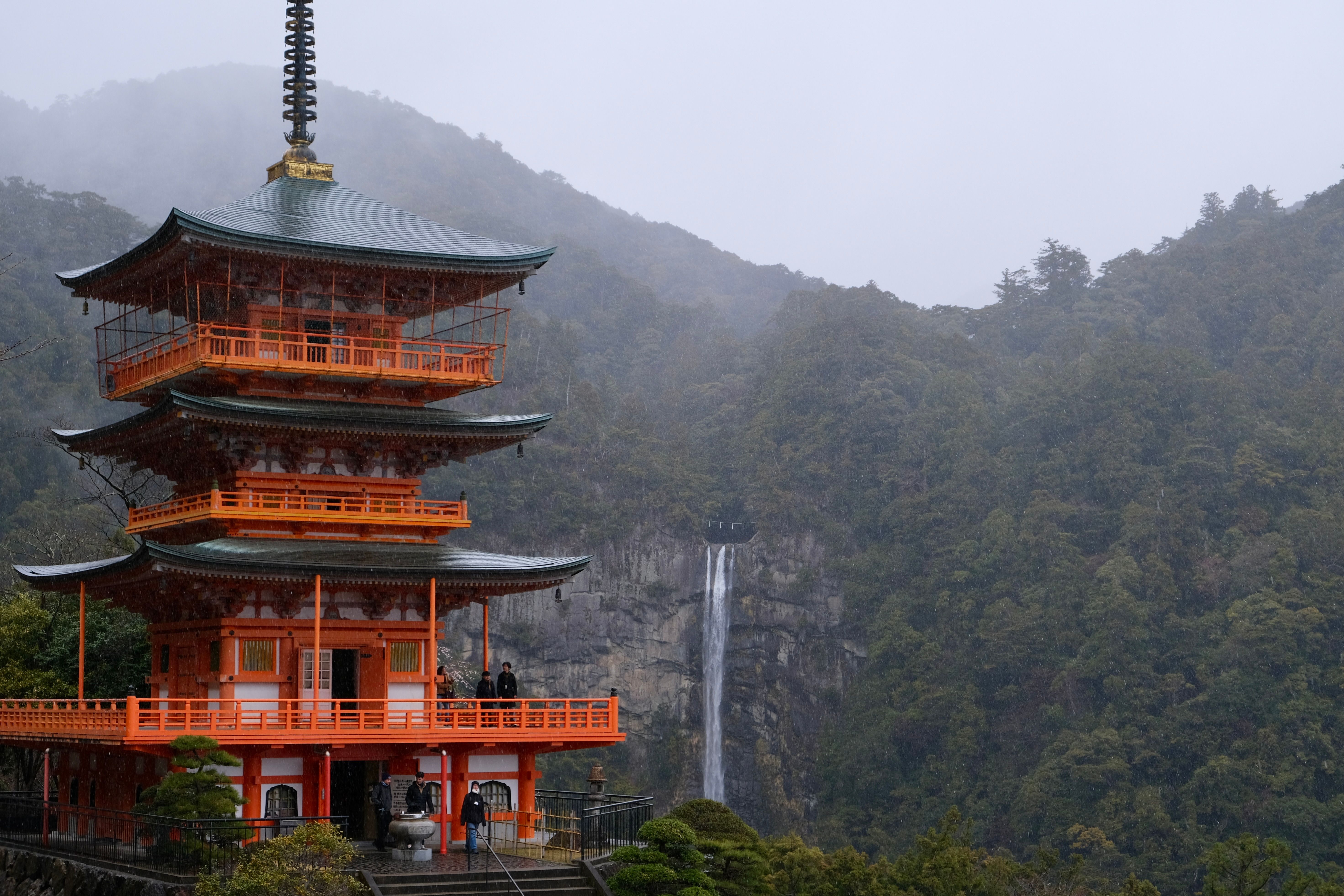
- Hike the Daimonzaka Cobblestone Slope: Located on the Iseji route, this 600-meter stone stairway passes beneath 200-year-old cedars leading to Seiganto-ji Temple and Nachi Falls—at 133 meters (436 feet), Japan's tallest single-drop waterfall. The contrast of vermilion pagoda, white water, and green canopy is the country's most photographed pilgrimage scene .
- Stay at a Minshuku and Eat With a Local Family: Book a night at a family-run guesthouse like Minshuku 3rd Place in the Nonaka area. Evening conversation—often conducted through translation apps—reveals local stories no guidebook contains. Meals are shojin ryori (Buddhist vegetarian) or local mountain vegetables and river fish .
- Find the Secret "Jizo Who Sweats": Between Nakahechi and Kohechi routes, a small, unmarked Jizo statue perpetually glistens with moisture. Locals call it "Asekaki Jizo" and whisper that it sweats because it carries the sins of pilgrims who fail to complete their journey. The exact coordinates are deliberately unmap; ask at Koguchi guesthouses for directions.
3 Hidden Gems Most Travelers Miss
- Koguchi's Abandoned Tea House (Koguchi Chaya): Between the Hyakken-gura pass and Kumano Hongu Taisha, a collapsed Edo-period tea house lies just off the main trail. Only the foundation stones and a single weathered wooden beam remain, but at 4:30 PM in autumn, the light transforms the ruin into a meditation on impermanence. No signage—watch for a small stone marker with faded kanji on your left about 1 kilometer before Koguchi village.
- Yunomine's DIY Riverbed Onsen: At Yunomine Onsen, locals dig their own small baths into the gravel riverbed where hot spring water seeps up through the stones. Arrive with a small shovel (or use your hands) to create a 40°C (104°F) pool just large enough for two people. Best at 8:00 PM, when the crowds have cleared and you can gaze at the stars. No cost, no reservation—just a flashlight and patience .
- The Miniature Torii at Fushiogami-oji: This 13th-century oji sits at the exact point where ancient pilgrims, after crossing the Kumano River, would first glimpse the sacred peaks. A 1.2-meter (4-foot) tall torii gate marks the spot—so small it's easily mistaken for a grave marker. Touch the red gate and face east: you're seeing the same sunrise that Emperor Go-Shirakawa saw in 1182 CE. Located 10 minutes off the main Nakahechi trail near the Yunomine Onsen turnoff.
Cultural & Practical Tips for Kumano Kodo
- Dual Pilgrimage Recognition: If you have already completed the Camino de Santiago, you can register as a "Dual Pilgrim" when you finish the Kumano Kodo—receiving a special certificate recognizing your completion of both UNESCO pilgrimage routes. Register at the Kumano Hongu Heritage Center .
- Essential Phrase: "Nakahechi wa doko desu ka?" (Where is the Nakahechi route?) — Pronounced: Nah-kah-heh-chee wah doh-koh dess kah? Useful when trail markers become ambiguous.
- Etiquette at Shrines: Bow once before passing under a torii gate, walk to the side of the path (center is reserved for the gods), and bow once again after exiting. At Kumano Hongu Taisha, clap twice, bow twice, and offer a silent prayer.
- Trail Etiquette: When meeting another pilgrim, nod silently—verbal greetings break the meditative atmosphere. Descending walkers yield to ascending walkers (they're working harder). Never walk through private farmland; stick to marked trails.
- What to Pack: Waterproof boots (essential—trails remain slick even after days without rain), quick-dry layers (mountain humidity is relentless), a headlamp (trail sections after 4:00 PM are unlit), and at least 1.5 liters of water between water sources. Bear bells are recommended—black bears inhabit the peninsula (attacks are rare, but sightings occur).
- Luggage Forwarding: Use Kumano Kodo Tourist Bureau's luggage delivery service (¥1,500–¥2,000 per bag). Drop your main pack at your lodging by 8:30 AM; it arrives at your next stop by 3:00 PM. This allows you to walk with only a daypack .
- Leave No Trace: There are no trash bins on the trail. Pack out everything—including used goshuin-cho stamps, food wrappers, and toilet paper. Many onsen prohibit soap (springs are natural mineral waters); rinse only with water.
Conclusion: Travel with Transformation, Not Just Photos
When you walk the Kumano Kodo, you will eventually stop checking your phone. Not because the signal fades—though it will—but because something older and quieter begins to claim your attention. The way a Jizo statue's stone cheek has been softened by a thousand hands. The way light falls through 800-year-old cedars exactly as it fell for a retired emperor who walked this same path, in sandals, with no promise of comfort at the day's end. A pilgrimage is not a hike. A hike measures distance; a pilgrimage measures inner shift. You will arrive at Kumano Hongu Taisha with sore legs and damp boots, and you will stand before that towering torii gate, and you will understand: the destination was never the point. The point was the gravel that worked its way into your socks, the stranger who shared their water at a pass, the small red stamp in your book that represents a moment you chose to be fully present. Walk slowly. Listen. The gods are not in the shrines—they are in the silence between your footsteps.