
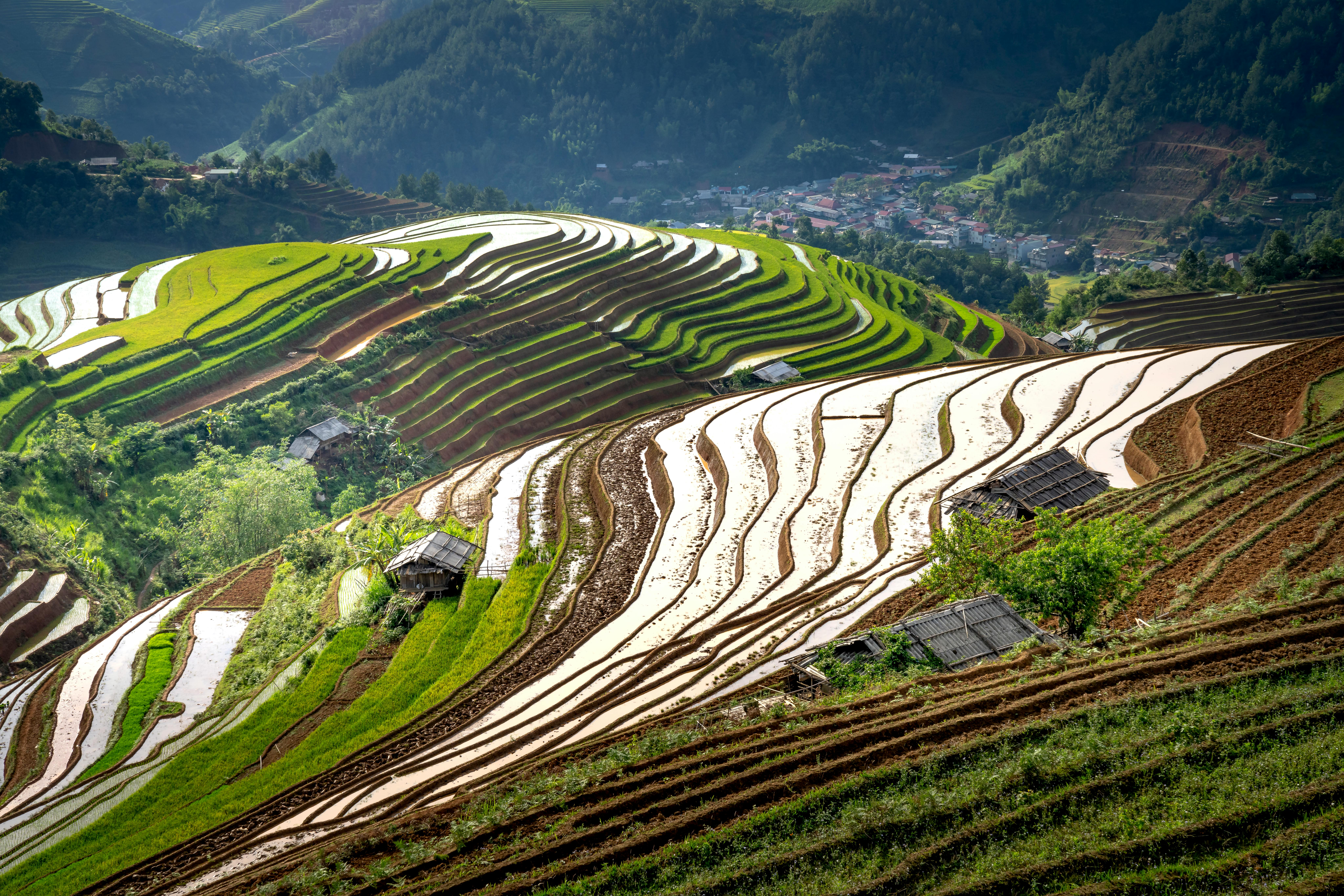
Longji Rice Terraces: Where Ancient Agriculture Meets Mountain Majesty
Dawn breaks over the Dragon's Backbone—golden light spilling across thousands of curved rice paddies that cascade down mountainsides like liquid stairways to the sky. At 6:15 AM in Ping'an Village, you stand at the Seven Stars with Moon viewpoint, watching mist rise from terraces built 650 years ago by Zhuang and Yao ethnic minorities who transformed steep 30–50 degree slopes into 66 square kilometers of agricultural artistry. The air carries the earthy scent of wet soil and blooming osmanthus; water flows through an intricate irrigation system of bamboo pipes and stone channels that has sustained communities since the Yuan Dynasty. Each terrace—some no wider than 1 meter, others stretching 200 meters along contour lines—represents generations of wisdom about soil conservation, water management, and harmonious coexistence with dramatic topography. This is not merely scenery; it is a living testament to human ingenuity, where every curve follows the mountain's natural geometry, where every harvest celebrates a partnership between culture and landscape that has endured for over two dozen generations.
Why Longji Rice Terraces Embodies Sustainable Genius
The Longji Rice Terraces—literally "Dragon's Backbone"—represent one of humanity's most sophisticated examples of sustainable mountain agriculture, constructed beginning in 1368 AD during the Yuan Dynasty by Zhuang and Yao ethnic minorities who migrated to Guangxi's rugged highlands [[1]]. Over six centuries, these communities engineered a terracing system that climbs from 300 meters to 1,100 meters elevation across 66 square kilometers, transforming slopes too steep for conventional farming into productive rice fields through contour-line construction that prevents soil erosion and maximizes water retention [[4]]. The terraces solve a fundamental challenge: how to feed communities in mountainous terrain where flat land comprises less than 3% of the landscape. The engineering is remarkable: each terrace wall—built from local stone and compacted earth—stands 0.5–2 meters tall, with drainage channels precisely graded to maintain water depth of 5–15 centimeters essential for rice cultivation [[7]].
The irrigation system represents hydraulic genius: mountain springs feed a network of bamboo aqueducts and stone channels that distribute water from highest terraces downward, with overflow returning to streams without causing erosion. This gravity-fed system requires no pumps or external energy, functioning identically today as it did in the Ming Dynasty. Cultural significance extends beyond agriculture: the terraces embody Zhuang and Yao cosmology, where mountain, water, and rice form a sacred triad; annual festivals like the Hair-Combing Ceremony (Yao) and Rice Sprout Festival (Zhuang) celebrate this relationship. The terraces fulfill a profound modern need: demonstrating how traditional ecological knowledge can address contemporary challenges of food security, climate adaptation, and cultural preservation in fragile mountain ecosystems.
The Best Time to Experience Longji Rice Terraces
To witness the Longji Rice Terraces at their most spectacular, seasonal timing transforms the experience. The optimal visiting windows are May 20–June 25 for water-filled terraces that mirror sky and clouds, and September 15–October 20 for golden harvest landscapes with ripe rice glowing amber under autumn sun. During late spring, temperatures at terrace elevation (800–1,000 meters) range from 15–24°C (59–75°F) with frequent morning mist creating ethereal photography conditions; autumn brings crisp air at 12–22°C (54–72°F) with 80% probability of clear skies perfect for panoramic views [[12]].
For the most magical photography, position yourself at viewpoints between 6:00–7:30 AM for sunrise or 5:00–6:30 PM for golden hour—these windows offer soft, directional light that accentuates the terraces' curved geometry and creates dramatic shadows across water-filled paddies. The period immediately following light rain (typically 1–2 days after) offers enhanced mist effects that partially veil distant terraces, creating the layered depth characteristic of classical Chinese landscape paintings.
Avoid: July–August peak monsoon when heavy rains can cause landslides, humidity exceeding 90%, and leeches in wet grass; also avoid Chinese national holidays (October 1–7, Spring Festival in late January/February) when visitor numbers exceed 20,000 daily, overwhelming narrow village paths and viewpoint platforms.
Approximate Budget for a 7-Day Trip
Longsheng County offers exceptional value for travelers seeking authentic cultural immersion. This budget assumes moderate comfort with guesthouse accommodation in terrace villages, local ethnic cuisine, and comprehensive exploration. All prices in Chinese Yuan (CNY/¥).
- Accommodation: ¥120–¥350 per night (traditional wooden guesthouses in Ping'an or Dazhai villages with terrace views; budget homestays from ¥80, boutique eco-lodges ¥400–700)
- Food: ¥80–¥150 per day
- Breakfast: ¥15–25 (rice porridge, steamed corn, pickled vegetables, oil tea)
- Lunch: ¥30–50 (bamboo tube rice, stir-fried mountain vegetables, free-range chicken)
- Dinner: ¥40–70 (Yao-style smoked pork, river fish, wild mushrooms, rice wine)
- Local snacks: ¥10–20 per item (sticky rice cakes, roasted chestnuts)
- Transportation:
- High-speed train to Guilin: ¥300–500 from major cities
- Bus from Guilin to Longsheng: ¥50
- Local minibus to Ping'an/Dazhai: ¥30–40
- Porter service for luggage: ¥50–100 depending on distance
- Attractions:
- Longji Rice Terraces entrance: ¥80 (valid 3 days with fingerprint)
- Guided village tour (Zhuang/Yao culture): ¥120–180
- Traditional craft workshop (embroidery, silver): ¥60–100
- Evening cultural performance: ¥50–80
- Miscellaneous:
- Hiking poles rental: ¥20/day
- Souvenirs (handwoven textiles, silver jewelry): ¥100–300
- Travel insurance: ¥50–100
- Tips for local guides: ¥30–80
Total for 7 days: ¥4,100–5,900 (approximately $560–810 USD)
6 Essential Longji Rice Terraces Experiences
- Sunrise at Seven Stars with Moon Viewpoint: Wake at 5:30 AM and hike 15 minutes from Ping'an Village to this iconic viewpoint where seven curved terraces surround a central pool, resembling stars orbiting a moon. The sunrise between 6:00–7:15 AM illuminates water-filled paddies that mirror the sky, creating a surreal reflection effect. Bring a wide-angle lens to capture the sweeping composition; wear sturdy shoes as morning dew makes stone paths slippery. Allow 45 minutes to fully absorb the scene as light transforms the landscape from silver to gold.
- Trek the Dragon's Backbone Ridge: Follow the 4-kilometer trail connecting Ping'an to Jinkeng (Dazhai) villages, traversing the terraces' highest elevations with panoramic views of the entire system. The 2.5-hour hike passes through Zhuang and Yao settlements, bamboo forests, and viewpoint platforms at 1,000+ meters. Start at 8:00 AM to avoid midday heat; carry water and snacks as services are limited along the ridge. This route reveals the terraces' engineering scale impossible to appreciate from single viewpoints.
- Experience Yao Village Life in Dazhai: Spend a morning in this Yao ethnic minority village famous for women's long-hair tradition—some exceeding 2 meters in length. Observe traditional embroidery techniques, sample oil tea (a savory beverage of fried rice, peanuts, and herbs), and learn about the Hair-Combing Ceremony held annually on the sixth day of the sixth lunar month. Visit 9:00–11:00 AM when women often work on crafts outdoors; ask permission before photographing individuals.
- Photograph the Five Tigers and One Dragon: This viewpoint in Jinkeng features five ridge lines converging like tiger paws around a central peak resembling a dragon's head. Best captured during golden hour (5:00–6:30 PM) when low-angle light accentuates the terraces' curved geometry and creates dramatic shadows. Position yourself on the eastern platform for optimal composition; use a polarizing filter to reduce glare on water-filled paddies and enhance sky contrast.
- Participate in Seasonal Rice Activities: Depending on your visit timing, join local farmers in transplanting rice seedlings (late May–early June) or harvesting golden grain (late September–early October). These hands-on experiences—arranged through guesthouses for ¥80–120—provide authentic cultural immersion while supporting community tourism. Wear clothes you don't mind getting muddy; bring sun protection for field work. The physical connection to agricultural rhythms transforms sightseeing into meaningful participation.
- Stay Overnight in a Terrace-View Guesthouse: Book accommodation with direct terrace views to experience sunrise and sunset without crowds. Traditional wooden guesthouses in Ping'an or Tiantouzhai offer simple but clean rooms (¥150–300) with shared or private bathrooms. Evening brings a different atmosphere: mist settling in valleys, stars emerging above mountain ridges, and the gentle sounds of rural life. Request a room on the upper floor for unobstructed views; many guesthouses serve family-style dinners featuring local specialties.
3 Hidden Gems Most Travelers Miss
- Golden Buddha Peak Sunrise Hike: This 1,100-meter summit—the highest viewpoint in the Longji system—offers 360-degree panoramas of terraces cascading in all directions, yet fewer than 10% of visitors attempt the steep 45-minute climb from Dazhai. The reward: sunrise views where mist fills valleys below while peaks emerge like islands in a sea of clouds. Access: Trailhead near Dazhai village center; free entry; start at 5:00 AM for sunrise; bring headlamp for pre-dawn ascent. Insider tip: Visit during the "sea of clouds" phenomenon (common after light rain) when terraces disappear beneath vapor, creating an otherworldly landscape.
- Ancient Camphor Tree of Ping'an: This 800-year-old tree stands at the village entrance, its massive trunk (4.2 meters circumference) and sprawling branches providing shade for community gatherings. Local legend claims the tree protects the village from natural disasters; Zhuang elders still hold ceremonies beneath its canopy. Access: Located at Ping'an Village entrance; free; best visited 4:00–6:00 PM when soft light filters through leaves. Insider tip: Ask the village elder (often seated nearby) to share stories about the tree's history—many speak basic English and welcome respectful curiosity.
- Hidden Waterfall Trail: A lesser-known path behind Ping'an Village leads to a 25-meter waterfall cascading through bamboo forest, with natural pools suitable for cooling dips after hiking. The 30-minute trail follows an old irrigation channel, revealing how water management integrates with natural features. Access: Ask guesthouse staff for directions; trailhead near village rear; free; best visited 10:00 AM–2:00 PM when sunlight reaches the falls. Insider tip: Bring water shoes for slippery rocks; the pool's temperature remains a refreshing 16°C (61°F) year-round.
Cultural & Practical Tips
- Respect Ethnic Traditions: Zhuang and Yao communities welcome visitors but value cultural sensitivity. Always ask permission before photographing individuals, especially elders or women in traditional dress. Remove shoes when entering homes; accept offered tea as a gesture of hospitality. Learn basic greetings: "Nǐ hǎo" (nee how) = Hello; "Xièxie" (shieh-shieh) = Thank you.
- Footwear and Terrain: Terrace paths consist of uneven stone steps, muddy trails, and steep inclines. Wear hiking shoes with excellent traction; avoid sandals or smooth-soled footwear. During rainy season (June–July), bring gaiters to protect against leeches in wet grass. Trekking poles (rentable for ¥20/day) reduce knee strain on descents.
- Weather Preparedness: Mountain weather changes rapidly; temperatures drop 5–8°C from Guilin city to terrace elevation. Pack layers regardless of season: lightweight rain jacket, fleece for mornings/evenings, sun protection for midday. Spring brings frequent drizzle that enhances misty atmospheres but requires waterproof gear.
- Photography Guidelines: Sunrise and sunset offer optimal light for terrace photography; midday sun creates harsh shadows. Bring a polarizing filter to reduce glare on water surfaces and enhance sky contrast. Drones require advance permission from Guangxi Civil Aviation Authority—apply 2 weeks ahead at Longsheng tourism office.
- Physical Considerations: Exploring the terraces involves significant elevation changes (300–1,100 meters) and uneven terrain. Allow time for acclimatization; ascend gradually to avoid altitude discomfort. The full ridge trek covers 4 kilometers with 400+ meters elevation gain—assess fitness level honestly and turn back if needed.
- Sustainable Tourism Practices: The terraces remain working agricultural land. Stay on designated paths to avoid damaging crops; never litter, even biodegradable items. Support community economies by purchasing crafts directly from artisans and eating at family-run guesthouses. Consider contributing to the Longji Conservation Fund (optional ¥20 at entrance) that supports terrace maintenance and cultural preservation.
Conclusion: Travel with Reverence, Not Just Checklists
The Longji Rice Terraces invite you to slow down—to walk their stone paths not as a tourist collecting photos but as a guest in a landscape shaped by centuries of patient wisdom. As you stand before curves that follow the mountain's natural geometry, as you watch farmers tend paddies using techniques unchanged since your great-grandparents' generation, remember that this landscape teaches harmony: between human need and ecological limits, between tradition and adaptation, between effort and grace. Travel here with reverence—respect the fields that feed communities, support ethnic cultures through mindful engagement, leave no trace on paths worn by generations of footsteps. The true gift of Longji lies not in photographing every viewpoint but in allowing the terraces to recalibrate your perspective—reminding you that humanity's greatest achievements are not the structures we build but the wisdom to cultivate beauty while sustaining life. Breathe deeply. Walk slowly. Let the Dragon's Backbone teach you that enduring landscapes emerge not from conquest but from collaboration with the earth.