
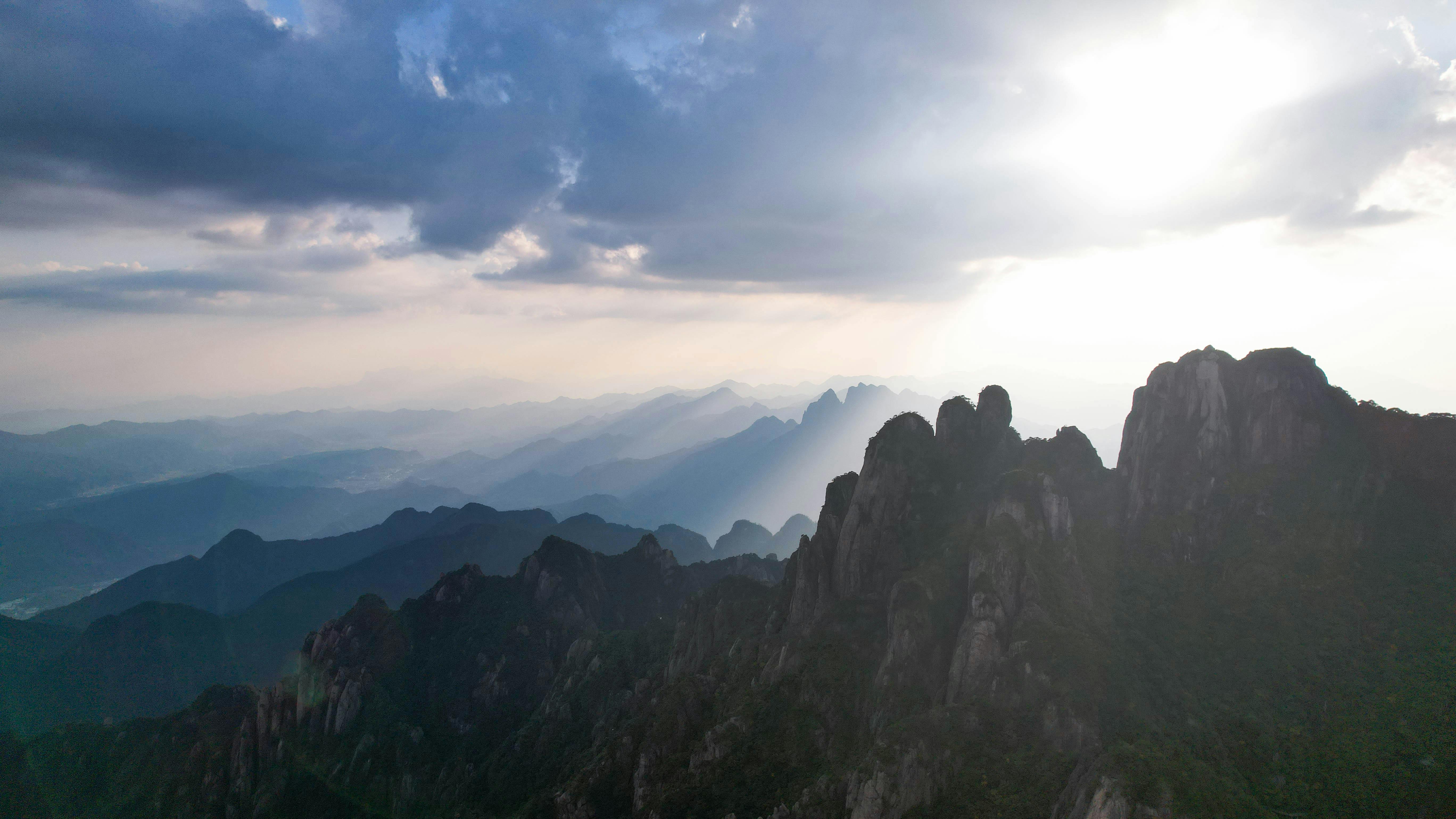
Mount Tai Sunrise: Where Ancient Pilgrimage Meets Celestial Dawn
Pre-dawn darkness blankets the 7,200 stone steps of Mount Tai—your breath fogs in the crisp 8°C (46°F) air as pilgrims move silently upward, headlamps casting dancing shadows on inscriptions carved by emperors over two millennia. At 1,545 meters (5,069 feet) above sea level, you stand on Jade Emperor Peak, the sacred summit where heaven and earth were believed to converge in ancient Chinese cosmology. The eastern horizon begins to blush—amber bleeds into rose, then molten gold—as the sun crests the Yellow Sea 200 kilometers (124 miles) away, illuminating a sea of clouds that transforms granite peaks into floating islands. Temple bells ring from the Azure Clouds Pavilion; incense smoke spirals into the newborn light; somewhere, a monk chants the Morning Sutra. This is not merely a sunrise; it is a ritual unchanged since the first emperor, Qin Shi Huang, ascended these slopes in 219 BC to perform the Feng and Shan sacrifices. Mount Tai matters because it connects you to an unbroken chain of human wonder—where every dawn reaffirms that some journeys are measured not in kilometers climbed, but in perspectives transformed.
Why Mount Tai Sunrise Embodies Sacred Mountain Tradition
Mount Tai (Taishan) represents the spiritual axis of Chinese civilization—a mountain so profoundly significant that emperors performed the Feng and Shan ceremonies here to legitimize their rule, and poets, scholars, and pilgrims have climbed its slopes for over 3,000 years. Designated a UNESCO World Heritage Site in 1987, the mountain encompasses 426 square kilometers (164 square miles) of cultural and natural treasures, with over 1,800 stone inscriptions documenting visits from Confucius to Mao Zedong. The traditional ascent follows the Imperial Route: 7,200 hand-carved stone steps ascending 1,300 vertical meters (4,265 feet) from Red Gate (Hongmen) to South Heaven Gate (Nantianmen), a pilgrimage that tests both body and spirit. Along the way, you pass the Mid-Heaven Gate (Zhongtianmen) at 847 meters (2,779 feet), the Eighteen Bends—a steep section of 1,594 steps carved at a 45-degree incline—and the Blue Clouds Temple, where Ming Dynasty murals depict celestial processions. The mountain solved a profound human need: creating a physical bridge between the mortal realm and the divine. Taoist, Buddhist, and Confucian traditions converge here, with 22 temples, 97 ruins, and 819 stone tablets preserving centuries of spiritual practice. The sunrise viewing platform at Jade Emperor Peak (Yuhuang Ding) was engineered with precise eastern orientation to capture the first light of the solstices—a feat of ancient astronomical knowledge. Modern geology reveals Mount Tai's granite core formed 2.5 billion years ago, making it one of Earth's oldest exposed rock formations; this geological antiquity reinforces its cultural status as a symbol of endurance and stability in Chinese philosophy.
The Best Time to Experience Mount Tai Sunrise
Witnessing Mount Tai's legendary sunrise requires strategic timing to balance weather clarity, crowd levels, and safety. The optimal windows run from April 20 through May 30 and September 15 through October 28, when temperatures at the summit range between 5-15°C (41-59°F) and atmospheric conditions frequently produce the famous "sea of clouds" phenomenon. During these periods, sunrise occurs between 5:15-5:45 AM in spring and 5:50-6:20 AM in autumn—arrive at Jade Emperor Peak by 4:30 AM to secure a viewing spot on the 12-meter (39-foot) observation platform. Clear mornings after light rain offer the highest probability of dramatic cloud formations; check the Taishan Weather Station forecast (updated hourly) before ascending. Summer (June-August) brings frequent fog and thunderstorms that obscure sunrise views, plus summit temperatures reaching 25°C (77°F) with humidity that makes the stone steps slippery. Winter (December-February) should be approached with extreme caution—summit temperatures plunge to -15°C (5°F), ice forms on steps creating dangerous conditions, and the cable car occasionally suspends operations during heavy snow. For the most authentic experience, begin your ascent at midnight from Red Gate, allowing 4-5 hours to reach the summit for dawn; this traditional pilgrimage rhythm lets you experience the mountain's spiritual atmosphere before crowds arrive. Always verify current conditions, cable car schedules, and sunrise times at the official tourism portal: www.taian.gov.cn
Approximate Budget for a 7-Day Trip
The following budget reflects mid-range travel standards for experiencing Mount Tai sunrise and exploring Shandong Province, based on current 2026 pricing in Chinese Yuan (RMB) with USD equivalents. This estimate assumes comfortable accommodations, local dining, public transportation with one private driver day, and full access to Mount Tai's attractions including cable car and guided cultural tours.
-
• Accommodation: ¥280-480 ($40-68) per night for boutique hotels in Tai'an city center or mountain guesthouses near South Heaven Gate (book summit lodgings months ahead)
• Food: ¥130 per day (breakfast ¥25—congee and steamed buns, lunch ¥45—noodle soup and vegetable dumplings, dinner ¥60—Shandong specialties like braised sea cucumber and Pancake rolls)
• Transportation: High-speed rail Beijing-Tai'an ¥185 ($26); Tai'an train station to Red Gate taxi ¥25 ($4); Mount Tai cable car (Mid-Heaven to South Heaven Gate) ¥100 round-trip ($14); local buses ¥10-20 per ride
• Attractions: Mount Tai entrance ¥115 ($16); cable car ¥100 ($14); Azure Clouds Temple ¥30 ($4); Dai Temple (base of mountain) ¥40 ($6); Confucius Temple Qufu day trip ¥150 ($21)
• Guided experiences: Sunrise photography workshop ¥200 ($28); cultural guide for Imperial Route ¥300 ($42)
• Miscellaneous: Souvenirs (Taishan stone carvings, calligraphy) ¥220 ($31); travel insurance ¥150 ($21); thermal layers for summit ¥180 ($26); temple donations ¥50 ($7)
Total 7-Day Budget: ¥5,245-5,985 ($745-850 USD)
7 Essential Mount Tai Sunrise Experiences
- Climb the Imperial Route at Midnight: Begin your ascent from Red Gate (Hongmen) at 11:30 PM, carrying a headlamp and warm layers. The 4-5 hour climb lets you experience the mountain's spiritual atmosphere in near-solitude—listen for temple bells echoing through valleys and watch for inscriptions illuminated by your light. Pace yourself: the Eighteen Bends section (steps 5,600-7,200) demands steady breathing and focus. Reach South Heaven Gate by 4:00 AM to rest before sunrise.
- Secure Your Sunrise Viewing Spot: Arrive at Jade Emperor Peak observation platform by 4:30 AM. Position yourself on the eastern edge where the horizon is unobstructed. As darkness softens, watch for the "golden thread"—the first sliver of sun piercing the cloud sea. The moment of full sunrise lasts approximately 90 seconds; have your camera ready but also pause to experience it without a lens.
- Photograph the Cloud Sea Phenomenon: After sunrise, explore the western ridges where mist frequently pools in valleys, creating the famous "sea of clouds." Use a polarizing filter to enhance contrast between white clouds and blue sky. The best vantage points: Azure Clouds Pavilion (Bixia Temple) at 1,300 meters (4,265 feet) and the Stone Sculpture Garden path. Morning light between 6:30-8:00 AM creates ideal conditions.
- Trace Imperial Inscriptions: Along the Imperial Route, pause at the Diamond Sutra Valley (Jing Shi Yu) to view the largest Buddhist stone carving in China—characters 50 centimeters (20 inches) tall inscribed in the Northern Qi Dynasty (550-577 AD). Bring a magnifying glass to read weathered characters; hire a local guide (¥100/$14) to explain historical context of emperors' edicts carved into cliff faces.
- Visit the Blue Clouds Temple at Dawn: After sunrise, descend to this Ming Dynasty complex dedicated to the Goddess Bixia. Arrive by 7:00 AM to witness morning rituals: monks burning sandalwood incense, devotees offering silk prayer ribbons, and the resonant chanting of the Bixia Sutra. The temple's bronze bell, cast in 1592, rings 108 times to dispel worldly desires—a sound that has echoed across these peaks for 430 years.
- Descend via the Peach Blossom Valley Route: For a less-crowded return journey, take the western path through Peach Blossom Valley (Taohua Yu). This 3-kilometer trail (1.9 miles) features ancient pine trees, waterfall viewpoints, and stone pavilions rarely visited by sunrise crowds. Allow 2 hours for the descent; wear sturdy shoes as moss-covered steps can be slippery.
- Experience the Cable Car at Sunset: If energy permits, ride the Taishan Cable Car (Mid-Heaven to South Heaven Gate) during golden hour (4:30-6:00 PM). The 8-minute ascent offers panoramic views of the mountain's geological layers and the Shandong Plain stretching to the horizon. Sunset light illuminates the stone steps you climbed, creating a powerful sense of accomplishment.
3 Hidden Gems Most Travelers Miss
-
• Heavenly Street (Tian Jie) at Dawn: Located just below South Heaven Gate, this 600-meter (1,968-foot) stone-paved avenue lined with Ming Dynasty shops and teahouses is usually packed by mid-morning. Arrive between 5:30-6:30 AM after sunrise to experience it in peaceful solitude. Sip jasmine tea at the century-old Yunwu Teahouse (look for the red lanterns) while watching pilgrims ascend. Owner Chen Mei (+86-139-5487-3321) shares stories of emperors who rested here—ask for her grandmother's recipe for Taishan honey cakes (¥15/$2).
• Hidden Inscription of Li Bai: Tucked behind the Azure Clouds Pavilion, a little-known cliff face bears the Tang Dynasty poet Li Bai's characters "Heaven's Gateway" (Tian Men), carved in 742 AD. Access requires asking temple staff for permission (a ¥20/$3 donation) and climbing a narrow, unmarked path behind the main hall. The 10-minute detour rewards you with a private meditation spot offering panoramic views of the sunrise valley—most visitors never discover this perspective. Best visited between 7:00-8:30 AM when morning light illuminates the carving.
• Monastic Morning Chanting: During the first and fifteenth of each lunar month, the Jade Emperor Temple opens for special pre-dawn meditation from 4:00-5:00 AM. These sessions require advance booking through the Taishan Taoist Association (email: taishan.taoist@gmail.com, WeChat: taishanmonk2026) and accommodate only 20 participants (¥80/$11 donation). You'll sit on wooden benches as monks chant the Taishan Scripture in classical Chinese, experiencing the mountain's spiritual essence before the first tourist arrives—a practice unchanged for 1,200 years.
Cultural & Practical Tips
-
• Photography etiquette: Tripods permitted on observation platforms but not on narrow steps. Flash photography prohibited inside temple halls. Drones require special permission from Shandong Cultural Heritage Bureau (apply 3 weeks in advance via www.shandong.gov.cn).
• Dress code: Modest clothing required for temple visits (shoulders and knees covered). For the summit ascent, wear thermal layers—summit temperatures can be 10-15°C (18-27°F) colder than base. Rent military-style cotton coats at South Heaven Gate for ¥30 ($4) if unprepared.
• Physical preparation: The full Imperial Route climb involves 7,200 uneven stone steps with sections exceeding 45-degree inclines. Not recommended for those with knee/heart conditions. Take the cable car one-way if needed. Carry water (sold at intervals for ¥10-20/$1.50-3) and high-energy snacks.
• Essential Mandarin phrases: "Rì chū zài nǎlǐ kàn?" (Where is the best sunrise viewing spot?); "Suǒ dào piào duōshǎo qián?" (How much for the cable car ticket?); "Xièxiè nín" (Thank you—formal, pronounced "she-eh she-eh neen"); "Qǐng wèn, cè suǒ zài nǎlǐ?" (Excuse me, where is the restroom?).
• Safety considerations: Stone steps become extremely slippery when wet—avoid ascending during rain. Summit winds can exceed 50 km/h (31 mph); secure loose items. Emergency rescue stations located at Mid-Heaven Gate and South Heaven Gate (dial 120 for medical assistance).
• Best photography light: Sunrise platform faces east—arrive by 4:30 AM for pre-dawn blue hour shots. Post-sunrise (6:30-8:00 AM) provides warm side-lighting ideal for capturing stone inscriptions and temple architecture. Avoid midday harsh overhead light.
• Crowd management: Sunrise viewing platform capacity: 300 people. During peak seasons (May, October), arrive by 4:00 AM to secure a spot. Weekdays see 40% fewer visitors than weekends. Download the "Taishan Smart Guide" app for real-time crowd updates.
Conclusion: Travel with Reverence, Not Just Spectacle
Mount Tai's sunrise endures not because it is photogenic, but because it invites you into a dialogue with time itself—where every stone step worn smooth by centuries of pilgrims reminds you that some journeys are meant to transform the traveler. When you stand on Jade Emperor Peak as the first light touches the cloud sea, you are not a tourist capturing a moment; you are a participant in a ritual that has shaped Chinese civilization for three millennia. This sacred mountain asks something of you: approach it not as a checklist item but as a meditation on impermanence and continuity. The emperors who climbed here sought legitimacy; the poets who wrote here sought inspiration; the monks who chanted here sought enlightenment. What do you seek? As you descend those 7,200 steps back to the mundane world, carry with you the understanding that true travel is not about collecting places but about allowing places to collect you—to shift your perspective, deepen your patience, and reconnect you with something larger than yourself. In an age of instant gratification, Mount Tai's sunrise remains a testament to the profound rewards of perseverance, reverence, and the quiet courage to climb toward the light.