
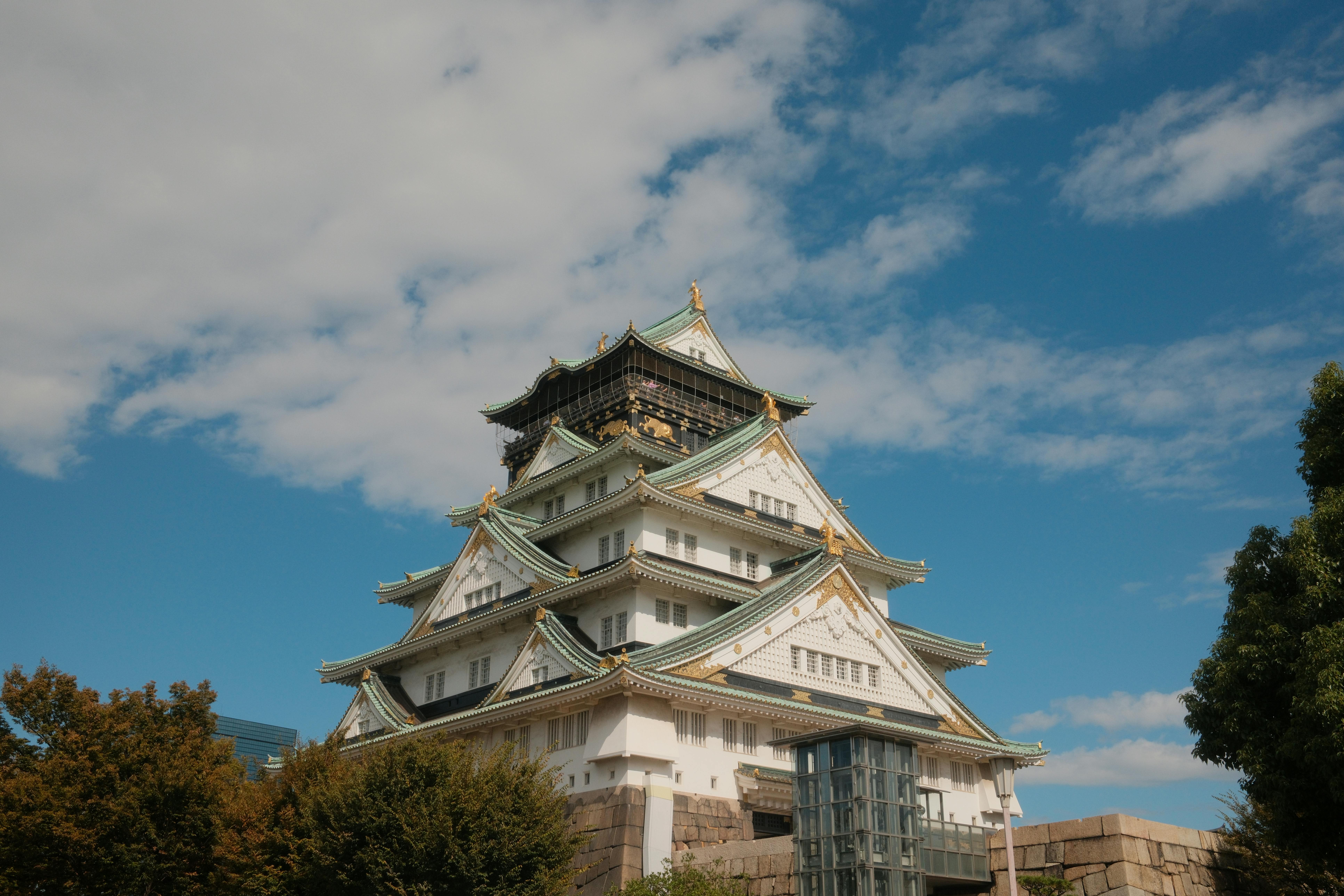
Nagoya Castle: Where Golden Tiger-Fish Meet Samurai Stone
The first gleam catches your eye from half a kilometer away—two flashes of 18-karat gold suspended against the sky, shimmering like living creatures in the morning light. You cross the reconstructed Omote Ni-no-mon gate, its iron-clad wooden beams cool beneath your fingertips, and step onto the grounds of Nagoya Castle. The air carries the faint, sweet scent of hinoki cypress from the newly reconstructed Hommaru Palace, mingled with the distant rustle of the 600-year-old Kaya tree—a National Natural Monument that has witnessed the rise and fall of shoguns [citation:5]. This is not merely a castle; it is the very heart of the samurai city, the seat of the Owari Tokugawa clan for over 250 years, and a phoenix that has risen twice from the ashes—once after the 1945 firebombing, and again through a meticulous, traditional reconstruction completed in 2018 [citation:4][citation:5]. As you stand before the five-story keep (the original was the nation's largest), you feel the weight of Tokugawa Ieyasu's ambition and the quiet pride of a city that still whispers, "Owari Nagoya is sustained by the castle" [citation:9].
Why Nagoya Castle Embodies Shrewd Power and Phoenix Resilience
Nagoya Castle is not simply a fortress; it is a masterstroke of political cunning. After emerging victorious from the Battle of Sekigahara in 1600, Tokugawa Ieyasu ordered the castle's construction in 1610—but with a ruthless twist: he forced 20 former enemy warlords to supply the labor and massive stones, draining their treasuries and preventing future rebellions [citation:4][citation:10]. The proof of their forced allegiance remains etched into the stone walls today; you can spend an afternoon hunting for the various family crests carved into the granite, each mark a story of submission [citation:4]. The original keep, completed in 1612, boasted the greatest floorspace of any castle in Japan, topped with the legendary kinshachi—tiger-headed, dolphin-bodied mythical creatures covered in 18-karat gold. The male on the north side stands 2.621 meters (8.6 feet) tall, weighing 1,272 kilograms (2,804 pounds); his female counterpart on the south is 2.579 meters (8.46 feet) and 1,215 kilograms (2,679 pounds) [citation:5]. These golden guardians were believed to protect the castle from fire—a bitter irony, as the original structures, including the magnificent Hommaru Palace (designated a National Treasure in 1930), were incinerated in the May 14, 1945 air raids [citation:4]. Only three watchtowers and three gates survived [citation:10]. But the castle rose again. The keep was rebuilt in ferroconcrete in 1959, and the Hommaru Palace—arguably the finest palace in all of Japan—was authentically reconstructed using original Edo-period plans and opened fully in 2018 [citation:5].
The Best Time to Experience Nagoya Castle
The ideal windows to visit Nagoya Castle are March through May and October through November. During these months, expect mild temperatures ranging from 15°C to 25°C (59°F to 77°F) with low humidity, making exploration of the expansive grounds a pure pleasure [citation:2]. For the most magical experience, arrive on a weekday morning between 8:45 AM and 9:30 AM. You will witness the morning light strike the western-facing Hommaru Palace wall, illuminating the newly restored gold-leaf paintings through the sliding doors [citation:6]. The castle opens at 9:00 AM, so being at the gate 15 minutes early secures you nearly empty grounds for photography [citation:1]. Avoid the Golden Week holidays (April 29–May 5), Obon week (August 13–16), and weekends in November when autumn foliage peaks, as crowds swell dramatically. The castle is also closed from December 29 to January 1 [citation:6]. Summer (June–August) brings oppressive humidity and temperatures soaring to 30–35°C (86–95°F) [citation:2]. For official updates on exhibitions and reconstruction progress, consult: www.nagoyajo.city.nagoya.jp/en/ [citation:5].
Approximate Budget for a 7-Day Nagoya Trip
Nagoya offers exceptional value, often 30-40% cheaper than Tokyo or Osaka. These estimates are per person based on mid-range travel (excluding international flights). A 5-day sample budget from Southeast Asia was reported at approximately ¥30,200 (roughly $200 USD), demonstrating the city's affordability [citation:3].
- Accommodation: $35–$120 USD (¥5,000–¥18,000) per night. Budget: Capsule hotels or hostels from $20. Mid-range: Business hotels like Travelodge Nagoya Sakae (Sakae district) from $65 [citation:3]. Luxury: Marriott or Hilton from $150. The Sakae or Nagoya Station areas offer the best convenience.
- Food: $20–$50 per day. Breakfast: Nagoya's famous "Morning Service" at Komeda Coffee—buy a coffee (¥500 / $3.30) and receive free toast and boiled egg [citation:8]. Lunch: Set meals for ¥800–¥1,500 ($5.50–$10). Dinner: Local specialties like hitsumabushi (grilled eel) at ¥3,000–¥5,000 ($20–$35) or cheaper izakaya fare.
- Transportation: $5–$8 per day. Nagoya Subway: ¥210–¥340 per ride. A 1-day subway pass is ¥870 ($6) [citation:3]. Meitetsu trains from Chubu Airport to Nagoya Station: ¥1,300 ($9).
- Attractions: Nagoya Castle: ¥500 ($3.40) for adults, free for junior high and younger [citation:4][citation:8]. Atsuta Shrine: Free. Toyota Commemorative Museum: ¥500. Osu Kannon Temple: Free.
- Miscellaneous: $15–$30. A tiny shachihoko charm from the castle souvenir shop (¥1,000 / $7). Nagoya's famous "Uiro" rice cakes (¥1,200).
Total estimated 7-day trip (per person, mid-range): $650 – $950 USD (excluding international flights).
7 Essential Nagoya Castle Experiences
- Walk Through the Reborn Hommaru Palace: The main keep is currently closed for seismic reinforcement, but this is no loss—the Hommaru Palace is the true heart [citation:5]. Reopened fully in 2018, this building is a masterpiece of traditional carpentry (no nails allowed). Walk the corridors barefoot, feel the smooth hinoki cypress beneath your feet, and gaze at the stunning recreations of gold-leaf paintings—tigers, leopards, and peonies—that adorn the sliding doors. Each room has signage explaining the shogun's hierarchy: the highest-ranking guests sat nearest the garden, where light filtered through the lattice to illuminate their sake cups. Your ¥500 admission grants access here [citation:4].
- Gaze Up at the Golden Shachihoko—Up Close: The two massive tiger-fish on the keep roof are city icons, but most visitors never see them up close. Inside the Hommaru Palace exhibition space (separate building), you will find a life-sized replica of one shachihoko. Stand beneath its 2.6-meter frame and imagine the craftsmen who hand-hammered its 1,200 kilograms of bronze before applying 18-karat gold leaf [citation:5]. The original, pre-war female shachihoko is also sometimes displayed—her expression is surprisingly gentle.
- Hunt for Daimyo Crests on the Stone Walls: Armed with a printed map (available at the information desk), spend an hour walking the castle's perimeter. The massive granite stones, some weighing several tons, bear carved symbols—triple spirals, squares, flowers—identifying the 20 lords forced to supply them [citation:4]. The largest stone, the "Kiyomasa Stone," named for the legendary castle architect Katō Kiyomasa, is a favorite photo spot [citation:5]. This is history written in stone, literal proof of feudal political strategy.
- Sip Tea Where Longevity is Promised at Ninomaru Tea House: East of the main grounds lies the Ninomaru Garden. Here, a quiet tea house offers matcha and sweets. Legend claims that if you drink tea made with the golden kettle (available only on Fridays), five years will be added to your life [citation:10]. Even without the golden kettle, the view of the garden—originally designed as a dry landscape in 1716 and serving as an emergency shelter for the lord—is a serene respite from the tourist flow [citation:10].
- Climb the Surviving Southwest Corner Watchtower (Special Open Days): Three original watchtowers (yagura) survived the 1945 firebombing and are normally closed to the public [citation:5]. However, on certain weekends and national holidays, the Southwest Corner Watchtower (Seinan-sumi Yagura) opens for limited viewing. From its three interior floors, you can see the original stone-dropping chutes (ishi-otoshi)—a brutal but ingenious defensive feature. Check the official website for opening announcements.
- Admire the 600-Year-Old Kaya Tree: Near the Ninomaru area stands a Torreya nucifera tree designated a National Natural Monument. Estimated to be over 600 years old, it predates the castle itself by two centuries [citation:5]. Its nuts were considered auspicious and were eaten by the Owari lords. Standing beside this ancient, gnarled giant—which survived the fires that consumed everything around it—you feel a direct, silent connection to the pre-Tokugawa era when the young Oda Nobunaga lived in an older castle on this very site [citation:5][citation:9].
- Participate in a Tea Ceremony at the Ofuke-maru Houses: The Ofuke-maru precinct encompasses about 2,000 square meters (0.5 acres) and contains three historically reconstructed tea ceremony houses: Sarumen-bogaku, Yuin, and Oribedou [citation:5]. On designated days (check the calendar), you can participate in a formal tea ceremony for a nominal fee (¥500–¥1,000). This is not a tourist show; it is a genuine meditative practice in a setting used by the lords themselves.
3 Hidden Gems Most Travelers Miss
- The Nogi Soko Storehouse Paintings: Most visitors rush past the unassuming Nogi Soko storehouse in the Ofuke-maru area. This building served as a gunpowder depot during the Meiji period. But its unassuming exterior hides its wartime role: many of the Hommaru Palace's priceless sliding-door and ceiling paintings—the very originals that were too large to save any other way—were stored here during World War II and thus escaped the May 1945 firebombing [citation:5]. Today, you can see these remarkable original artworks exhibited here. They are the authentic ghosts of the palace, their colors still vibrant after four centuries.
- q.o.l. Coffee for Castle Views: Located a short walk from the castle entrance in the Sakae district, this minimalist cafe features floor-to-ceiling windows that frame—you guessed it—the castle's keep and golden shachihoko in the distance [citation:6]. Arrive after your castle visit (around 11:00 AM) when the morning crowds have thinned. Order a pour-over coffee (¥600 / $4) and sit near the glass. On rainy days, the moody light and tree shadows create a cinematic atmosphere perfect for journaling your adventure [citation:6]. Cash is preferred here.
- The Uzumi-gomon Gate Escape Route: To the west of the Ninomaru Garden lies an unmarked depression in the ground—the site of the Uzumi-gomon Gate. This was not a grand entrance but an emergency escape route for the castle lord if the fortress was breached [citation:5]. It was designed to be hidden, a secret passage leading directly to the river. Very few tourists know to look for it, so you will likely have the spot to yourself. Stand there and imagine the shogun fleeing under cover of darkness—a reminder that even the mightiest castles were built with escape in mind.
Cultural & Practical Tips for Nagoya Castle
- The Main Keep is Closed (But Don't Despair): As of 2026, the iconic main tower keep is closed indefinitely for earthquake-resistance reinforcement and renovation [citation:5]. Many tourists are disappointed, but the Hommaru Palace is actually the superior experience—it is the authentically rebuilt, traditional wooden masterpiece. Do not skip the castle because of this closure.
- "Hajimemashite" (Hah-jee-meh-mash-teh): Meaning "Nice to meet you," this polite phrase is useful at tea ceremonies or when being served by guides. A simple "Arigato gozaimasu" (Ah-ree-gah-toh go-zahee-mahs) suffices for shops. At the tea house, say "Oishii" (Oh-ee-shee-ee) — "delicious" — and watch the server's face light up.
- Photography Guidelines: Photography is permitted in all outdoor areas and inside the Hommaru Palace (no flash). Tripods are not allowed without prior permission. For the best photos of the Hommaru Palace's gold-leaf paintings, visit on a cloudy morning; the diffuse light eliminates glare and brings out the colors' depth [citation:6].
- Nagoya's "Morning Service" Culture: Before your castle visit, experience Nagoya's unique breakfast culture. At Komeda Coffee (a local chain with a location near the castle), order any drink before 11:00 AM (¥500–¥700), and receive a piece of toast and a boiled egg for free [citation:8]. This is not a gimmick—it is a beloved local tradition. It fuels your castle exploration for less than $5.
- Parking is Expensive—Use Public Transit: The castle's main gate parking lot charges ¥180 per 30 minutes [citation:4]. It is cheaper and more convenient to take the subway. Take the Meijō Line to Shiyakusho Station (City Hall), Exit 7, and you are a 5-minute walk from the castle gate [citation:4].
- Avoid Mondays (For Different Reasons): While the castle is open on Mondays, the nearby Atsuta Shrine's treasure hall and many small museums are closed. Plan your Nagoya itinerary so you visit the castle on a Tuesday or Wednesday, allowing you to hit other attractions on adjacent days.
- Bring Cash for Small Purchases: The castle's ¥500 admission fee can be paid by card, but the small tea houses, souvenir stalls in the Ninomaru Garden, and nearby cafes like q.o.l. are cash-only [citation:6]. Withdraw ¥5,000–¥10,000 before arriving.
Conclusion: Travel With Reverence, Not Just a Photo
Nagoya Castle asks something of you that many historic sites do not: it asks you to understand fire. To know that what you see today—the gleaming shachihoko, the fragrant hinoki corridors, the reconstructed palace—is a defiant act of will against oblivion. The original was not merely old; it was one of the best-preserved castles in Japan, a designated National Treasure that American firebombs turned to ash in a single night in 1945 [citation:4]. Yet the people of Nagoya rebuilt. They poured concrete into a ferroconcrete replica of the keep in 1959, and then, more ambitiously, they embarked on a decade-long, traditional, nail-free reconstruction of the Hommaru Palace, finishing in 2018 [citation:5][citation:10]. When you walk those corridors, you are not seeing a fake; you are witnessing a cultural resurrection. Travel here with reverence, not with a checklist. Touch the cool stone of the Kiyomasa boulder. Sit beneath the 600-year-old Kaya tree. Understand that what survives does so because generations chose to remember. That is the deeper journey—not to see a castle, but to witness a city's unbroken heart.