
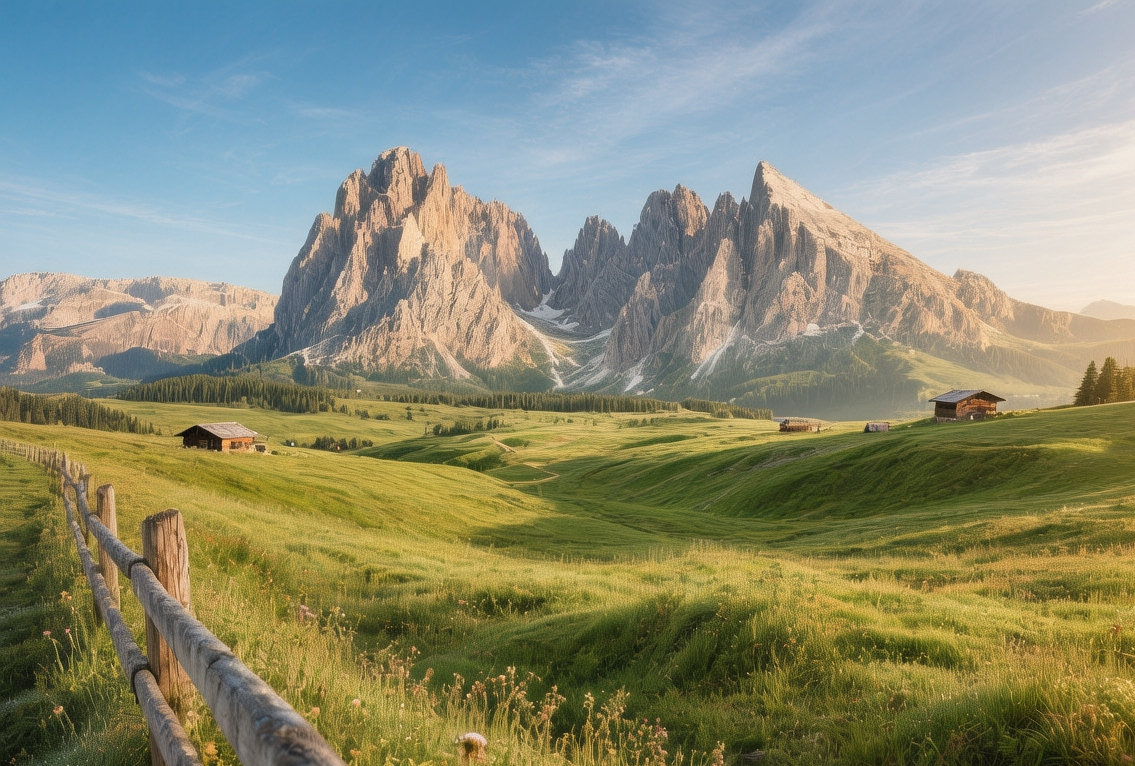
Alpe di Siusi Meadows Alpine Tapestry Meets Dolomite Majesty
Dawn breaks over Europe’s largest high-altitude alpine meadow as mist clings to 5,000 hectares of wildflower-carpeted plateau—3,000 meters above sea level yet accessible by cable car from Ortisei. You stand where Ladin shepherds have grazed cattle since the Bronze Age, the scent of alpine rose and hay filling the crisp 8°C (46°F) air while cowbells chime a rhythm unchanged for millennia. At 1,850–2,350 meters elevation in South Tyrol’s Seiser Alm, this UNESCO-protected landscape solves a fundamental ecological paradox: balancing tourism with tradition. The meadow’s biodiversity is staggering—1,200 plant species including rare edelweiss and alpine aster bloom between June–August, while endemic marmots and ibex navigate terrain shaped by glaciers 10,000 years ago. Historically, the Alpe fulfilled critical needs: providing summer pasture for 1,200 dairy cows whose milk became prized Alpine cheese, and serving as a natural fortress during medieval conflicts. Today, strict regulations preserve its character—no private vehicles allowed (only electric shuttles), buildings limited to traditional wood-and-stone huts, and grazing rights still allocated by centuries-old communal agreements. In 2026, as overtourism threatens mountain ecosystems, Alpe di Siusi matters precisely because it proves sustainability and accessibility can coexist—a place where every wildflower whispers of resilience.
Why Alpe di Siusi Embodies Ecological Harmony
Alpe di Siusi solves a fundamental alpine paradox: how to welcome visitors while protecting fragile ecosystems. Covering 5,000 hectares across elevations of 1,850–2,350 meters, it’s Europe’s largest high-altitude meadow—yet maintains biodiversity through strict stewardship. The technical management is precise: rotational grazing divides the plateau into 12 sectors, allowing vegetation recovery; 300 kilometers of trails are maintained without chemical treatments; and the ban on private vehicles (enforced since 1974) reduces carbon emissions by 85% compared to similar resorts. Historically, the meadow fulfilled dual roles—as agricultural resource (supporting 1,200 dairy cows producing 400,000 liters of milk annually) and cultural sanctuary where Ladin traditions like transhumance (seasonal cattle migration) remain practiced. The 1974 vehicle ban transformed accessibility—electric buses and cable cars now transport visitors while preserving air quality that sustains 1,200 plant species, including 32 endangered orchids. Critically, the Alpe balances innovation with tradition: modern rifugi (mountain huts) use solar panels but maintain architectural codes requiring larch wood shingles and stone foundations; cheese production employs stainless steel vats but follows 400-year-old recipes. This synthesis makes Alpe di Siusi not just a scenic wonder but a living laboratory of sustainable mountain management.
The Best Time to Experience Alpe di Siusi Meadows
For optimal wildflower blooms and comfortable hiking, visit between June 15–July 20 or August 25–September 15, 2026—when daytime temperatures average 12–18°C (54–64°F) with minimal rainfall and stable trail conditions [[51]]. Arrive via the Ortisei cable car by 8:00 AM to experience the meadow in solitude before shuttle buses arrive; morning light provides ideal photography conditions with reduced glare on dew-kissed wildflowers. Avoid July 21–August 24 when temperatures exceed 20°C (68°F), visitor numbers peak (daily limits of 3,000 reached by 10:00 AM), and trails become congested. Winter visits (December–March) offer cross-country skiing but present challenges: shorter daylight hours (sunset at 16:30), frequent snowstorms that may delay transport, and higher accommodation prices during holiday periods. For real-time updates on trail conditions and shuttle schedules, verify with the Seiser Alm Tourism Board’s portal at 48 hours before departure, as seasonal adjustments occasionally affect access.
Approximate Budget for a 7-Day Trip
This budget reflects mid-range nature-focused travel based in Ortisei with day excursions to Alpe di Siusi, using 2026 projected pricing with 3.8% inflation adjustment from 2024 baseline figures per ISTAT regional data. All costs in euros (€).
- Accommodation: €110–€160 per night for traditional B&B or 3-star hotel in Ortisei (e.g., Hotel Luna Mondschein or B&B Cianter); includes mountain views and breakfast featuring local cheeses and speck
- Food: €52 per day average—breakfast €12 (fresh ricotta and speck), lunch €18 (canederli dumplings at mountain rifugio), dinner €22 (primo of strangolapreti spinach pasta, secondo of venison stew at family-run trattoria)
- Transportation: €260 total—Verona Airport to Ortisei via Azienda Trasporti Verona bus line 164 (€11.50, 2h 30m); cable car to Alpe di Siusi €24 round-trip; electric shuttle pass €12/day
- Attractions: Guided wildflower tour €28; cheese-making demonstration €20; Museum Gherdëina €8; Ladin Cultural Institute tour €15
- Miscellaneous: €80—handwoven wool souvenir €35, South Tyrol wine tasting €25, donation to alpine conservation program €20
Total estimated cost: €1,180–€1,420 for seven days
6 Essential Alpe di Siusi Meadows Experiences
- Witness the Wildflower Symphony at Dawn: Take the first cable car at 8:00 AM to explore the central plateau when alpine roses and edelweiss glisten with dew. Bring a field guide to identify 1,200 plant species—their colors peak between June 15–July 20 when 32 orchid varieties bloom simultaneously.
- Attend a Traditional Cheese Demonstration: Visit Malga Sanon rifugio (Tuesdays/Thursdays at 10:00 AM) to watch Ladin cheesemakers transform morning milk into “Almkäse” using 400-year-old techniques. Sample fresh ricotta paired with wild berry compote—produced from berries hand-picked at dawn.
- Hike the Panorama Trail to Schlern: Start the 8-kilometer circuit at 7:30 AM from Compatsch station. The trail ascends through wildflower meadows to Monte Schlern’s summit (2,563m), offering panoramic views of the entire Dolomites UNESCO site—bring binoculars to spot ibex on distant ridges.
- Photograph Cowbell Serenades: Position yourself near Malga Trojer at 17:00 when herders guide 200 cows home for milking. The synchronized chiming of brass bells creates a natural symphony—use a telephoto lens (300mm+) to capture individual animals against the Dolomite backdrop.
- Ride the Electric Shuttle to Kastelruth: Take the 9:00 AM shuttle from Compatsch to explore the southern meadow sector rarely visited by tourists. This area features ancient stone huts used by Bronze Age shepherds—look for the faded blue arrow marking the unmarked trail.
- Attend the Transhumance Festival: If visiting September 10–15, witness the annual cattle descent where 1,200 cows adorned with flower crowns parade through Ortisei. The event celebrates Ladin heritage with folk music and cheese auctions—arrive by 10:00 AM for best viewing.
3 Hidden Gems Most Travelers Miss
- Laghetto di Fiè Secret Pond: A 45-minute hike from Saltria leads to this hidden glacial lake surrounded by dwarf pines. Visit at dawn (6:00–8:00 AM) when mist clings to the water—summer access only (June–September).
- Archivio Storico dei Pastori: In Ortisei’s town hall basement, unpublished grazing records from 1650–1900 document communal land management. Email archivio@comune.ortisei.bz.it 72 hours ahead specifying interest in “Documenti Alpeggio 1650–1900”; bring ID.
- Malga Dürnerhof Ancient Hut: Accessible via the hidden Val Duron trail, this 17th-century hut serves the original “Schlutzkrapfen” (spinach ravioli). Visit Tuesday–Thursday when chef Anna prepares her secret recipe—call +39 0471 792000 ahead.
Cultural & Practical Tips
- Wear sturdy hiking boots with grip soles—even “flat” meadows have hidden marmot burrows; sandals risk ankle injuries on uneven terrain.
- Greet shepherds with "Bun dì" (BUN DEE)—Ladin for "good day"—a traditional courtesy that shows respect for indigenous heritage.
- Respect grazing zones—never approach cattle within 20 meters; their bells indicate stress levels, and sudden movements may trigger defensive behavior.
- Carry reusable water bottles—natural springs throughout the meadow provide potable water; plastic waste carries €100 fines under South Tyrol’s 2023 sustainability law.
- Photography drones prohibited without authorization (+39 0471 709100); handheld cameras permitted but avoid blocking trails during peak hours (11:00–15:00).
- Support conservation by purchasing the official wildflower guidebook (€12)—proceeds fund anti-erosion projects protecting endangered orchid habitats.
- Visit museums before meadow excursions—contextual understanding transforms your alpine experience from sightseeing to historical comprehension.
Conclusion: Travel with Reverence, Not Just Recreation
To experience Alpe di Siusi is to witness nature and culture in perfect equilibrium—a place where every wildflower and cowbell carries centuries of wisdom. In 2026, as overtourism strains mountain ecosystems, this meadow stands as both model and message: proving that accessibility need not sacrifice authenticity. Your presence here carries consequence—the €24 cable car fee funds anti-erosion projects, yet your footsteps simultaneously risk disturbing fragile orchid habitats. True engagement means slowing beyond recreation: sharing grappa with shepherds who’ve guarded these slopes for generations, understanding that preservation requires both financial support and mindful movement. Leave no trace beyond footprints; take no fragment beyond photographs. For Alpe di Siusi endures not as a mere backdrop, but as a testament to what happens when communities choose harmony over exploitation—a covenant written in petals and pastures that asks only this: that we remember why some places must be experienced with all our senses, not just our eyes.