
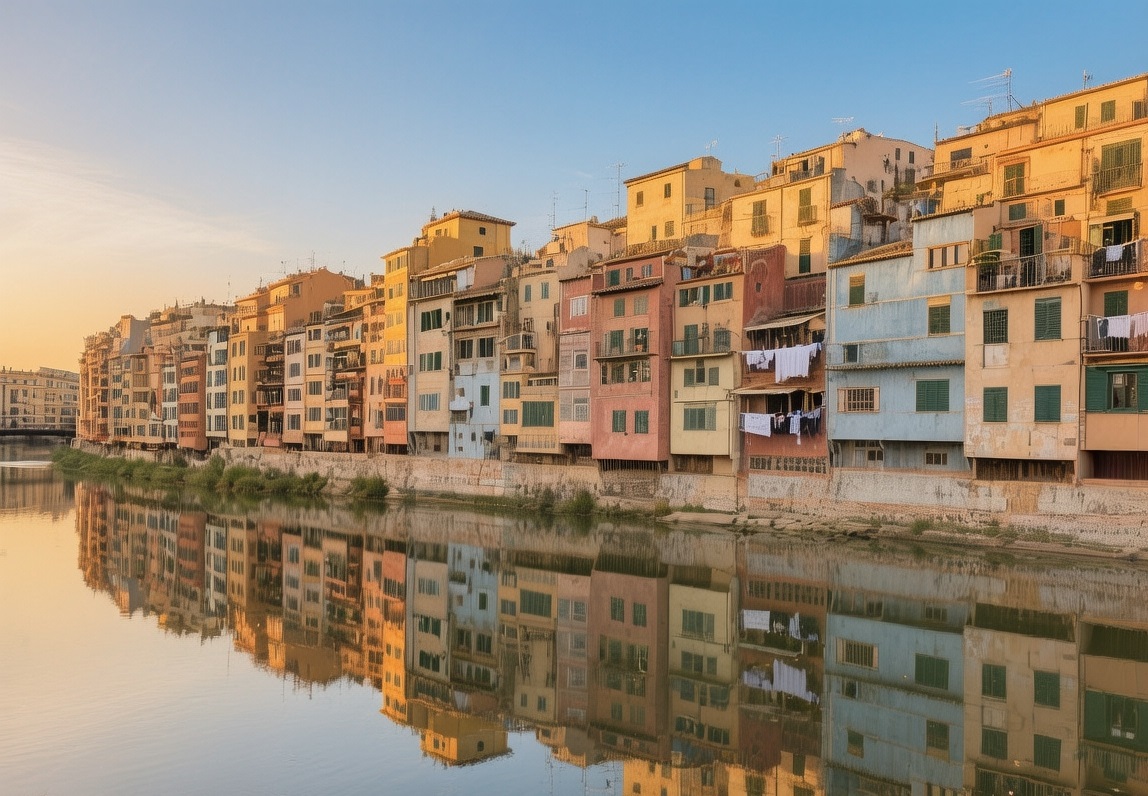
Bosa Riverside Pastel Facades Meet Mediterranean Currents
Golden hour transforms the Temo River into liquid amber as sunlight gilds Bosa’s pastel-hued buildings—ochre, coral, and azure facades leaning companionably over the water like gossiping neighbors. You stroll along Lungo Temo, where laundry lines strung between wrought-iron balconies flutter with crimson tablecloths, and the scent of saffron-infused pasta mingles with river mist rising from Sardinia’s only navigable river. At just 30 meters wide but flowing year-round through volcanic canyons, the Temo carved this valley over millennia before Phoenician traders established a settlement here in 800 BCE. The current laps gently against medieval stone quays where fishermen once unloaded orata for the Malaspina Castle kitchens perched 150 meters above. Today, these riverside houses—painted in colors derived from local minerals since the 1700s—create Italy’s most chromatic streetscape, a living canvas where every shutter tells a story of Catalan merchants, Genoese sailors, and Sardinian artisans. In 2026, as overtourism flattens destinations into Instagram backdrops, Bosa matters precisely because it refuses performance—a place where beauty emerges from daily life, not staged aesthetics.
Why Bosa Riverside Embodies Chromatic Authenticity
Bosa solves a fundamental architectural paradox: how to create visual harmony through regulated individuality. Its riverside palette emerged not from tourism marketing but practical necessity—since the 1700s, residents painted facades using mineral-based pigments (ochre from iron oxide, azure from copper sulfate) that protected soft tuff stone from the Temo River’s humidity. The 1836 municipal ordinance formalized this tradition, requiring new constructions to follow the existing chromatic scheme while allowing personal expression through shutter colors and balcony flowers. Historically, the riverfront served as Bosa’s economic spine: the Temo’s navigability (unique in Sardinia) allowed Roman grain barges to reach inland farms until the 1800s; Catalan administrators built the 14th-century Ponte Vecchio to connect artisan quarters; and Genoese merchants established coral-dye workshops whose crimson runoff once tinted the river. Technically, the riverside functions as an integrated system—the 1.2-kilometer Lungo Temo features raised stone quays (1.5 meters high) that prevent flooding during autumn rains; house foundations use river-smoothed basalt blocks fitted without mortar; and narrow alleyways (vicos) channel sea breezes to cool interiors naturally. Culturally, this chromatic heritage is actively preserved: the annual Festa dei Colori (June 15–17) celebrates traditional pigments, while local artisans still produce paints using 18th-century recipes at Bottega del Colore near Piazza IV Novembre.
The Best Time to Experience Bosa Riverside
For optimal light and comfortable exploration, visit between May 20–June 18 or September 10–October 5, 2026—when daytime temperatures average 21–26°C (70–79°F) with low humidity and minimal rainfall [[37]]. Arrive at Lungo Temo by 8:30 AM to photograph facades in soft morning light before crowds arrive, or return at 18:30 for golden hour reflections on the river. Avoid July 15–August 25 when temperatures exceed 32°C (90°F), humidity reaches 78%, and tourist numbers peak—diminishing authentic interactions with local artisans. Winter visits (November–February) offer solitude but present challenges: shorter daylight hours (sunset at 17:15), occasional rain that obscures facade colors, and some artisan shops close seasonally. For real-time updates on festival dates and river conditions, verify with the Comune di Bosa’s portal at comune.bosa.or.it 48 hours before departure, as seasonal adjustments occasionally affect boat tours.
Approximate Budget for a 7-Day Trip
This budget reflects mid-range cultural travel based in Bosa with day excursions along the Temo River, using 2026 projected pricing with 3.8% inflation adjustment from 2024 baseline figures per ISTAT regional data. All costs in euros (€).
- Accommodation: €85–€125 per night for riverside B&B or 3-star hotel in Bosa center (e.g., Hotel Sa Rughitta or B&B Su Niu); includes balcony views and breakfast featuring local cheeses
- Food: €45 per day average—breakfast €9 (fresh ricotta and pane carasau), lunch €16 (panino with bottarga at riverside kiosk), dinner €20 (primo of malloreddus pasta with saffron, secondo of grilled orata fish at family-run trattoria)
- Transportation: €220 total—Alghero Airport to Bosa via ARST bus line 720 (€7.50, 1h 15m); daily scooter rental €38 including fuel for coastal exploration; parking free in town outskirts
- Attractions: Guided color heritage walk €18; Malaspina Castle entry €7; Temo River kayak tour €28; Bottega del Colore pigment workshop €15
- Miscellaneous: €70—hand-painted ceramic souvenir €30, Sardinian wine tasting €20, donation to facade preservation fund €20
Total estimated cost: €950–€1,150 for seven days
6 Essential Bosa Riverside Experiences
- Photograph Facade Reflections at Golden Hour: Position yourself on Ponte Vecchio at 18:30 to capture the entire riverside panorama bathed in warm light, with pastel buildings mirrored in the Temo’s calm surface. Use a polarizing filter to reduce glare and emphasize the contrast between vibrant colors and deep blue river.
- Attend a Traditional Pigment Workshop: Join the 11:00 AM session at Bottega del Colore where artisans demonstrate grinding local minerals into paint. Create your own ochre sample using 18th-century techniques—this same pigment protects Bosa’s facades from river humidity.
- Kayak the Temo River at Dawn: Launch from the town dock at 7:00 AM for a 2-hour paddle upstream through volcanic canyons. Glide beneath medieval bridges where swallows nest in stone crevices; the early hour ensures calm waters and solitude.
- Explore the Vicos Alleyway Network: Wander the narrow vicos between 9:00–11:00 AM when shopkeepers open their doors, revealing hidden courtyards with citrus trees and hand-painted tiles. Look for the “blue door” at Vicolo del Corallo—a 1700s coral merchant’s home with original frescoes.
- Dine at a Fisherman’s Table: Book the “Cena del Temo” experience at Trattoria da Giò (Wednesdays/Thursdays 20:00)—a four-course meal featuring river-caught eel and sea bass. The highlight: malloreddus al sugo di fiume (pasta with river fish sauce).
- Climb to Malaspina Castle Panorama: Hike the 150-meter trail from Piazza IV Novembre between 16:00–18:00 to reach the 12th-century castle. From its ramparts, witness the entire chromatic riverscape unfold below—a perspective unchanged since Catalan times.
3 Hidden Gems Most Travelers Miss
- Sa Mandra ‘e Mesu Secret Garden: Hidden behind an unmarked door on Via Alighieri, this 18th-century courtyard features citrus trees and original pigment-stained walls. Access requires asking the florist next door for the key (tip €2 appreciated); open 10:00–12:00 daily.
- Temo River Source Excursion: Located 12 kilometers upstream near Borore, this sacred spring emerges from basalt cliffs. Visit at dawn (6:00–8:00 AM) when mist clings to the water;
- Archivio Storico dei Colori: In Bosa’s town hall basement, unpublished pigment recipes from 1750–1900 document facade maintenance. Email archivio@comune.bosa.or.it 72 hours ahead specifying interest in “Documenti Cromatici 1750–1900”; bring ID for the 30-minute viewing.
Cultural & Practical Tips
- Wear sturdy sandals with grip soles—the riverside’s volcanic stone surfaces become slippery when wet, especially near the Ponte Vecchio steps.
- Greet locals with "Sa buna orta" (SAH BOO-nah OR-tah)—Sardinian for "good harvest"—a traditional blessing acknowledging the region’s agricultural roots.
- Respect private spaces—many colorful buildings are homes, not photo studios; ask permission before photographing interiors or courtyards.
- Carry cash in small denominations—many artisan shops and trattorias don’t accept cards, and ATMs are limited to two machines in town center.
- Photography drones require authorization from the Comune (+39 0785 340001); handheld cameras are permitted but avoid disrupting daily life during laundry hours (10:00–12:00).
- Support preservation by purchasing the official Bosa color map (€8) from the tourist office—proceeds fund facade restoration projects.
- Visit the Mercato Ittico (fish market) Tuesday–Saturday 8:00–10:00 AM to observe the day’s river and sea catch; bargaining is considered rude—prices are fixed by weight.
Conclusion: Travel with Presence, Not Just Aesthetics
To experience Bosa’s riverside is to witness beauty born of necessity—a chromatic symphony where every hue serves purpose beyond prettiness. In 2026, as destinations increasingly curate themselves for social media, this Sardinian gem stands as both antidote and anchor: its pastel facades aren’t painted for visitors but preserved through generations of practical wisdom. Your presence here carries consequence—the €18 color walk fee funds artisan workshops keeping pigment traditions alive, yet your gaze must move beyond surface aesthetics to engage with the living culture. True appreciation means slowing to notice how laundry lines become accidental art installations, how river mist softens edges at dawn, how centuries of resilience are encoded in mineral-based blues and ochres. Leave no trace beyond footprints; take no fragment beyond photographs. For Bosa endures not as a backdrop for our adventures, but as a testament to what happens when utility and beauty align—a covenant written in stone and river that asks only this: that we remember why some places must be experienced as they are, not as we frame them.