
Buckingham Palace Royal Grandeur Meets British Tradition
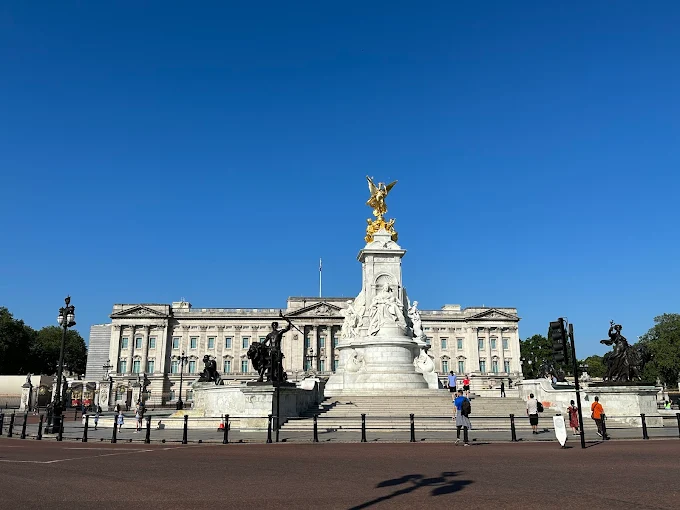
The iron gates groan—a heavy, metallic sigh that has echoed since 1850—as the crowd presses forward, a sea of smartphones raised toward the 109-meter-wide East Front. You stand on The Mall at 10:30 AM, watching the scarlet tunics of the Queen's Guard emerge from the archway, their bearskin hats rising 45 centimeters above stoic faces that refuse to blink. Built originally as Buckingham House in 1703 and transformed into a palace by King George IV in 1826, this 775-room residence serves as the administrative headquarters of the monarch and the ceremonial heart of the nation. The Victoria Memorial gleams ahead, 2,300 tons of white marble and gold leaf catching the morning light while the Union Flag flies atop the roof—signaling the King is in residence. Behind those balcony doors, history unfolds: coronations are planned, state visits are hosted, and the daily machinery of constitutional monarchy hums quietly. In 2026, as the monarchy evolves within a modern democracy, visiting Buckingham Palace means stepping into a living theater of tradition where every gilded chair and Persian carpet witnesses the continuity of a thousand-year institution.
Why Buckingham Palace Embodies Ceremonial Statecraft
Buckingham Palace solves the unique architectural problem of housing a head of state while remaining accessible enough for public ceremony—a balance struck through decades of modification. When John Nash began transforming the house in 1825, he envisioned a U-shaped courtyard enclosing 10 hectares of gardens, though financial constraints led to the East Front's completion only in 1850 under Edward Blore. The facade you see today uses Bath stone, chosen for its durability against London's sulphurous air, though it was replaced with Portland stone in 1913 due to weathering. Inside, the State Rooms span 1,500 square meters, featuring 19 rooms open to visitors during summer, including the 18-meter-long Picture Gallery and the 37-meter-long Grand Staircase designed by Nash. The palace employs 800 staff members who maintain the 19 state rooms, 52 royal bedrooms, and 78 bathrooms, ensuring the building functions as both home and office. The famous balcony—added in 1850—projects 3 meters from the facade, serving as the stage for royal appearances during Trooping the Colour and state visits. Engineering-wise, the palace underwent a £369 million Reservicing Programme completed in 2022, upgrading electrical wiring, plumbing, and heating systems to reduce carbon emissions by 40%. This infrastructure ensures Buckingham Palace remains not merely a museum of monarchy but a working headquarters where the Sovereign Grant funds official duties, blending historic preservation with modern operational efficiency.
The Best Time to Experience Buckingham Palace
For the full experience, plan your visit between July 11–September 28, 2026, when the State Rooms open to the public during the Summer Opening period. Temperatures during this window range from 16–24°C (61–75°F), providing comfortable conditions for queueing outside and walking the garden terrace. The Changing of the Guard occurs at 10:45 AM on Mondays, Wednesdays, Fridays, and Sundays during summer, with the actual handover happening at 11:00 AM—arrive by 10:15 AM to secure a view through the railings. For photography, the golden hour between 7:30–9:00 PM in summer bathes the Portland stone in warm light with minimal crowds, though you cannot enter the grounds. Avoid December 20–January 5 when the palace is closed to tourists and London experiences peak holiday congestion with temperatures dropping to 2–8°C (36–46°F). Bank Holiday weekends (late May, late August) bring excessive crowds that extend security queues beyond 60 minutes. The State Rooms close completely from October to June, so verify opening dates at rct.uk/visit/buckingham-palace before booking. For a quieter experience, visit on Tuesday or Thursday mornings when tour groups are thinner, allowing you to linger longer in the Picture Gallery without shoulder-to-shoulder congestion.
Approximate Budget for a 7-Day Trip (2026)
London remains a premium destination, but staying in Zones 1-2 near Victoria or Pimlico provides easy access to Buckingham Palace without central London price gouging. These 2026 estimates assume a moderate travel style, accounting for approximately 3-4% annual inflation in UK hospitality and attraction pricing.
- Accommodation: £110–£250 per night for a double room in Victoria, Pimlico, or Westminster; budget hostels from £40/night in Earl's Court
- Food: £45–70 per day—breakfast £8–12 (full English or café pastry), lunch £12–18 (pub pie or market stall), dinner £25–40 (mid-range restaurant with wine); afternoon tea at The Goring £65
- Transportation: £8.10 daily cap for Zones 1-2 using contactless/Oyster; Heathrow Express £25 one-way or Elizabeth Line £12.80; Black Cab from Victoria £15 minimum
- Attractions: Buckingham Palace State Rooms £33.00 adult, Royal Mews £13.00, Queen's Gallery £16.50, Westminster Abbey £29.00, Thames cruise £18.00
- Miscellaneous: Souvenir guidebook £15, royal commemorative coins £25, umbrella (essential) £15, travel insurance £45 for week
Total for 7 days: £1,200–1,750 per person (excluding international flights)
7 Essential Buckingham Palace Experiences
- State Rooms Summer Tour: Walk the 19 open rooms including the Throne Room and White Drawing Room, viewing masterpieces by Rembrandt and Rubens. Tours run daily 9:30 AM–7:30 PM during summer opening; audio guides are included in your ticket, providing historical context for each gilded ceiling and Sèvres porcelain vase displayed on the 109-meter route.
- Changing of the Guard Ceremony: Witness the 45-minute ritual where the Old Guard hands over responsibility to the New Guard. Position yourself at the Victoria Memorial steps for an elevated view rather than the front railings where visibility is limited; the band plays marches from 10:45 AM, culminating in the New Guard marching into the palace at 11:15 AM.
- Royal Mews Carriage Tour: Explore the working stables housing the Gold State Coach used for coronations since 1831. Open year-round (except during royal events), the museum displays historic carriages and modern vehicles; allow 60 minutes to examine the intricate woodwork and learn how horses are trained for ceremonial duties.
- The Queen's Gallery Exhibition: View rotating exhibitions from the Royal Collection, featuring everything from Leonardo da Vinci sketches to contemporary photography. Located on Buckingham Palace Road, the gallery opens 10:00 AM–5:00 PM; check the website for current exhibition themes as collections change every 12–18 months.
- Palace Garden Walk: Included with State Rooms tickets, this 156-meter lakeside walk offers views of the 3.5-acre lake and Waterloo Vase. Walk the grass path beneath the plane trees where royal garden parties are held; listen for the 325 wildflowers buzzing with bees during July blooms.
- Victoria Memorial Photo Stop: Capture the palace facade framed by the golden Angel of Peace statue atop the memorial. Best light occurs at 8:00 AM or 8:30 PM in summer; use the memorial steps to elevate your camera above the crowd for an unobstructed shot of the balcony and flagpole.
- Evening Illumination Walk: Stroll The Mall at dusk when floodlights illuminate the facade without daytime crowds. The palace glows amber against the night sky; combine this with a walk through St. James's Park to see the pelicans settling for the night while the palace stands sentinel in the background.
3 Hidden Gems Most Travelers Miss
- Royal Collection Trust Shop: Located inside the Palace exit route, this shop offers exclusive merchandise not available elsewhere, including official guidebooks and reproductions of paintings seen in the State Rooms. Access requires a State Rooms ticket; visit immediately after your tour to browse without time pressure. The shop's staff includes royal historians who can answer specific questions about artifacts you just viewed.
- Wellington Arch Viewing Platform: Standing at Hyde Park Corner, this arch offers a unique rear-angle view of Buckingham Palace down Constitution Hill. Climb the 93 steps to the platform (English Heritage ticket £10.50) for a perspective few tourists consider; you'll see the palace gardens from above and understand the urban planning connecting the royal parks.
- St. James's Park Pelican Feeding: While not inside the palace, this adjacent park offers the closest public access to the palace garden boundary. Attend the 2:30 PM daily feeding to watch the pelicans dive while framing the palace lake in your background. Bring binoculars to spot the palace's private garden gate where staff occasionally pass through—a glimpse of the working estate behind the glamour.
Cultural & Practical Tips
- Guard etiquette: Never touch the guards or attempt to make them smile; they are on active duty and will shout "Make way for the Queen's Guard" if you obstruct their path. Stand behind the white lines marked on the pavement during ceremonies.
- Photography rules: Exterior photography is unrestricted, but interior photography is strictly prohibited in State Rooms to protect light-sensitive artworks. Phones must be silenced and stored during tours; professional cameras with lenses over 20cm require prior written permission from the Royal Collection Trust.
- Security screening: All visitors pass through airport-style security; prohibited items include large bags (nothing over 45×35×25cm), sharp objects, and aerosols. Allow 20–30 minutes for security checks during peak summer hours (11:00 AM–2:00 PM).
- Local phrases: Learn "Mind the gap" (watch the step), "Cheers" (thanks), and "Queue here" (wait in line); Londoners appreciate visitors who respect pedestrian flow on The Mall during ceremonial events.
- Weather preparedness: London's maritime climate means rain can arrive any month; carry a compact umbrella (£10 from Boots pharmacy) and waterproof layers even in summer. The garden walk offers little shelter, so dress for wind and potential showers.
- Accessibility: The State Rooms offer step-free access via ramps and lifts; wheelchair users receive priority entry—contact access@rct.uk 48 hours ahead to arrange assistance. The Royal Mews has limited accessibility due to historic carriage dimensions.
- Flag protocol: Check the flag flying atop the palace before visiting; the Royal Standard indicates the King is in residence, while the Union Flag means he is away. This changes daily based on the monarch's official schedule.
Conclusion: Travel with Reverence, Not Just Checklists
Buckingham Palace demands more than a selfie with a guard—it invites you to contemplate the weight of history resting on those Portland stone shoulders. When you walk the State Rooms in 2026, tracing the same carpets worn by queens and kings, you're not just ticking a sightseeing box; you're witnessing the delicate balance between public access and private duty that defines modern monarchy. As overtourism pressures London's landmarks, visiting mindfully means respecting the working nature of this institution, understanding that behind the gold leaf, real people maintain this machine of state. Walk slowly through the garden, noticing how the plane trees shield the private quarters; listen to the guard's boots crunching on gravel not as performance but as protocol. Leave only footprints on the grass, take only memories of gilded ceilings, and carry forward the understanding that places like this endure because each generation chooses to preserve them—not as frozen relics, but as living symbols of continuity in a changing world.