
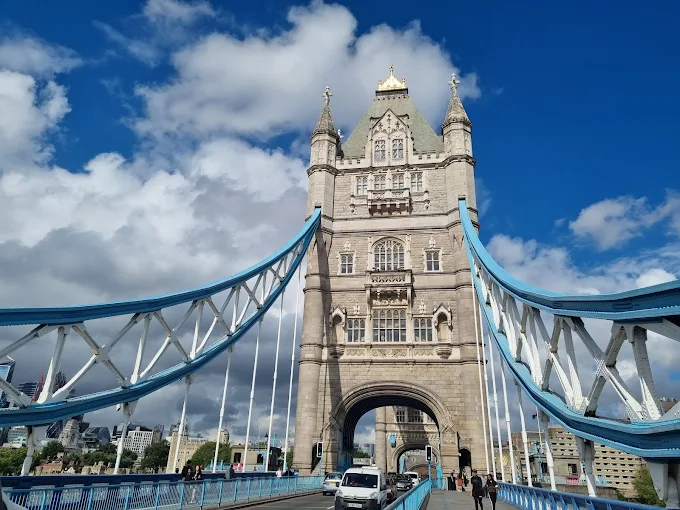
Tower Bridge Victorian Engineering Meets Thames River Majesty
The hydraulic pistons hiss—a mechanical breath held for 132 years—as the twin bascules begin their slow ascent, rising 86 degrees to allow a tall ship passage through the 61-meter-wide gap. You stand on the north walkway at 6:47 AM, watching mist rise from the Thames while the bridge's two 65-meter towers pierce the pearl-gray dawn sky. Built between 1886 and 1894, this 244-meter span solved Victorian London's most pressing dilemma: how to maintain river traffic to the Pool of London while connecting the rapidly expanding East End to the city center. The Gothic Revival stone cladding—Cornish granite and Portland stone—masks a revolutionary steel framework of 11,000 tons, while the original hydraulic system (now electrified but preserving Victorian engineering principles) still lifts those 1,200-ton roadways in just 90 seconds. Today, Tower Bridge remains London's most iconic movable bridge, lifting approximately 800 times annually for vessels ranging from historic tall ships to modern cruise liners. In 2026, as climate change threatens historic infrastructure and mass tourism strains iconic landmarks, visiting Tower Bridge means witnessing a masterpiece of adaptive engineering that has gracefully served the city for 132 years—proof that functional beauty can endure across centuries.
Why Tower Bridge Embodies Victorian Industrial Innovation
Tower Bridge stands as the ultimate solution to a Victorian paradox: how to preserve London's status as the world's busiest port while connecting communities severed by the Thames. In 1876, the Special Bridge or Subway Committee formed to address the crisis—east London residents faced hours of detours to cross the river, while closing the existing bridges to ship traffic would choke commerce. Architect Sir Horace Jones won the 1876 design competition, partnering with engineer Sir John Wolfe Barry after Jones's death in 1887 to create a hybrid structure combining bascule (from the French word for seesaw) and suspension bridge elements. Construction began on April 22, 1886, employing 432 workers who labored for eight years, driving foundations 27 meters deep into the riverbed using pressurized caissons—a dangerous technique that claimed several lives. The two towers contain 70,000 cubic meters of concrete and masonry, clad in Cornish granite below the waterline and Portland stone above, chosen specifically for their resistance to Thames pollution and tidal erosion. The bascule mechanism represents a triumph of hydraulic engineering: originally powered by steam engines pumping water at 750 psi through cast-iron mains, the system accumulated energy in six massive accumulators, releasing it instantaneously to lift each 1,200-ton span. In 1976, the system converted to electro-hydraulic power while maintaining the original Victorian design principles, proving the foresight of Jones and Barry's engineering. The high-level walkways, positioned 42 meters above the river, were initially unpopular—pedestrians preferred waiting for the bascules to lower rather than climbing 300 steps—leading to their closure in 1910. Reopened in 2014 with glass floors, they now offer one of London's most thrilling perspectives, allowing you to peer directly down at the traffic and river 42 meters below while standing on the same structural framework that has supported this bridge since 1894.
The Best Time to Experience Tower Bridge
For optimal photography and comfortable exploration, visit between May 20–June 25 or September 5–October 20, when temperatures range from 14–21°C (57–70°F) and daylight extends until 9:15 PM, providing extended golden hour opportunities. The bridge lifts occur throughout the day according to ship schedules—check towerbridge.org.uk for the weekly lift timetable—but early morning lifts (8:00–10:00 AM) offer the best combination of dramatic lighting and manageable crowds. For photography, position yourself on the south bank at Tower Bridge Approach between 7:00–8:30 AM when the rising sun illuminates the eastern facade, or capture blue hour from 8:45–9:30 PM in summer when the bridge's LED illumination system bathes the structure in adjustable colors. Avoid December 20–January 3 when tourist volumes peak despite temperatures dropping to 2–7°C (36–45°F), and steer clear of bank holiday weekends when queues for the tower exhibition exceed 90 minutes. Summer months (July–August) bring temperatures of 17–24°C (63–75°F) but also cruise ship season, meaning more frequent lifts but heavier foot traffic. For a unique experience, visit during the London Marathon (typically last Sunday in April) when thousands of runners cross the bridge, creating an electric atmosphere—though expect road closures from 6:00 AM–2:00 PM. The bridge's lift schedule varies with river traffic, so verify current timings at towerbridge.org.uk before your visit, and consider booking the Tower Bridge Exhibition online to skip ticket queues.
Approximate Budget for a 7-Day Trip (2026)
London remains one of Europe's premium destinations, but Tower Bridge's location in Zone 1 offers excellent value for budget-conscious travelers willing to stay in adjacent neighborhoods. These 2026 estimates reflect moderate travel style with strategic splurges, accounting for approximately 3-4% annual inflation in UK tourism sectors.
- Accommodation: £95–£220 per night for a double room in Tower Hill, Bermondsey, or Wapping neighborhoods; budget pods/capsules from £45/night in nearby Shadwell
- Food: £40–65 per day—breakfast £7–10 (café pastries or market stall), lunch £11–15 (Borough Market street food or pub sandwich), dinner £22–40 (riverside gastropub with pint); traditional Sunday roast £18–25
- Transportation: £8.10 daily cap for Zones 1-2 using contactless/Oyster; DLR from London City Airport £3.90; Thames Clippers river bus £9.40 single Tower Bridge to Greenwich
- Attractions: Tower Bridge Exhibition £12.30 adult, Tower of London £34.80, HMS Belfast £23.50, Borough Market food tour £35, Thames dinner cruise £65
- Miscellaneous: Souvenir guidebook £10, Tower Bridge postcards £4, rain jacket (essential) £35, travel insurance £45 for week
Total for 7 days: £980–1,450 per person (excluding international flights)
7 Essential Tower Bridge Experiences
- Tower Bridge Exhibition with Glass Floor: Walk the high-level walkways 42 meters above the Thames, stepping onto the reinforced glass panels that reveal traffic and pedestrians 14 stories below. The exhibition opens 9:30 AM–6:00 PM (last entry 5:00 PM), with extended hours until 9:00 PM in summer; allow 90 minutes to explore the Victorian engine rooms, watch the multimedia history presentation, and photograph the city from both north and south towers.
- Witness a Bridge Lift: Time your visit with the published lift schedule (typically 2-3 times weekly in 2026) to watch the bascules rise—arrive 15 minutes early to secure position on Tower Bridge Approach or the south bank; the entire lift sequence takes approximately 5 minutes from first movement to full 86-degree elevation, accompanied by warning horns and flashing lights.
- Victorian Engine Rooms Tour: Descend into the bridge's foundations to see the original 1894 steam engines and hydraulic accumulators that powered the bridge until 1976; included in exhibition ticket, these cavernous chambers maintain the massive flywheels and pumps, with interpretive displays explaining how 150 psi steam pressure translated into lifting 1,200 tons.
- Sunrise Photography Walk: Begin at St. Katharine Docks at 6:00 AM, photographing the bridge emerging from dawn mist as the first light hits the Portland stone; walk across the bridge itself as it opens to pedestrians at 6:00 AM, capturing the empty span with the City of London's skyscrapers silhouetted behind.
- Thames Path Riverside Circuit: Walk the complete 2-kilometer loop from Tower Bridge to HMS Belfast and back via the south bank, discovering the Belfast Walkway and Butler's Wharf conversion; this flat, accessible route takes 45 minutes and reveals the bridge from seven distinct angles, each offering different photographic perspectives.
- Evening Illumination Viewing: Return after dark when the bridge's LED system—installed in 2012—bathes the structure in programmable colors marking national events;最佳 viewing from Potters Fields Park (south bank) between 8:00–10:00 PM, where you can photograph the reflection in the Thames with minimal tourist crowds.
- Bridge Lift Alert Subscription: Sign up for Tower Bridge's lift notification service at the exhibition desk or online, receiving text alerts 24 hours before scheduled lifts; this insider access allows you to plan your day around these spectacular mechanical ballets rather than hoping for random encounters.
3 Hidden Gems Most Travelers Miss
- Tower Bridge South Walkway Secret Staircase: Behind the unmarked door on the south tower's ground level lies a Victorian spiral staircase (157 steps) that leads to a maintenance platform offering 360-degree views unavailable to regular visitors. Access requires advance booking through the Tower Bridge Engineering Team (engineering@towerbridge.org.uk) at least 6 weeks ahead; tours run monthly on first Tuesday, limited to 8 people, £45 per person. You'll see the bascule counterweights up close and learn about the 2010-2012 restoration that added 50 years to the bridge's lifespan.
- Butler's Wharf Chapel: This converted 1870s warehouse chapel sits 200 meters east of Tower Bridge, featuring original cast-iron columns and a riverside garden with unobstructed bridge views. Open Tuesday–Thursday 11:00 AM–3:00 PM (free entry), the space hosts rotating art exhibitions in a serene setting most tourists bypass; the garden's bench positioned at 51°30'17"N 0°04'31"W provides the perfect frame for sunset bridge photography without crowds.
- Thames Tideway Tunnel Viewing Gallery: Beneath the bridge's north approach lies a public gallery showcasing the super-sewer construction project, accessible through the Thames Water Community Hub at 12 Tower Bridge Approach (open weekdays 9:00 AM–5:00 PM). The underground exhibition explains how this £4.2 billion infrastructure project protects the Thames while preserving Tower Bridge's foundations—most visitors walk overhead unaware of the engineering drama unfolding 30 meters below their feet.
Cultural & Practical Tips
- Bridge lift etiquette: When the bascules rise, pedestrians cannot cross for approximately 10–15 minutes total; respect the barriers and use this time to photograph the mechanical spectacle rather than complaining about delays—this is a working bridge, not a tourist attraction alone.
- Photography permissions: Exterior photography is unrestricted for personal use, but tripods require permission from the Tower Bridge Exhibition office (photography@towerbridge.org.uk); commercial shoots need permits arranged 4 weeks minimum in advance with fees starting at £350.
- Weather considerations: The glass walkways can feel exposed in high winds (closed if gusts exceed 50 mph/80 kph); check the Met Office forecast and bring layers even in summer—the walkways are 42 meters high and significantly windier than ground level.
- Local phrases: Learn "Mind the gap" (watch the step), "Cheers" (thanks), and "Queue here" (wait in line); Londoners appreciate visitors who respect pedestrian flow on the narrow bridge walkways during rush hour.
- Accessibility: The exhibition offers step-free access via lifts to the high-level walkways; wheelchair users receive priority entry—contact access@towerbridge.org.uk 48 hours ahead to arrange assistance. The Victorian Engine Rooms involve stairs and are not wheelchair accessible.
- Safety protocols: Security screening occurs at exhibition entry; large bags (over 40×30×15cm) must be left at left luggage facilities at Tower Hill Station (£5/day); allow 15 minutes for bag checks during peak hours (11:00 AM–3:00 PM).
- Respectful behavior: The bridge remains a critical transport link carrying 40,000 vehicles and pedestrians daily; keep right on walkways, don't stop abruptly for photos during rush hour (7:30–9:30 AM, 5:00–7:00 PM), and never attempt to climb the towers or access restricted areas.
Conclusion: Travel with Curiosity, Not Just Checklists
Tower Bridge demands more than a snapshot and a hashtag—it invites you to contemplate the audacity of Victorian engineers who dared to span the Thames with moving parts, trusting that steam pressure and human ingenuity could reconcile commerce with connectivity. When you stand on those glass walkways 42 meters above the river, watching ships pass through the gap while cars queue below, you're not just observing a landmark; you're participating in a 132-year conversation between past and present, between preserving heritage and serving modern needs. In 2026, as cities worldwide grapple with aging infrastructure and the tension between tourism and functionality, Tower Bridge offers a masterclass in adaptive reuse—maintaining its Victorian soul while embracing LED illumination, online ticketing, and climate resilience measures. Walk slowly across the span, noticing how the Portland stone weathers differently on the north and south faces, how the bascules' counterweights balance like giant metronomes, how the bridge connects not just Tower Hamlets to Southwark but history to possibility. Leave only footprints on those glass panels, take only memories of hydraulic poetry, and carry forward the understanding that structures like this endure because each generation chooses to maintain them—not as frozen monuments, but as living, lifting, breathing testaments to what human hands can build when they serve both beauty and purpose.