
Caserta Royal Palace Baroque Grandeur Meets Neapolitan Ambition
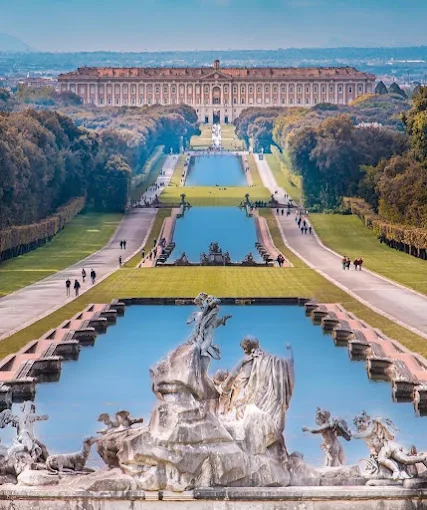
The morning sun strikes the pale limestone facade of the Caserta Royal Palace, illuminating a structure so vast it seems to stretch to the horizon. You hear the gentle splash of water from the monumental fountain at the base of the grand staircase, the distant echo of footsteps in the 120-meter-long (394-foot) Gallery of Battles, and the rustle of leaves in the world’s longest formal garden vista. This is the Reggia di Caserta, a palace built between 1752 and 1780 by the Bourbon King Charles VII of Naples to rival Versailles and assert his kingdom’s power on the European stage [[25]]. Designed by architect Luigi Vanvitelli, it is the largest royal residence in the world by volume, with 1,200 rooms, 34 staircases, and a garden that extends an astonishing 3.3 kilometers (2 miles) into the distance. In an age of minimalist design and digital experiences, the Caserta Palace matters now more than ever—it is a breathtaking testament to human ambition, artistic vision, and the enduring power of physical space to inspire awe.
Why Caserta Royal Palace Embodies Theatrical Power
The Caserta Royal Palace is not merely a building; it is a three-dimensional manifesto of Bourbon power and Enlightenment ideals. Commissioned by King Charles VII in 1752, its primary purpose was political: to move the royal court away from the volatile city of Naples and to create a monument that would rival—and even surpass—the great palaces of Europe, particularly Versailles [[25]]. The genius of architect Luigi Vanvitelli lay in his synthesis of styles: he combined the grandeur of Roman Baroque with the rational order of Neoclassicism, creating a structure that was both theatrical and harmonious. The palace’s scale is staggering—its main facade spans 249 meters (817 feet), and its central dome rises 43 meters (141 feet) above the ground. But its true marvel is the integration of architecture and nature. The 120-hectare (297-acre) park is a masterpiece of hydraulic engineering, featuring a complex system of aqueducts that feed over 100 fountains, including the dramatic Fountain of Diana and Actaeon. This solved a critical problem: how to demonstrate absolute control over both the built environment and the natural world. Today, it fulfills a modern need—for a place where beauty is not subtle, but overwhelming; where history is not read, but felt in every echoing corridor and sun-drenched courtyard.
The Best Time to Experience Caserta Royal Palace
To experience the palace and its gardens in their most comfortable and photogenic state, plan your visit for the specific windows of April 20–May 30 or September 10–October 15, 2026. During these periods, the weather in Campania is ideal, with daytime temperatures ranging from a pleasant 21–26°C (70–79°F), and the gardens are lush and green from spring rains [[11]]. The best time of day to visit is in the morning, between 9:00 AM and 11:30 AM, when the light is soft, the fountains are fully operational, and you can explore the vast interiors before the crowds arrive. It is strongly advised to avoid the peak summer months of July and August, when temperatures can exceed 33°C (91°F) and the lack of shade in the expansive gardens makes walking uncomfortable [[43]]. For the most current information on opening hours, fountain schedules, and guided tours, always consult the official website: reggiadicaserta.cultura.gov.it.
Approximate Budget for a 7-Day Trip (2026)
This budget is calculated for a solo traveler seeking a comfortable, culturally rich experience in the Campania region in 2026, based on current inflation trends and average regional costs.
- Accommodation: €75–€130 per night. Staying in Caserta town offers easy access to the palace. Options in Naples are more varied but require a 40-minute train ride.
- Food: €40 per day. Breakfast (€4): a cappuccino and cornetto at a local bar. Lunch (€15): a plate of pasta e fagioli at a trattoria near the palace. Dinner (€21): a main course like melanzane alla parmigiana with a glass of local Aglianico wine.
- Transportation: €120 total. A regional train ticket from Naples to Caserta (€3). A weekly UnicoCampania pass for unlimited regional transport (€20). Local transport within Caserta is primarily on foot.
- Attractions: Entry to the Royal Palace and Park (€15). Guided tour of the private apartments (€10). Visit to the nearby Aqueduct Carolino (free).
- Miscellaneous: €85. This covers a bottle of local wine (€15), several gelato stops (€3 each), a cooking class featuring regional recipes (€40), and souvenirs like a replica of the palace’s floor plan.
Total Estimated Cost: €855–€975
6 Essential Caserta Royal Palace Experiences
- Walk the Grand Staircase and Gallery of Battles: Enter through the main courtyard and ascend the monumental staircase. Then, walk the full length of the 120-meter Gallery of Battles, lined with frescoes depicting Bourbon military victories.
- Witness the Fountain Spectacle: Time your visit for 10:00 AM or 3:00 PM when the fountains in the upper garden are turned on. The Fountain of Diana and Actaeon, with its dramatic sculptures, is the highlight.
- Stroll the 2-Mile Garden Vista: Walk the entire length of the central axis of the park, from the palace to the Great Waterfall. The perspective is a masterpiece of Baroque design, meant to be experienced on foot.
- Explore the Private Apartments: Take a guided tour of the king’s and queen’s private quarters to see the opulent furnishings, silk wall coverings, and intimate spaces that contrast with the palace’s public grandeur.
- Visit the Palatine Chapel: This small but exquisite chapel, modeled after St. Peter’s in Rome, features a stunning coffered ceiling and a beautiful altar. It’s a peaceful retreat from the palace’s scale.
- See the Aqueduct Carolino: Just outside the palace grounds, this 38-kilometer (24-mile) long aqueduct, also designed by Vanvitelli, was the engineering marvel that made the fountains possible. Its arches are a sight to behold.
3 Hidden Gems Most Travelers Miss
- The English Garden: Tucked away at the far end of the park, this 18th-century landscape garden is a romantic contrast to the formal Italian gardens. It features faux ruins, a lake, and winding paths—a favorite of Queen Maria Carolina.
- The Belvedere Pavilion: At the very end of the garden vista, this small pavilion offers the best panoramic view back toward the palace. It’s a perfect spot for a quiet moment of reflection.
- The Secret Courtyard of the Servants’ Quarters: On a guided “behind-the-scenes” tour, you can access the lower courtyards where the palace’s hundreds of servants lived and worked. It’s a fascinating glimpse into the hidden machinery of royal life.
Cultural & Practical Tips
- Wear comfortable walking shoes: You will walk at least 5 kilometers (3 miles) to see the palace and gardens properly. Good footwear is essential.
- Bring a hat and sunscreen: There is very little shade in the gardens. Protect yourself from the sun, especially in the warmer months.
- Learn a few key phrases: “Dov’è la Reggia?” (DOH-veh lah REH-jah?) for “Where is the palace?”, and “Un caffè, per favore” (oon kah-FEH).
- Photography is allowed, but no tripods: You can take photos in most areas, but professional equipment requires a special permit.
- Combine your visit with other sites: Caserta is easily paired with a trip to Naples, Pompeii, or the Amalfi Coast. The train station is a 15-minute walk from the palace.
- Respect the silence in the private apartments: These are historic spaces. Keep your voice low to preserve the atmosphere for everyone.
Conclusion: Travel with Awe, Not Just Admiration
The Caserta Royal Palace is not a place to be simply admired from a distance; it is a space to be fully absorbed. In 2026, as we seek travel experiences that are both grand and meaningful, Caserta offers a powerful reminder of the human capacity for creation on a monumental scale. Your journey here should be one of awe—not just capturing its image, but feeling the weight of its history in the cool marble halls, hearing the rush of its fountains, and understanding the immense ambition that shaped every stone. By traveling with this mindful wonder, you honor the legacy of Vanvitelli and the Bourbons and help preserve this UNESCO World Heritage site for future generations. Slow down. Sit on a bench in the garden and let the sheer scale of it all sink in. In that quiet moment of reverence, you don’t just visit Caserta—you enter into a timeless dialogue with the human spirit’s quest for beauty and power.