
Cité de l'Espace : European Space Ambition Touches Earth
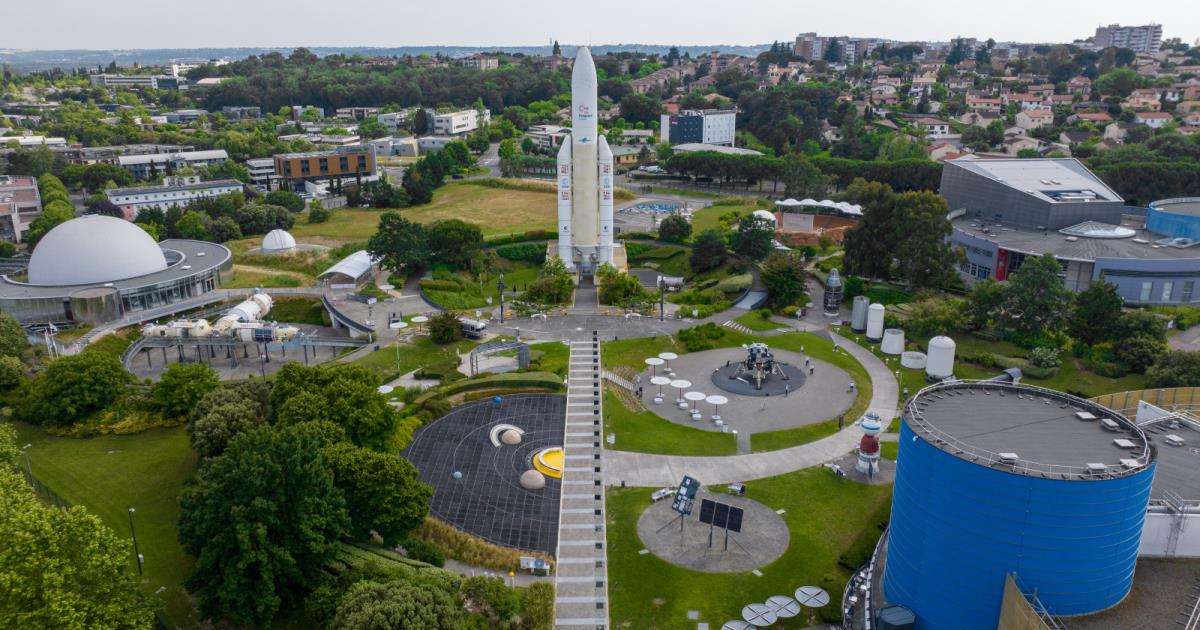
The scale reveals itself gradually. First, the shadow—a perfect silhouette of a rocket stretching 53 meters across sun-baked concrete. Then, the structure itself: Ariane 5 standing vertically against the Occitan sky, its white fuselage gleaming, orange boosters scarred with authentic soot from atmospheric re-entry tests. But this is no launchpad. Here in Toulouse, Europe's aerospace capital, the rocket rests horizontally within touching distance, its payload bay open like a cathedral nave where visitors walk beneath thermal tiles that have faced the void. The air carries the scent of warm metal and ozone, mingling with children's gasps as they press palms against the same hull that carried satellites to geostationary orbit. This is not simulation but artifact—a deliberate choice by Cité de l'Espace to display genuine flight hardware rather than replicas. In 2026, this 6-hectare complex remains Europe's most authentically grounded space experience—not because it promises weightlessness, but because it honors the earthbound ingenuity that makes spaceflight possible.
Why Cité de l'Espace Embodies European Space Heritage
Cité de l'Espace represents more than interactive exhibits—it embodies Europe's distinct approach to space exploration: collaborative, pragmatic, and deeply rooted in scientific tradition. Opened in 1997 adjacent to Toulouse Space Centre (CNES headquarters), the complex was conceived not as entertainment venue but as public interface for Europe's space program. Unlike NASA-centric museums, Cité de l'Espace showcases multinational achievement: the Soyuz capsule that ferried Thomas Pesquet to the ISS, the Rosetta lander that touched comet 67P, the ATV cargo vehicle that resupplied the station—all developed through ESA's 22-nation partnership. Its power lies in tangible authenticity: the full-scale Ariane 5 is flight-certified hardware retired after ground tests; the Moon rock embedded in the plaza was gifted by NASA after Apollo 17; the planetarium's projectors replicate starfields visible from ISS cupola windows. Crucially, 40% of staff are active or retired aerospace engineers who volunteer as guides—ensuring every explanation carries the weight of lived experience rather than scripted performance.
The Best Time to Experience Cité de l'Espace
For optimal conditions—manageable crowds, comfortable outdoor exhibit temperatures, and access to special programming—visit between May 18 and June 12 or September 20–October 5. These windows deliver daytime temperatures of 22–28°C (72–82°F), ideal for exploring the 3-hectare outdoor plaza housing full-scale rockets without summer's oppressive heat. Arrive at opening (9:30 AM Tuesday–Friday; 10:00 AM weekends) to experience the Ariane 5 plaza in near-solitude before school groups arrive—a critical window for unobstructed photography and contemplation. September offers a second excellent opportunity: departing summer crowds, stable weather, and the added dimension of autumn light gilding the rocket's white fuselage during golden hour (5:00–6:30 PM). Avoid July 10–August 25 when temperatures exceed 34°C (93°F), making metal exhibits dangerously hot to touch and indoor spaces uncomfortably congested. Note that the complex closes entirely on January 1, May 1, July 14, and December 25—verify openings at cite-espace.com before travel.
Approximate Budget for a 7-Day Trip (2026)
Based on 2025 benchmarks adjusted for 4% inflation (per INSEE and Occitanie Tourism Board projections), here's a realistic mid-range budget for a Toulouse-focused itinerary including Cité de l'Espace:
- Accommodation: €95–€140 per night for a family-run guesthouse in Carmes district or boutique hotel near Métro Line B (essential for easy Cité access).
- Food: €85–€100 per day—breakfast at bakery (€6), lunch of cassoulet at market hall (€20–€25), dinner featuring regional specialties with Fronton wine (€45–€55).
- Transportation: €25 for a 7-day Pastel Pass (covers all Métro/bus). Shuttle bus from Toulouse Métro B Ramonville station to Cité: included with admission. Train from Paris: €60–€90 one-way (4h45 via SNCF Connect).
- Attractions: Cité de l'Espace entry: €24. Planetarium show supplement: €6. Guided engineer tour (weekends only): €12. Allocate €110 total for related sites (Aeroscopia aviation museum).
- Miscellaneous: €50 for ESA mission patches from gift shop, violet-infused chocolates from Toulouse chocolatiers, or donations to the Youth Space Education Fund.
Total Estimated Cost: €1,050–€1,500 for seven days, excluding international flights.
5 Essential Cité de l'Espace Experiences
- Ariane 5 Full-Scale Exhibit: Walk beneath the 53-meter rocket horizontally displayed outdoors—climb the observation platform at 10:00 AM when morning light illuminates engine nozzles without harsh shadows.
- Soyuz Capsule Interior: Enter the actual descent module that carried European astronauts—experience the cramped reality of space travel with authentic control panels and parachute compartment.
- Planetarium Stellarium: Europe's largest fixed-dome planetarium (28m diameter)—attend the 11:30 AM "Orbiting Earth" show featuring real ISS footage with commentary by active ESA astronauts (English sessions available).
- Mission Control Simulator: Participate in a 45-minute simulated ISS resupply mission—book the 2:00 PM English session 30 days ahead via cite-espace.com (ages 12+, limited to 16 participants).
- Moon Rock Plaza: Touch the lunar sample embedded in outdoor plaza stone—the only publicly accessible Moon rock in France, collected during Apollo 17's final mission.
3 Hidden Gems Most Travelers Miss
- Engineers' Lunch Corner: At 12:30 PM daily, retired CNES engineers gather at picnic tables behind the gift shop—approach respectfully with a question about Ariane 6 development for impromptu insights rarely shared on formal tours.
- Behind-the-Scenes Tunnel: During weekday afternoons, request access to the service tunnel connecting Soyuz exhibit to simulator building (ask at information desk)—reveals authentic cable runs and thermal insulation used in actual spacecraft.
- Observatoire de la Montagne Noire: A 45-minute drive south to this research observatory partners with Cité de l'Espace—book a 9:00 PM stargazing session (€18) to view planets through a 60cm telescope after your daytime space immersion.
Cultural & Practical Tips
- Book Simulator Sessions Early: Reserve Mission Control slots exactly 30 days ahead at 9:00 AM CET via cite-espace.com—English sessions sell out within hours during peak season.
- Respect Artifact Integrity: Never touch spacecraft surfaces except at designated interactive points. The Soyuz's interior fabric is original—oils from skin accelerate deterioration of 30-year-old materials.
- Learn Key Phrases: "Bonjour," "Merci," and "Comment fonctionne Ariane 6?" (How does Ariane 6 work?) show respect—engineer-guides often share technical insights with curious visitors.
- Photography Protocol: Tripods permitted only in outdoor plaza before 11:00 AM. No flash photography inside Soyuz capsule—UV radiation damages original instrumentation.
- Combine with Local Aerospace: Visit Aeroscopia aviation museum (adjacent to Toulouse-Blagnac Airport) to see Airbus A380 prototype—purchase combined ticket online for 15% savings.
Conclusion: Travel with Cosmic Perspective, Not Just Curiosity
Cité de l'Espace endures not as theme park attraction, but as testament to humanity's collaborative reach beyond atmosphere. As a conscious traveler, your presence should honor this legacy: engage with engineer-guides not as performers but as knowledge-keepers, support the Youth Space Education Fund through official donation boxes, and understand that every exhibit represents decades of multinational cooperation in an increasingly fragmented world. Sit quietly on the plaza bench at dusk and watch the Ariane 5 silhouette against twilight—the same sky that cradles the ISS orbiting 400 kilometers above. By approaching this complex not as entertainment but as inspiration, you help ensure it continues nurturing not just visitors' wonder, but tomorrow's engineers—for those who recognize that space exploration's greatest achievement isn't reaching orbit, but reminding us that Earth remains our only shared home.