
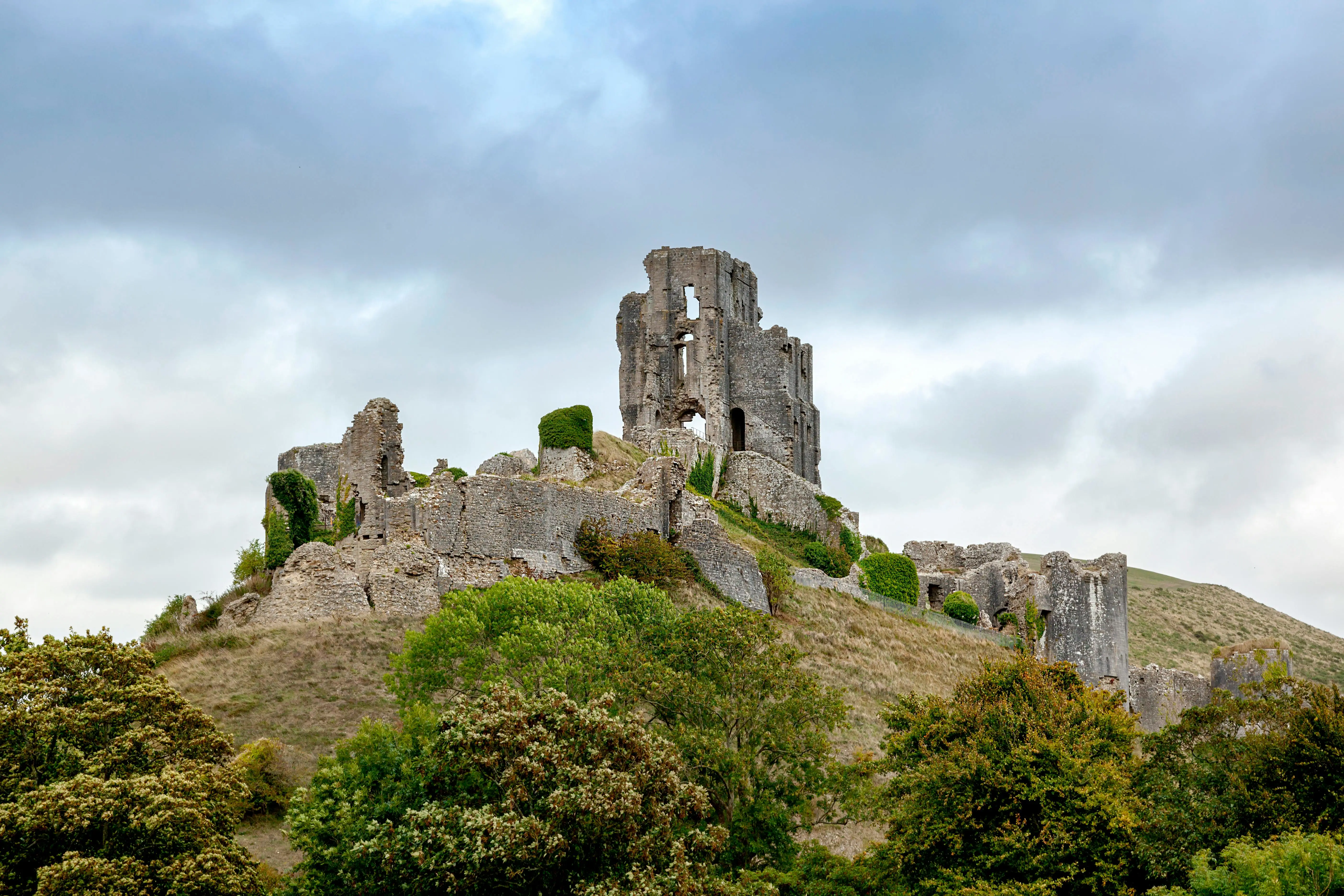
Corfe Castle Ruinse Medieval Stone Meets Purbeck Hills
Wind whistles through the arrow slits of the keep as dusk settles over the Purbeck Hills—carrying the scent of wild thyme and damp limestone from walls that have stood for over 1,000 years. You stand within the bailey of the Corfe Castle ruins, tracing the cold surface of Norman masonry while the village lights below flicker like grounded stars against the darkening landscape. Construction began in 1066 under William the Conqueror; unlike intact fortresses preserved in amber, this site bears the scars of the English Civil War, deliberately slighted by Parliamentarian forces in 1646 using gunpowder to render it indefensible. As you walk the 30-meter (98-foot) height of the remaining keep, listening to the distant chuff of the heritage steam railway, you realize this place matters now more than ever: in an era of digital impermanence, the Corfe Castle ruins offer a tangible connection to resilience, destruction, and the enduring power of stone against the erosion of time.
Why Corfe Castle Ruins Embodies Resilience
The Corfe Castle ruins are not merely a picturesque backdrop; they are a forensic record of military engineering and political upheaval. Built initially as a motte-and-bailey structure before being rebuilt in stone between 1139 and 1195, the castle served as a royal fortress protecting the approach to Portland Harbour. The architecture showcases the transition from early Norman simplicity to sophisticated concentric defense systems: the inner bailey sits atop a natural chalk spur, while the outer bailey utilizes the steep terrain as a natural deterrent. The keep's walls, measuring 3.5 meters (11.5 feet) thick at the base, were designed to withstand siege engines, yet they ultimately fell to 36 barrels of gunpowder during the Civil War.
This destruction solved a political problem for Parliament—removing a Royalist stronghold—but created a cultural need for preservation that continues today. Acquired by the National Trust in 1946, the site now fulfills an educational role, demonstrating the lifecycle of medieval fortifications from construction to slighting. The visible damage tells a specific story: the collapsed west wall shows where explosives breached the structure; the intact gatehouse reveals 14th-century portcullis mechanisms. When you examine the tool marks on the Purbeck Stone, you touch the work of masons who died centuries ago. The Corfe Castle ruins stand as a testament to the fact that destruction does not erase history; it merely adds another layer to the narrative, preserved by the very organization that now manages the site for over 150,000 annual visitors.
The Best Time to Experience Corfe Castle Ruins
To witness the Corfe Castle ruins in optimal atmospheric conditions, plan your visit between May 20 and June 30. During this window, temperatures average 16-22°C (61-72°F), and the surrounding meadows bloom with orchids and poppies, creating a vibrant contrast against the grey stone. The best light for photography occurs between 7:00-9:00 AM when morning mist clings to the valley floor, and 6:30-8:30 PM for golden hour illumination on the west-facing walls. Visiting early also allows you to explore before tour buses arrive from London, typically between 11:00 AM and 2:00 PM.
Autumn offers a secondary window—specifically September 15 to October 15—when summer crowds dissipate and the heathland turns russet and gold. Temperatures remain mild at 13-18°C (55-64°F), though daylight hours shorten rapidly. Avoid July 25 to August 25 when school holidays push visitor numbers above 2,000 daily, creating congestion on the narrow keep stairs and limited parking in the village square. Winter months (November-February) offer solitude but challenging conditions; high winds often close the keep climb for safety, and sunset occurs as early as 4:05 PM in December. For current opening hours and closure notices, verify information at www.nationaltrust.org.uk/corfe-castle or contact the site office at +44 (0)1929 481294.
Approximate Budget for a 7-Day Trip (2026)
Exploring the Corfe Castle ruins and the wider Isle of Purbeck requires moderate budgeting, as Dorset is a premium domestic destination. The following budget reflects mid-range travel for one person in 2026, accounting for approximately 4.5% UK inflation (ONS data, January 2026). Prices assume a base in Corfe Village or Wareham for optimal access to the site and coastal paths.
- Accommodation: £90-£150 per night for a boutique inn or cottage in Corfe Village (6 nights = £540-£900). Budget options: £50-£70 for B&Bs in Wareham or camping at Purbeck Hills.
- Food: £50-70 per day total • Breakfast: £10-15 (Full English at The Castle Inn) • Lunch: £15-20 (Ploughman's lunch at The Bankes Arms) • Dinner: £25-35 (Three-course meal at The Fox & Hounds or Greyhound)
- Transportation: • Train London Waterloo to Wareham: £60-100 return (advance booking) • Local bus (Route 40): £4.50 day pass • Car rental (recommended): £65/day plus fuel £1.58/liter • Parking at Corfe Village: £6/day (March-October)
- Attractions: • Corfe Castle Entry (National Trust): £14 (Free for members) • Swanage Steam Railway: £25 return • Old Harry Rocks boat tour: £30 • Free: Village exploration, churchyard, public footpaths
- Miscellaneous: • Guidebook and map: £12 • Local pottery souvenirs: £25 • Travel insurance: £40-60 for week • Waterproof gear rental: £20
Total estimated cost: £1,350-£1,650 for 7 days (excluding international flights)
5 Essential Corfe Castle Experiences
- Climb the Keep at Sunrise: Arrive at the gatehouse by 8:00 AM when the site opens. Ascend the 105 stone steps to the top of the keep. The view encompasses the entire Purbeck ridge; on clear days, you can see the Isle of Wight 30 kilometers away. Bring a windbreaker; exposure at 30 meters (98 feet) creates wind chill 5°C below ground level. Spend 20 minutes sketching or photographing the village layout from above before crowds arrive.
- Walk the Medieval Town Plot: Exit the castle grounds and walk south toward St. Edward's Church. The grassy mounds surrounding the village center mark the foundations of the medieval town destroyed during the Civil War. Follow the information boards to identify the market square and burgage plots. This self-guided walk takes 45 minutes and provides context for the castle's economic influence. Best visited late afternoon when shadows highlight the earthworks.
- Ride the Swanage Steam Railway: Board the heritage train at Corfe Castle Station (located 500 meters from the ruins). The 10-kilometer journey to Swanage takes 40 minutes, passing through tunnels and cuttings unchanged since 1885. Book the first departure at 10:00 AM for the quietest carriage. The smell of coal smoke and the rhythm of the wheels evoke the Victorian era when the castle became a tourist destination rather than a fortress.
- Explore the Gatehouse Mechanisms: Join the free hourly talk held at the inner gatehouse (check times at entrance). A National Trust volunteer demonstrates how the portcullis and murder holes functioned. You will see the original grooves worn by iron chains and the defensive angles designed to trap attackers. This 15-minute session offers technical insight often missed by independent walkers. Questions are encouraged; guides are typically local historians.
- Dine in the Village Square: Reserve a table at The Bankes Arms, a 16th-century coaching inn directly opposite the castle gates. Order the local lamb stew and a Dorset apple cake. Sit in the courtyard if weather permits; the view of the illuminated ruins at night is unmatched. This experience connects you to the continuous hospitality tradition of the village, which has served travelers for over 400 years. Booking essential for dinner; walk-ins accepted for lunch.
3 Hidden Gems Most Travelers Miss
- St. Edward's Churchyard Yew: While crowds focus on the castle, the parish church dedicated to King Edward the Martyr (murdered 978 AD) holds a yew tree estimated to be 1,000 years old. Access via the footpath behind the village school. The churchyard offers a quiet viewpoint of the castle ruins framed by ancient branches. Open daily 9:00 AM-4:00 PM. The church contains a shrine to Edward; lighting a candle here provides a moment of reflection away from the tourist flow. Donations for maintenance appreciated.
- Nine Barrow Down Walk: Contact the Purbeck District Council (+44 (0)1929 556111) for access to this chalk ridge trail starting 2 kilometers east of the village. The 5-kilometer circular route offers elevated views of the castle ruins from the opposite side of the valley. Best visited May-June for chalk gentian blooms. The path is steep; wear hiking boots with ankle support. This perspective reveals the castle's strategic placement within the landscape, showing why it was deemed impregnable for so centuries.
- The Cellar at The Greyhound: Ask the landlord at The Greyhound Inn for permission to view the 14th-century wine cellar beneath the bar. Access is restricted but available during weekday afternoons (2:00-4:00 PM) if staff are present. The vaulted stone ceiling remains original, used historically to store supplies during sieges. This space is rarely advertised; politeness and purchasing a drink increase your chances of access. It offers a tangible connection to the domestic life supporting the fortress above.
Cultural & Practical Tips
- Respect the ruins: Do not climb on loose masonry or venture beyond barrier ropes. The National Trust employs conservation masons who repair damage caused by visitors. Removing stones or graffiti is a criminal offense under the Ancient Monuments Act 1979. Stay on marked paths to protect archaeological deposits beneath the grass.
- Understand access limitations: The keep climb involves steep, uneven stairs not suitable for limited mobility. Alternative viewing platforms exist in the outer bailey. Wheelchair access is available to the gatehouse and exhibition rooms. Request an accessibility map at the ticket office upon arrival.
- Photography guidelines: Tripods are permitted outside but restricted inside the gatehouse exhibition during busy periods. Drone use requires written permission from the National Trust and Civil Aviation Authority—apply 6 weeks in advance. Respect other visitors; do not block pathways for extended shoots during peak hours (11:00 AM-3:00 PM).
- Learn local terminology: "Slighting" (deliberate destruction of a fortress); "Bailey" (enclosed courtyard); "Portcullis" (heavy grilled gate). Using these terms shows respect for historical accuracy and helps guides assist you better during tours.
- Weather preparedness: The site is exposed; wind chill is common even in summer. Pack waterproof layers; Dorset showers are sudden. Wear sturdy shoes with grippy soles—limestone becomes slippery when wet. Sun protection is essential; reflection from white stone increases UV exposure by 20%.
- Support preservation: Entry fees fund ongoing conservation. Consider becoming a National Trust member (£126/year) for free entry to this and 500+ other properties. Donate to the specific Corfe Castle conservation fund if you wish to support structural repairs directly.
- Dog policy: Dogs are welcome on leads in the outer bailey and grounds but not inside the keep or exhibition rooms. Water bowls are provided at the entrance. Clean up after your pet; fines apply for waste left on site. The surrounding village is also dog-friendly.
Conclusion: Travel with Reverence, Not Just Sightseeing
The Corfe Castle ruins do not exist merely to be photographed—they exist to be understood as a chapter in England's turbulent history. When you walk these grounds in 2026, you are not observing a static monument; you are entering a space where kings were crowned, sieges were endured, and gunpowder changed the landscape forever. The masons who laid the stones are gone, but their intent remains embedded in the limestone. The village that grew in its shadow continues to thrive, supported by the very heritage it protects. This is not heritage frozen in amber—it is heritage living, breathing, enduring.
So slow down. Sit on the grassy banks of the outer bailey for ten minutes without your phone. Listen to the wind that once carried the sounds of battle and now carries the laughter of children. Buy your lunch from a village pub whose owners pay rates that support the local community. Donate to the conservation fund rather than purchasing plastic souvenirs. Leave only footprints on ancient grass, take only memories of stone against sky, carry home only the profound understanding that some things—history, community, structural integrity—cannot be rushed, cannot be owned, can only be honored. The ruins will still stand in 2126 if we choose stewardship over exploitation today.