
Ebro Delta Nature Reserve Wetland Wilderness Meets Mediterranean Light
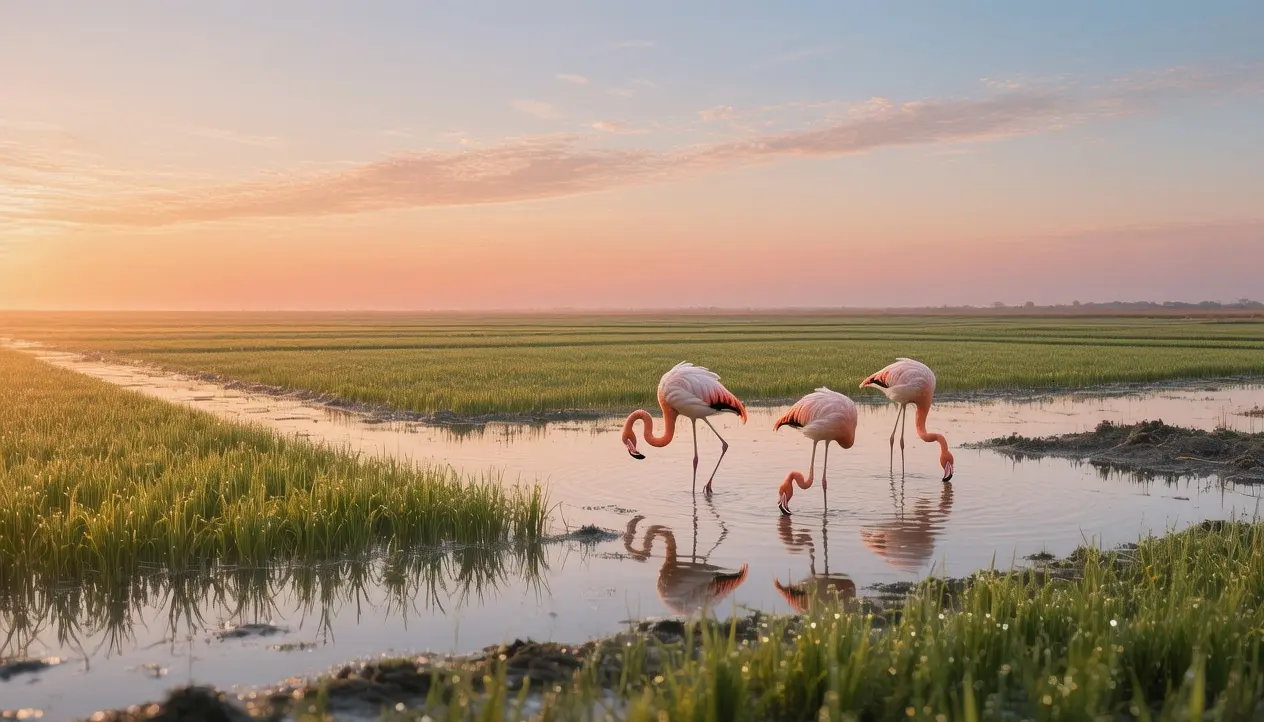
Dawn breaks over the lagoons as mist clings to the surface of the water—light catching the pink plumage of flamingos taking flight while the scent of salt and damp earth fills the air. You stand on the wooden boardwalk of the Ebro Delta nature reserve, breathing air scented with wild rice and brine, listening to the cacophony of 300 bird species waking to the morning sun. This is the largest aquatic bird habitat in the western Mediterranean, a 320-square-kilometer mosaic of wetlands, rice paddies, and sandbars formed by sediment deposited over millennia. The silence here is deceptive; beneath the surface, freshwater from the Ebro River mixes with saltwater from the sea, creating a brackish ecosystem that supports life in its most abundant form. In 2026, as rising sea levels threaten coastal deltas globally, the Ebro Delta nature reserve matters because it remains a critical frontline for conservation—demanding visitors witness not just beauty, but the fragile balance between land, water, and human survival.
Why Ebro Delta Nature Reserve Embodies Ecological Resilience
The Ebro Delta nature reserve solves a fundamental environmental need: the preservation of a transitional ecosystem where river meets sea. Designated a Natural Park in 1983 and a Ramsar Wetland of International Importance in 1993, this 320-square-kilometer sanctuary protects the second-largest wetland in Spain after Doñana. The geological significance is profound; the delta extends 50 kilometers into the Mediterranean, growing at a rate of 40 hectares per year historically, though sediment retention from upstream dams has slowed this expansion. The landscape is divided into distinct zones: the Banya and Tranca lagoons (saltwater), the rice fields (freshwater), and the Punta del Buda sandbar (coastal dunes). This diversity fulfills a need for biodiversity; over 50,000 waterbirds winter here annually, including the world's third-largest colony of Audouin's gulls.
Technical conservation is managed by the Patronat del Parc Natural del Delta de l'Ebre, which employs 40 rangers to monitor water levels and combat invasive species like the apple snail. The 2018–2024 restoration project (€8 million investment) focused on reinforcing dunes and restoring salt marshes to buffer against storm surges. This preservation fulfills a need for tangible connection to agricultural heritage; in 2026, amidst industrial farming, the Ebro Delta nature reserve offers a landscape where rice cultivation—a practice introduced by Arabs in the 17th century—coexists with wildlife. The 15,000 hectares of rice fields act as artificial wetlands, providing feeding grounds for herons and ibises during the growing season (May–September). This symbiosis between farmer and bird is rare, making the delta a model for sustainable land use where economic activity supports rather than destroys ecological integrity.
The Best Time to Experience Ebro Delta Nature Reserve
For optimal birdwatching conditions—when migration is in full swing and the rice fields are flooded—target April 15–May 25 or September 10–October 20. During these windows, daytime temperatures in Deltebre range 18–26°C (64–79°F), while evenings cool to 12–16°C (54–61°F), perfect for evening boat trips without summer heat. For photography and atmosphere, arrive at the Tancada lagoon hide by 7:00–8:00 AM, when the light is soft and birds are most active.
The golden hour before sunset—approximately 8:30–9:30 PM in June, 7:00–8:00 PM in October—casts warm amber light onto the water, creating ideal conditions for capturing the reflection of flamingos against the sky. Visit Tuesday through Thursday to avoid weekend crowds from Barcelona and Tarragona; Saturday afternoons see visitor numbers exceed 3,000 people at the main visitor centers, creating bottlenecks at the observation hides. Avoid August 1–20 unless you tolerate temperatures exceeding 32°C (90°F) and intense mosquito activity; similarly, avoid December 24–January 6 when some visitor centers close for holidays or operate on reduced hours.
Approximate Budget for a 7-Day Trip (2026)
This budget reflects mid-range travel with comfortable accommodations, quality dining, and nature experiences—based on 2025 pricing adjusted for Spain's projected 3.2% inflation rate for 2026. The Ebro Delta is a rural destination; costs are moderate, but guided boat tours and bike rentals add to the expense. This itinerary assumes a base in Deltebre or Sant Jaume d'Enveja.
Accommodation: €90–€180 per night
- Rural masia in rice fields: €90–€130 (Mas de la Vinya)
- 3-star hotel in Deltebre: €130–€180 (Hotel Riu Ebre)
- Eco-lodge near lagoons: €150–€200 (Delta Ecolodge)
Food: €45–€75 per day
- Breakfast: €7–€12 (coffee, pastry, toast at local café)
- Lunch: €16–€28 (menú del día: rice dishes, fish, or meat with wine)
- Dinner: €25–€40 (traditional restaurant: seafood paella, wine, dessert)
Transportation:
- Rental car (7 days, compact): €280–€350 (essential for reaching hides)
- Train Barcelona to L'Aldea (RENFE): €15 one-way, 2 hours
- Fuel for regional exploration (400 km): €60–€75
- Bicycle rental (daily): €15–€25
Attractions & Experiences:
- Boat tour (Passatge de les Illes): €25 per person
- Visitor Center entry: €4
- Guided birdwatching tour: €40
- Rice Museum entry: €5
- Kayak rental (half-day): €30
Miscellaneous:
- Local rice (DOP Arròs de l'Ebre, 1kg): €5–€10
- Souvenirs and local food: €40–€70
- Travel insurance (7 days): €35–€55
- Emergency fund: €100 (recommended)
Total for 7 days (mid-range): €1,400–€1,900 per person (excluding international flights)
6 Essential Ebro Delta Nature Reserve Experiences
- Take a Boat Tour of Passatge de les Illes: This narrow channel cuts through the heart of the delta. Depart from the Embarcador dock at 10:00 AM. The 2-hour tour navigates through rice fields and lagoons, offering close views of herons and turtles. The guide explains the hydraulic system that manages water flow. Allow 2 hours. The boat is covered, providing shade in summer. Photography is permitted; bring a zoom lens. This experience is the best introduction to the Ebro Delta nature reserve.
- Birdwatch at La Tancada Lagoon: Located near Sant Jaume d'Enveja, this hide overlooks one of the most productive lagoons. Arrive by 8:00 AM. The hide is equipped with benches and informational panels. You'll see flamingos, avocets, and black-winged stilts. Best visited in spring during nesting season. Allow 90 minutes. No entry fee; it is an open public facility. Bring binoculars; the birds are often distant. This experience offers solitude away from the main tourist centers.
- Visit the Punta del Buda Lighthouse: Located at the easternmost tip of the delta. Access via a 3-kilometer dirt road from the parking area. The lighthouse dates to 1863 and offers panoramic views of the Mediterranean. Entry free; open daylight hours. The beach here is wild and undeveloped. Best visited at sunset. No facilities exist; bring water and snacks. This spot reveals the raw edge of the delta where land meets sea.
- Explore the Rice Museum (Museu del Arròs): Located in Sant Jaume d'Enveja. Open Tuesday–Saturday, 10:00 AM–6:00 PM. Entry €5. The exhibition details the history of rice cultivation from the 17th century to present. The old mill building is architecturally significant. Allow 60 minutes. This experience contextualizes the landscape you see outside. Photography permitted without flash. The shop sells local DOP rice varieties.
- Cycle the Green Way (Via Verda): A 25-kilometer paved path connects Deltebre to the beaches. Rent a bike at 9:00 AM in Deltebre. The route passes through rice fields and pine forests. The gradient is flat, suitable for all fitness levels. Allow 3 hours round-trip. Stop at the Gola del Mig viewpoint. This experience offers an active way to explore the Ebro Delta nature reserve. Helmets are recommended.
- Dine on Delta Seafood: Experience the local cuisine at Restaurant Riu Ebre (Carrer Major 45). Reserve a table for 9:00 PM. Order the arròs negre (squid ink rice) or grilled eel (traditional delicacy). The terrace overlooks the river. Prices average €35 per person without wine. This meal connects you to the gastronomic traditions of the delta. Wine pairing: White wine from Terra Alta (€18 per bottle).
3 Hidden Gems Most Travelers Miss
- El Garxal Sandbank: Accessible only by boat or a long hike, this sandbank is a critical nesting site for terns. Join a guided excursion from the Visitor Center (€30, Saturdays at 9:00 AM). Access is restricted during nesting season (May–July) to protect birds. It is overlooked because it requires permission to visit. Best visited in autumn when restrictions lift. This experience offers a glimpse of the delta's most fragile ecosystem.
- Illa de Buda: This island sits at the mouth of the northern arm of the river. Access via a 45-minute boat ride from Deltebre. The island features a lighthouse and abandoned farmhouses. Entry free; boat tour costs €25. It is special because it feels like the end of the world. Visit at 11:00 AM when the light is clear. No facilities exist; bring supplies. This spot offers isolation impossible on the mainland.
- Traditional Fishermen Huts (Barracas): Scattered along the lagoons, these wooden huts were used by fishermen in the 19th century. Some are preserved near the Quart Vell lagoon. Access via the cycling path. Entry free; view from outside. They are overlooked by tourists focused on bird hides. Best visited in the afternoon. This site reveals the human history of the wetlands. Photography allowed; respect private property.
Cultural & Practical Tips
- Language etiquette: Catalan is the primary language; Spanish is widely understood. Key phrases: Bon dia (BON DEE-ah = good morning), Si us plau (see oos PLAW = please), Gràcies (GRAH-see-es = thank you), Parla anglès? (PAR-lah ang-LES = do you speak English?). Using Catalan greetings shows respect for local identity.
- Mosquito protection: The delta has a high mosquito population, especially in summer. Wear long sleeves and pants at dusk. Apply insect repellent (DEET or Icaridin) every 4 hours. Accommodations provide mosquito nets; use them. This is critical for comfort in the Ebro Delta nature reserve.
- Photography guidelines: Flash photography is prohibited in bird hides. Tripods are permitted but cannot block pathways. Respect wildlife; do not approach nesting birds closer than 50 meters. Drones require permission from the park office (email info@parcdelta.cat 14 days ahead). Best light for photography is early morning or late evening.
- Accessibility considerations: The main Visitor Center and some hides are wheelchair accessible. The Punta del Buda road is unpaved and difficult for standard wheelchairs. Boat tours have limited accessibility; inform operators in advance. Taxis can drop off at most sites, but not on dirt tracks. This ensures you plan accordingly.
- Weather considerations: The delta can be windy, especially the Mestral. Check forecasts at meteocat.gencat.cat before traveling. Summer temperatures exceed 30°C; sun protection is critical. Wear SPF 50+ and hats. Winter nights can drop to 5°C; layer clothing. Rain can flood paths; check conditions.
- Dining schedules: Lunch runs 1:30–3:30 PM; dinner doesn't begin until 8:30 PM. Many restaurants close between 4:00–8:00 PM; plan accordingly. For authentic cuisine, try angules (baby eels) or galeres (slipper lobsters). Reservations recommended for weekends. Tipping 5–10% is appreciated for good service.
- Respect conservation zones: Some areas are closed to protect nesting birds. Heed signage; fines for trespassing start at €200. Stay on marked paths to avoid damaging vegetation. Do not feed wildlife; it disrupts natural behaviors. This etiquette ensures the preservation of the ecosystem.
Conclusion: Travel with Reverence, Not Just Checklists
The Ebro Delta nature reserve does not exist merely for your camera—it stands as a silent witness to the relentless struggle between river and sea. What it deserves is your reverence: the willingness to walk softly on the boardwalks without disturbing the reeds, to understand that the rice fields are not just scenery but a lifeline for thousands of birds, to recognize that this wetland is a fragile buffer against climate change first and a tourist destination second. In 2026, as coastal ecosystems face pressure from development and rising waters, the Ebro offers a model of resilience—demonstrating how humanity can coexist with nature without dominating it. Sit in the hide not to check a box, but to watch the flamingos feed. Eat the local rice not for novelty, but to support the farmers who maintain the wetlands. Let the water teach you that flow is more important than stagnation. Travel to the Ebro Delta not to consume the view, but to honor it, ensuring your footprint is as light as the mist that rises from the lagoons each morning.