
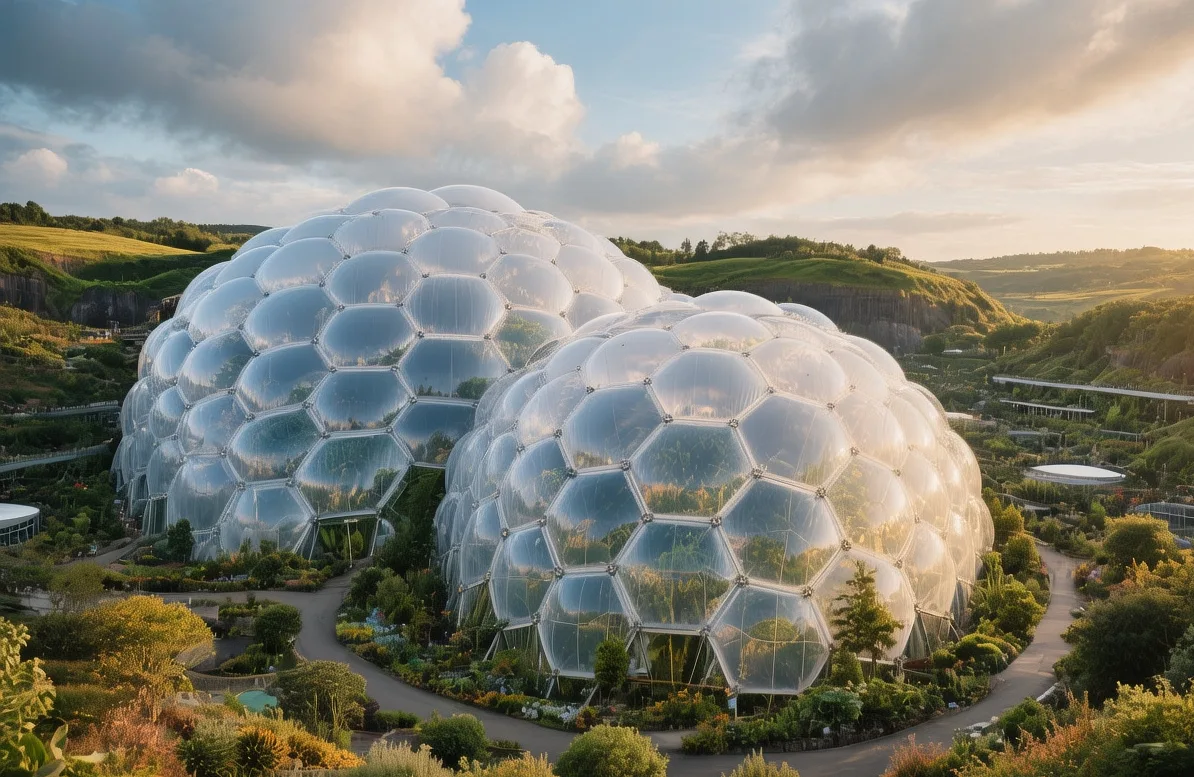
Eden Project Biomes Geodesic Domes Meet Cornish Clay
Humidity hits you first—a warm, wet embrace as the automatic doors slide open to reveal the Rainforest Biome towering 55 meters (180 feet) above the reclaimed clay pit. You stand on the wooden boardwalk, surrounded by banana plants and cocoa trees, while sunlight filters through hexagonal ETFE pillows that shimmer like soap bubbles against the Cornish sky. Construction began in 1998 on a site scarred by 160 years of kaolin mining; opened in 2001, this architectural marvel transformed a barren depression into a lush sanctuary housing over 1 million plants. As you trace the condensation on the transparent skin of the Eden Project biomes, listening to the distant hum of ventilation systems maintaining tropical conditions, you realize this place matters now more than ever: in an era of climate crisis, it stands as a living laboratory for sustainability, proving that human innovation can heal the wounds inflicted upon the earth.
Why Eden Project Biomes Embodies Regenerative Design
The Eden Project biomes are not merely greenhouses; they are the largest captive rainforests in the world, engineered to demonstrate the interdependence of humans and plants. Built within a 15-hectare (37-acre) kaolin clay pit, the structure solves a critical environmental problem: how to showcase biodiversity without consuming additional land. The geodesic domes, designed by Nicholas Grimshaw and engineered by Anthony Hunt, utilize a steel framework weighing 5,000 tonnes—lighter than the air contained within—covered in 1,000+ ETFE pillows that weigh only 1% of equivalent glass. This technical choice maximizes light transmission while minimizing heat loss, creating distinct climates: the Humid Tropics Biome maintains 25°C (77°F) year-round, while the Warm Temperate Biome mimics Mediterranean conditions.
Culturally, the site fulfills a need for connection to nature in an increasingly urbanized world. Founded by Tim Smit and opened to the public in March 2001, the project has hosted over 20 million visitors, serving as an educational hub for ecological literacy. The biomes house species ranging from 40-meter (131-foot) tall trees to microscopic fungi, all curated to tell stories of utility, medicine, and survival. When you walk beneath the canopy, you traverse a space where conservation science meets public engagement. The Eden Project biomes represent a shift from exploitation to regeneration, managed by the Eden Project Charity which reinvests surplus into community programs and environmental research, ensuring the site remains a beacon of hope for future generations facing ecological uncertainty.
The Best Time to Experience Eden Project Biomes
To witness the Eden Project biomes in optimal conditions, plan your visit between May 15 and June 25. During this window, temperatures average 15-20°C (59-68°F) outdoors, while the biomes maintain constant internal climates regardless of weather. The best light for photography occurs between 8:30-10:00 AM when morning sun illuminates the ETFE panels without glare, and the outdoor gardens are dew-fresh. Visiting early also allows you to explore the Rainforest Biome before tour groups arrive from London, typically between 11:00 AM and 3:00 PM.
Autumn offers a secondary window—specifically September 10 to October 15—when summer crowds dissipate and the outdoor harvest displays peak. Temperatures remain mild at 12-17°C (54-63°F), though daylight hours shorten rapidly. Avoid July 25 to August 25 when school holidays push visitor numbers above 5,000 daily, creating congestion on the narrow biome walkways and limited parking. Winter months (November-February) offer solitude but reduced outdoor planting; however, the Winter Lights event (November-January) transforms the site after dark. For current opening hours and event schedules, verify information at www.edenproject.com or contact the visitor center at +44 (0)1726 811911.
Approximate Budget for a 7-Day Trip (2026)
Exploring the Eden Project biomes and the wider Cornwall coast requires moderate budgeting, as the region commands premium prices during peak season. The following budget reflects mid-range travel for one person in 2026, accounting for approximately 4.5% UK inflation (ONS data, January 2026). Prices assume a base in St Austell or Fowey for optimal access to the site and coastal paths.
- Accommodation: £95-£160 per night for a B&B or boutique hotel in St Austell (6 nights = £570-£960). Budget options: £55-£75 for hostels in Par or camping near Mevagissey.
- Food: £50-70 per day total • Breakfast: £10-15 (Full English at The Cornish Bean) • Lunch: £15-20 (Pasties at The Cornish Pasty Co) • Dinner: £25-35 (Seafood platter at The Ship Inn or Eden's Restaurant)
- Transportation: • Train London Paddington to St Austell: £75-130 return (advance booking) • Local bus (Route 101): £4.50 day pass • Car rental (recommended): £65/day plus fuel £1.58/liter • Parking at Eden Project: £10/day (included with some tickets)
- Attractions: • Eden Project Entry: £33.50 • Zip Wire Experience: £45 • Cornwall Surf Lesson: £50 • Free: Outdoor gardens, playgrounds, exhibitions
- Miscellaneous: • Ordnance Survey Explorer Map 107: £10.99 • Local seed souvenirs: £15 • Travel insurance: £40-60 for week • Waterproof gear rental: £20
Total estimated cost: £1,450-£1,800 for 7 days (excluding international flights)
5 Essential Eden Project Experiences
- Walk the Rainforest Biome Canopy: Arrive at opening time (9:00 AM) to experience the humidity before crowds. Ascend the walkways to the highest level, 35 meters (115 feet) above the floor. The view encompasses the entire dome structure; listen for the sound of water misting systems activating. Bring a light layer; the temperature difference between levels is noticeable. Spend 45 minutes observing the cocoa and rubber trees. This experience provides tangible context for the commodities used in daily life.
- Explore the Warm Temperate Biome: Enter the second dome to experience Mediterranean climates. The scent of olive trees and citrus fills the air. Walk the lower paths to see wine grapes and cork oaks. Visit between 10:00-11:30 AM when light filters through the vines. The structure here is lower than the Rainforest Biome but wider, creating intimate garden rooms. Look for the bee hives near the entrance; pollination demonstrations occur at 2:00 PM daily.
- Visit the Core Building: Located between the biomes, this educational center houses the "Plant Power" exhibition. Entry is included with admission. Spend 60 minutes interacting with displays on sustainability and energy. The architecture features a copper-clad roof resembling a flower head. Open 9:00 AM-5:00 PM daily. This context enriches your biome visit, explaining the engineering behind the ETFE pillows and the site's carbon-neutral goals.
- Walk the Outdoor Gardens: Dedicate 90 minutes to the 12 hectares of outdoor planting. Follow the path from the Rainforest Biome toward the Cornish Garden. The planting changes seasonally; visit May-June for rhododendrons. The sound of wind through grasses contrasts with the stillness inside the domes. Wear sturdy shoes; paths are gravel and can be muddy. This experience connects the captive biomes to the local Cornish landscape surrounding the pit.
- Take the Zip Wire: Book the Eden Zip Wire (£45, book 2 weeks ahead). You will fly 150 meters over the crater lake at speeds up to 40 mph. The sensation offers a unique perspective of the biome scale from above. Safety gear is provided; weight limits apply (35-120 kg). Departures every 30 minutes from 10:00 AM. This adrenaline experience highlights the depth of the former clay pit, emphasizing the scale of the regeneration project.
3 Hidden Gems Most Travelers Miss
- The Cordage Garden: While crowds cluster in the biomes, this outdoor section dedicated to fiber plants remains surprisingly quiet. Access via the path behind the Warm Temperate Biome (look for signage). The garden features hemp, flax, and willow used historically for rope and cloth. Visit between 3:00-4:00 PM when guided talks occur. No facilities exist nearby—bring water. The Eden Project notes this area demonstrates sustainable materials often overlooked in favor of food plants.
- The Wildlife Pond: Located near the entrance plaza, this small wetland area is often bypassed by visitors rushing to the domes. Access is free; open during site hours. The pond supports dragonflies, newts, and native frogs. Visit during early morning for amphibian activity. Bring binoculars to spot kingfishers diving. This site offers a tangible connection to local Cornish biodiversity, contrasting with the exotic species housed within the ETFE structures.
- The Evolution House: Contact the education team (+44 (0)1726 811911) to request access to this research facility during open days (usually first Saturday monthly). The building houses seed banks and propagation labs not visible from public paths. Access is restricted to small groups (max 15) at 11:00 AM. The space offers a behind-the-scenes look at conservation science. This experience reveals the work required to maintain the living collections, showing the labor behind the lush display.
Cultural & Practical Tips
- Respect the climate: The biomes are controlled environments. Do not open doors unnecessarily; temperature fluctuations harm plants. Follow staff instructions regarding misting systems. Keep voices low in sensitive zones. The humidity is real; expect condensation on lenses and screens.
- Underdress for layers: Outdoor temperatures vary from 10-20°C (50-68°F); biomes are 25°C (77°F). Check www.edenproject.com for weather warnings. Wear removable layers. If paths are wet, wear shoes with grippy soles. The site is exposed; wind chill is common on the crater rim.
- Leave no trace: Remove all litter, including biodegradable items. The site collects 15 tonnes of waste annually. Do not remove seeds or plant material—this violates biosecurity laws. Photograph specimens in situ instead. Recycling bins are located throughout the grounds.
- Learn local terminology: "Kaolin" (china clay); "ETFE" (plastic polymer); "Biome" (ecosystem dome). Using these terms shows respect for scientific heritage and helps guides assist you better during tours.
- Photography guidelines: Tripods are permitted outside but restricted inside biomes during busy periods. Drone use requires written permission from Eden Project and Civil Aviation Authority—apply 6 weeks in advance. Respect other visitors; do not block pathways for extended shoots during peak hours (11:00 AM-3:00 PM).
- Weather preparedness: Cornwall weather changes rapidly. Pack waterproof layers; rain occurs on 140+ days annually. Wear sturdy shoes with ankle support—gravel paths become slippery when wet. Sun protection is essential; UV reflection from ETFE panels increases exposure by 10%.
- Accessibility considerations: The biomes are wheelchair accessible via ramps. The Zip Wire is not accessible due to physical requirements. Wheelchairs are available for loan at the entrance. Request an accessibility map at the ticket office upon arrival.
Conclusion: Travel with Stewardship, Not Just Sightseeing
The Eden Project biomes do not exist merely to be photographed—they exist to be understood as a model for planetary care. When you walk these paths in 2026, you are not observing a static garden; you are entering a space where engineering and ecology converge to heal a scarred landscape. The miners who dug the clay are gone, but their pit remains repurposed. The engineers who built the domes are gone, but their structures breathe. This is not heritage frozen in amber—it is heritage living, growing, evolving.
So slow down. Sit on the bench outside the Rainforest Biome for ten minutes without your phone. Listen to the rain on the ETFE pillows. Buy your lunch from a café whose owners support local Cornish producers. Donate to the Eden Project Charity rather than purchasing plastic souvenirs. Leave only footprints on recycled paths, take only memories of light through hexagons, carry home only the profound understanding that some things—biodiversity, regeneration, hope—cannot be rushed, cannot be owned, can only be nurtured. The biomes will still stand in 2126 if we choose stewardship over exploitation today.