
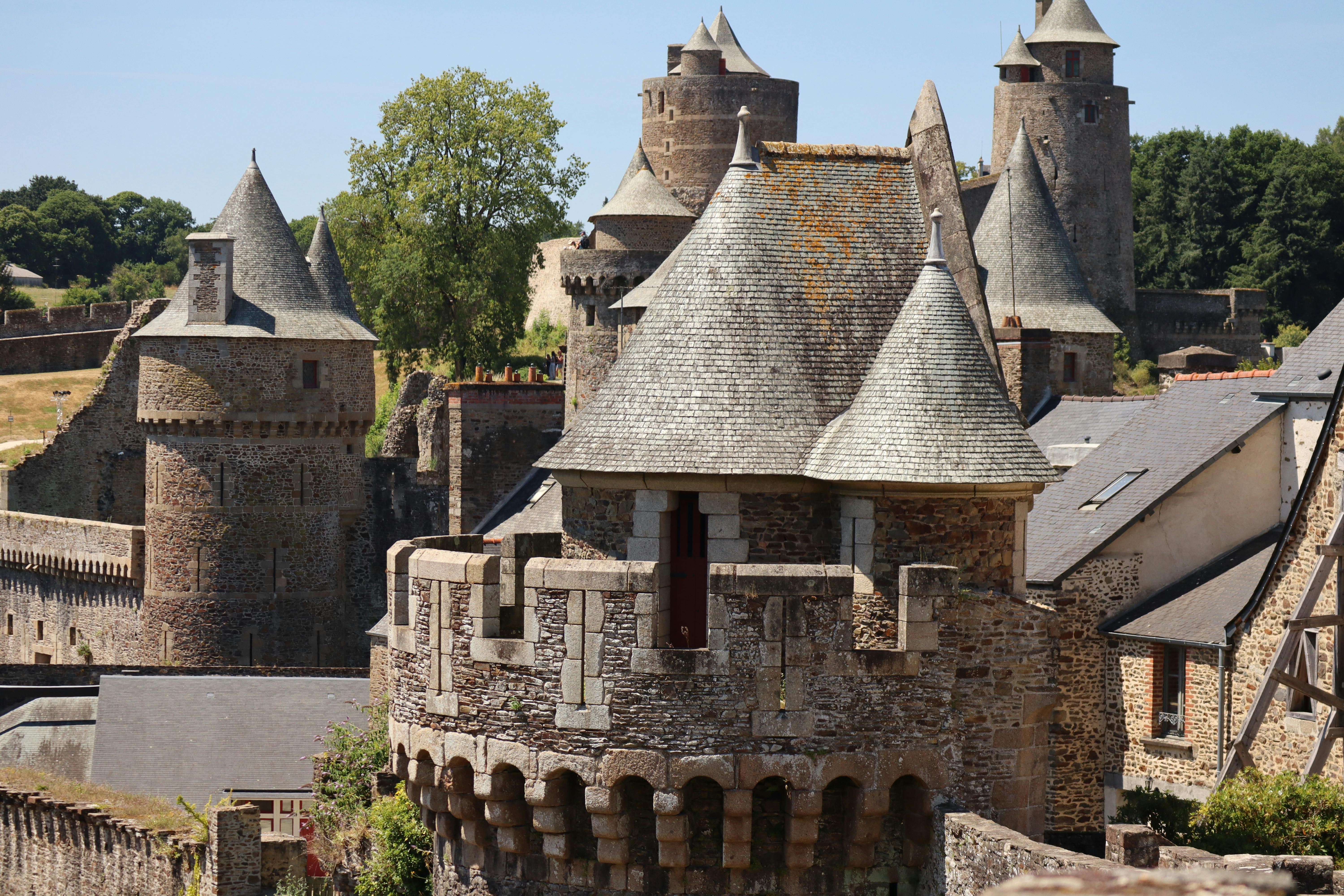
Fougères Castle Medieval Might Meets Norman Stone
The stones remember what guidebooks cannot convey. As dawn breaks over the Normandy-Brittany border, Fougères Castle emerges from morning mist like a stone sentinel—its 13 towers rising 40 meters above the Nançon River, weathered granite walls glowing honey-gold in first light. The only sounds are the whisper of wind through arrow slits and the distant clang of a blacksmith's hammer from the reconstructed forge beneath the keep. This isn't theatrical staging but living archaeology: a 12th-century fortress that has witnessed Plantagenet sieges, Breton rebellions, and revolutionary tribunals—all while maintaining its original function as guardian of this strategic frontier. In 2026, Fougères Castle remains Europe's most authentically layered medieval stronghold—not preserved behind glass, but breathing with the defensive ingenuity that shaped it.
Why Fougères Castle Embodies Defensive Medieval Genius
Fougères Castle represents more than military architecture—it embodies Normandy's fierce struggle for autonomy through stone and strategy. Constructed between 1166 and 1487 on a strategic rocky spur overlooking the Nançon River valley, this masterpiece of medieval fortification evolved through three distinct building phases: the original 12th-century keep built by Raoul II de Fougères, the 13th-century curtain walls added during Breton conflicts, and the 15th-century artillery towers designed to withstand cannon fire. Its genius lies in layered defense: the outer bailey protected villagers during sieges, the middle enclosure housed garrisons, and the inner keep served as last refuge. Unlike sanitized heritage sites, Fougères maintains raw authenticity—spiral staircases worn concave by centuries of footsteps, cannon embrasures open to sea breezes, and the original well system that sustained 500 defenders during the 1449 siege. The castle's survival through the French Revolution—when many fortresses were dismantled—and its meticulous 19th-century restoration using original plans makes it a testament to Norman resilience. As France's largest medieval fortress (2 hectares/5 acres), it offers rare insight into how architecture could embody both power and protection.
The Best Time to Experience Fougères Castle
For optimal conditions—dramatic light on weathered stone, manageable crowds, and authentic historical atmosphere—visit between May 20 and June 15 or September 12–28. Daytime temperatures average 16–22°C (61–72°F), creating ideal conditions for exploring the castle's 13 towers and 1,000-meter ramparts without summer's intensity. Mornings between 9:00–11:00 AM offer the most magical illumination: low-angle sun transforms the granite walls to burnished gold while casting long shadows that accentuate defensive architecture details without harsh glare—a critical window before tour groups arrive from Rennes. September provides a second excellent opportunity: departing crowds, stable weather, and autumn light that intensifies the castle's honey-colored tones while mist rises from the Nançon River valley. Avoid July 15–August 20 when temperatures exceed 25°C (77°F), making spiral staircases uncomfortably warm and viewpoints congested. Note that the castle closes entirely during severe Atlantic storms and for conservation work during the first two weeks of November—verify current access at chateau-fougeres.fr before travel.
Approximate Budget for a 7-Day Trip (2026)
Based on 2025 benchmarks adjusted for 4% inflation (per INSEE and Normandie Tourism Board projections), a realistic mid-range budget for a Fougères-focused itinerary requires €1,250–€1,750 per person excluding international flights. Accommodation ranges from €80–€120 nightly for family-run guesthouses in the historic center or boutique hotels near Place Aristide Briand—essential for experiencing castle atmosphere after day-trippers depart. Daily food costs average €75–€90: breakfast at crêperies (€6), lunch of rillettes and fouées (puff pastry) at Place du Marchix (€18–€24), and dinners featuring fresh Normandy duck with Calvados (€40–€50). Transportation necessitates car rental for exploring the Normandy-Brittany border region, though regional trains connect to Rennes.
- Accommodation: €80–€120 per night for a family-run guesthouse in Fougères historic center or boutique hotel near Place Aristide Briand—essential for experiencing castle atmosphere after day-trippers depart.
- Food: €75–€90 per day—breakfast at crêperie (€6), lunch of rillettes and fouées at Place du Marchix (€20–€26), dinner featuring Normandy duck with Calvados (€42–€52).
- Transportation: €42 for car rental daily plus €75 weekly fuel. Train from Paris Montparnasse to Rennes (2h15, €55–€85 one-way via SNCF Connect), then €12 taxi to Fougères.
- Attractions: Castle entry: €9. Guided medieval history tour: €12. Musée Municipal: €6. Boat tour of Nançon River: €18. Allocate €95 total.
- Miscellaneous: €50 for artisanal Calvados from local distilleries, Norman lace reproductions, or donations to the Castle Conservation Association.
Total Estimated Cost: €1,250–€1,750 for seven days, excluding international flights.
5 Essential Fougères Castle Experiences
- Castle Ramparts Circuit: Walk the complete 1,000-meter defensive circuit at 9:30 AM when morning light illuminates the 13 towers and offers panoramic views of the Nançon River valley—best experienced starting from Tour du Moulin.
- Medieval Forge Demonstration: Attend the 11:00 AM blacksmith demonstration in the reconstructed forge beneath the keep—watch artisans create replica weapons using 12th-century techniques.
- Great Hall Exploration: Visit the 15th-century Salle des États where Breton nobles once convened—observe how the vaulted ceiling and arrow slits created both grandeur and defense.
- Well System Discovery: Descend into the castle's original well chamber at 2:00 PM to understand how 500 defenders survived the 1449 siege with this ingenious water collection system.
- Sunset from Tour Raoul: Climb the highest tower at 7:30 PM for panoramic views where the setting sun ignites the granite walls while mist rises from the Nançon River below.
3 Hidden Gems Most Travelers Miss
- Passage des Murailles Secret Archway: Behind No. 15 Rue Nationale, an unmarked stone arch leads to a hidden passageway where 12th-century masons' marks remain visible on foundation stones—accessible during weekday mornings when restoration crews work nearby.
- Chapelle Saint-Sulpice: A 10-minute walk reveals this secluded 13th-century chapel with rare frescoes depicting Norman saints—accessible only by requesting permission at the adjacent presbytery (open Wednesday afternoons).
- Atelier du Tailleur de Pierre: A stone-carving workshop hidden in a vaulted cellar at 9 Rue de la Pinterie—observe artisans restoring castle masonry using medieval techniques (open Tuesday mornings by appointment: +33 2 99 94 11 23).
Cultural & Practical Tips
- Footwear is Non-Negotiable: Cobblestones are uneven and polished smooth by centuries of use. Wear grippy-soled shoes with ankle support—sandals cause dangerous slips on spiral staircases, especially after morning dew.
- Respect Historical Integrity: Never touch carved graffiti or cannon embrasures—oils from skin accelerate deterioration of irreplaceable surfaces. Photography without flash permitted in all areas.
- Learn Key Phrases: "Bonjour," "Merci," and "Où est la tour historique?" (Where is the historic tower?) show respect—guides often share deeper insights with curious visitors.
- Photography Protocol: Best exterior shots captured between 9:00–11:00 AM when eastern light illuminates weathered stone without harsh shadows. Tripods prohibited inside towers due to narrow passages.
- Weather Preparedness: Normandy's microclimate shifts rapidly—carry waterproof layers even in summer. Morning mist often burns off by noon, but afternoon showers can appear without warning.
Conclusion: Travel with Medieval Reverence, Not Just a Lens
Fougères Castle endures not as attraction to be consumed, but as testament to civic resilience forged through centuries of siege and survival. As a conscious traveler, your presence should honor this legacy: climb slowly to appreciate the engineering that withstood Plantagenet assaults and revolutionary fervor, support the Castle Conservation Association through official donation boxes, and understand that your footsteps tread ground where Norman lords chose freedom over submission. Sit quietly on the western ramparts at dusk and watch mist rise from the Nançon River—the same waters that witnessed Eleanor of Aquitaine's departure for the Crusades and modern historians piecing together medieval life. By approaching these walls not as backdrops for social media, but as teachers of endurance, you help ensure their stones continue to shelter not just history, but the unbroken spirit of a frontier that has always chosen resilience over ruin.