
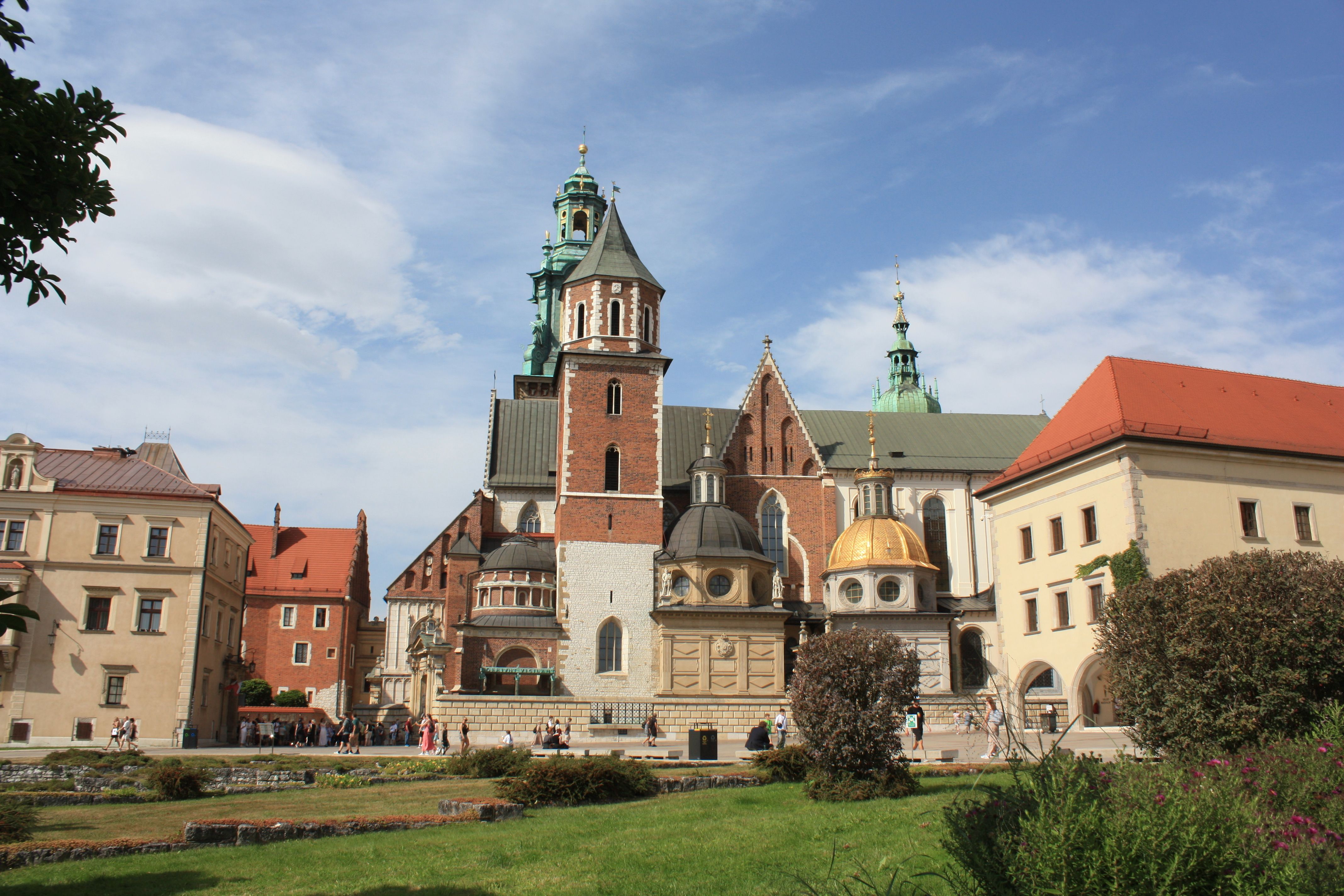
Wawel Castle: Where Royal Legacy Meets Vistula River Mist
Morning mist curls along the banks of the Vistula River as you ascend the cobblestone path toward Wawel Castle—a limestone hill crowned with centuries of Polish history, where Gothic spires pierce the pale sky and Renaissance arcades cast geometric shadows across sun-warmed courtyards. The air carries the faint scent of river water, aged stone, and distant bakery smoke from Kraków's Old Town below. You hear the soft echo of footsteps in vaulted corridors, the distant chime of cathedral bells, and beneath it all, the quiet persistence of a fortress that has witnessed coronations, invasions, and the steady rhythm of national identity since the 10th century. This isn't merely a castle—it's a living archive where every stone holds the weight of kings and queens, where the Crown Treasury safeguards symbols of sovereignty, and where the legendary Wawel Dragon's cave whispers folklore into the river's current. Standing here, you touch the same limestone that shaped a kingdom.
Why Wawel Castle Embodies Enduring Sovereignty
Wawel Castle represents far more than architectural grandeur—it embodies the extraordinary continuity of Polish statehood through centuries of transformation. Established as a fortified settlement in the 10th century and expanded into a royal residence under Casimir III the Great (1333–1370), the complex evolved through Romanesque, Gothic, Renaissance, and Baroque phases, each layer reflecting the political and cultural aspirations of its era [[12]]. The castle solved a fundamental challenge of medieval power: how to create a seat of authority that balanced defensive strength with ceremonial splendor, spiritual sanctity with administrative function. The Royal Cathedral, consecrated in 1142 and rebuilt after fires in 1305 and 1499, stands as Poland's national sanctuary—site of royal coronations, burials of monarchs and national heroes, and the resting place of St. Stanisław, patron saint of Poland. The Renaissance courtyard, designed by Italian architects Francesco Fiorentino and Bartolomeo Berrecci between 1507–1536, features 90 elegant arcades with intricately carved loggias that blend Florentine symmetry with local limestone craftsmanship. What makes Wawel unique is its layered authenticity: unlike many European castles reconstructed after war, Wawel survived World War II with remarkable integrity, preserving original medieval foundations beneath Renaissance facades—a palimpsest of history you can literally walk upon.
The Best Time to Experience Wawel Castle
To experience Wawel Castle at its most atmospheric, plan your visit between May 15–June 10 or September 18–October 8, when daytime temperatures range from 17–25°C (63–77°F) and the Vistula Valley blooms with spring greenery or glows with autumn amber [[9]]. During these windows, you'll enjoy comfortable conditions for exploring the expansive hilltop complex, photography, and walking the uneven stone pathways without summer's crowds or winter's chill. For optimal photography of the cathedral spires and Renaissance arcades, arrive at 7:30–9:00 AM when morning light strikes the eastern facades, illuminating Gothic details with soft, directional illumination. Alternatively, visit at 5:00–6:30 PM during golden hour when warm light transforms limestone into honey tones and long shadows emphasize the castle's dramatic silhouette against the river. You should firmly avoid July 20–August 15 when temperatures can exceed 32°C (90°F), the castle becomes congested with tour groups, and harsh overhead light flattens architectural textures. For live event schedules, opening hours, and official guided tours, visit wawel.krakow.pl [[5]].
Approximate Budget for a 7-Day Trip
Visiting Wawel Castle requires basing yourself in Kraków's Old Town or Kazimierz district, with easy walking access to the castle hill and surrounding attractions. The following budget assumes moderate travel style—comfortable boutique hotels, authentic Polish cuisine, and a mix of public transportation and occasional taxi rides. Prices are listed in Polish Złoty (PLN) with euro equivalents for international travelers (1 EUR ≈ 4.3 PLN in 2026) [[18]].
- Accommodation: 87–214 PLN (20–50€) per night in Old Town or Kazimierz. Budget pensions start at 44 PLN; boutique hotels with historic charm run 218–437 PLN (50–100€) [[25]].
- Food: 44–66 PLN (10–15€) per day total. Breakfast: 15–20 PLN for traditional śniadanie with jajecznica, local cheese, and fresh bread. Lunch: 20–30 PLN for pierogi or żurek at a milk bar like Tomasza. Dinner: 40–60 PLN for sit-down meals featuring oscypek cheese, duck with apples, and craft beer [[20]].
- Transportation: Local tram/bus: 2.80 PLN (0.65€) for 20 minutes; one-day pass: 15 PLN (3.50€). Taxi from airport: ~70 PLN (16€); Uber/Bolt often cheaper [[25]].
- Attractions: Wawel Castle State Rooms: 32 PLN (7.50€); Royal Cathedral: 20 PLN (4.70€); Crown Treasury & Armory: 16 PLN (3.70€); Dragon's Den: 10 PLN (2.30€); combined ticket: 54 PLN (12.50€) [[14]].
- Miscellaneous: Handcrafted amber jewelry: 115–160 PLN (26–37€); local vodka tasting: 44 PLN (10€); traditional pottery: 30–70 PLN (7–16€) [[21]].
Total 7-Day Budget: 2,500–3,600 PLN (580–840€) per person (excluding international flights)
7 Essential Wawel Castle Experiences
- Enter Through the Sigismund Gate at Dawn: Arrive at 7:30 AM to witness the castle awakening. Pass beneath the 16th-century gate adorned with the Polish eagle and enter the main courtyard. The morning light filters through Renaissance arcades, casting geometric patterns on limestone paving. Listen for the distant cathedral bells and feel the cool stone underfoot—a sensory connection to centuries of royal processions. Allow 20 minutes; free entry to courtyard.
- Explore the Royal Cathedral's Sacred Spaces: Step inside the 14th-century cathedral to see the Sigismund Chapel—a Renaissance masterpiece with a golden dome and marble tombs of Polish kings. Visit the crypts beneath to stand among the graves of national heroes like Tadeusz Kościuszko and Adam Mickiewicz. The interior's Gothic vaulting and Baroque altars create a solemn, awe-inspiring atmosphere. Allow 45 minutes; entry 20 PLN.
- Walk the State Rooms' Ceremonial Halls: Ascend to the castle's upper floors to explore the Royal State Rooms, featuring the Senator's Hall with its coffered ceiling and the Grand Armory displaying medieval weapons. The rooms' frescoes, tapestries, and period furnishings reconstruct the splendor of royal life. Visit mid-morning (10:00 AM–12:00 PM) when natural light illuminates the details. Allow 60 minutes; entry 32 PLN or included in combined ticket.
- Descend into the Dragon's Den: Follow the narrow stone staircase into the legendary cave of the Wawel Dragon—Smok Wawelski—said to have terrorized the city until outwitted by a clever shoemaker. The cave's cool, damp air and echoing chambers bring folklore to life. Exit through the dragon's mouth sculpture at river level, where a bronze statue breathes fire every few minutes. Best visited late afternoon (4:00–5:30 PM); entry 10 PLN.
- Climb the Cathedral Tower for Panoramic Views: Ascend the 220 narrow stone steps of the Sigismund Tower for breathtaking views of Kraków's red-tiled rooftops, the Vistula River winding through the valley, and the Tatra Mountains on clear days. The top platform features a small exhibition on cathedral history. Visit golden hour (5:00–6:30 PM) for photography; entry included with cathedral ticket.
- Visit the Crown Treasury & Armory: Explore the vaulted chambers housing Poland's coronation regalia replicas, historic swords, armor, and royal artifacts. The Crown Treasury displays the Szczerbiec sword—the only original piece of the Polish crown jewels to survive centuries of conflict. Allow 30 minutes; entry 16 PLN or included in combined ticket.
- Stroll the Castle Gardens at Sunset: Walk the terraced gardens on the castle's western slope, where manicured lawns and historic lime trees overlook the Vistula. Visit at sunset (6:00–7:30 PM) when the river reflects golden light and the castle's silhouette creates dramatic photography opportunities. Free; allow 20 minutes.
3 Hidden Gems Most Travelers Miss
- The Rotunda of St. Felix and St. Adauctus: Tucked beneath the cathedral's floor lies a 10th-century Romanesque rotunda—one of Poland's oldest surviving religious structures. Most visitors miss it because access requires a special guided tour. Access: Book in advance via the cathedral office; tours depart at 11:00 AM and 3:00 PM weekdays. Best examined midday when natural light filters through narrow windows. Entry included with special tour (additional 15 PLN); allow 20 minutes.
- The Norwegian Tapestries in the Ambassador's Hall: Hidden within the State Rooms, a series of 16th-century Flemish tapestries commissioned by King Sigismund II Augustus depict biblical scenes with extraordinary detail. Overlooked because they're displayed in a dimly lit corridor. Access: Included with State Rooms ticket; visit mid-morning (10:00 AM–12:00 PM) when guide explanations enhance appreciation. No additional fee; allow 15 minutes.
- The Vistula Riverbank Path Beneath the Dragon: Exit the Dragon's Den sculpture and follow the riverside promenade eastward for a peaceful walk beneath the castle walls. This path offers unique photographic angles of the limestone cliffs and quiet spots to reflect. Most tourists miss it because they exit toward the Old Town. Best visited late afternoon (4:00–6:00 PM); free; allow 15 minutes.
Cultural & Practical Tips
- Respect Sacred Spaces: When entering the Royal Cathedral, dress modestly (shoulders and knees covered), speak quietly, and avoid photography during services. Remove hats as a sign of respect.
- Essential Polish Phrases: "Dzień dobry" (jen doh-brih) = Good day; "Dziękuję" (jen-koo-yeh) = Thank you; "Proszę" (proh-sheh) = Please/You're welcome; "Przepraszam" (psheh-prah-sham) = Excuse me. Locals appreciate the effort, even if pronunciation isn't perfect.
- Booking Strategy: Purchase combined tickets online at wawel.krakow.pl to skip queues. State Rooms and Crown Treasury have timed entry slots—book morning slots for smaller crowds.
- Photography Guidelines: Photography is permitted in most areas, but flash is prohibited in the Cathedral and Treasury. Tripods require advance permission (contact: informacja@wawel.krakow.pl).
- Weather Preparedness: Kraków experiences continental climate: summer highs reach 25–32°C (77–90°F); winter lows drop to -5°C (23°F). The castle hill is exposed—carry sun protection in summer, warm layers in winter. Afternoon rain showers are common May–September; a compact umbrella is wise.
- Accessibility Notes: The castle's historic stone pathways and stairs are challenging for wheelchairs. Accessible routes exist to the courtyard and cathedral entrance; request assistance at the ticket office. The Dragon's Den is not wheelchair accessible.
- Combine with Nearby Sites: Enhance your Wawel visit with walking-distance attractions: Kraków Main Square (10 minutes north), Kazimierz Jewish Quarter (15 minutes southeast), and the Planty Park ring encircling the Old Town. A regional perspective enriches understanding of Kraków's historical layers.
Conclusion: Travel with Reverence, Not Just Checklists
Wawel Castle invites you to do more than photograph Gothic spires against a blue sky. This is a place to stand where kings were crowned and poets buried, where artisans carved limestone into legacy, where the Vistula's current has carried centuries of hope and hardship. When you walk the same corridors trodden by Casimir the Great and Queen Jadwiga, when you hear cathedral bells echo through vaulted stone, when you descend into the dragon's cave where myth meets geology, you participate in a living tradition that transcends tourism. Travel to Wawel with reverence for the craftsmanship that built these walls, for the resilience that preserved this heritage through partitions and wars, for the community that keeps this hilltop sanctuary vibrantly alive. Respect the fragility of medieval masonry—ten centuries of weathering have softened edges, and every careless touch accelerates erosion. Understand that the contemplative atmosphere you cherish depends on the mindfulness of every visitor who comes after you. Let the castle's timeless silhouette humble your expectations, let its layered history slow your pace, and let the convergence of faith, power, and art remind you that the most profound journeys are those that deepen our connection to human continuity across ages.