
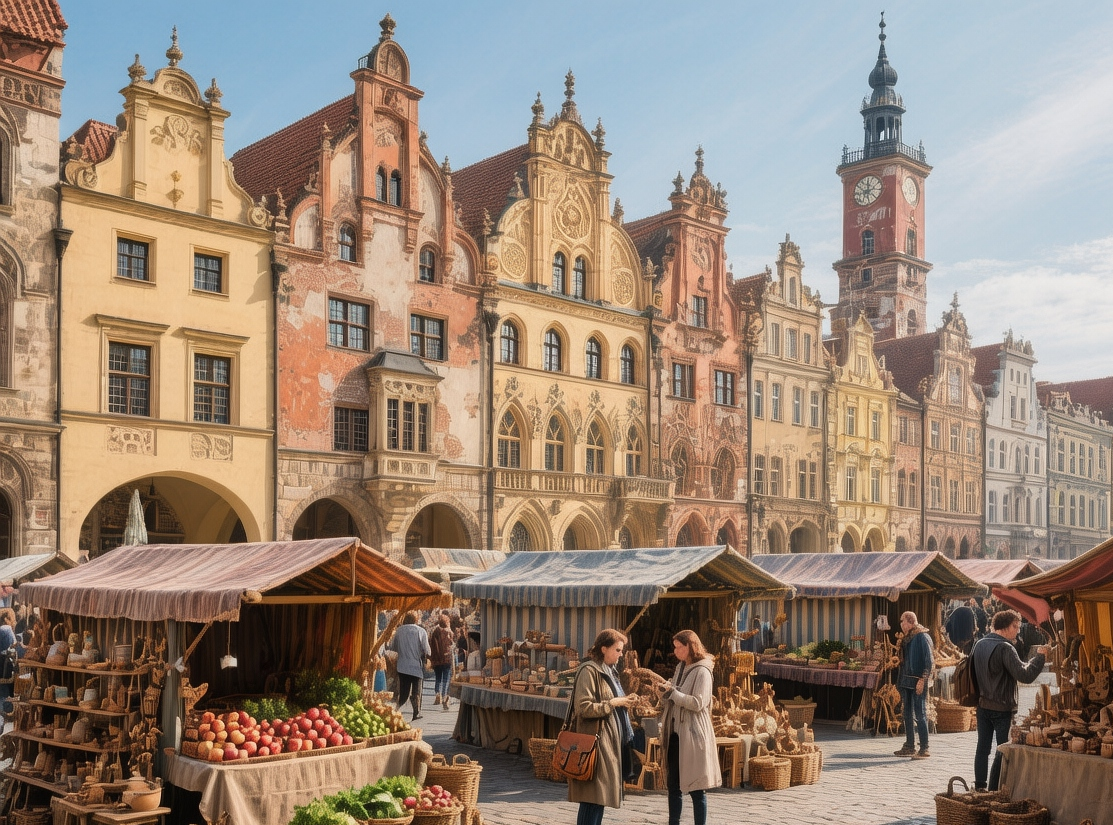
Görlitz Old Town Film Sets Meet Medieval Stone
5:00 AM breaks over the Neisse River—a winding waterway marking the border between Germany and Poland, passing directly beneath the historic bridges of Görlitz Old Town. The air bites at 6°C (43°F), sharp with the scent of damp cobblestones, river mist, and the earthy perfume of the Saxon countryside waking from sleep. Dawn light spills over the Renaissance gables of the Upper Market Square, illuminating the 3,500 monuments that have stood sentinel over the city since the 12th century. This is not merely a town; it is an open-air museum of architecture rising from the ashes of history, standing guard over the borderlands since the founding of the Holy Roman Empire. You hear the distant chime of St. Peter and Paul Church; the mist lifts 50 meters from the water, exposing the facades that survived World War II intact. In 2026, as heritage sites face threats from modernization, Görlitz Old Town matters now more than ever. It remains a tactile connection to history—a place where you walk the same flags as merchants and filmmakers, where the past isn't behind glass but embedded in the stone, and where the rhythm of life follows the church bell rather than the clock. This is why you visit.
Why Görlitz Old Town Embodies Architectural Resilience
Görlitz Old Town isn't merely a picturesque village—it's a testament to civic pride and architectural continuity spanning nine centuries. First mentioned in 1071, the town became a wealthy hub on the Via Regia trade route, earning the nickname "Görliwood" in modern times due to its frequent use as a film location, most notably for The Grand Budapest Hotel. The town solved a fundamental economic need: to provide a fortified trading post between East and West. The architecture is remarkable: over 3,500 protected monuments span styles from Gothic to Art Nouveau, all preserved within the historic center. Unlike many German cities, Görlitz escaped heavy bombing during World War II, preserving its medieval street layout and intricate facades. The Upper Market Square, with its Renaissance town hall built in 1537, serves as the civic heart. In 2026, the town welcomes over 500,000 visitors annually, making it a premier destination for cultural tourism in Saxony. The City of Görlitz manages the heritage sites, maintaining the structural integrity of the sandstone buildings against weathering and pollution. When you walk these lanes, you traverse a layered history: Medieval trade in 1200, Renaissance prosperity in 1500, and a contemporary commitment to preservation that defines the future of European heritage. The stone doesn't care about your schedule; it demands you respect its silence.
The Best Time to Experience Görlitz Old Town
Görlitz Old Town reveals its true character during specific windows, though it is accessible year-round for determined travelers. The definitive experience occurs between May 18 and June 12. During this window, you'll experience average temperatures of 15–20°C (59–68°F), with daylight stretching until 9:00 PM—ample time for evening photography after closing. The spring light filters beautifully through the square, creating dramatic contrasts between shadow and illumination on the gables. The summer tourist hordes haven't yet descended. For those seeking quieter contemplation, weekday mornings (8:00–9:30 AM) offer a more intimate atmosphere with significantly fewer tour groups in the market square.
Autumn—specifically September 15–October 5—provides a second peak experience, with temperatures cooling to 10–15°C (50–59°F) and the Neisse riverbank trees turning russet and gold. This is when you'll witness the cultural festivals in the region. However, avoid December 15–23 unless you enjoy navigating crowds: this Christmas Market period sees visitor numbers swell to 20,000 daily, with the square congested and accommodation prices inflating by 100%. Winter (December–February) brings its own magic but limited services—the outdoor cafés close early, and daylight shrinks to 8:00 AM–4:30 PM. For real-time opening hours and event schedules, verify current information at www.goerlitz.de before your visit. Always check the museum schedule; some sites close for maintenance periodically.
Approximate Budget for a 7-Day Trip (2026)
Görlitz accommodates various budgets, though 2026 prices reflect post-pandemic tourism recovery and 3.5% German inflation. The following breakdown assumes mid-range travel with comfortable accommodations, local dining, and comprehensive exploration including public transport. Prices are listed in Euros (€), the local currency.
- Accommodation: €100–€160 per night for a double room in a traditional guesthouse or boutique hotel in the Altstadt. Luxury properties command premium rates (€300–€500), while hostels offer better value (€40–€60 per bed).
- Food: €45–€70 per day. Breakfast (€12–€18) typically includes bread rolls, cold cuts, and local cheese. Lunch (€15–€25) at historic taverns: Silesian Dumplings, or a Schnitzel. Dinner (€30–€50) featuring regional specialties: Roast Pork, fresh river fish, or Eierschecke cake.
- Transportation: Dresden Airport train to Görlitz: €45 single. VVO day pass (Zone 6): €11.50. Taxi from airport to center: €150. Car rental not recommended due to limited Old Town parking.
- Attractions: Upper Market Square: Free. St. Peter and Paul Church: €5. Silesian Museum: €10. Old Town Hall Tower: €6. Film Tour: €15.
- Miscellaneous: City map: €5. Local wool scarf: €50–€100. Guidebook: €15. Travel insurance: €40–€60 for the week.
Total estimated cost for 7 days: €1,400–€2,000 per person (based on double occupancy)
Seven Essential Görlitz Old Town Experiences
- Walk the Upper Market Square: Step onto the cobblestones at 8:00 AM. The Renaissance gables are colorful and intricate. The view of the town hall is stunning. The scent of fresh bread is distinct. Wear sturdy shoes; the stones are uneven. Allow 30 minutes for the circuit. It is the definitive physical connection.
- Climb the Town Hall Tower: Ascend the stairs at 9:30 AM. The view from the gallery is panoramic over the Neisse. The wind is strong at the top; hold your camera steady. The light here is cooler, more subdued. It offers a contrast to the street view. Allow 45 minutes for the climb. It is physically demanding but offers the definitive perspective.
- Visit St. Peter and Paul Church: Enter the nave at 10:30 AM. The altar is Gothic and intricate. The temperature inside is constant at 18°C (64°F). View the organ with 5,000 pipes. The acoustics amplify the choir music. Allow 45 minutes for observation. It contextualizes the town within religious history.
- Explore the Silesian Museum: Walk the halls at 12:00 PM. The building is the Schönhof from 1526. The temperature is constant. View the regional history exhibits. The vaulted ceilings are original 16th-century design. Audio guides are included with entry. Allow 90 minutes to read the displays. It offers the definitive cultural connection.
- Take a Film Tour: Join the guide at 2:00 PM. The route spans the filming locations. The stories are cinematic and engaging. The pace is leisurely and informative. Wear comfortable shoes; the walk is 2 kilometers. Allow 90 minutes for the tour. It is a tangible connection to modern culture.
- Dine at a Historic Tavern: End your evening at a Gasthof (open 11:00 AM–10:00 PM). Order a Roast Pork (€22) in the wood-paneled room. The building dates to 1800 but blends with the historic style. Speak to the staff about the town history. The fireplace crackles even in summer. This is the traditional end to a Görlitz exploration.
- Watch the Sunset: Return to the square at 7:00 PM (summer closing varies). The sandstone glows orange under the evening light. The shadows of the gables stretch across the square. You can hear the city traffic from the bridge. The city noise diminishes. It is the best time for exterior photography. The square frames the sky perfectly. Allow 30 minutes for a full circuit.
Three Hidden Gems Most Travelers Miss
- The Waidhaus: While most visitors focus on the square, this historic woad house sits nearby. Access: Walk from the market (5 minutes). Open 10:00 AM–5:00 PM. It is overlooked because it is a museum, but the architecture is stunning. Best visited: Afternoon for the light. No facilities; bring food. It offers a perspective on trade history.
- The Reichenbach Tower: Located on the city wall, this defensive tower dates to 1400. Access: View from the exterior. Open 24 hours. It's overlooked because it is subtle, but the stonework is beautiful. Insider tip: Look for the arrow slits. Benches available for rest. It provides context for city defense.
- The Old Jewish Cemetery: Beneath the shadow lies a burial ground from 1750. Access: Enter from the side street. Open during daylight hours. It is overlooked because it is small. The headstones are original. It's special because you see the multicultural history. Best visited: Morning for the quiet. A unique cultural heritage experience.
Cultural & Practical Tips
- Respect the Quiet: This is a residential town. Do not shout at night. This is not just etiquette; it is law. Leave no trace; take all litter home. Keep voices moderate in the lanes.
- Photography Guidelines: Photography is permitted in the public square. Tripods are allowed but cannot obstruct paths. Do not use flash inside the churches. Respect worshippers; no photography during mass. Silence your phone completely.
- Booking Strategy: Hotel rooms sell out during Christmas. Book online at least 30 days in advance. Arrive 15 minutes before your tour slot. Late arrival may result in denied entry without refund. Print your ticket or save it to your phone wallet.
- Learn these Local Terms: "Grüß Gott" (Hello), "Altstadt" (Old Town), and "Kirche" (Church). Locals appreciate the correct terminology. When greeting, say "Grüß Gott" rather than "Hello." It shows respect for German heritage.
- Weather Preparation: Görlitz is changeable. Even on sunny days, carry a rain jacket. The temperature drops 1°C for every 100 meters of elevation. Dress in layers. Check the forecast; rain is common.
- Accessibility Information: The square is mostly flat and cobblestoned. Some museums have elevators. Virtual tours are available online. Contact the visitor team at +49 3581 6710 for specific access queries before traveling.
- Support Conservation: Consider donating to the "Görlitz Heritage Fund" upon exit. Maintenance costs €2 million annually. Purchase souvenirs from the shop rather than online to support the local revenue stream. Membership offers free entry to other sites.
Conclusion: Travel with Appreciation, Not Just Consumption
Görlitz Old Town in 2026 asks something different of you than mere sightseeing. This town—stone, film, resilient—has witnessed centuries of trade, war, peace, and art. But it also sustains a living community of residents who keep the history alive. To travel here responsibly means understanding that you're not just visiting a museum but entering a home maintained by strict preservation protocols. Walk softly on these cobblestones; they've carried merchants, filmmakers, soldiers, and tourists for generations. Choose the quiet morning visit over the crowded afternoon. Listen to the church bells, not just the noise. Donate to the conservation fund, not just the gift shop. Let Görlitz Old Town change you, not just entertain you. In an age of mass tourism and digital detachment, this is how we ensure that 2026's visitors don't become the generation that loved this place to death. The town will still be here in 2126—if we treat it not as a backdrop to consume but as a legacy to protect.