
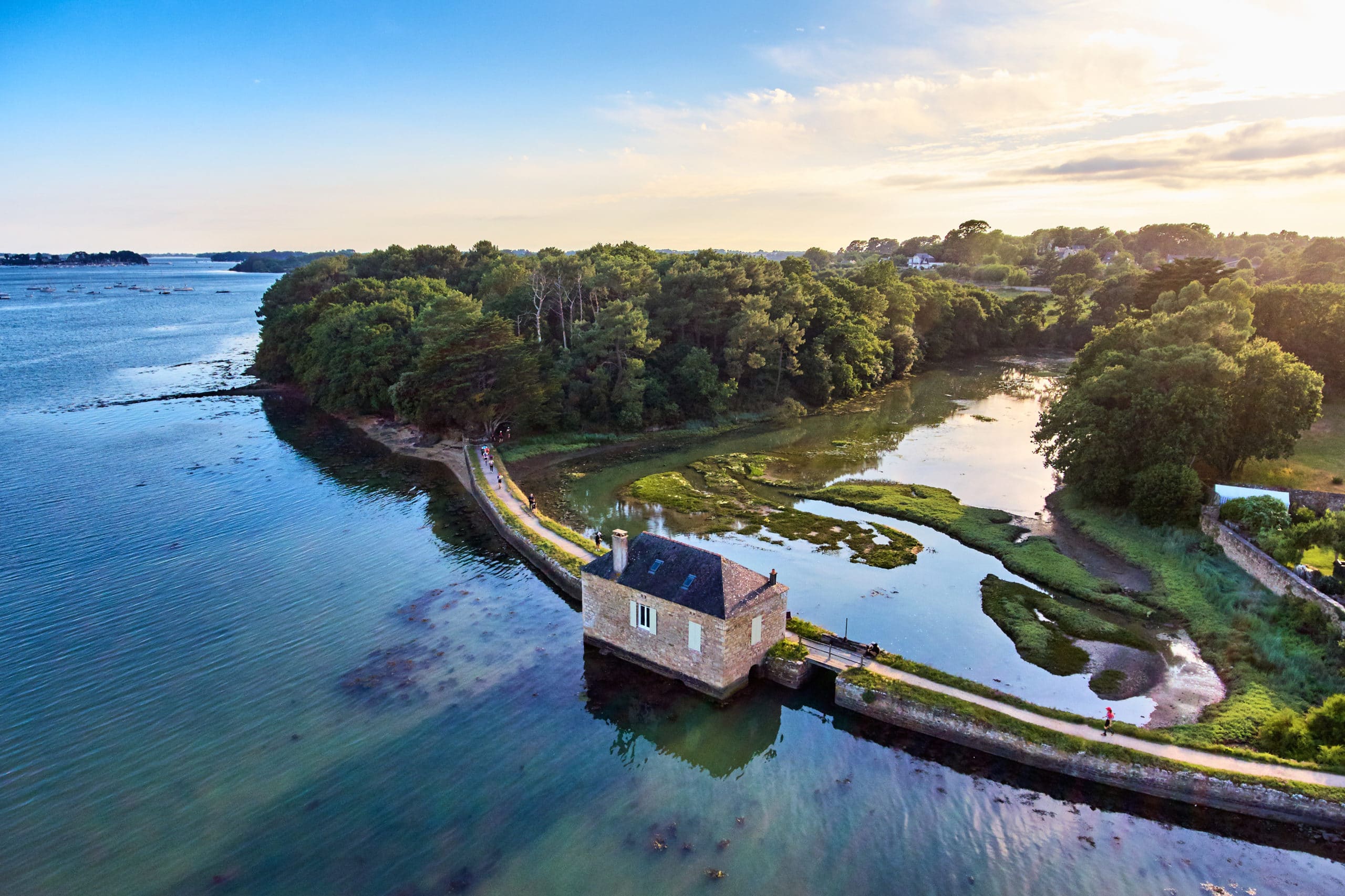
Gulf of Morbihan Ancient Tides Meet Atlantic Light
The rhythm begins not with clocks but with water. As dawn breaks over Brittany's southern coast, the Gulf of Morbihan breathes—a slow exhalation as the tide recedes, revealing vast mudflats where oyster farmers in flat-bottomed plateaux boats navigate channels invisible to outsiders. The air carries the briny perfume of exposed seabed mingling with woodsmoke from village boulangerie ovens, while the only sounds are the whisper of wind through gorse bushes and the distant cry of a peregrine falcon nesting on one of the gulf's 42 islands. This isn't a curated postcard but a living ecosystem where maritime tradition shapes daily life—where Neolithic menhirs stand sentinel on islands accessible only at low tide, and fishing boats still follow routes charted centuries ago. In 2026, the Gulf of Morbihan remains Europe's most authentically tidal landscape—not frozen in nostalgia, but pulsing with the ancient dialogue between land and sea.
Why Gulf of Morbihan Embodies Sacred Geography
The Gulf of Morbihan represents more than scenic beauty—it embodies humanity's earliest sophisticated understanding of astronomy, engineering, and communal organization. Dating to 4500 BCE during the Neolithic period, this 12,000-hectare inland sea features Europe's densest concentration of megalithic sites, including the Gavrinis passage tomb with its intricately carved stones aligned to winter solstice sunrise. Unlike haphazard prehistoric sites elsewhere, the gulf's geography reveals deliberate sacred planning—the 42 islands form a natural amphitheater where ancient astronomers tracked celestial events, while the 14-meter tidal range created predictable pathways for ritual processions. The engineering required defies comprehension: each menhir weighs 5–40 tons, quarried from local granite outcrops and transported using log rollers across tidal flats. Protected as a French national monument since 1889 and proposed for UNESCO World Heritage status, the gulf stands as testament to a civilization that mapped the heavens with stones when writing hadn't yet been invented. Today, this delicate balance continues—oyster farmers work ancient concessions while conservationists protect the fragile ecosystem that sustained both Neolithic builders and modern mariners.
The Best Time to Experience Gulf of Morbihan
For optimal conditions—dramatic morning mist, manageable crowds, and authentic Breton atmosphere—visit between May 15 and June 10 or September 15–28. Daytime temperatures average 15–21°C (59–70°F), creating ideal conditions for exploring both mainland sites and island excursions without summer's intensity. Mornings between 7:00–9:00 AM offer the most magical experience: low-angle sun transforms the gulf's waters to burnished copper while mist rising from fields creates ethereal veils around the islands—a phenomenon locals call "la brume des druides" (druids' mist). September provides a second excellent window: departing summer tourists restore contemplative atmosphere, autumn light intensifies the granite's russet tones, and Breton cultural festivals showcase traditional music near key sites. Avoid July 15–August 20 when temperatures exceed 25°C (77°F), boat tours become uncomfortably congested, and many local artisans close shops for vacation. Note that the gulf closes entirely during severe Atlantic storms and for conservation work during the first two weeks of November—verify current access at golfedumorbihan-tourisme.com before travel.
Approximate Budget for a 7-Day Trip (2026)
Based on 2025 benchmarks adjusted for 4% inflation (per INSEE and Bretagne Tourism Board projections), a realistic mid-range itinerary requires €1,450–€1,950 per person excluding international flights. Accommodation ranges from €85–€130 nightly for family-run guesthouses in Auray or boutique hotels in Vannes—essential for early gulf access. Daily food costs average €80–€95: breakfast at local crêperies (€6), lunch of kig ha farz (buckwheat stew) at village taverns (€18–€24), and dinners featuring fresh Gulf of Morbihan seafood with Muscadet wine (€40–€50). Transportation necessitates car rental for exploring megalithic sites beyond the gulf, though public transport connects major towns. Boat tours are essential for island access and represent the primary attraction cost.
- Accommodation: €85–€130 per night for a family-run guesthouse in Auray or boutique hotel in Vannes—essential for early gulf access and authentic Breton atmosphere.
- Food: €80–€95 per day—breakfast at crêperie (€6), lunch of kig ha farz at village tavern (€20–€26), dinner featuring fresh scallops with Muscadet wine (€42–€52).
- Transportation: €48 for car rental daily plus €70 weekly fuel. Train from Paris Montparnasse to Auray (3h20, €55–€85 one-way via SNCF Connect), then local transport to gulf sites.
- Attractions: Gulf boat tour: €24. Gavrinis island visit: €18. Locmariaquer megaliths: €8. Tumulus de Saint-Michel climb: €6. Allocate €100 total.
- Miscellaneous: €55 for artisanal Breton honey, locally woven woolens, or donations to the Gulf Megalithic Conservation Fund.
Total Estimated Cost: €1,450–€1,950 for seven days, excluding international flights.
5 Essential Gulf of Morbihan Experiences
- Gavrinis Island Passage Tomb: Take the 9:00 AM boat from Larmor-Baden to explore Europe's most intricately carved Neolithic tomb—arrive early to witness sunrise illuminating the 6,000-year-old spiral engravings through the solstice-aligned entrance.
- Tumulus de Saint-Michel: Climb this 12-meter burial mound containing 15,000 artifacts at 8:00 AM to witness sunrise illuminating the entire gulf from its summit—a perspective reserved for Neolithic elite.
- Locmariaquer Megalithic Complex: Visit the world's largest standing menhir (20m, 350 tons) at 7:30 AM when morning mist creates ethereal veils around the broken monolith—learn how it was transported 4,000 years before wheels were invented.
- Gulf Boat Tour: Take the 11:00 AM guided tour from Vannes to navigate the 42 islands—observe how Neolithic builders used the sea as their astronomical reference point and spot oyster farmers working ancient concessions.
- Île-aux-Moines Exploration: Cycle the car-free island's 12-kilometer perimeter at 4:00 PM when afternoon light gilds the granite chapels and offers panoramic views of the gulf's sacred geometry.
3 Hidden Gems Most Travelers Miss
- Champ Dolent Secret Circle: A 15-minute drive northeast to this lesser-known site features Brittany’s tallest menhir (9.3m) surrounded by a perfect stone circle—accessible via unmarked path behind the village church (ask at Gulf tourist office for directions).
- Pointe de Kerbihan Tide Pools: Accessible only 90 minutes before/after low tide via coastal path west of Locmariaquer—reveals Neolithic cup marks carved into tidal rocks, used for ritual water collection (check tide tables at tourist office).
- Atelier du Tailleur de Pierre: A working stone-carving workshop hidden in a vaulted cellar at 7 Rue des Druides in Locmariaquer—observe artisans using Neolithic techniques to restore weathered menhirs (open Wednesday mornings by appointment: +33 2 97 52 11 34).
Cultural & Practical Tips
- Respect Sacred Ground: Never climb on menhirs or touch engraved surfaces—oils from skin accelerate deterioration of 6,500-year-old granite. Stay on marked paths to protect fragile archaeological layers beneath soil.
- Boat Tour Etiquette: Arrive 30 minutes early for scheduled departures—boats leave precisely on time due to tidal constraints. Bring waterproof layers even in summer; gulf microclimate shifts rapidly.
- Learn Key Phrases: "Demat" (hello in Breton), "Trugarez," and "Pegoul eus ar c'helc'h?" (Where is the circle?) show respect—locals often share deeper insights with culturally curious visitors.
- Tide Awareness: Gulf islands become inaccessible during high tide—check official tide tables at golfedumorbihan-tourisme.com before planning visits to Gavrinis or other tidal sites.
- Photography Protocol: Tripods permitted only before 9:00 AM when paths are empty. Never use drones—strictly prohibited over megalithic sites due to preservation concerns and bird nesting areas.
Conclusion: Travel with Neolithic Reverence, Not Just Curiosity
The Gulf of Morbihan endures not as attraction to be consumed, but as testament to humanity’s earliest cosmic dialogue. As a conscious traveler, your presence should honor this legacy: walk slowly along alignment paths to appreciate the engineering that mapped heavens with stones, support local conservators through official donation channels, and understand that every footprint treads ground where Neolithic astronomers measured time against eternity. Sit quietly at the Gavrinis tomb at dusk and watch stars emerge—the same constellations that guided builders who shaped these monoliths before writing existed. By approaching the gulf not as puzzle to be solved but as sanctuary to be respected, you help ensure these stones continue sheltering not just mystery, but meaning—for those who recognize that true wisdom lies not in answers, but in the courage to stand in wonder before what we cannot know.