
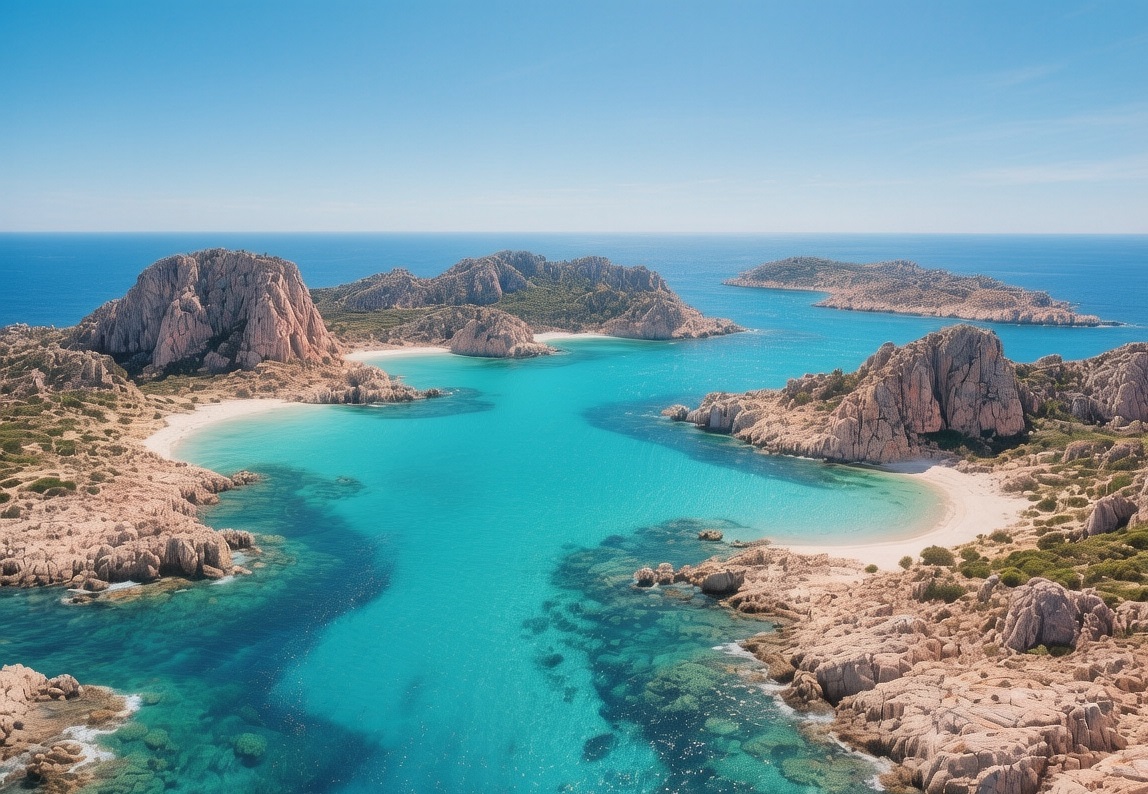
La Maddalena Archipelago Granite Islands Meet Mediterranean Blue
The morning sun glints off the turquoise waters of the Tyrrhenian Sea, fracturing into a million shards of light that dance across the surface. You hear the gentle lap of waves against the fine white sand of Spalmatore di Terra, the distant cry of a shearwater gull circling the sheer granite cliffs, and the soft rustle of Mediterranean maquis—wild rosemary, myrtle, and juniper—on the coastal breeze. This is the La Maddalena archipelago, a cluster of seven main islands and dozens of islets scattered across 20,000 hectares (49,400 acres) of protected marine park northeast of Sardinia [[48]]. The largest island, La Maddalena, is a charming town of pastel-colored houses and a historic naval base, while its siblings—Caprera, Spargi, Budelli, and Santa Maria—offer pristine beaches, hidden coves, and crystal-clear waters that shift from deep blue to an almost unreal emerald green. In an age of overtourism and digital saturation, the archipelago matters now more than ever—it is a sanctuary of unspoiled beauty where nature, not commerce, sets the pace.
Why La Maddalena Archipelago Embodies Protected Seclusion
The La Maddalena archipelago is not just a scenic destination; it is a testament to conservation and historical resilience. Its strategic location made it a coveted naval outpost for centuries—Napoleon briefly occupied it in 1793, and Giuseppe Garibaldi retired to Caprera, where he lived until his death in 1882 [[48]]. In 1994, recognizing its ecological importance, the Italian government established the La Maddalena National Park, Italy’s first marine protected area, which was later expanded to include the Strait of Bonifacio. This designation “solved” a critical modern problem: how to preserve the archipelago’s fragile ecosystem—home to Posidonia seagrass meadows, dolphins, and rare seabirds—from the pressures of mass tourism. Today, strict regulations limit boat traffic, ban anchoring on seagrass, and protect the famous Pink Beach of Budelli (viewing only). This commitment to preservation fulfills a deep modern need—for a place where the primary soundtrack is the wind and the waves, not the roar of engines, and where every swim feels like a privilege, not a right.
The Best Time to Experience La Maddalena Archipelago
To experience the archipelago in its most serene and ecologically vibrant state, plan your visit for the specific windows of May 15–June 20 or September 10–October 5, 2026. During these periods, the weather is ideal, with daytime temperatures ranging from a pleasant 22–27°C (72–81°F), and the sea has warmed to a swimmable 20–23°C (68–73°F) [[11]]. The best time of day to explore the islands is in the early morning, between 8:00 AM and 10:30 AM, when the light is soft, the water is calm, and you can often have a cove to yourself before the tour boats arrive. It is essential to avoid the peak summer period of July 20–August 25, when the limited ferry capacity leads to long lines, the popular beaches become crowded, and accommodation prices double [[67]]. For the most reliable information on ferry schedules, park regulations, and guided tours,
Approximate Budget for a 7-Day Trip (2026)
This budget is calculated for a solo traveler seeking a comfortable, nature-focused experience in the La Maddalena archipelago in 2026, based on current inflation trends and average regional costs.
- Accommodation: €100–€180 per night. Staying in a guesthouse in La Maddalena town offers easy access to ferries and amenities. Options on Caprera are more rustic but immersed in nature.
- Food: €50 per day. Breakfast (€6): a cappuccino and cornetto at a local bar. Lunch (€20): a plate of seafood pasta at a waterfront trattoria. Dinner (€24): a main course like grilled octopus with a glass of local Vermentino wine.
- Transportation: €220 total. Round-trip ferry from Palau to La Maddalena (€15). A weekly pass for inter-island ferries (€35). Guided boat tour of the archipelago (€70).
- Attractions: Entry to the Garibaldi Museum on Caprera (€5). Snorkeling gear rental (€15). Visit to the Naval Museum in La Maddalena town (€4).
- Miscellaneous: €110. This covers a bottle of local wine (€20), several gelato stops (€4 each), a guided hiking tour on Caprera (€40), and souvenirs like a piece of local granite.
Total Estimated Cost: €1,025–€1,145
6 Essential La Maddalena Archipelago Experiences
- Swim at Cala Coticcio on Caprera: Often called the “Tahiti of Sardinia,” this stunning cove is framed by pink granite boulders and features water so clear it feels like liquid glass. Arrive early by ferry to secure a spot on the small beach.
- Take a Boat Tour of the Archipelago: Book a small-group tour to see the Pink Beach of Budelli (viewing only), the dramatic cliffs of Spargi, and the hidden coves of Santa Maria. The perspective from the water is unforgettable.
- Visit Garibaldi’s House on Caprera: Explore the simple home where the Italian hero spent his final years. The museum and surrounding gardens offer a poignant glimpse into his private life and love for the island.
- Relax at Spalmatore di Terra: This long, sandy beach on La Maddalena island is perfect for families and those seeking a more relaxed vibe. The shallow, calm water is ideal for swimming and paddleboarding.
- Hike the Coastal Trails of Caprera: Walk the network of paths that crisscross the island, offering panoramic views of the entire archipelago. The trail to Monte Tejalone is particularly rewarding.
- Dine on Fresh Seafood in La Maddalena Town: Reserve a table at a family-run restaurant like Ristorante Il Pescatore. Savor the day’s catch as you watch the fishing boats bob in the harbor.
3 Hidden Gems Most Travelers Miss
- Cala Napoletana on Spargi: A tiny, secluded cove accessible only by boat or a steep path. Its isolation means you’ll likely have the turquoise water all to yourself. Go on a weekday for complete solitude.
- The View from Punta Filetto: On the northern tip of La Maddalena island, this rocky promontory offers a panoramic vista of the entire archipelago, including the Strait of Bonifacio and the French island of Corsica on a clear day.
- The Secret Path to Cala Serena: Near the main port, a hidden trail leads to a small, quiet cove favored by locals. Ask a fisherman in the village for directions—they’re usually happy to help.
Cultural & Practical Tips
- Book ferries in advance: The archipelago has limited capacity. For a summer 2026 trip, book your ferry tickets and accommodation by January 2026 to secure your spot.
- Bring water shoes and reef-safe sunscreen: Many beaches have rocky entries, and the marine ecosystem is fragile. Protect your feet and the environment.
- Learn a few key phrases: “Dov’è il traghetto per Caprera?” (DOH-veh eel trah-GHEHT-toh pehr Kah-PRAH-rah?) for “Where is the ferry to Caprera?”, and “Un caffè, per favore” (oon kah-FEH).
- Respect the protected area rules: Do not anchor on seagrass, do not remove any natural items (shells, rocks), and stick to marked trails to protect the endemic flora.
- Carry cash: Many small restaurants, boat operators, and even some B&Bs operate on a cash-only basis.
- Embrace the slow pace: Life on the islands runs on “island time.” Don’t rush. Sit at a bar, order a granita, and let the rhythm of the place wash over you.
Conclusion: Travel with Reverence, Not Just a Checklist
The La Maddalena archipelago is not a destination to be ticked off a list; it is a sanctuary to be absorbed. In 2026, as we seek travel experiences that are both beautiful and meaningful, these islands offer a powerful lesson in humility and preservation. Your journey here should be one of reverence—not just capturing the view, but feeling the salt on your skin, listening to the silence between the waves, and understanding the immense effort to protect this fragile paradise. By traveling with this mindful respect, you honor the legacy of Garibaldi and the local communities who guard this place. Slow down. Let the tide set your schedule. In that quiet communion with the granite and the sea, you don’t just visit La Maddalena—you become part of its enduring, silent story.