
Montserrat Monastery Sacred Chant Meets Jagged Rock
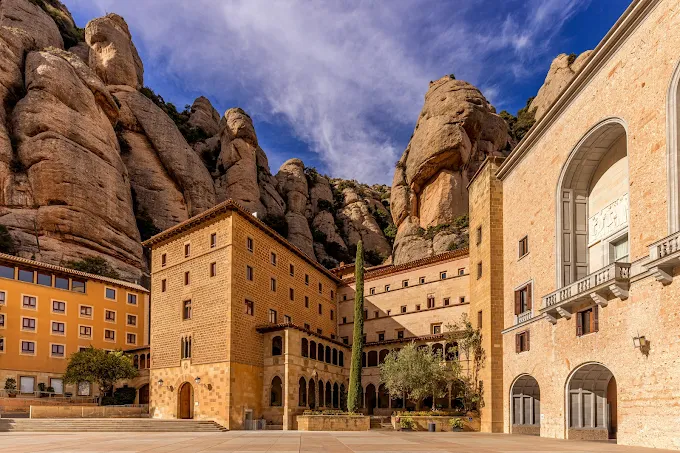
Mist clings to the serrated peaks of the Montserrat massif as dawn breaks—light catching the limestone needles while the deep resonance of monks' chanting drifts from the basilica at 1,236 meters elevation. You stand on the plaza before the Montserrat monastery, breathing air scented with pine resin and damp stone, listening to the mechanical hum of the Sant Joan funicular ascending the 45-degree slope. This is Santa Maria de Montserrat, a Benedictine abbey founded in 1025 that clings to the mountainside like a swallow's nest, housing the revered Black Madonna (La Moreneta) within its Gothic nave. The silence here is not empty; it is filled with the prayers of a million pilgrims, the echo of boys' choir rehearsals, and the wind whistling through geological formations sculpted over 50 million years. In 2026, as secularism rises across Europe, the Montserrat monastery matters because it remains a living bridge between the spiritual and the geological—a place where faith is carved into rock, demanding visitors ascend not just in altitude, but in awareness.
Why Montserrat Monastery Embodies Spiritual Resilience
The Montserrat monastery solves a fundamental human need: the desire for a sanctuary that feels suspended between earth and heaven. Perched on a multi-peaked mountain range 50 kilometers northwest of Barcelona, the abbey has survived wars, fires, and political upheaval since its consecration in 1025. The current basilica, reconstructed in the 19th century after Napoleon's troops burned the original in 1811, features a neo-Romanesque facade facing a plaza that accommodates 5,000 pilgrims daily. The engineering required to sustain this community is staggering: water is pumped 600 meters up from the valley, and the Cremallera rack railway climbs gradients of 20% to deliver supplies and visitors to the door.
Cultural significance centers on the La Moreneta, a 12th-century Romanesque sculpture of the Virgin Mary and Child, darkened by centuries of candle smoke or perhaps the varnish used by medieval artisans. She sits in the Cambril sanctuary, visible through a glass partition, holding the orb of the earth and a pine cone symbolizing fertility. The monastery also houses the Escolania de Montserrat, one of Europe's oldest boys' choirs (established 1307), whose voices amplify the acoustics of the basilica's 1,200-pipe organ. Managed by a community of 80 Benedictine monks, the site balances tourism with prayer; the monks wake at 4:00 AM for Vigils, maintaining a rhythm of life that predates the tourist buses. This preservation fulfills a need for continuity; in 2026, amidst rapid modernization, the Montserrat monastery offers a tangible connection to a millennium of uninterrupted devotion.
The Best Time to Experience Montserrat Monastery
For optimal conditions—when the mountain peaks are visible and the choir is performing—target April 15–June 10 or September 15–October 20. During these windows, daytime temperatures at the monastery (1,236 meters) range 14–22°C (57–72°F), while mornings cool to 8–12°C (46–54°F), perfect for hiking the trails without summer heat or winter chill. For photography and atmosphere, arrive at the Cremallera station by 8:00–8:30 AM, before the day-trip crowds from Barcelona swell the plaza.
The golden hour before sunset—approximately 8:30–9:30 PM in June, 7:00–8:00 PM in October—casts warm amber light onto the rock needles, creating ideal conditions for capturing the contrast between stone and sky. Visit Tuesday through Thursday to avoid weekend pilgrims; Saturday afternoons see visitor numbers exceed 10,000 people, creating bottlenecks at the funicular and basilica entrance. Avoid August 1–20 unless you tolerate temperatures exceeding 28°C (82°F) and dense crowds; similarly, avoid December 24–January 6 when the monastery closes certain areas for holiday retreats or operates on reduced hours.
Verify current choir schedules and weather conditions at the official Monastery website: www.abadiamontserrat.net or call the Information Office at +34 938 777 777.
Approximate Budget for a 7-Day Trip (2026)
This budget reflects mid-range travel with comfortable accommodations, quality dining, and cultural experiences—based on 2025 pricing adjusted for Spain's projected 3.2% inflation rate for 2026. This itinerary assumes a base in Barcelona with day trips, or a mix including a night on the mountain. Montserrat itself is free to enter, but transport and activities incur costs.
Accommodation: €100–€200 per night
- 3-star hotel in Barcelona (Eixample): €100–€140 (Hotel Jazz)
- Monastery guesthouse (Abat Cisneros): €120–€160 (on the mountain)
- Rural apartment in Collbató: €90–€130 (requires 3-night minimum)
Food: €50–€80 per day
- Breakfast: €8–€12 (coffee, pastry, toast at local café)
- Lunch: €18–€30 (menú del día: Catalan stew, fish, or meat with wine)
- Dinner: €25–€40 (traditional restaurant: steak, wine, dessert)
Transportation:
- Train Barcelona to Monistrol (FGC R5): €12 round-trip
- Cremallera rack railway: €10 round-trip
- Sant Joan Funicular: €8 round-trip
- Rental car (7 days, compact): €280–€350 (for rural exploration)
- Fuel for regional exploration (350 km): €55–€65
Attractions & Experiences:
- Montserrat Museum entry: €11
- Audio guide: €6
- Boys' Choir performance: Free (donations accepted)
- Guided monastery tour: €15
- Barcelona day pass: €25
Miscellaneous:
- Local wine (Penedès DO, bottle): €12–€25
- Souvenirs and religious items: €30–€60
- Travel insurance (7 days): €35–€55
- Emergency fund: €100 (recommended)
Total for 7 days (mid-range): €1,400–€1,850 per person (excluding international flights)
6 Essential Montserrat Monastery Experiences
- View La Moreneta in the Basilica: Enter the basilica through the main plaza. The Black Madonna is located behind the altar in the Cambril. Queue times average 45 minutes; arrive by 9:00 AM to minimize waiting. The statue is small (95 centimeters tall); view it through the glass partition. Touching is prohibited. The atmosphere is hushed; maintain silence. This experience is the spiritual core of the Montserrat monastery. Allow 30 minutes including prayer time.
- Listen to the Escolania Choir: The boys' choir performs daily at 1:00 PM (except July and school holidays) in the basilica. Arrive by 12:30 PM to secure a seat in the nave. The acoustics amplify the polyphonic harmonies, creating a transcendent auditory experience. The performance lasts 20 minutes. Photography is prohibited during the service. This tradition dates back to the 14th century. It is a rare chance to hear medieval music in its intended setting.
- Ride the Sant Joan Funicular: Take the cable railway from the monastery plaza to the upper stations (1,450 meters). The 5-minute ride offers panoramic views of the Llobregat valley. Purchase tickets at the machine near the basilica (€8 round-trip). From the top, access hiking trails or the Santa Cova path. Best visited at 10:00 AM when visibility is clearest. The engineering of the funicular is a feat of 1920s innovation.
- Hike to Sant Jeroni Peak: For the highest viewpoint, hike from the Sant Joan funicular station to Sant Jeroni (1,289 meters elevation gain from sea level). The trail takes 1.5 hours one-way. The summit offers 360-degree views of the Pyrenees and Mediterranean. Wear sturdy boots; the path is rocky. This experience connects you to the geological drama of the mountain. Best visited in the morning to avoid afternoon heat.
- Visit the Montserrat Museum: Located in the monastery complex. Open 10:00 AM–5:45 PM. Entry €11. The collection includes works by Caravaggio, El Greco, and Picasso, alongside archaeological finds from the Holy Land. The audio guide explains the connection between art and faith. Allow 60 minutes. This experience contextualizes the monastery's wealth and patronage. Photography permitted without flash.
- Walk the Path of the Holy Cave: The Camí de la Santa Cova is a devotional path descending from the monastery. It features 15 sculptural groups depicting the Rosary mysteries. The walk takes 1 hour one-way. The sculptures by Gaudí's contemporaries blend art and nature. Best visited at 4:00 PM when light hits the stone figures. This path is less crowded than the funicular routes. It offers a meditative walking experience.
3 Hidden Gems Most Travelers Miss
- Sant Miquel Cross: While thousands hike to Sant Jeroni, this cross sits on a lower peak (1,143 meters) with equally stunning views of the monastery facade. Access via the trail from the Sant Joan funicular station (30 minutes). It is overlooked because it is not the highest point. Best visited at sunset when the basilica glows gold. No facilities exist; bring water. This spot offers the classic postcard view without the crowd.
- Monastery Crypt Museum: Located beneath the basilica, this small space displays archaeological artifacts found during construction. Entry free; open 10:00 AM–4:00 PM. It is special because it reveals the layers of history beneath the current church. Visit at 2:00 PM when the guide is present. This experience appeals to history buffs. Photography allowed without flash. It is often missed by tourists focused on the Madonna.
- Collbató Caves (Coves del Salnitre): Located at the base of the mountain, these limestone caves were used by hermits before the monastery was built. Entry €8; open weekends 10:00 AM–2:00 PM. The guided tour lasts 45 minutes. It is overlooked because it requires a bus ride from Monistrol. Best visited in the morning. This experience connects you to the pre-monastic history of the mountain. Wear warm clothes; temperature is constant 15°C.
Cultural & Practical Tips
- Language etiquette: Catalan is the primary language; Spanish and English are widely spoken. Key phrases: Bon dia (BON DEE-ah = good morning), Si us plau (see oos PLAW = please), Gràcies (GRAH-see-es = thank you), Parla anglès? (PAR-lah ang-LES = do you speak English?). Using Catalan greetings shows respect for local identity.
- Dress code: The monastery is an active religious site. Shoulders and knees must be covered when entering the basilica. Hats should be removed inside. Security may deny entry to those dressed inappropriately. This rule is strictly enforced during mass times. Dress in layers; the mountain is windier than Barcelona.
- Photography guidelines: Flash photography is prohibited inside the basilica and museum. Tripods require written permission from the abbot's office (email informacio@abadiamontserrat.net 7 days ahead). Respect pilgrims; do not photograph people praying. Best light for exterior photos is early morning or late evening.
- Accessibility considerations: The plaza and basilica are wheelchair accessible. The funiculars accommodate wheelchairs. Hiking trails are NOT accessible. The museum has elevators. Inform staff at the information desk for assistance; they provide priority access to avoid queues. Taxis can drop off at the plaza, but not deeper into the trails.
- Weather considerations: Montserrat weather changes rapidly. The mountain is often foggy when Barcelona is sunny. Check forecasts at meteocat.gencat.cat before traveling. Summer temperatures are milder than the city, but winter nights can drop to 0°C. Layer clothing. Rain makes the stone trails slippery; exercise caution.
- Dining schedules: Lunch runs 1:30–3:30 PM; dinner doesn't begin until 8:30 PM. Many restaurants close between 4:00–8:00 PM; plan accordingly. The monastery cafeteria serves simple meals (€15–€25). For authentic cuisine, dine in Monistrol village. Reservations recommended for weekends. Tipping 5–10% is appreciated for good service.
- Transport logistics: The FGC train from Barcelona (Plaça Espanya) runs every 20 minutes. The Cremallera connects to the train at Monistrol. Buy the TransMontserrat pass (€35) for unlimited transport and some discounts. It saves money if using funiculars. Validate tickets before boarding. Trains are crowded on Sundays; arrive early.
Conclusion: Travel with Reverence, Not Just Checklists
The Montserrat monastery does not exist merely for your Instagram feed—it stands as a silent witness to a millennium of prayer, war, and pilgrimage. What it deserves is your reverence: the willingness to walk slowly across the plaza without rushing to the next landmark, to understand that the chanting you hear is part of a cycle that began before your nation existed, to recognize that this sanctuary is a home for monks first and a tourist destination second. In 2026, as historical narratives are increasingly contested, Montserrat offers a model of continuity—demonstrating how faith can endure in stone. Sit on the bench overlooking the valley not to check a box, but to contemplate the scale of the mountain. Listen to the choir not for novelty, but to hear the voices that have sung here for 700 years. Let the rock needles teach you that endurance is quiet. Travel to Montserrat not to consume spirituality, but to witness it, ensuring your visit respects the sanctity of a place where heaven and earth have met for a thousand years.