
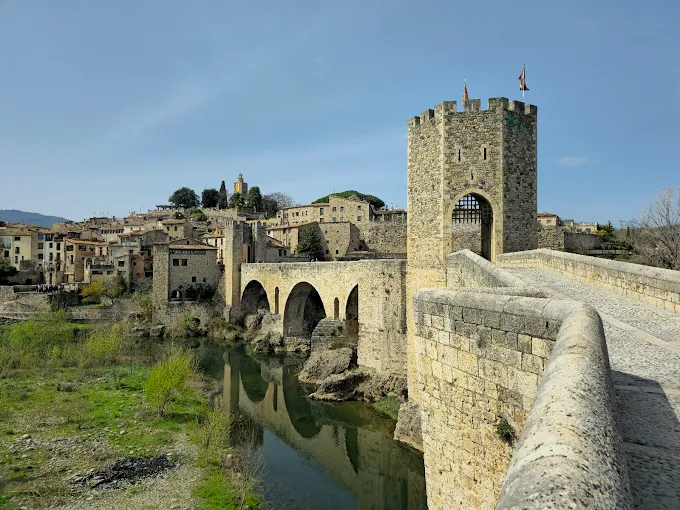
Besalú Medieval Bridge Romanesque Stone Meets Fluvià River Mist
Dawn breaks over the Fluvià River as mist clings to the seven stone arches—light catching the weathered limestone while the water flows silently beneath 12th-century masonry. You stand at the entrance of the Besalú medieval bridge, breathing air scented with damp river mud and wild thyme, listening to the distant tolling of bells from the Church of Sant Vicenç. This is the Pont Vell, a 105-meter fortification that once guarded the capital of the Counts of Besalú, its pointed arches reinforced by a gatehouse that still bears the scars of medieval warfare. The silence here is profound, broken only by the rush of water over weir stones and the cry of herons nesting in the riparian willows. In 2026, as heritage sites worldwide face the dual threats of overtourism and climate-induced flooding, the Besalú medieval bridge matters because it stands as a resilient testament to engineering endurance—demanding visitors walk not just as spectators, but as stewards of a structure that has connected communities for nearly a millennium.
Why Besalú Medieval Bridge Embodies Medieval Engineering
The Besalú medieval bridge solves a fundamental historical problem: how to maintain a strategic crossing over the unpredictable Fluvià River while defending the town from invasion. Constructed primarily in the 11th and 12th centuries under the reign of the Counts of Besalú, this 105-meter structure features seven unequal arches, with the central span reaching 18 meters in height to allow floodwaters to pass. The bridge's design incorporates a fortified gatehouse at the northern end, complete with a drawbridge mechanism (now lost) and a chapel dedicated to Saint Martin, illustrating the dual role of religious sanctity and military defense. Technical measurements reveal the scale of medieval ambition: the roadway is 4.5 meters wide, paved with irregular cobblestones that have withstood 900 years of foot traffic, cart wheels, and modern vehicles until pedestrianization in the 1970s.
Historical significance extends beyond the stone; the bridge served as the primary access point to one of Catalonia's most important Jewish quarters, home to a mikveh (ritual bath) dating to 1075—one of the oldest in Europe. The structure survived the 1315 flood that destroyed much of the town, thanks to the pointed arch design that distributed water pressure more effectively than rounded Roman arches. Restoration efforts, led by the Generalitat de Catalunya in 1975 and reinforced in 2018 with €1.2 million in structural stabilization, ensure the masonry remains intact against seismic activity and erosion. This preservation fulfills a need for tangible connection to the medieval past; in 2026, amidst modern infrastructure, walking these stones offers a physical link to the era when Besalú was an independent county capital.
The Best Time to Experience Besalú Medieval Bridge
For optimal conditions—when the river is calm and the light is soft for photography—target May 15–June 25 or September 10–October 20. During these windows, daytime temperatures in Besalú range 18–26°C (64–79°F), while evenings cool to 10–15°C (50–59°F), perfect for evening walks without heavy coats. For photography and atmosphere, arrive at the bridge entrance by 7:30–8:00 AM, when morning mist often lingers over the Fluvià and tourist buses have not yet arrived.
The golden hour before sunset—approximately 8:30–9:30 PM in June, 7:00–8:00 PM in October—casts warm amber light onto the limestone blocks, creating ideal conditions for capturing the texture of medieval masonry against the darkening sky. Visit Tuesday through Thursday to avoid weekend crowds from Girona and Barcelona; Saturday afternoons see visitor numbers exceed 2,000 people in the old town, creating bottlenecks on the narrow bridge deck. Avoid August 1–20 unless you tolerate temperatures exceeding 32°C (90°F) and peak tourist density; similarly, avoid November through February when the Fluvià River is prone to swelling, occasionally closing access paths due to flood risk.
Verify current river levels and opening hours at the official Besalú Tourism website: www.besalu.cat or call the Visitor Center at +34 972 591 250.
Approximate Budget for a 7-Day Trip (2026)
This budget reflects mid-range travel with comfortable accommodations, quality dining, and cultural experiences—based on 2025 pricing adjusted for Spain's projected 3.2% inflation rate for 2026. Besalú is a small town; accommodation is limited, so staying in nearby Girona (30 km) is often more economical. This itinerary includes day trips to the Costa Brava.
Accommodation: €85–€170 per night
- Rural masia near Besalú: €85–€120 (Mas La Costa)
- 3-star hotel in Girona center: €130–€170 (Hotel Historic)
- Apartment rental (self-catering): €100–€140 (requires 3-night minimum)
Food: €40–€70 per day
- Breakfast: €6–€10 (coffee, pastry, toast at local café)
- Lunch: €15–€25 (menú del día: Catalan sausage, fish, or meat with wine)
- Dinner: €20–€35 (traditional restaurant: steak, wine, dessert)
Transportation:
- Train Barcelona to Girona (RENFE): €18 one-way, 38 minutes
- Bus Girona to Besalú (Line 11): €3.50 one-way, 35 minutes
- Rental car (7 days, compact): €260–€330 (for rural exploration)
- Fuel for regional exploration (350 km): €55–€65
Attractions & Experiences:
- Jewish Mikveh entry: €4
- Sant Vicenç Church entry: €3
- Guided Besalú tour: €12
- Costa Brava boat trip: €45
- Museum of Miniatures: €5
Miscellaneous:
- Local wine (Empordà DO, bottle): €12–€25
- Souvenirs and art prints: €30–€60
- Travel insurance (7 days): €35–€55
- Emergency fund: €100 (recommended)
Total for 7 days (mid-range): €1,250–€1,700 per person (excluding international flights)
6 Essential Besalú Medieval Bridge Experiences
- Walk the Pont Vell at Sunrise: Begin your day at the southern entrance of the Besalú medieval bridge by 7:30 AM. The stone is cool underfoot, and the river mist creates an ethereal atmosphere. Walk the full 105 meters to the gatehouse, noting the different arch sizes designed to handle water flow. Allow 30 minutes; best visited when light hits the eastern facade. Photography is permitted; respect early morning quiet. This experience offers solitude impossible during midday hours.
- Explore the Jewish Mikveh: Located near the bridge at Plaça del Mestre Ferrer. Open Tuesday–Sunday, 10:00 AM–6:00 PM. Entry €4; includes audio guide. The ritual bath is carved into bedrock, accessed by 23 stone steps descending to a cistern. The space is cool and damp, preserving the sanctity of the 11th-century site. Allow 45 minutes. This experience provides crucial context for the Jewish community that once thrived here. Guides explain the purification rites.
- Visit the Church of Sant Vicenç: This Romanesque basilica dominates the skyline above the bridge. Climb the steps from the town square. Inside, the crypt dates to 1003, featuring original capitals carved with biblical scenes. Entry €3; open 10:00 AM–6:00 PM. The view from the porch overlooks the bridge and river valley. Best visited at 11:00 AM when light penetrates the nave. Photography permitted without flash. This landmark anchors the town's religious history.
- Swim in the Fluvià River: In summer, locals swim in the calm pools downstream from the bridge. Access via the path on the western bank. The water is shallow and safe for families. Best visited at 4:00 PM when the sun warms the stone banks. Bring water shoes; the riverbed is rocky. No lifeguards on duty; swim at your own risk. This experience connects you to the natural element the bridge was built to conquer.
- Dine on Catalan Country Cuisine: Experience the local flavors at Restaurant La Bodega (Carrer de Tallaferro 4). Reserve a table for 9:00 PM. Order canelons (pasta tubes) or botifarra amb mongetes (sausage with beans). The interior features exposed stone walls and wooden beams. Prices average €30 per person without wine. This meal connects you to the agricultural traditions of the Garrotxa region. Wine pairing: Negre de l'Empordà (€18 per bottle).
- Attend the Medieval Market (September): If visiting in early September, this festival transforms the town with period costumes, artisans, and food. Dates vary annually (first weekend of September). Entry to most stalls is free. Crowds are significant; arrive by 9:00 AM. This event highlights the town's historical identity. It is a unique convergence of commerce and heritage. Check dates at besalu.cat.
3 Hidden Gems Most Travelers Miss
- Sant Pere Church Crypt: While thousands visit Sant Vicenç, this smaller church features a crypt with 10th-century frescoes. Located on Carrer de Sant Pere. Entry by donation; open Saturday afternoons 4:00–6:00 PM. The frescoes are faded but reveal Byzantine influence. It is overlooked because it is not prominently signposted. Ask at the Tourist Office for the keyholder's contact. Best visited with a flashlight to see details. This site offers a glimpse into pre-Romanesque art.
- Museum of Miniatures: Located in the old convent near the bridge, this museum displays intricate carvings on tiny surfaces (rice grains, flea wings). Entry €5; open 10:00 AM–7:00 PM. The collection includes a 12-page book on a pinhead. It is special because it contrasts the massive stone bridge with microscopic art. Visit at 3:00 PM when the guide gives demonstrations. This experience appeals to those interested in craftsmanship. Photography allowed without flash.
- River Walk to Cornellà del Terri: A 5-kilometer path follows the Fluvià upstream from the bridge. The trail is flat and shaded by poplars. It ends at a small weir where herons fish. Access via the western bank path. No facilities exist; bring water. It is overlooked because visitors stay in the town center. Best visited at 5:00 PM for birdwatching. This experience offers nature away from the stone streets. Wear hiking shoes; the path can be muddy.
Cultural & Practical Tips
- Language etiquette: Catalan is the primary language; Spanish is widely understood. Key phrases: Bon dia (BON DEE-ah = good morning), Si us plau (see oos PLAW = please), Gràcies (GRAH-see-es = thank you), Parla anglès? (PAR-lah ang-LES = do you speak English?). Using Catalan greetings shows respect for local identity.
- Photography guidelines: Flash photography is prohibited inside churches and the Mikveh. Tripods require written permission from the city council (email turisme@besalu.cat 7 days ahead). Respect residents' privacy; many homes near the bridge are private. Do not photograph people without permission. Best light for street photography is early morning or late evening.
- Footwear imperative: Besalú streets are paved with irregular cobblestones and smooth sandstone. Heels and smooth-soled shoes are dangerous. Wear sneakers or flats with grip. The bridge surface is uneven; comfortable walking shoes are non-negotiable for enjoying the town. Rain makes the stones slippery; exercise caution in wet weather.
- Accessibility considerations: The bridge has a slight incline but is wheelchair accessible. The Mikveh is NOT accessible due to stairs. The Church of Sant Vicenç has a ramp. Electric scooters are prohibited on the bridge. Inform tour guides of mobility issues in advance; they can adjust routes. Taxis can drop off near the bridge, but not on it.
- Weather considerations: Besalú can be windy, especially the Tramuntana. The bridge is exposed; bring a windbreaker even in summer. Summer temperatures exceed 30°C; the stone radiates heat. Check forecasts at meteocat.gencat.cat before traveling. Winter nights can drop to 5°C; layer clothing. River levels rise quickly after rain.
- Dining schedules: Lunch runs 1:30–3:30 PM; dinner doesn't begin until 8:30 PM. Many restaurants close between 4:00–8:00 PM; plan accordingly. For authentic Garrotxa cuisine, try suquet de peix (fish stew) or botifarra (sausage). Reservations recommended for weekends. Tipping 5–10% is appreciated for good service. Water is safe to drink from taps.
- Security checks: Bag checks are rare but possible during festivals. Large backpacks must be checked in cloakrooms (free). Scanners detect metal; remove belts and keys to speed up process. Prohibited items include food, drinks, and sharp objects inside museums. Allow 15 minutes extra for security during peak times. This ensures safety for the invaluable structures inside.
Conclusion: Travel with Memory, Not Just Checklists
The Besalú medieval bridge does not exist merely for your Instagram feed—it stands as a silent witness to centuries of trade, war, and faith. What it deserves is your memory: the willingness to walk slowly across cobblestone arches without rushing to the next landmark, to understand that the stone beneath your feet has supported kings and peasants alike, to recognize that this structure is a monument to human resilience first and a tourist attraction second. In 2026, as historical narratives are increasingly contested, Besalú offers a model of preservation—demonstrating how towns can honor their past without freezing it in time. Sit on the riverbank not to check a box, but to watch the water flow as it did in 1100. Eat the local sausage not for novelty, but to taste the agriculture that sustained the builders. Let the arches teach you that endurance is quiet. Travel to Besalú not to consume history, but to honor it, ensuring your visit respects the legacy of those who built this connection between banks and whose legacy remains etched in every limestone block.