
Newquay Surfing Beaches Atlantic Swells Meet Cornish Coast
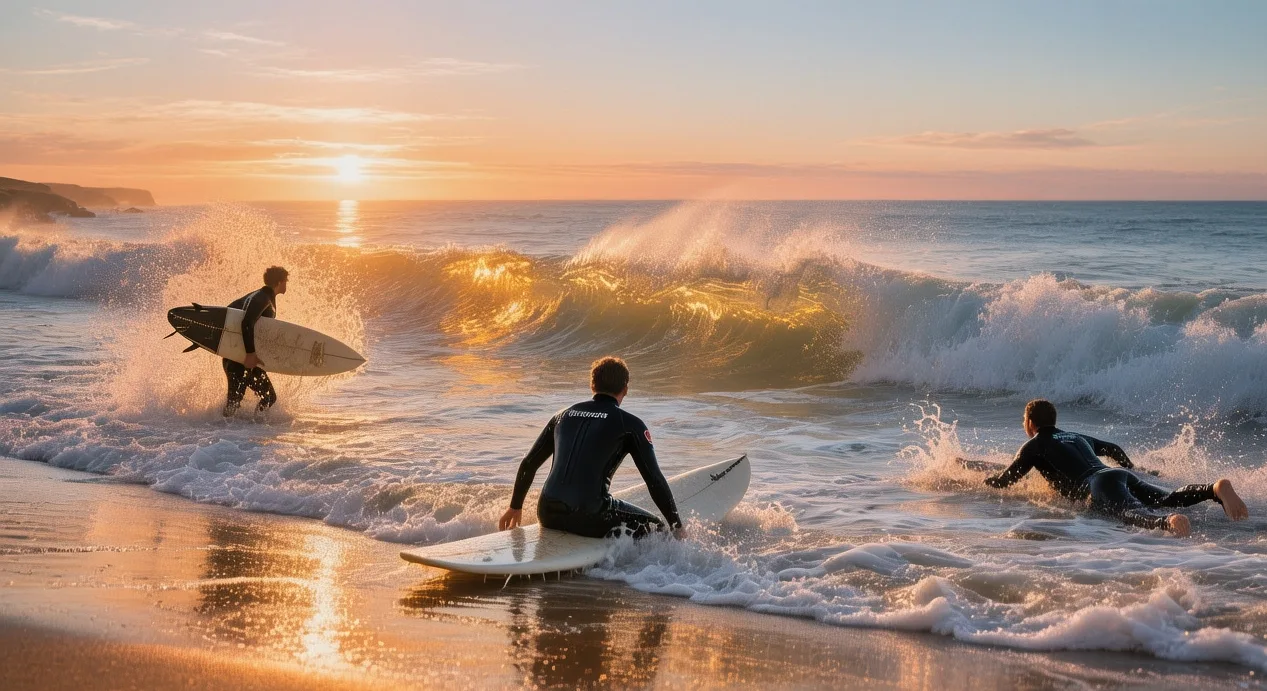
Dawn breaks over Fistral Beach as the first surfers paddle out—silhouetted against a sky painted in shades of coral and gold while 2-meter (6.5-foot) swells roll in from the Atlantic. You stand on the promenade, the scent of salt spray and wetsuit neoprene filling the air, while the rhythmic crash of waves echoes against the granite headland that has shaped this town's identity since the 1960s surfing revolution. Newquay, once a quiet fishing village, transformed into Britain's surfing capital when the Boardmasters festival began in 1983, attracting over 50,000 visitors annually to its seven beaches. As you watch the morning light illuminate the white foam of breaking waves, you realize the Newquay surfing beaches matter now more than ever: in an era of digital disconnection, they offer a physical communion with nature's power, preserving a culture of respect for the ocean that continues to define Cornwall's identity in 2026.
Why Newquay Surfing Beaches Embodies Coastal Culture
The Newquay surfing beaches are not merely recreational spaces; they are the birthplace of British surf culture, where Atlantic swells traveling 5,000 kilometers from the Caribbean meet the Cornish coast. Fistral Beach, the crown jewel, stretches 800 meters (2,625 feet) between Pentire Head and Newquay Head, providing consistent breaks that work on all tides and wind directions. This geographical advantage solved a critical problem for early surfers in the 1960s: finding reliable waves in the unpredictable British climate. The beach's orientation faces directly west-northwest, capturing the full force of Atlantic low-pressure systems that generate swells year-round.
Today, the site fulfills a cultural need for connection to nature in an increasingly urbanized world. Managed by the Newquay Town Council and the RNLI, the beaches host over 2 million visitors annually, with Fistral alone accommodating 500 surfers daily during peak season. The technical infrastructure includes beach huts built in the 1930s, surf schools established since 1972, and the Boardmasters festival grounds that transform the beach each August. When you walk the sand, you traverse a space where Olympic surfers trained and where the UK's first surf shop opened in 1963. The Newquay surfing beaches represent a continuous narrative of coastal adaptation, preserved by the very community that now maintains the beach access paths against the erosive power of winter storms.
The Best Time to Experience Newquay Surfing Beaches
To witness the Newquay surfing beaches in optimal conditions, plan your visit between May 18 and June 12. During this window, water temperatures average 13-16°C (55-61°F), air temperatures reach 15-20°C (59-68°F), and daylight extends until 9:15 PM, maximizing surfing time. The best wave conditions occur during early morning (6:00-9:00 AM) when offshore winds create clean faces, and the beaches are less crowded. Visiting early also allows you to secure parking before tour groups arrive from Devon, typically between 10:00 AM and 4:00 PM.
Autumn offers a secondary window—specifically September 15 to October 15—when summer crowds dissipate and water temperatures remain warm from summer heating. Swell consistency peaks during this period, with average wave heights of 1.5-2.5 meters (5-8 feet). Avoid July 25 to August 25 when the Boardmasters festival and school holidays push visitor numbers above 10,000 daily, creating congestion on the beaches and limited parking. Winter months (November-February) offer powerful swells but challenging conditions; water temperatures drop to 8-10°C (46-50°F), requiring 5mm wetsuits, and sunset occurs as early as 4:05 PM in December..
Approximate Budget for a 7-Day Trip (2026)
Exploring the Newquay surfing beaches and the wider North Cornwall coast requires moderate budgeting, as the region commands premium prices during peak season. The following budget reflects mid-range travel for one person in 2026, accounting for approximately 4.5% UK inflation (ONS data, January 2026). Prices assume a base in Newquay town center for optimal access to the beaches and surf schools.
- Accommodation: £85-£150 per night for a B&B or surf lodge in Newquay town center (6 nights = £510-£900). Budget options: £45-£65 for hostels in Fistral or camping at Porth Beach.
- Food: £45-65 per day total • Breakfast: £8-12 (Full English at The Beach Hut) • Lunch: £12-18 (Fish and chips at The Seafood Cafe) • Dinner: £25-35 (Cornish pasty and ale at The Stable)
- Transportation: • Train London Paddington to Newquay: £75-130 return (advance booking) • Local bus (Route 555): £4.50 day pass • Car rental (recommended): £60/day plus fuel £1.58/liter • Parking at Fistral: £8/day (March-October)
- Attractions: • Surf Lesson (2 hours): £45 • Board Hire (full day): £25 • Boardmasters Festival Ticket: £185 • Free: Beach access, coastal path, public facilities
- Miscellaneous: • Wetsuit purchase: £150-250 • Surf wax and accessories: £30 • Travel insurance: £40-60 for week • Waterproof camera rental: £25
Total estimated cost: £1,350-£1,750 for 7 days (excluding international flights)
5 Essential Newquay Surfing Experiences
- Surf at Fistral Beach at Sunrise: Arrive at the beach by 6:00 AM during May-September. The waves are cleanest at dawn with offshore winds. Book a 2-hour lesson with a certified instructor (£45). The water temperature averages 14°C (57°F); a 4/3mm wetsuit is essential. Expect to spend 90 minutes in the water learning paddling techniques and pop-ups. This experience connects you to the birthplace of British surfing culture.
- Walk the South West Coast Path: Dedicate 90 minutes to the section from Fistral to Watergate Bay. The path climbs 80 meters to clifftops offering panoramic views of the surfing beaches below. The scent of gorse and sea thrift fills the air. Wear sturdy shoes; paths are uneven and exposed. This experience connects the beaches to the wider geological landscape of the North Cornwall Heritage Coast.
- Visit the Boardmasters Festival: Attend the annual event (second week of August) combining professional surfing competitions and live music. Entry is £185 for a day pass. Watch world-class surfers compete in waves up to 3 meters (10 feet). The festival attracts 50,000 visitors annually. This experience demonstrates the cultural significance of surfing to Newquay's identity.
- Explore Crantock Beach: Travel 5 kilometers west to this sheltered bay ideal for beginners. The beach is 1 kilometer long with gentle waves. Spend 60 minutes swimming or bodyboarding. Best visited at low tide when sandbars are exposed. This experience provides a contrast to the powerful breaks at Fistral.
- Take a Sunset Surf Session: Book an evening lesson (6:00-8:00 PM) during summer months. The light is golden and the crowds have dispersed. The water feels warmer after a day of sun. Expect smaller waves but perfect conditions for practicing. This experience offers a meditative end to the day, surfing as the sun dips below the horizon.
3 Hidden Gems Most Travelers Miss
- Towan Beach Rock Pools: While crowds cluster at Fistral, this small beach in the town center remains surprisingly quiet. Access via the harbor steps (grid reference SW815615). The rock pools teem with marine life at low tide. Visit between 2:00-4:00 PM when tide is receding. No facilities exist—bring water and a headlamp for the return. The Marine Conservation Society notes this area has high biodiversity due to protected tidal zones.
- Porth Beach Caves: Located 3 kilometers east, grid reference SW845625, lies a series of sea caves accessible at low tide. The caves extend 50 meters into the cliff. Visit during weekday mornings when the beach is empty. No facilities exist—bring snacks and a torch. This spot demonstrates the geological history of the coastline, offering a raw view of the granite formations before erosion shaped the modern beaches.
- The Surf Heritage Museum: Contact the Newquay Surf School (+44 (0)1637 851234) for access to the small museum in the old lifeboat station. The collection features vintage surfboards from the 1960s. Access is restricted to guided tours on Tuesdays at 11:00 AM. The space offers a tangible connection to the evolution of British surfing culture. This site reveals the technological progression from wooden boards to modern fiberglass designs.
Cultural & Practical Tips
- Respect surf etiquette: Do not drop in on other surfers' waves. The surfer closest to the peak has right of way. Follow RNLI flag warnings; red flags mean no swimming. Keep a safe distance from swimmers. The RNLI reports 20-30 rescues annually due to surfers ignoring conditions.
- Understand tide schedules: The tidal range at Newquay averages 6-7 meters. Check www.uktides.co.uk before visiting. Never turn your back on the sea—rogue waves occur. If caught in a rip current, swim parallel to the shore. The RNLI lifeguards patrol Fistral from May-September.
- Leave no trace: Remove all litter, including biodegradable items. The Town Council collects 15 tonnes of waste annually from the beaches. Do not remove shells or rocks—this violates the Wildlife and Countryside Act 1981. Photograph specimens in situ instead.
- Learn local terminology: "Drop in" (taking someone's wave); "Lineup" (waiting area); "Shore break" (waves breaking on sand). Using these terms shows respect for surf culture and helps instructors assist you better during lessons.
- Photography guidelines: Tripods are permitted on the beach but restricted during competitions. Drone use requires written permission from the Town Council and Civil Aviation Authority—apply 6 weeks in advance. Respect other visitors; do not block pathways for extended shoots during peak hours (10:00 AM-4:00 PM).
- Weather preparedness: The coast is exposed; wind chill is common even in summer. Pack waterproof layers; Cornwall showers are sudden. Wear sturdy shoes with grippy soles—granite becomes slippery when wet. Sun protection is essential; reflection from water increases UV exposure by 25%.
- Accessibility considerations: Fistral Beach has wheelchair access via the promenade. The sand is firm at low tide. Alternative viewing exists from the cafe terrace. Request an accessibility map at the visitor center upon arrival.
Conclusion: Travel with Respect, Not Just Recreation
The Newquay surfing beaches do not exist merely to be conquered—they exist to be respected as a meeting point of human endeavor and ocean power. When you paddle out in 2026, you are not simply catching waves; you are entering a space where generations of surfers have learned humility from the sea. The shapers who crafted the first boards are gone, but their legacy rides every swell. The pioneers who braved the cold are gone, but their spirit lives in every dawn patrol. This is not heritage frozen in amber—it is heritage living, breathing, enduring.
So slow down. Sit on the promenade for ten minutes without your phone. Listen to the wind that once carried the sounds of fishing boats and now carries the laughter of surfers. Buy your lunch from a café whose owners pay rates that support the local community. Donate to the RNLI rather than purchasing mass-produced souvenirs. Leave only footprints in the sand, take only memories of salt and sun, carry home only the profound understanding that some things—oceans, waves, natural power—cannot be controlled, cannot be owned, can only be respected. The beaches will still break in 2126 if we choose stewardship over exploitation today.