
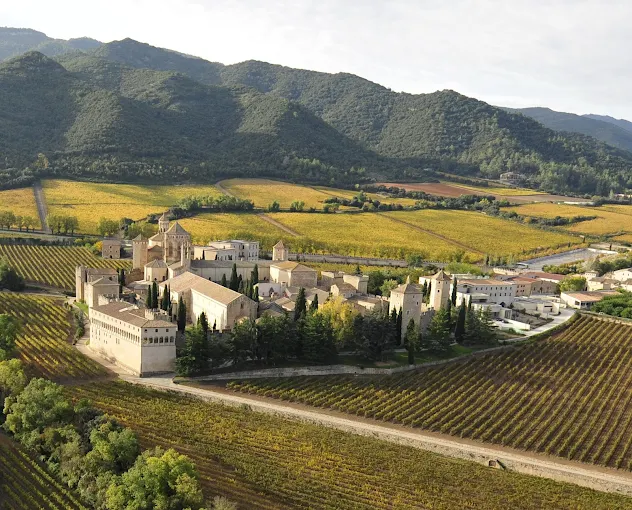
Poblet Monastery Cistercian Silence Meets Catalan Stone
The bell tolls vespers as dusk settles over the Conca de Barberà—sound vibrating through 12 meters of fortified limestone walls while the scent of cypress and old incense lingers in the cloisters. You stand before the Poblet Monastery, breathing air cooled by the shadow of the Prades Mountains, listening to the rhythmic chant of monks that has echoed here since 1151. This is Santa Maria de Poblet, a UNESCO World Heritage Site inscribed in 1991, where the tombs of the Kings of Aragón lie beneath vaulted ceilings painted with stars. The silence here is not empty; it is filled with the weight of eight centuries of prayer, the scratch of quills in the scriptorium, and the wind rustling through the royal pantheon. In 2026, as modern life accelerates and digital noise dominates, the Poblet Monastery matters because it remains a sanctuary of contemplation—demanding visitors slow their pace to match the rhythm of stone and spirit that has outlasted empires.
Why Poblet Monastery Embodies Cistercian Grandeur
The Poblet Monastery solves a fundamental historical need: the projection of royal power through spiritual legitimacy. Founded in 1151 by Ramon Berenguer IV, Count of Barcelona, this complex grew from a hermitage into the largest Cistercian abbey in Spain, covering 64 hectares within its outer walls. The architecture fulfills a dual purpose: defense and devotion. The fortified perimeter, constructed in the 14th century under Peter the Ceremonious, rises 12 meters high and features 12 towers, making it one of the few monasteries in Europe capable of withstanding siege. Inside, the church follows the strict Cistercian plan of Saint Bernard of Clairvaux, emphasizing light, proportion, and austerity, yet the Royal Pantheon introduces Gothic opulence with alabaster tombs carved by Pere Moragues in the 1370s.
Technical preservation is managed by the Patronat del Monestir de Poblet, which employs 35 conservators to maintain the sandstone facades against erosion. The 2018–2024 restoration project (€6.5 million investment) stabilized the cloister vaults using traditional lime mortar techniques, ensuring the structural integrity of the 12th-century masonry. This preservation fulfills a need for tangible connection to the medieval past; in 2026, amidst modern development, the Poblet Monastery offers a landscape where the separation between sacred and secular is physically demarcated by stone gates. The community of 25 Cistercian monks continues to live within the enclosure, maintaining a liturgical cycle that dictates the rhythm of the site, reminding visitors that this is not a museum but a living house of prayer.
The Best Time to Experience Poblet Monastery
For optimal conditions—when the light filters softly through the cloister arches and the tourist crowds are manageable—target May 15–June 25 or September 10–October 20. During these windows, daytime temperatures in Vimbodí i Poblet range 18–26°C (64–79°F), while evenings cool to 10–15°C (50–59°F), perfect for walking the ramparts without summer heat. For photography and atmosphere, arrive at the gatehouse by 9:30–10:00 AM, when the morning sun illuminates the facade before tour buses arrive from Barcelona.
The golden hour before sunset—approximately 8:30–9:30 PM in June, 7:00–8:00 PM in October—casts warm amber light onto the limestone walls, creating ideal conditions for capturing the texture of medieval masonry against the darkening sky. Visit Tuesday through Thursday to avoid weekend pilgrims; Saturday afternoons see visitor numbers exceed 2,000 people, creating bottlenecks at the ticket office. Avoid August 1–20 unless you tolerate temperatures exceeding 32°C (90°F) and peak tourist density; similarly, avoid December 24–January 6 when the monastery closes certain areas for holiday retreats or operates on reduced hours.
Verify current opening hours and liturgical schedules at the official Monastery website: www.poblet.cat or call the Visitor Center at +34 977 870 089.
Approximate Budget for a 7-Day Trip (2026)
This budget reflects mid-range travel with comfortable accommodations, quality dining, and cultural experiences—based on 2025 pricing adjusted for Spain's projected 3.2% inflation rate for 2026. Poblet is a rural destination; accommodation is limited in Vimbodí, so staying in nearby Tarragona or Montblanc is often more economical. This itinerary includes day trips to the Costa Daurada.
Accommodation: €85–€170 per night
- Rural masia in Vimbodí: €85–€120 (Mas de la Vinya)
- 3-star hotel in Montblanc (10 km): €130–€170 (Hotel Terraza)
- Apartment rental (self-catering): €100–€140 (requires 3-night minimum)
Food: €40–€70 per day
- Breakfast: €6–€10 (coffee, pastry, toast at local café)
- Lunch: €15–€25 (menú del día: Catalan stew, fish, or meat with wine)
- Dinner: €20–€35 (traditional restaurant: steak, wine, dessert)
Transportation:
- Train Barcelona to Vimbodí (RENFE): €12 one-way, 1 hour 30 minutes
- Local bus within region: €1.50 per ride
- Rental car (7 days, compact): €260–€330 (for rural exploration)
- Fuel for regional exploration (350 km): €55–€65
Attractions & Experiences:
- Poblet Monastery entry: €11
- Audio guide: €4
- Guided monastery tour: €15
- Montblanc Medieval Town tour: €10
- Winery tasting (Conca de Barberà): €20
Miscellaneous:
- Local wine (DO Conca de Barberà, bottle): €10–€20
- Souvenirs and religious items: €30–€60
- Travel insurance (7 days): €35–€55
- Emergency fund: €100 (recommended)
Total for 7 days (mid-range): €1,250–€1,700 per person (excluding international flights)
6 Essential Poblet Monastery Experiences
- Visit the Royal Pantheon: This is the heart of the Poblet Monastery, where 10 kings and 4 queens of the Crown of Aragón rest. Enter the church through the main nave. The tombs are elevated on lion-supported pedestals, carved from white alabaster. Lighting is dim to preserve the stone; allow your eyes to adjust. The effigies depict the monarchs in eternal prayer. Allow 30 minutes. Photography is prohibited inside the pantheon to respect the sanctity of the tombs. This experience connects you to the political history of medieval Spain.
- Walk the Cloisters: The monastery features three cloisters: the Cloister of the Monks (12th century), the Cloister of the Infirmary (14th century), and the Cloister of St. Jordi. Start at the main cloister at 10:30 AM. The double columns feature carved capitals depicting biblical scenes and mythical beasts. The fountain in the center is original. Allow 45 minutes. This space was used for meditation and reading. Best visited when light filters through the arches. Audio guides explain the symbolism.
- Explore the Palace of Martin the Humanist: Located within the fortified enclosure, this Gothic palace served as the royal residence during visits. Open 10:00 AM–6:00 PM. Entry included in monastery ticket. The Great Hall features a wooden coffered ceiling restored in the 1990s. The views from the balcony overlook the vineyards. Allow 30 minutes. This experience reveals the secular power intertwined with the spiritual. Photography permitted without flash.
- Attend Vespers with the Monks: The Cistercian community sings the Liturgy of the Hours daily. Vespers are at 6:45 PM (winter) or 8:00 PM (summer). Enter the church 15 minutes early. Sit in the rear section reserved for visitors. Maintain absolute silence. The chanting is unaccompanied, amplifying the acoustics of the vaulted ceiling. This experience offers a rare glimpse into the living monastic tradition. No photography allowed during services.
- Walk the Fortified Walls: The outer perimeter offers panoramic views of the Conca de Barberà. Access is via the gatehouse near the ticket office. The walk is 1 kilometer along the ramparts. The stone is uneven; wear sturdy shoes. Best visited at 5:00 PM when the sun warms the limestone. Allow 40 minutes. This experience demonstrates the military engineering that protected the monks. Wind can be strong; bring a jacket.
- Visit the Museum of Religious Art: Located in the old dormitory. Open 10:00 AM–6:00 PM. Entry included in monastery ticket. The collection features liturgical objects, manuscripts, and paintings from the 15th–18th centuries. The Retable of St. George is a highlight. Allow 45 minutes. This experience contextualizes the wealth and artistic patronage of the abbey. Photography permitted without flash.
3 Hidden Gems Most Travelers Miss
- Santa Maria de Poblet Winery: While thousands visit the church, the monks produce their own wine in the cellars beneath the monastery. Access via the Celler de Poblet shop (Carrer Major 12). Tastings available Tuesday–Saturday, 11:00 AM–5:00 PM. The Vi de Missa (Mass Wine) is a sweet red unique to the order. It is overlooked because it is not part of the standard tour. Best visited after the monastery visit. This experience supports the monastic economy directly.
- Ermita de Sant Bartomeu: This 12th-century hermitage sits on a hill 2 kilometers west of the monastery. Access via a marked hiking trail from the village. The chapel features original Romanesque frescoes. Entry free; open daylight hours. It is special because it predates the main monastery and offers solitude. Visit at sunset when the view over the valley is clear. No facilities exist; bring water. This site reveals the eremitic origins of the community.
- Medieval Walls of Montblanc: Located 10 kilometers away, this fortified town rivals Poblet in historical significance. The walls enclose 1.5 kilometers of perimeter. Access via train or car. Entry to towers €3. It is overlooked by tourists focused solely on the monastery. Best visited in the morning before heading to Poblet. This experience complements the monastic visit with urban medieval history. Guided tours available at the tourist office.
Cultural & Practical Tips
- Language etiquette: Catalan is the primary language; Spanish is widely understood. Key phrases: Bon dia (BON DEE-ah = good morning), Si us plau (see oos PLAW = please), Gràcies (GRAH-see-es = thank you), Parla anglès? (PAR-lah ang-LES = do you speak English?). Using Catalan greetings shows respect for local identity.
- Dress code: The monastery is an active religious site. Shoulders and knees must be covered when entering the church. Hats should be removed inside. Security may deny entry to those dressed inappropriately. This rule is strictly enforced during mass times. Dress in layers; the stone buildings are cool in summer.
- Photography guidelines: Flash photography is prohibited inside the church and pantheon. Tripods require written permission from the abbot's office (email info@poblet.cat 7 days ahead). Respect the monks; do not photograph them without explicit permission. Best light for exterior photos is early morning or late evening.
- Accessibility considerations: The church and main cloister are wheelchair accessible. The walls and upper galleries are NOT accessible due to stairs. The museum has elevators. Inform staff at the ticket office for assistance; they provide priority access to avoid queues. Taxis can drop off at the gatehouse, but not deeper into the enclosure.
- Weather considerations: The Conca de Barberà can be windy, especially the Cerc wind. The walls are exposed; bring a windbreaker even in summer. Summer temperatures exceed 30°C; the stone radiates heat. Check forecasts at meteocat.gencat.cat before traveling. Winter nights can drop to 5°C; layer clothing.
- Dining schedules: Lunch runs 1:30–3:30 PM; dinner doesn't begin until 8:30 PM. Many restaurants close between 4:00–8:00 PM; plan accordingly. For authentic cuisine, try conill a la brasa (grilled rabbit) or calçots (in season). Reservations recommended for weekends. Tipping 5–10% is appreciated for good service.
- Silence protocol: In the cloisters and church, maintain a low voice. Mobile phones must be silenced. This is a working monastery, not just a museum. Respect the prayer times; tours may be paused during liturgical services. This etiquette ensures the spiritual atmosphere is preserved for the monks and other visitors.
Conclusion: Travel with Reverence, Not Just Checklists
The Poblet Monastery does not exist merely for your Instagram feed—it stands as a silent witness to eight centuries of prayer, war, and royal legacy. What it deserves is your reverence: the willingness to walk slowly across the cloister stones without rushing to the next landmark, to understand that the chanting you hear is part of a cycle that began before your nation existed, to recognize that this sanctuary is a home for monks first and a tourist destination second. In 2026, as historical narratives are increasingly contested, Poblet offers a model of continuity—demonstrating how faith can endure in stone. Sit on the bench overlooking the vineyards not to check a box, but to contemplate the rhythm of the seasons. Listen to the bells not for novelty, but to hear the timekeeping that governed medieval life. Let the walls teach you that endurance is quiet. Travel to Poblet not to consume spirituality, but to witness it, ensuring your visit respects the sanctity of a place where heaven and earth have met for nearly a thousand years.