
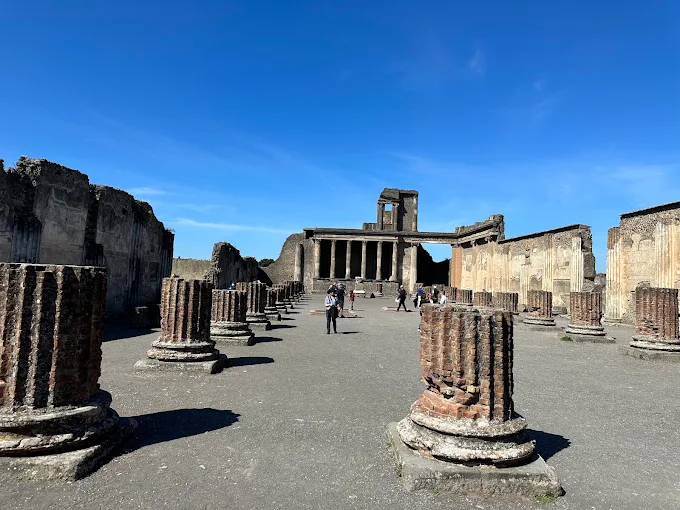
Pompeii Ruins – Mount Vesuvius Ash Preserves Time
The first light of dawn spills over the Bay of Naples—casting long shadows across the cobbled streets of Pompeii, where bread still sits in ovens and frescoes glow with undimmed color. You hear the crunch of volcanic gravel underfoot, the distant cry of a gull, and the whisper of wind through the ruins of the Forum. Ahead, Mount Vesuvius looms, its slopes deceptively green, its crater silent since 1944. On August 24, 79 CE, this mountain unleashed a pyroclastic surge that buried Pompeii under 4–6 meters (13–20 feet) of ash and pumice, freezing 11,000 lives in mid-breath. Rediscovered in 1748, the site spans 66 hectares—nearly two-thirds excavated—and offers the most complete portrait of Roman urban life ever found. In 2026, as climate change accelerates archaeological decay and overtourism strains fragile mosaics, Pompeii stands not just as a monument to catastrophe, but as a urgent call for preservation—where every visitor’s choice shapes whether history endures or erodes.
Why Pompeii Ruins – Mount Vesuvius Embodies Frozen Civilization
Pompeii is not merely an archaeological site—it is a time capsule sealed by fire and ash. When Vesuvius erupted in 79 CE, it released a 30-kilometer-high plume of superheated gas and rock, followed by pyroclastic flows moving at 100 km/h (62 mph) that instantly carbonized organic matter while preserving structures in astonishing detail. The city, founded by the Osci in the 7th century BCE and later Romanized, boasted advanced infrastructure: aqueduct-fed fountains, underfloor heating (hypocausts), and public baths with gender-segregated zones. Key discoveries include the Villa of the Mysteries’ vivid Dionysian frescoes, the plaster casts of victims frozen in their final moments, and the Lupanar’s explicit erotic art—revealing a society far more complex than textbooks suggest. Mount Vesuvius itself remains Europe’s only active volcano on the mainland, standing 1,281 meters (4,203 feet) tall with a crater 200 meters deep. Today, the Parco Archeologico di Pompei manages strict conservation protocols, including controlled visitor flow and laser-scanning technology to monitor structural shifts. This dual landscape—of human ingenuity and natural fury—offers unparalleled insight into how civilizations rise, live, and vanish.
The Best Time to Experience Pompeii Ruins – Mount Vesuvius
To explore Pompeii and hike Vesuvius with comfortable temperatures and fewer crowds, target the precise window of May 12–26, 2026. During these weeks, daytime temperatures range from 20–26°C (68–79°F)—ideal for walking ancient streets and ascending the volcano’s steep trail [[25], [28]]. Mornings between 8:00–10:00 AM offer cool shade in the ruins before the sun beats down on exposed stone. Alternatively, September 15–29, 2026 provides similar conditions with the added benefit of lower humidity and fewer school groups. Avoid visiting during peak periods: all of July and August, when temperatures exceed 35°C (95°F) and heat exhaustion is common, and major holidays like Easter week or Italian Ferragosto (August 15) [[30]]. For the Vesuvius hike, aim for mid-morning—after morning fog clears but before afternoon winds pick up. Always verify site hours and trail status via the official park website (pompeiisites.org).
Approximate Budget for a 7-Day Trip (2026)
This budget reflects mid-range 2025 pricing adjusted for Italy’s projected 2026 inflation rate of 1.5% [[37]], offering a realistic estimate for a solo traveler based in Sorrento or Naples with day trips to Pompeii and Vesuvius.
- Accommodation: €770–€1,050 total (€110–€150 per night) for a 3-star hotel or private apartment in Sorrento—well-connected by Circumvesuviana train and quieter than Naples.
- Food: €490 total (€70 per day). Breakfast at a café (€4 for cappuccino and cornetto); lunch of pizza margherita and arancini (€15); dinner at a family-run trattoria (€45 for pasta alla norma, grilled sardines, and house red wine).
- Transportation: €85 total. Includes Circumvesuviana train from Sorrento to Pompeii (€4 round-trip); Vesuvius shuttle bus from Ercolano (€10 round-trip); and regional ferry to Capri or Ischia (€25).
- Attractions: €65 total. Pompeii entry (€22); Vesuvius National Park hike (€12); Herculaneum ruins (€16); and a guided small-group tour (€15 donation).
- Miscellaneous: €90 total. A high-quality print from the Pompeii bookstore (€25); gelato from Gelateria David (€4); locally made ceramic replica (€30); and a reusable water bottle (€20) for volcano hikes.
Total Estimated Budget: €1,500–€1,800
6 Essential Pompeii Ruins – Mount Vesuvius Experiences
- Enter Pompeii at Opening (8:30 AM): Arrive early to experience the Forum, Amphitheater, and Stabian Baths in near solitude. The soft morning light enhances the colors of frescoes in the House of the Faun.
- See the Plaster Casts in the Garden of the Fugitives: Stand before the haunting forms of 13 victims, their final postures preserved in ash—a visceral reminder of the human cost of the eruption.
- Hike Mount Vesuvius at Mid-Morning: Take the shuttle from Ercolano Scavi to the crater trailhead. The 30-minute ascent rewards you with panoramic views of the Bay of Naples and the eerie silence of the caldera.
- Explore the Villa of the Mysteries: Just outside the Herculaneum Gate, this suburban villa features one of antiquity’s most enigmatic fresco cycles—depicting a woman’s initiation into a Dionysian cult.
- Visit Herculaneum for Intimacy: Smaller and better preserved than Pompeii, this site reveals carbonized wooden furniture, upper floors, and vivid mosaics—often with far fewer visitors.
- Attend an Evening Sound-and-Light Show: On select summer nights, “Pompeii at Night” illuminates key ruins with projections and narration—a haunting, immersive journey through the final hours.
3 Hidden Gems Most Travelers Miss
- Temple of Isis: Tucked near the Triangular Forum, this small sanctuary reveals how Egyptian cults thrived in Roman cities. Its underground chamber once held sacred Nile water—rarely crowded, deeply atmospheric.
- Boscoreale Antiquarium: A 15-minute drive from Pompeii, this museum displays artifacts from nearby villas, including the famous Boscoreale Treasure—silver tableware hidden before the eruption.
- Oplontis Villa (Villa Poppaea): In Torre Annunziata, this opulent seaside estate—possibly owned by Nero’s wife—features stunning frescoes and gardens. Access requires a short train ride and is often empty.
Cultural & Practical Tips
- Wear sturdy shoes and a hat: Pompeii’s terrain is uneven and exposed. Sun protection is essential—shade is scarce in most areas.
- Carry 2+ liters of water: Hydration stations are limited. Refill at the main entrance or bring your own supply, especially for Vesuvius hikes.
- Book tickets online: Reserve timed entry via ticketone.it to skip lines. Same-day tickets often sell out by noon.
- Learn key phrases: “Dov’è la Casa del Poeta Tragico?” (doh-VEH lah KAH-sah del POW-eh-tah trah-JEE-koh?) for directions; “Grazie mille” (GRAHT-see-eh MEE-leh) for thanks.
- Respect the ruins: Never sit on walls, touch frescoes, or remove stones. These sites are protected by Italian law—violations carry heavy fines.
Conclusion: Travel with Reverence, Not Just Curiosity
In 2026, visiting Pompeii is an act of witness—not tourism. Your €22 ticket funds laser-cleaning of frescoes and structural reinforcement against seismic shifts. Choosing a small-group guide over a megabus tour reduces foot traffic on fragile mosaics; carrying out your trash protects the same ecosystem that once nurtured Roman vineyards. Slow down: trace the grooves of chariot wheels in volcanic stone; imagine the scent of baking bread in the Thermopolium; stand silent before the plaster casts that hold human breath across two millennia. By traveling with reverence—prioritizing understanding over Instagram—you help ensure that Pompeii’s story continues to teach, not just display. Let your presence be a promise: that memory, carefully tended, can outlast even fire and ash.