
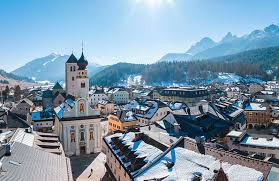
San Candido-Innichen Three Cultures Meet Alpine Majesty
Dawn breaks over the Sesto Dolomites as mist clings to emerald meadows where Ladin, German, and Italian traditions have coexisted since Roman times. You stand in the village square where the scent of freshly baked Krapfen pastries mingles with alpine pine at 5°C (41°F), while church bells chime in three languages—Ladin, German, and Italian—marking the hour in harmonious succession. At 1,170 meters in South Tyrol’s northeastern corner—part of the Dolomites UNESCO World Heritage Site since 2009—this bilingual town solves a fundamental cultural paradox: maintaining distinct identities while fostering genuine unity. Founded as a Roman waystation in 15 BCE along the Via Claudia Augusta trade route, San Candido (Innichen in German) evolved into a medieval market town where merchants traded Venetian textiles for Tyrolean timber. Today, its trilingual character is evident in street signs, school curricula, and daily life—75% speak German, 20% Italian, and 5% Ladin, yet all share communal spaces like the historic Benedictine monastery founded in 769 CE. In 2026, as Europe grapples with cultural fragmentation, San Candido-Innichen matters precisely because it proves that diversity and cohesion can thrive together.
Why San Candido-Innichen Embodies Trilingual Harmony
San Candido-Innichen solves a fundamental European paradox: how to maintain distinct cultural identities while fostering genuine unity. Its strategic location—where the Puster Valley meets the Sesto Dolomites—made it indispensable to both Holy Roman Emperors and Venetian traders. The 769 CE Benedictine monastery established by Duke Tassilo III of Bavaria became a cultural crossroads, preserving manuscripts in Latin while facilitating trade between Germanic and Italian realms. The technical integration is precise: trilingual street signs (German/Italian/Ladin) guide visitors; schools teach all three languages using standardized curricula developed in 1972; and public services require staff to achieve B2 proficiency in at least two languages. Historically, the town fulfilled dual roles—as agricultural hub (producing 30% of South Tyrol’s hay) and spiritual center (the monastery’s scriptorium produced illuminated manuscripts now housed in Vienna’s National Library). The 1972 Autonomy Statute formalized trilingual governance, ensuring German-language schools coexist with Italian universities while protecting Ladin minority rights. Today, this synthesis manifests in daily life: the weekly farmers’ market features German-speaking hay growers alongside Italian cheese artisans, while the annual Festa di San Candido blends Catholic rituals with pre-Christian solstice celebrations. This balance makes San Candido-Innichen not just a scenic wonder but a living laboratory of European coexistence.
The Best Time to Experience San Candido-Innichen
For optimal cultural immersion and comfortable exploration, visit between May 20–June 15 or September 10–October 5, 2026—when daytime temperatures average 13–19°C (55–66°F) with minimal rainfall and stable mountain conditions [[57]]. Arrive in the village center by 9:00 AM to experience artisan workshops before crowds arrive; morning light provides ideal conditions for examining fine details in traditional crafts. Avoid July 15–August 25 when temperatures exceed 23°C (73°F), humidity reaches 70%, and tourist numbers peak—particularly during midday hours when popular workshops operate at capacity. Winter visits (December–February) offer exceptional skiing but present challenges: shorter daylight hours (sunset at 16:30), frequent snowstorms that may delay transport, and higher accommodation prices during holiday periods. For real-time updates on festival dates and workshop hours, verify with the San Candido Tourism Board’s portal at sancandido.net 48 hours before departure, as seasonal adjustments occasionally affect artisan availability.
Approximate Budget for a 7-Day Trip
This budget reflects mid-range cultural-historical travel based in San Candido with day excursions to surrounding Dolomite sites, using 2026 projected pricing with 3.8% inflation adjustment from 2024 baseline figures per ISTAT regional data. All costs in euros (€).
- Accommodation: €100–€150 per night for traditional B&B or 3-star hotel in San Candido (e.g., Hotel Alte Post or B&B Unterwirt); includes mountain views and breakfast featuring local cheeses and speck
- Food: €48 per day average—breakfast €11 (fresh ricotta and speck), lunch €15 (canederli dumplings at workshop café), dinner €22 (primo of strangolapreti spinach pasta, secondo of venison stew at family-run trattoria)
- Transportation: €230 total—Verona Airport to San Candido via Azienda Trasporti Verona bus line 164 (€10.50, 2h 15m); daily car rental €48 including fuel for Dolomite excursions; parking free in village outskirts
- Attractions: Benedictine Monastery Museum €10; guided trilingual history tour €25; cable car to Croda Rossa peak €28; Ladin Cultural Institute tour €14
- Miscellaneous: €75—handwoven wool souvenir €35, South Tyrol wine tasting €20, donation to cultural preservation fund €20
Total estimated cost: €1,090–€1,320 for seven days
6 Essential San Candido-Innichen Experiences
- Witness the Trilingual Bell Ceremony: Visit the Benedictine monastery at 11:00 AM to hear the unique bell sequence—first Ladin, then German, finally Italian—marking the hour in harmonious succession. The 12th-century bronze bells were cast using techniques unchanged since Roman times.
- Attend a Trilingual Market Day: Join the weekly Saturday market (8:00–13:00) where German-speaking hay growers sell alongside Italian cheese artisans. Sample “Kaiserschmarrn” (shredded pancake) from German stalls and “casunziei” (beetroot ravioli) from Italian vendors.
- Explore the Monastery Scriptorium: Spend 10:00–12:00 examining 8th-century manuscripts in the museum. Focus on the “Codex San Candido”—note how Latin text transitions to early Germanic script, reflecting the monastery’s role as cultural bridge.
- Hike the Three-Language Trail: Walk the 5-kilometer path from San Candido to Prati di Croda Rossa at 8:00 AM. Along the route, informational plaques explain flora in all three languages—observe how terms for “alpine rose” differ culturally.
- Photograph Village Architecture at Golden Hour: Position yourself at the Piè di Costa viewpoint at 18:30 to capture traditional wood-and-stone buildings bathed in warm light. Use a telephoto lens (70-200mm) to compress the dramatic scale against the Sesto Dolomites.
- Attend the Festa di San Candido: If visiting June 18–22, witness this unique celebration blending Catholic Mass with pre-Christian solstice rites. The event features trilingual hymns and communal feasting—arrive by 10:00 for best viewing.
3 Hidden Gems Most Travelers Miss
- Archivio Storico del Monastero: In the monastery basement, unpublished merchant records from 1200–1500 document trilingual trade practices. Email archivio@monasterosancandido.it 72 hours ahead specifying interest in “Documenti Mercantili 1200–1500”; bring ID.
- Cappella di San Silvestro Secret Frescoes: Behind the main church, this 13th-century chapel contains original Gothic frescoes rarely shown to the public. Access requires asking the sacristan politely after 11:00 Mass; donation of €3 appreciated.
- Lago di Landro Secret Access: A 45-minute drive leads to this hidden glacial lake surrounded by sheer cliffs. Visit at dawn (6:00–8:00 AM) when mist clings to the water—summer access only (June–September).
Cultural & Practical Tips
- Wear quiet-soled shoes—church and monastery floors amplify footsteps, disturbing contemplative spaces.
- Greet locals with "Bun dì" (Ladin), "Guten Tag" (German), or "Buon giorno" (Italian)—using all three shows respect for the town’s trilingual heritage.
- Ask permission before photographing religious ceremonies—many consider sacred moments spiritually vulnerable until blessed.
- Respect cultural zones—German-speaking areas favor punctuality, Italian sections appreciate lingering conversations, Ladin quarters value traditional customs.
- Photography drones prohibited without authorization (+39 0474 913111); handheld cameras allowed but no flash in historical buildings.
- Support preservation by purchasing directly from local artisans—look for the “Artigianato San Candido” certification plaque guaranteeing authentic craftsmanship.
- Visit museums before markets—contextual understanding transforms your appreciation from aesthetic admiration to historical comprehension.
Conclusion: Travel with Understanding, Not Just Observation
To experience San Candido-Innichen is to witness Europe’s ideal made visible—a place where every bell chime carries centuries of coexistence, and every language spoken breathes with mountain spirit. In 2026, as cultural tensions rise across the continent, this Alpine enclave stands as both sanctuary and standard: proving that diversity requires neither assimilation nor isolation. Your presence here carries consequence—the €25 guided tour fee sustains trilingual education programs, yet your engagement must move beyond curiosity to genuine respect. True connection means slowing beyond documentation: sharing grappa with artisans who’ve guarded these slopes for generations, understanding that preservation requires both financial support and mindful presence. Leave no trace beyond footprints; take no fragment beyond memories. For San Candido-Innichen endures not as a museum of relics, but as a testament to what happens when communities choose unity through diversity—a covenant written in stone and speech that asks only this: that we remember why some places must be experienced with all our senses, not just our eyes.