
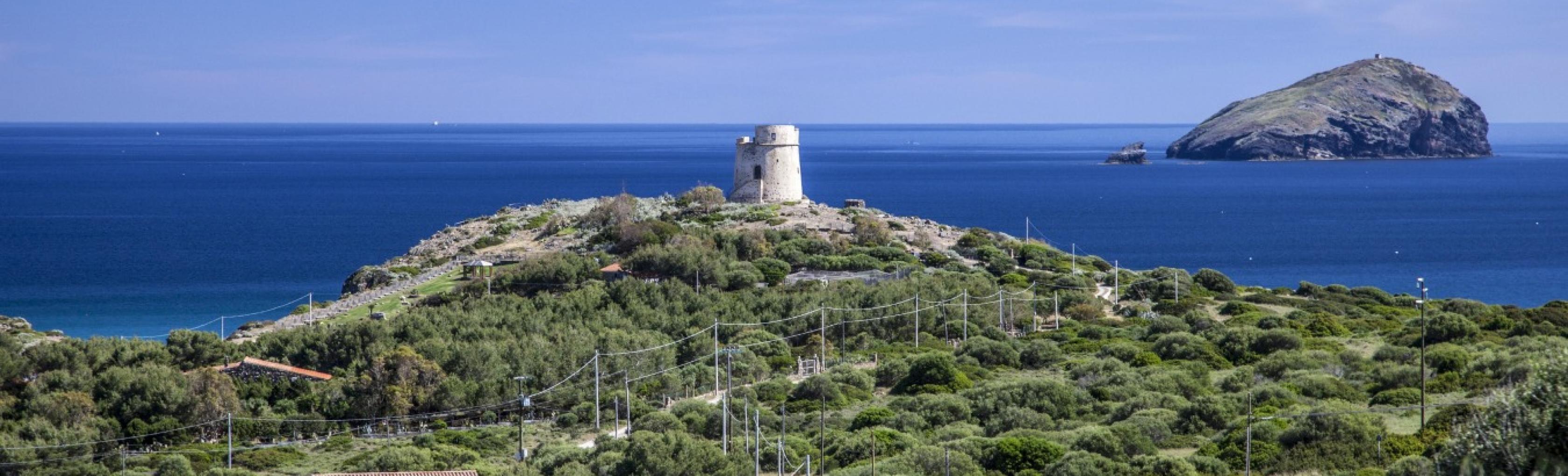
Sant'Antioco Island Phoenician Roots Meet Mediterranean Light
Dusk settles over the Roman bridge as fishing boats return to Calasetta harbor—nets glistening with silver orata that will grace tables by moonrise. You stand where Phoenician traders once bartered Tyrian purple dye for Sardinian silver, where Roman engineers built a 200-meter causeway in 100 CE that still connects this island to the mainland. The air carries the briny tang of the sea mingled with woodsmoke from bakeries preparing pane carasau—a scent layered with 2,800 years of continuous habitation. At 11,500 hectares, Sant’Antioco is Sardinia’s fourth-largest island yet feels worlds away from tourism’s bustle, its identity woven from threads of Phoenician pragmatism, Roman engineering, and Catalan resilience. Founded as Sulcis by Carthaginians in 770 BCE, it became a critical hub for processing garum (fermented fish sauce) that flavored Roman feasts across the empire. Today, its heritage lives in the tappeti di Sant’Antioco—handwoven textiles using techniques unchanged since Nuragic times—and in the annual Festa di Sant’Antioco Martire that blends Catholic ritual with pre-Christian traditions. In 2026, as global travel seeks authenticity beyond Instagram backdrops, Sant’Antioco matters precisely because it refuses performance—a place where history isn’t curated but lived, and every cobblestone whispers of civilizations that chose continuity over conquest.
Why Sant'Antioco Island Embodies Layered Continuity
Sant’Antioco solves a fundamental Mediterranean paradox: how to maintain cultural identity through successive waves of colonization without erasure. Its strategic location—just 200 meters from Sardinia’s southwest coast via the Roman-built causeway—made it a coveted prize: Phoenicians established Sulcis here in 770 BCE as a processing center for garum, the fermented fish sauce that became Rome’s umami secret; Romans expanded the settlement into a provincial capital with baths, temples, and that enduring causeway (still functional after 1,924 years); Byzantines fortified it against Saracen raids; and Catalans revitalized its economy in the 1300s with salt pans and vineyards. Unlike other Mediterranean islands that experienced cultural rupture, Sant’Antioco’s genius lies in synthesis—the Punic tophet became a Christian cemetery; Roman roads became shepherd trails; Catalan weaving techniques merged with Nuragic patterns to create the island’s signature tappeti. Technically, the island functions as a living museum: the 4th-century Basilica di Sant’Antioco Martire incorporates Roman columns repurposed as structural supports; the Museo Archeologico houses intact garum amphorae with residue analysis confirming production methods; and the salt pans at Mal di Ventre still use 14th-century evaporation techniques. Critically, this continuity manifests in daily life—85% of residents speak Sardinian logudorese dialect alongside Italian [[30]], and traditional crafts like coral carving and textile weaving remain economically viable through EU cultural preservation grants.
The Best Time to Experience Sant'Antioco Island
For optimal cultural immersion and comfortable exploration, visit between May 22–June 18 or September 12–October 8, 2026—when daytime temperatures average 21–26°C (70–79°F) with low humidity and minimal rainfall [[31]]. Time your visit to coincide with the Festa di Sant’Antioco Martire (typically June 15–17), when processions blend Catholic ritual with pre-Christian elements like the canto a tenore polyphonic singing. Avoid July 15–August 25 when temperatures exceed 31°C (88°F), humidity reaches 78%, and tourist numbers peak—diminishing authentic interactions with local artisans. Winter visits (November–February) offer solitude but present challenges: many museums reduce hours, some restaurants close seasonally, and ferry services to neighboring islands decrease frequency. For real-time updates on festival dates and museum hours, verify with the Comune di Sant’Antioco’s portal at sardegnaturismo 48 hours before departure, as weather occasionally affects coastal access.
Approximate Budget for a 7-Day Trip (2026)
This budget reflects mid-range cultural-historical travel based in Sant’Antioco town with island exploration, using 2026 projected pricing with 3.8% inflation adjustment from 2024 baseline figures per ISTAT regional data. All costs in euros (€).
- Accommodation: €85–€125 per night for seaside B&B or 3-star hotel in Sant’Antioco town (e.g., Hotel Belvedere or B&B Su Niu); includes harbor views and breakfast featuring local cheeses
- Food: €48 per day average—breakfast €9 (fresh ricotta and pane carasau), lunch €16 (panino with bottarga at harbor kiosk), dinner €23 (primo of malloreddus pasta with saffron, secondo of grilled orata fish at family-run trattoria)
- Transportation: €220 total—Cagliari Elmas Airport to Sant’Antioco via ARST bus line 1072 (€8.50, 2h); daily scooter rental €28 including fuel for island exploration; parking free in town center
- Attractions: Museo Archeologico €7; guided weaving workshop €25; boat excursion to Isola di Mal di Ventre €32; Basilica di Sant’Antioco Martire audio tour €5
- Miscellaneous: €70—handwoven textile souvenir €30, Sardinian wine tasting €20, donation to coral conservation program €20
Total estimated cost: €1,120–€1,360 for seven days
6 Essential Sant'Antioco Island Experiences
- Trace Phoenician Foundations at Sulcis Archaeological Site: Visit the open-air museum at 9:00 AM when angled light reveals construction details in the 770 BCE garum processing tanks. Stand where Carthaginian workers fermented mackerel in salt for 90 days to create Rome’s prized condiment; note the drainage channels still visible after 2,800 years.
- Attend a Traditional Weaving Demonstration: Join the 11:00 AM session at Cooperativa Artigiana where master weavers demonstrate the tappeti di Sant’Antioco technique using 3,000-year-old looms. The geometric patterns encode Nuragic cosmology—ask about the “star of Sulcis” motif representing celestial navigation.
- Explore the Basilica di Sant’Antioco Martire: Enter this 4th-century church at 16:00 when sunlight streams through Roman-era windows onto the saint’s sarcophagus. Note how repurposed Roman columns support the nave—a physical manifestation of cultural layering unique to this island.
- Taste History at a Garum-Inspired Dinner: Book the “Cena Antica” experience at Trattoria Sa Scighera (Wednesdays 20:00)—a four-course meal recreating Roman recipes. The highlight: patina de piscibus (fish custard) made with modern bottarga standing in for ancient garum.
- Hike to Punta Sebera Lighthouse: Trek the 6-kilometer coastal path from Calasetta between 7:00–10:00 AM to reach this 1850s lighthouse perched on volcanic cliffs. Bring binoculars to spot peregrine falcons nesting in limestone crevices; the panoramic view encompasses three islands.
- Photograph the Roman Causeway at Golden Hour: Position yourself on the mainland side at 19:30 to capture the 200-meter bridge bathed in warm light, with fishing boats reflected in turquoise waters. Use a polarizing filter to reduce glare and emphasize the contrast between ancient stonework and modern vessels.
3 Hidden Gems Most Travelers Miss
- Cala Sapone Secret Cove: Reachable only by boat or 50-minute hike from Cala Sapone trailhead, this untouched cove features a natural arch framing turquoise waters. Visit at low tide (check Porto Vesme port authority tables at porto-vesme.it/maree) when hidden sea caves become accessible—most tourists never venture beyond the main beaches.
- Museo del Tappeto Archive: In the town hall basement, unpublished sketches from 1920s weavers document pattern evolution. Email archivio@comune.santantioco.ci.it 72 hours ahead specifying interest in “Documenti Tessili 1920–1950”; bring ID for the 30-minute viewing.
- Saline di Sant’Antioco Salt Pans: Located 3 kilometers north of town, these restored 14th-century salt evaporation ponds produce artisanal sea salt used in local cuisine. Visit at dawn (6:00–8:00 AM) when workers harvest crystals; purchase directly from the cooperative (€7/500g).
Cultural & Practical Tips
- Learn basic Sardinian phrases—“Sa die d’e sòccussu” (good health) shows respect for linguistic heritage; most elders appreciate the effort even if they respond in Italian.
- Respect religious sites—shoulders and knees must be covered when entering the Basilica di Sant’Antioco Martire; silence is expected during prayer times (12:00–13:00 daily).
- Carry cash in small denominations—many family-run eateries and boutiques don’t accept cards, and ATMs are limited to two machines in town center.
- Wear sturdy sandals with grip soles—the Roman causeway’s volcanic stone surfaces become slippery when wet, and coastal trails have loose scree.
- Support sustainability by choosing restaurants displaying the “Prodotti Tipici Sant’Antioco” certification plaque; this guarantees locally sourced ingredients.
- Photography drones require authorization from the Comune (+39 0781 840001); handheld cameras are permitted but avoid disrupting religious ceremonies.
- Visit the Mercato Ittico (fish market) Tuesday–Saturday 8:00–10:00 AM to observe the day’s catch; bargaining is considered rude—prices are fixed by weight.
Conclusion: Travel with Reverence, Not Just Curiosity
To experience Sant’Antioco is to witness time not as a linear progression but as a layered presence—where Phoenician foundations support Roman columns that frame Christian rituals, all while fishermen haul nets using techniques unchanged for centuries. In 2026, as travel increasingly prioritizes convenience over connection, this island remains defiantly authentic: demanding nothing but attention, rewarding patience with profound continuity. Your presence here carries consequence—the €25 weaving workshop fee sustains endangered craftsmanship, yet your haste could disrupt the quiet concentration of an artisan perfecting a 3,000-year-old pattern. True engagement means slowing beyond documentation: sitting silently in the Basilica to feel the weight of repurposed history, tracing mortarless joints in Phoenician walls with reverent fingertips, understanding that preservation requires both financial support and physical restraint. Leave no trace beyond awe; take no fragment beyond photographs. For Sant’Antioco endures not as a backdrop for our adventures, but as a living testament to what happens when cultures choose synthesis over erasure—a covenant written in stone and sea that asks only this: that we remember why some places must be experienced, not just visited.