
Scala dei Turchi White Cliffs Limestone Steps Meet Mediterranean Blue
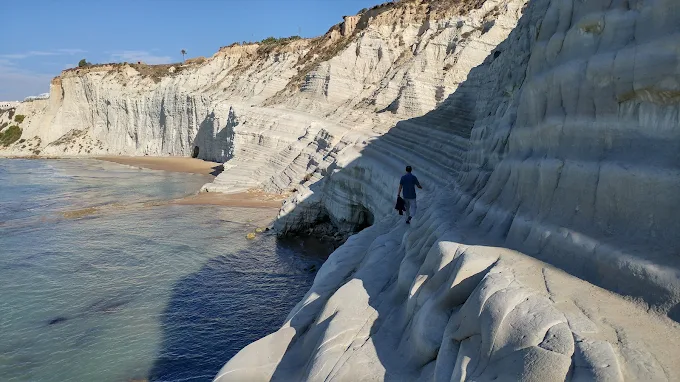
The morning sun in southern Sicily strikes the blindingly white cliffs of the Scala dei Turchi, setting the smooth, undulating rock ablaze with a brilliant, almost surreal glow. You hear the gentle lap of turquoise waves against the shore, the distant cry of a seagull circling overhead, and the soft crunch of your footsteps on the fine, white sand at the base of the cliff. This is not just a beach—it is a natural sculpture carved by wind and sea over millions of years from soft, white marlstone. Rising 50 meters (164 feet) from the water, its unique, staircase-like formations have made it one of Sicily’s most iconic landmarks. The name, meaning “Stair of the Turks,” comes from the Saracen pirates who once used these coves as a landing point for raids along the coast [[34]]. In an age of predictable coastlines and digital saturation, the Scala dei Turchi matters now more than ever—it is a place of raw, elemental beauty where you can truly disconnect and feel the power of nature’s slow, patient artistry.
Why Scala dei Turchi White Cliffs Embodies Natural Sculpture
The Scala dei Turchi is a masterpiece of geological artistry, formed over millions of years by the relentless action of the Mediterranean Sea on a deposit of soft, white marl—a sedimentary rock composed of clay and calcium carbonate. Unlike the jagged limestone cliffs found elsewhere in Sicily, the marl at Scala dei Turchi is so pliable that the waves have carved it into smooth, flowing terraces that resemble a giant, natural staircase. This unique formation “solved” a historical problem for local communities: its secluded coves provided perfect hiding spots for fishermen and, infamously, for the Saracen pirates who gave the site its name in the Middle Ages [[34]]. Today, this same geology fulfills a modern need—for a place of unspoiled, tactile beauty where visitors can climb, swim, and sunbathe on a landscape that feels both alien and deeply familiar. The cliff’s brilliant white color is not just aesthetic; it reflects the intense Sicilian sun, keeping the rock cool to the touch even in summer. This rare combination of form, function, and history makes the Scala dei Turchi a singular destination on the island’s southern coast.
The Best Time to Experience Scala dei Turchi White Cliffs
To experience the cliffs in their most serene and photogenic state, plan your visit for the specific windows of May 1–June 15 or September 10–October 20, 2026. During these periods, the weather in Agrigento province is ideal, with daytime temperatures ranging from a comfortable 22–27°C (72–81°F), and the sea has warmed to a swimmable 20–23°C (68–73°F) [[11]]. The best time of day to visit is in the early morning, between 8:00 AM and 10:30 AM, when the light is soft, the cliffs are cool, and you can often have the beach to yourself before the tour groups arrive. It is essential to avoid the peak summer period of July 15–August 25, when the site can become extremely crowded, the white rock reflects intense heat, and the serene atmosphere is lost to the bustle of mass tourism [[52]]. For the most current information on access rules and local conditions,
Approximate Budget for a 7-Day Trip (2026)
This budget is calculated for a solo traveler seeking a comfortable, nature-focused experience in southern Sicily in 2026, based on current inflation trends and average regional costs.
- Accommodation: €80–€140 per night. Staying in a hotel in Realmonte or Porto Empedocle offers easy access to the cliffs. Options in Agrigento are more varied but require a short drive.
- Food: €45 per day. Breakfast (€5): a cappuccino and brioche at a local bar. Lunch (€16): a plate of seafood pasta at a beachside trattoria. Dinner (€24): a main course like grilled sardines with a glass of local Nero d’Avola wine.
- Transportation: €150 total. A rental car for the week is essential for exploring the remote coast (€45/day). A regional train ticket from Palermo to Agrigento (€10).
- Attractions: Entry to the Scala dei Turchi beach area (free, but parking is €5). Guided boat tour of the coastline (€25). Visit to the nearby Valley of the Temples (€15).
- Miscellaneous: €95. This covers a bottle of local olive oil (€15), several gelato stops (€3 each), a guided snorkeling tour (€40), and souvenirs like a piece of local ceramics.
Total Estimated Cost: €905–€1,025
6 Essential Scala dei Turchi White Cliffs Experiences
- Climb the Natural Staircase at Dawn: Arrive by 8:00 AM to ascend the smooth, white terraces before the crowds. The rock is cool to the touch, and the panoramic view of the turquoise sea is unforgettable.
- Swim in the Turquoise Cove: The water at the base of the cliffs is crystal-clear and calm, perfect for a refreshing dip. The contrast between the white rock and blue water creates a stunning visual effect.
- Sunbathe on the Marlstone Terraces: Find a flat, smooth spot on the upper levels to lay out your towel. The white stone reflects the sun, creating a natural solarium that is uniquely warm and comfortable.
- Take a Boat Tour of the Coastline: Book a small-group tour to see the cliffs from the water. The perspective highlights the full scale of the formation and often includes stops at hidden coves inaccessible by land.
- Photograph the Iconic View: Capture the classic shot from the beach looking up at the staircase. The best light for photography is in the early morning or late afternoon when the shadows accentuate the rock’s curves.
- Combine Your Visit with the Valley of the Temples: Just a 30-minute drive away, this UNESCO World Heritage site offers a powerful contrast of ancient human grandeur against the natural drama of the cliffs.
3 Hidden Gems Most Travelers Miss
- The Secret Cove to the South: A short walk south along the coast reveals a smaller, quieter cove with equally dramatic rock formations. It’s rarely visited because there’s no formal path—just follow the shoreline.
- The View from Monte Rossello: This small hill just inland offers a panoramic vista of the entire coastline, including the Scala dei Turchi and the distant Temple of Concordia. It’s a perfect spot for a picnic at sunset.
- The Local Fisherman’s Path: Near the main parking lot, a narrow, unmarked trail used by locals leads to a quiet fishing spot at the base of the cliffs. Ask a fisherman for directions—they’re usually happy to help.
Cultural & Practical Tips
- Wear water shoes: The rock can be slippery when wet, and the entry into the water may have some sharp stones. Sturdy water shoes will protect your feet.
- Bring plenty of water and sunscreen: There is no shade at the site. The white rock reflects intense UV rays, so high-SPF sunscreen and a hat are essential.
- Learn a few key phrases: “Dov’è la Scala dei Turchi?” (DOH-veh lah SKAH-lah deh-ee TOOR-kee?) for “Where is the Scala dei Turchi?”, and “Un caffè, per favore” (oon kah-FEH).
- Respect the environment: Do not carve your name into the soft rock or leave any trash behind. The site is fragile and actively protected by local authorities.
- Parking is limited: Arrive early to secure a spot in the official lot. Unauthorized parking on the roadside can result in a fine.
- Tipping is appreciated but not expected: A small tip of €1–€2 for a boat captain or guide is a kind gesture.
Conclusion: Travel with Presence, Not Just a Camera
The Scala dei Turchi is not a stage set for your vacation photos; it is a living canvas of wind, water, and time. In 2026, as we seek travel experiences that are both beautiful and meaningful, these white cliffs offer a powerful lesson in presence. Your journey here should be one of mindful engagement—not just capturing the view, but feeling the coolness of the marlstone, listening to the rhythm of the waves, and understanding the immense timescale of its creation. By traveling with this deep attention, you honor the fragile beauty of this coastline and support its preservation for future generations. Slow down. Sit on a terrace and watch the light change on the water. In that quiet moment of communion with nature’s artistry, you don’t just visit the Scala dei Turchi—you become part of its enduring, silent story.