
Segovia Aqueduct Roman Granite Meets Castilian Sky
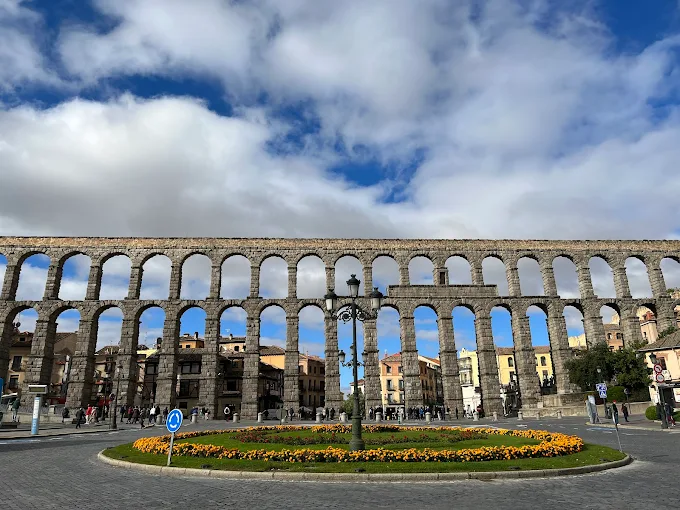
The morning sun strikes the granite blocks, turning the ancient stone into a glowing beacon against the deep blue Castilian sky. You stand in the Plaza del Azoguejo, dwarfed by the Segovia Aqueduct, a monumental structure rising 28.5 meters at its highest point—equivalent to a modern nine-story building. The air smells of heated stone and roasted suckling pig from nearby taverns; the silence is broken only by the murmur of tourists counting the 167 arches and the distant chime of the Cathedral bells. This is not merely a ruin but a functioning testament to Roman engineering, built around 50 AD without a single drop of mortar to hold its 20,400 granite blocks together. You walk beneath the double-tiered arches, tracing the path where water once flowed for 17 kilometers from the Fuenfría River. In 2026, as modern infrastructure crumbles within decades, the Segovia Aqueduct remains a humbling reminder of ancient precision—a place where engineering ambition meets timeless beauty, demanding you look up in awe at a structure that has defied gravity for nearly two millennia.
Why Segovia Aqueduct Embodies Roman Engineering
The Segovia Aqueduct represents one of the best-preserved Roman hydraulic engineering feats in the world, solving the critical need to transport fresh water to a settlement perched on a granite outcrop. Constructed during the reign of Emperor Domitian around 50 AD, though some scholars argue for Trajan's era in the early 2nd century, the structure utilized 20,400 granite blocks quarried from the nearby Sierra de Guadarrama. The engineering precision is staggering: the aqueduct maintains a gradient of only 1% over its 17-kilometer length, dropping just 170 meters from source to city.
The structure's most impressive section stands in the city center, where 167 arches rise in two tiers. The lower tier features 75 arches, while the upper tier contains 44 arches, with the remaining arches distributed along the approach. The tallest section reaches 28.5 meters (93.5 feet), constructed from granite blocks fitted together without mortar, relying solely on the precise cutting and the force of gravity. Each block weighs between 1 and 2 tons, yet they interlock with such precision that the structure has survived earthquakes, wars, and nearly 2,000 years of weathering.
This integration of form and function makes the Segovia Aqueduct not merely a monument but a working document of Roman urban planning. The water channel at the top, measuring 1.5 meters wide and 1.8 meters deep, carried an estimated 20,000 cubic meters of water daily to the city's fountains, baths, and private homes. This concentration of engineering genius makes it a pilgrimage site for architects and historians, where the evolution of hydraulic technology is traced through the very stones that defined an empire.
The Best Time to Experience Segovia Aqueduct
For the optimal Segovia Aqueduct visit, target April 15–June 10 or September 15–October 25, when temperatures range between 12–24°C (54–75°F) and the light is soft enough for photography. The aqueduct is accessible 24 hours, but the ideal viewing window is 8:00–9:30 AM when the light hits the eastern facade directly, illuminating the granite texture without harsh shadows. Evening visits between 7:00–9:00 PM offer atmospheric lighting as the stone glows amber, though crowds peak during sunset. Spring coincides with local festivals, causing hotel rates to increase 30–50%; book accommodation three months in advance if visiting during this period.
Avoid July 15–August 25 unless you tolerate extreme heat; temperatures regularly exceed 32°C (90°F), making the granite surfaces radiate intense thermal energy. The lack of shade in the plaza exacerbates the heat. Winter months (December–February) bring cold weather (2–10°C / 36–50°F) but fewer crowds, allowing for contemplative exploration.
Approximate Budget for a 7-Day Trip (2026)
Segovia offers excellent value for cultural travelers, with costs generally 20–30% lower than Madrid. The following budget assumes mid-range comfort with a focus on local experiences, based on 2026 pricing with approximately 3.5% inflation from 2025 figures. Estimates include stays in the historic center for easy access to the Segovia Aqueduct and day trips to explore Castilla y León.
- Accommodation: €65–€120 per night for a double room in a boutique hotel or casas rurales in the historic center; luxury paradores with aqueduct views command €150–€280 per night
- Food: €40–€60 per day—breakfast €5–€8 (café con leche and hornazo), lunch €15–€25 (menú del día including cochinillo asado, salad, and wine), dinner €20–€30 (tapas selection including judiones and local cheeses)
- Transportation: Train from Madrid Chamartín to Segovia-Guiomar: €13 high-speed AVANT (30 minutes); local bus to city center: €2.50; taxi from station: €12 fixed rate; regional bus to nearby towns: €8–€15 per trip
- Attractions: Segovia Aqueduct viewing: free; Alcázar of Segovia: €8.50; Cathedral: €6; Roman ruins tour: €12; guided aqueduct walk: €15
- Miscellaneous: Ceramic souvenirs from €10; local Ribera del Duero wine €8–€20 per bottle; ponche segoviano liqueur €12; artisan leather goods €25–€60; marzipan from €8
Total estimated cost for 7 days: €850–€1,250 per person (based on double occupancy; solo travelers should add 35–45% for single supplements)
7 Essential Segovia Aqueduct Experiences
- Stand Beneath the Tallest Arches: Position yourself in the Plaza del Azoguejo to gaze up at the 28.5-meter-high double-tiered section. The perspective is breathtaking; count the 167 arches as they stretch across the plaza. Visit at 9:00 AM when the morning light illuminates the granite texture. The blocks fit together without mortar—a engineering marvel. Allow 20 minutes to walk the full length and appreciate the scale. This is the iconic view of the Segovia Aqueduct; do not rush past it.
- Walk the Water Channel Route: Follow the 17-kilometer path from the Fuenfría River source to the city. The hike takes 4–5 hours and reveals the engineering precision. Visit in spring when wildflowers bloom along the route. The gradient drops only 170 meters over the entire distance. Guided tours available for €25; contact +34 921 466 720. This reveals the full scope of Roman hydraulic engineering.
- Photograph from Plaza de la Artillería: Climb to this elevated viewpoint for a panoramic perspective of the entire structure. Visit at 7:00 PM when the sun sets behind the arches, casting long shadows. The plaza is 300 meters from the aqueduct; follow signs from the tourist office. It offers the best angle for capturing the full length. Bring a wide-angle lens; the structure spans 728 meters.
- Visit the Interpretation Center: Explore the small museum near the aqueduct featuring models and explanations of the construction. Visit at 11:00 AM when the guide explains the quarrying techniques. The exhibits show how 20,400 granite blocks were transported. Entry is free; open 10:00 AM–6:00 PM. It provides crucial context for understanding the engineering feat.
- Dine with a View: Eat at a restaurant terrace overlooking the aqueduct, such as Mesón de Cándido. Order cochinillo asado (roast suckling pig), a Segovian specialty. Visit at 2:00 PM for lunch when the light is best. The restaurant has operated since 1892. Reservations essential: +34 921 464 006. This combines culinary tradition with architectural wonder.
- Explore the Roman Ruins: Walk to the nearby Roman theater ruins and baths. The site dates to the 1st century AD, contemporary with the aqueduct. Visit between 2:00–4:00 PM when lighting accentuates the stone details. Entry: €4; open 10:00 AM–6:00 PM. It demonstrates the extent of Roman settlement in Segovia.
- Attend Evening Illumination: Return after dark to see the aqueduct lit with golden lights. The granite glows amber against the night sky. Visit at 9:00 PM in summer or 7:00 PM in winter. The lighting changes seasonally; verify times at the tourist office. It creates a magical atmosphere distinct from daytime. This reveals the structure's timeless beauty.
3 Hidden Gems Most Travelers Miss
- Church of San Martín: Located 400 meters northwest at Plaza de San Martín, this 12th-century Romanesque church features a stunning portico. Entry: €3; open 10:00 AM–6:00 PM. It is often overlooked as visitors focus on the aqueduct. The bell tower rises 33 meters with Mudéjar influences. Contact: +34 921 460 327. Visit early morning for photography without crowds. The interior frescoes date to the 13th century.
- Casa de los Picos: A 5-minute walk south from the aqueduct at Calle Juan Bravo, 23, this 15th-century mansion features 600+ granite spikes on its facade. Entry: €4; open Tuesday–Sunday 10:00 AM–6:00 PM. It is often overlooked by tourists rushing to the Alcázar. The School of Arts is housed inside. Contact: +34 921 466 720. Visit mid-morning when light illuminates the spikes. The architecture is unique in Spain.
- Alcázar Gardens: Located behind the famous castle at Plaza de la Reina Victoria Eugenia, these terraced gardens offer views over the Clamores River valley. Entry included with Alcázar ticket; open 10:00 AM–6:00 PM. It is often overlooked as visitors focus on the castle interior. The gardens feature native plants and medieval irrigation systems. Contact: +34 921 460 759. Visit late afternoon when the light is soft. The perspective allows you to see the aqueduct in the distance.
Cultural & Practical Tips
- Respect the monument: The Segovia Aqueduct is a UNESCO World Heritage Site and protected monument. Do not climb on the arches or touch the granite blocks. Oils from skin damage the ancient stone. Fines for vandalism can reach €300. Security monitors the area. Keep the site clean; use provided bins.
- Master these phrases: "Buenos días" (BWEH-nos DEE-as) for good morning; "Por favor" (por fah-BOR) for please; "¿Cuánto cuesta?" (KWAN-toh KWES-tah) to ask price; "La cuenta, por favor" (lah KWEN-tah) to request the bill.
- Photography guidelines: Tripods are allowed in the plaza but not inside museums without permission. Drone usage is strictly prohibited over the monument. Flash photography is discouraged inside churches. Respect other visitors when composing shots. Early morning and sunset offer the best light without crowds.
- Hydration strategy: Segovia's high altitude (1,000 meters) means dry air; carry a refillable bottle. Public fountains (fuentes) are available in the plazas. The water is potable and sourced from mountain springs. You'll save €2–€3 daily and reduce plastic waste. Purchase water from kiosks if fountains are unavailable.
- Footwear selection: The ground consists of cobblestones and granite steps. Wear sturdy walking shoes with good grip. The plaza can be slippery when wet. Avoid high heels. Comfortable walking shoes essential for exploring the historic center. The cobblestones can be uneven.
- Weather considerations: The plaza provides little shade; wear a hat and sunscreen during summer months. Winter evenings can be chilly due to altitude; bring a light jacket even if the day is warm. Rain is rare but possible in November; the stone surfaces become slick when wet.
- Security awareness: While the area is safe, pickpockets operate near crowded viewpoints. Keep bags zipped and valuables secure. Do not leave phones on café tables. Allow an extra 15 minutes for security processing during peak festival seasons. Report suspicious activity to local police.
Conclusion: Travel with Reverence, Not Just Reverie
The Segovia Aqueduct demands more than casual observation—it asks for contemplation of the layers of history embedded in every granite block, every arch, every precise cut made by hands long turned to dust. When you walk beneath these arches in 2026, you're not merely touring a monument; you're walking through a fragile ecosystem of memory where Roman engineering, medieval adaptation, and modern preservation intersect in delicate balance.
Choose to engage deeply: hire a local guide from the historic center rather than a large tour company; respect the silence of the stones; understand that this structure represents a gift from an ancient civilization to the future. The Segovia Aqueduct survives not as a museum exhibit but as a living bridge between eras—and its preservation depends on visitors who recognize the difference between appreciation and consumption.
Slow down. Sit on the plaza steps after the tour buses depart. Listen to the wind moving through the arches. Watch the sunset paint the granite in shades of gold and amber. The aqueduct rewards those who approach it not as a checklist item but as a conversation across time—a dialogue between ancient Rome and modern Spain that continues, like the water that once flowed above, in perpetual motion.