
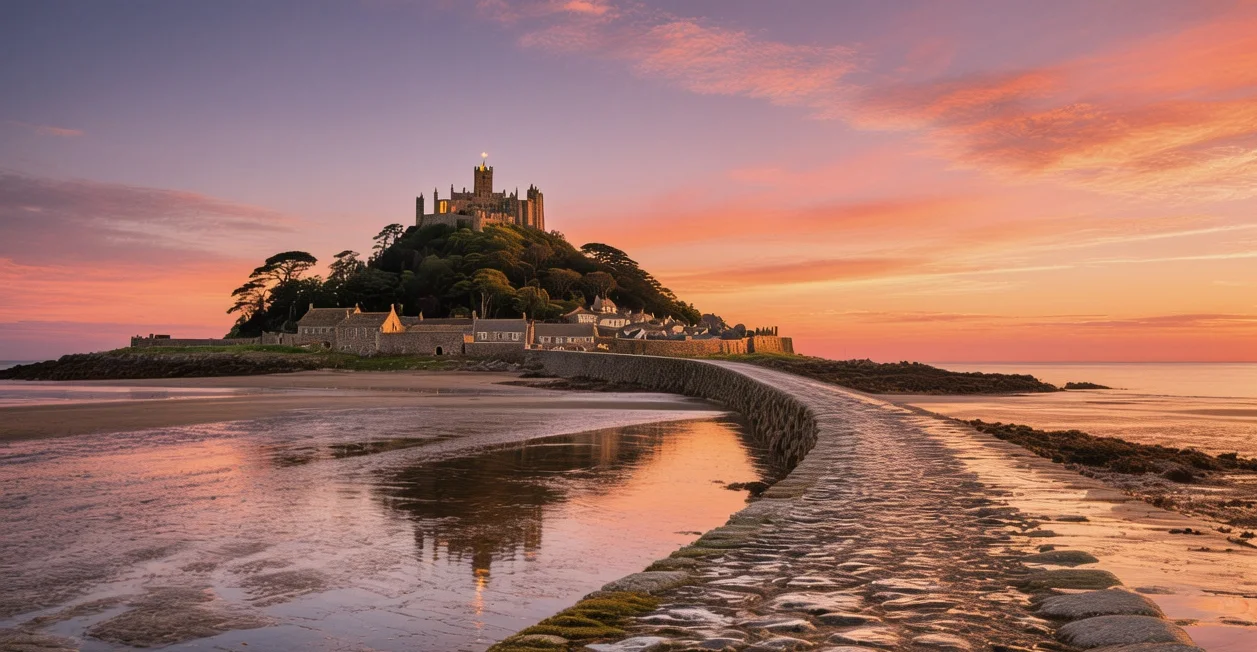
St. Michael's Mount Tidal Causeways Meet Cornish Legend
Granite stones emerge from the receding Atlantic as the tide drops—revealing the ancient causeway that connects the mainland to the mystical island for exactly three hours each day. You stand on the wet pavement in Marazion, the scent of salt spray mixing with wild thrift growing in the stone cracks, while the 12th-century church spire pierces the Cornwall sky 60 meters (197 feet) above. Built originally as a Benedictine monastery in 1135, this tidal fortress has served as a pilgrimage site, a military stronghold, and a private home for the St Aubyn family since 1659. As you watch the water lap against the harbor walls, knowing it will soon swallow the path you stand on, you realize St. Michael's Mount matters now more than ever: in an era of digital permanence, it remains a physical reminder of nature's rhythm, a place where human history is dictated by the moon and the sea still claims its territory twice daily in 2026.
Why St. Michael's Mount Embodies Maritime Heritage
The St. Michael's Mount is not merely a tourist attraction; it is a geological and historical anomaly preserved in granite. Rising from Mount's Bay, the island consists of a core of hard granite surrounded by softer rock that eroded away, leaving the summit isolated at high tide. The causeway, constructed in the 14th century and widened in 1870, measures 4 meters (13 feet) wide and 400 meters (1,312 feet) long, serving as the only land access when tides permit. This structure solved a logistical need for pilgrims traveling to the shrine of St Michael, allowing safe passage during low water while protecting the island from invaders during high water. Technical engineering includes drainage channels beneath the stones to prevent waterlogging and slip-resistant surfaces worn smooth by 800 years of footsteps.
Culturally, the site fulfills a need for connection to myth and monarchy. Managed by the National Trust since 1954, though still lived in by the St Aubyn family, the castle houses state rooms open to the public during summer months. The architecture showcases medieval defensive walls alongside Victorian domestic modifications, creating a layered narrative of occupation. When you walk the cobbled streets of the village clinging to the hillside, you traverse a space where smugglers once hid contraband and kings sought refuge. The St. Michael's Mount represents a continuous thread of Cornish identity, balancing private residence with public access, preserved by the very tides that threaten to isolate it completely from the modern world.
The Best Time to Experience St. Michael's Mount
To witness St. Michael's Mount in optimal atmospheric conditions, plan your visit between May 18 and June 12. During this window, temperatures average 14-19°C (57-66°F), and daylight extends until 9:15 PM, maximizing causeway walking time. The critical factor is tide timing: visit exactly 2 hours before to 2 hours after low tide when the causeway is fully exposed. Check the UK Tide Tables for specific dates; a low tide below 2.0 meters is ideal for safe crossing. Morning light between 8:00-10:00 AM reduces glare on the water, aiding photography of the castle facade.
Autumn offers a secondary window—specifically September 15 to October 15—when summer crowds dissipate and storm watching becomes dramatic. Temperatures remain mild at 12-17°C (54-63°F). Avoid July 25 to August 25 when school holidays push visitor numbers above 4,000 daily, creating congestion on the narrow causeway and limited parking in Marazion. Winter months (November-February) offer solitude but challenging conditions; high winds often cancel boat services, and sunset occurs as early as 4:05 PM in December. For current tide times and closure notices, verify information at www.stmichaelsmount.co.uk or contact the visitor center at +44 (0)1736 710507.
Approximate Budget for a 7-Day Trip (2026)
Exploring St. Michael's Mount and the wider Cornwall coast requires moderate budgeting, as the region commands premium prices during peak season. The following budget reflects mid-range travel for one person in 2026, accounting for approximately 4.5% UK inflation (ONS data, January 2026). Prices assume a base in Marazion or Penzance for optimal access to the mount and coastal paths.
- Accommodation: £95-£160 per night for a B&B or guesthouse in Marazion town center (6 nights = £570-£960). Budget options: £55-£75 for hostels in Penzance or camping at Prussia Cove.
- Food: £50-70 per day total • Breakfast: £10-15 (Full English at The Godolphin Arms) • Lunch: £15-20 (Cornish pasty at The Cornish Pasty Co) • Dinner: £25-35 (Seafood platter at The Old Coastguard or Reef)
- Transportation: • Train London Paddington to Penzance: £80-140 return (advance booking) • Local bus (Route 1): £4.50 day pass • Car rental (recommended): £65/day plus fuel £1.58/liter • Parking at Marazion: £8/day (March-October)
- Attractions: • Castle & Gardens Entry: £29.50 • Boat Transfer (High Tide): £3.50 return • St Michael's Way Walk: Free • Free: Causeway walk, harbor view, public footpaths
- Miscellaneous: • Ordnance Survey Explorer Map 102: £10.99 • Local artisan jewelry: £30 • Travel insurance: £40-60 for week • Waterproof gear rental: £20
Total estimated cost: £1,450-£1,800 for 7 days (excluding international flights)
5 Essential St. Michael's Mount Experiences
- Walk the Causeway at Low Tide: Arrive 2 hours before low tide to ensure safe crossing time. The granite stones are slippery when wet; wear sturdy shoes with grippy soles. The walk takes 15 minutes one-way and covers 400 meters (1,312 feet). Listen for the sound of water rushing over the edges as the tide turns. Return at least 1 hour before high tide to avoid being stranded. This experience connects you to the medieval pilgrim route used for centuries before modern transport.
- Explore the Castle State Rooms: Join the hourly guided tour (departing 10:30 AM daily). You will walk through the library, drawing room, and bedroom used by the St Aubyn family. The view from the windows encompasses Mount's Bay and the mainland. Photography without flash is permitted in designated zones. The guide explains the family's history since 1659. This experience provides context for the private life maintained within a public monument.
- Visit the Subtropical Gardens: Access the terraced gardens clinging to the steep hillside. The microclimate allows rare plants to flourish, including agaves and palms. Spend 60 minutes walking the winding paths. The scent of jasmine and eucalyptus is strong in summer. Open 10:00 AM-5:00 PM daily. This context enriches your castle visit, showing how the island supports biodiversity despite exposure to salt spray.
- Take the Boat at High Tide: When the causeway is submerged, board the amphibious vehicle or small boat from Marazion harbor. The journey takes 5 minutes and costs £3.50. The view from the water offers the best perspective of the island's scale. Departures every 15 minutes during peak times. This experience demonstrates the island's true isolation when the sea claims the land.
- Watch Sunset from Marazion Beach: Reserve a spot on the sand opposite the mount by 7:00 PM during May-August. The light illuminates the castle windows as dusk falls. The sound of waves crashing on the shore provides a rhythmic backdrop. This experience connects you to the maritime history that supported the island, offering a panoramic view of the lights twinkling on the hill.
3 Hidden Gems Most Travelers Miss
- The Chapel Rock: While crowds cluster on the causeway, this small rocky outcrop 200 meters west remains surprisingly quiet. Access via the beach at low tide (grid reference SW515305). The site features a natural pool used for bathing historically. Visit between 3:00-5:00 PM when tide is lowest. No facilities exist—bring water and a headlamp for the return. The National Trust notes this area has high geological interest due to exposed granite formations.
- The Harbor Museum: Contact the visitor center (+44 (0)1736 710507) to access the small maritime museum in the harbor building. The collection features model ships and fishing artifacts rarely seen by day trippers. Access is restricted to weekdays at 2:00 PM. The space offers a tangible connection to the fishing industry that sustained the island before tourism. This site reveals the working history of the harbor beyond the castle walls.
- The Priest's House Garden: Located near the church at the summit, this enclosed garden is often bypassed by visitors rushing to the castle. Access is free with castle entry; open 11:00 AM-4:00 PM. The garden features heritage roses and medicinal herbs used by monks. Visit during weekday mornings when the space is empty. The acoustics amplify bird song, creating an intimate atmosphere. This site demonstrates how monastic life utilized the limited space available on the rocky summit.
Cultural & Practical Tips
- Respect tide schedules: The causeway floods quickly—check www.uktides.co.uk before visiting. Never attempt to cross when water is flowing over the stones. If stranded, call HM Coastguard immediately at 999. The tide rises faster than you can walk.
- Understand access limitations: The castle involves steep stairs and uneven floors; not wheelchair accessible. The gardens have some level paths. Alternative viewing exists from Marazion beach. Request an accessibility map at the ticket office upon arrival.
- Leave no trace: Remove all litter, including biodegradable items. The National Trust collects 8 tonnes of waste annually from the island. Do not remove stones or plants—this violates the Wildlife and Countryside Act 1981. Photograph specimens in situ instead.
- Learn local terminology: "Causeway" (tidal path); "Mount" (island); "Marazion" (mainland town). Using these terms shows respect for local heritage and helps guides assist you better during tours.
- Photography guidelines: Tripods are permitted on the causeway but restricted inside castle rooms during busy periods. Drone use requires written permission from the National Trust and Civil Aviation Authority—apply 6 weeks in advance. Respect other visitors; do not block pathways for extended shoots during peak hours (11:00 AM-3:00 PM).
- Weather preparedness: The island is exposed; wind chill is common even in summer. Pack waterproof layers; Cornwall showers are sudden. Wear sturdy shoes with ankle support—granite becomes slippery when wet. Sun protection is essential; reflection from water increases UV exposure by 25%.
- Support preservation: Entry fees fund ongoing conservation. Consider becoming a National Trust member (£126/year) for free entry to this and 500+ other properties. Donate to the specific St. Michael's Mount conservation fund if you wish to support structural repairs directly.
Conclusion: Travel with Reverence, Not Just Sightseeing
The St. Michael's Mount does not exist merely to be photographed—it exists to be understood as a dialogue between land and sea. When you walk this causeway in 2026, you are not observing a static monument; you are entering a space where tides dictate access and history is written in granite. The monks who built the church are gone, but their prayers remain embedded in the stone. The fishermen who sailed these waters are gone, but their harbor remains active. This is not heritage frozen in amber—it is heritage living, breathing, enduring.
So slow down. Sit on the harbor wall for ten minutes without your phone. Listen to the wind that once carried the sounds of chanting and now carries the cries of gulls. Buy your lunch from a café whose owners pay rates that support the local community. Donate to the National Trust rather than purchasing plastic souvenirs. Leave only footprints on ancient stone, take only memories of light on water, carry home only the profound understanding that some things—tides, history, natural beauty—cannot be rushed, cannot be owned, can only be honored. The mount will still rise above the bay in 2126 if we choose stewardship over exploitation today.