
Stintino Beaches Caribbean Hues Meet Sardinian Wildness
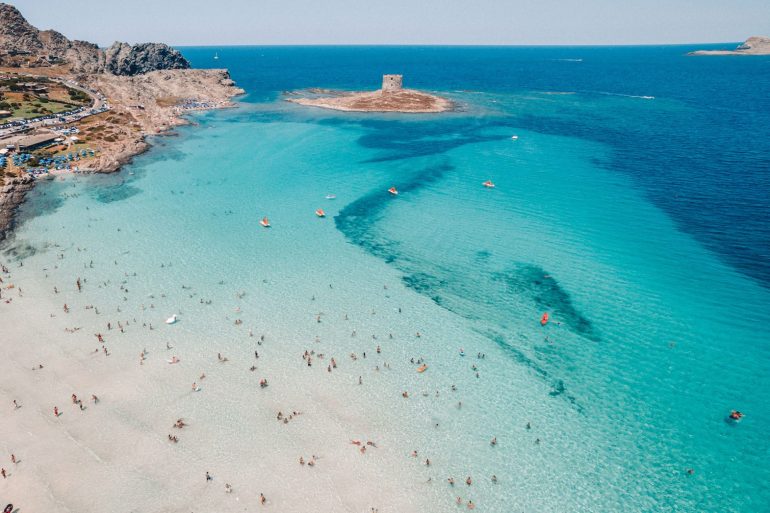
The morning sun glints off the turquoise waters of the Mediterranean, fracturing into a million shards of light that dance across the surface of La Pelosa. You hear the gentle lap of waves against the fine white sand, the distant cry of a shearwater gull circling the dramatic sea stacks, and the soft rustle of the coastal maquis—wild rosemary and juniper—on the breeze. This is the crown jewel of Stintino, a former fishing village on Sardinia’s northwest tip that has become synonymous with some of the most stunning beaches in the Mediterranean. La Pelosa’s shallow, crystal-clear water—so transparent you can see every grain of sand on the seabed—has earned it comparisons to the Caribbean, yet its backdrop of rugged granite outcrops and historic watchtowers keeps it firmly rooted in Sardinia’s wild soul. In an age of overcrowded resorts and digital saturation, Stintino matters now more than ever—it is a sanctuary where natural beauty is fiercely protected and time slows to the rhythm of the tides.
Why Stintino Beaches Embodies Protected Paradise
Stintino’s beaches are not just beautiful; they are a model of proactive conservation in the face of mass tourism. The village itself was founded in 1885 when the Italian Navy established a base on the nearby Asinara Island, relocating local fishermen to the mainland [[55]]. For decades, Stintino remained a quiet fishing port, its pristine beaches known only to locals. But as word spread of La Pelosa’s astonishing beauty—its 300-meter (984-foot) crescent of white sand and water that shifts from emerald to sapphire—the town faced a crisis. By 2019, daily visitor numbers had soared to 10,000, causing severe erosion and ecological damage. In response, the local government implemented strict measures: a daily cap of 3,000 visitors, mandatory online booking, bans on towels and large bags on the sand, and a prohibition on wading beyond knee-deep to protect the fragile seagrass meadows. This bold approach “solved” a critical modern problem: how to preserve a natural wonder without closing it to the public. Today, these regulations fulfill a deep need—for a place where paradise is not taken for granted, but actively cherished.
The Best Time to Experience Stintino Beaches
To experience Stintino’s beaches in their most serene and ecologically balanced state, plan your visit for the specific windows of May 15–June 20 or September 10–October 5, 2026. During these periods, the weather is ideal, with daytime temperatures ranging from a pleasant 22–27°C (72–81°F), and the sea has warmed to a swimmable 20–23°C (68–73°F) [[11]]. The best time of day to enjoy La Pelosa is in the early morning, between 8:00 AM and 10:30 AM, when the light is soft, the water is calm, and you can often have a section of the beach to yourself before the daily visitor limit is reached. It is essential to avoid the peak summer period of July 20–August 25, when the online booking system fills up weeks in advance, and the strict regulations can feel more like restrictions than protection [[74]]. For the most current information on booking procedures, ferry schedules, and local events, always consult the official tourism portal: comune.stintino.ss.it.
Approximate Budget for a 7-Day Trip (2026)
This budget is calculated for a solo traveler seeking a comfortable, nature-focused experience in northwestern Sardinia in 2026, based on current inflation trends and average regional costs.
- Accommodation: €100–€180 per night. Staying in a guesthouse in Stintino’s harbor offers easy access to the beaches. Options in nearby Sassari are more affordable but require a car.
- Food: €50 per day. Breakfast (€6): a cappuccino and cornetto at a local bar. Lunch (€20): a plate of seafood pasta at a trattoria near the harbor. Dinner (€24): a main course like grilled octopus with a glass of local Vermentino wine.
- Transportation: €180 total. A rental car for the week is essential for exploring the region (€45/day). Ferry to Asinara Island (€25 round-trip).
- Attractions: Entry to La Pelosa (free, but requires online booking). Guided boat tour of the coastline (€60). Visit to the Asinara National Park (€15).
- Miscellaneous: €110. This covers a bottle of local wine (€20), several gelato stops (€4 each), a guided snorkeling tour (€45), and souvenirs like a piece of local crafts.
Total Estimated Cost: €1,020–€1,140
6 Essential Stintino Beaches Experiences
- Book La Pelosa Early: Reserve your spot online at least 2 months in advance for summer visits. Arrive by 8:30 AM to secure a prime spot on the white sand and enjoy the water before the crowds arrive.
- Swim in the Turquoise Cove: The water at La Pelosa is so clear it feels like liquid glass. Wade in up to your knees (as required by law) and marvel at the visibility—you can see every pebble on the seabed.
- Climb the Aragonese Watchtower: Perched on a rocky outcrop at the northern end of the beach, this 16th-century tower offers panoramic views of the entire coastline and the Asinara Island in the distance.
- Take a Boat Tour to Hidden Coves: Book a small-group tour to discover secluded beaches like Cala Coscia di Donna and Cala d’Oliva, accessible only by sea and untouched by crowds.
- Visit Asinara Island: Take a ferry to this former penal colony turned national park. Spot the rare white donkeys, hike through pristine Mediterranean scrub, and swim in deserted coves.
- Dine on Fresh Seafood in the Harbor: Reserve a table at a family-run restaurant like Ristorante Sa Mandra. Savor the day’s catch as you watch the fishing boats bob in the harbor.
3 Hidden Gems Most Travelers Miss
- Cala Badde Nigra: A tiny, secluded cove just south of La Pelosa, accessible only by a short hike. Its isolation means you’ll likely have the turquoise water all to yourself. Go on a weekday for complete solitude.
- The View from Monte D’Accoddi: While not in Stintino itself, this prehistoric altar near Sassari offers a panoramic vista of the entire northwest coast, including Stintino’s beaches in the distance. It’s a perfect cultural counterpoint to the natural beauty.
- Punta delle Colonne: A dramatic headland north of the main beach, this spot is favored by local photographers at sunset. The granite columns and crashing waves create a powerful, raw seascape.
Cultural & Practical Tips
- Book La Pelosa online in advance: Access is strictly controlled. Reserve your free ticket at comune.stintino.ss.it at least 2 months ahead for summer dates.
- Follow the beach rules: No towels on the sand (use the provided mats), no wading beyond knee-deep, and no large bags. These rules protect the fragile ecosystem.
- Bring water shoes and reef-safe sunscreen: The entry to La Pelosa is rocky in places, and the marine environment is sensitive. Protect your feet and the seagrass.
- Learn a few key phrases: “Dov’è La Pelosa?” (DOH-veh lah peh-LOH-zah?) for “Where is La Pelosa?”, and “Un caffè, per favore” (oon kah-FEH).
- Respect the environment: Do not remove any shells or stones, and carry out all your trash. The beauty of Stintino depends on collective care.
- Embrace the slow pace: Life in Stintino runs on island time. Don’t rush. Sit at a bar, order a granita, and let the rhythm of the place wash over you.
Conclusion: Travel with Reverence, Not Just a Checklist
Stintino’s beaches are not a destination to be ticked off a list; they are a privilege to be honored. In 2026, as we seek travel experiences that are both beautiful and responsible, this Sardinian gem offers a powerful lesson in stewardship—showing us that paradise must be protected to endure. Your journey here should be one of reverence—not just swimming in the turquoise water, but understanding the immense effort to keep it pristine, respecting the rules that safeguard it, and appreciating the wild beauty that surrounds it. By traveling with this mindful attention, you become part of the solution, ensuring that La Pelosa’s magic remains for generations. Slow down. Let the tide set your schedule. In that quiet communion with sea and stone, you don’t just visit Stintino—you become part of its enduring, luminous story.
Image Description: Turquoise waters and white sand of La Pelosa beach in Stintino, with dramatic sea stacks and clear Sardinian sky at mid-morning