
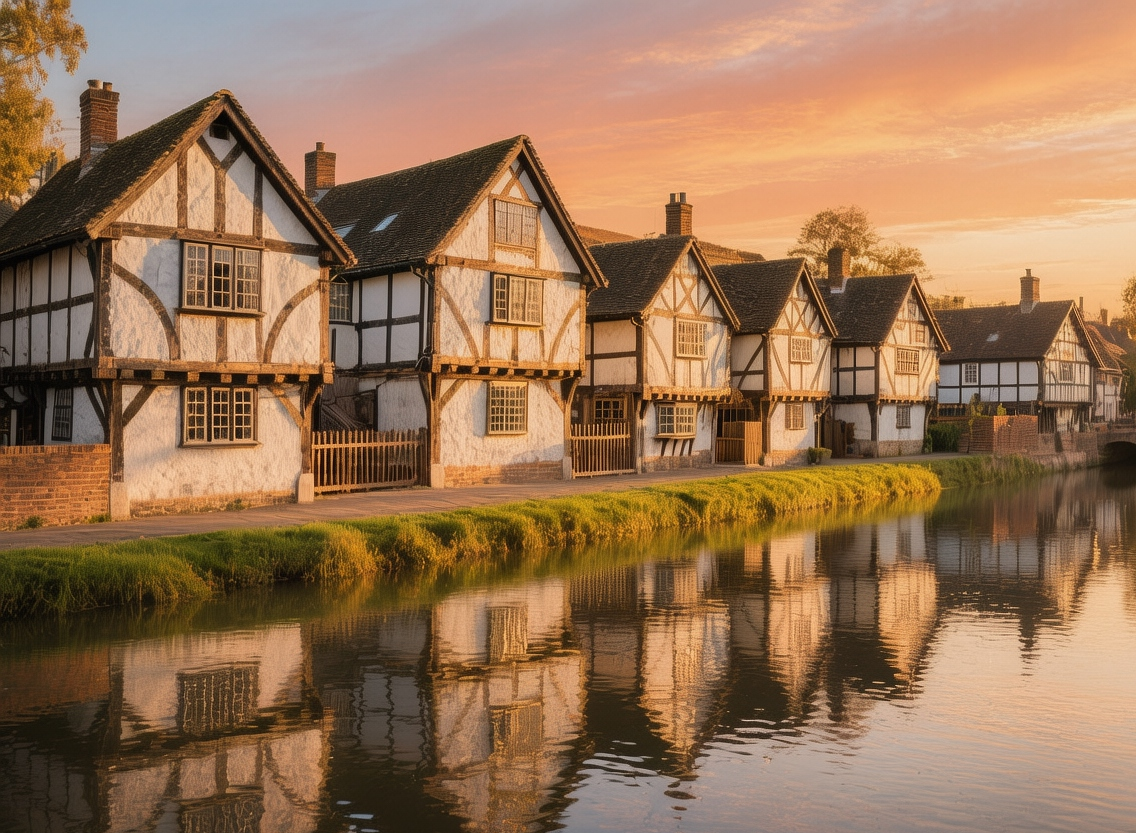
Stratford-upon-Avon Elizabethan Timber Meets Avon River Serenity
The river flows—a gentle, rhythmic hush against the weeping willows—as you stand on the footbridge at 7:30 AM, watching mist rise from the water while the sun ignites the black-and-white timber facades. The air smells of damp wood and blooming roses; the silence hums with the weight of four centuries of literary history preserved in the mortar. Born here in 1564 and buried in 1616, William Shakespeare transformed this market town into a global pilgrimage site, where Stratford-upon-Avon spans 3.5 square kilometers of Warwickshire countryside. You stand before the Tudor gables of Henley Street, where the poet's birthroom remains unchanged, while the Royal Shakespeare Theatre rises 40 meters across the water, its brick tower reflecting in the current. Every cobblestone tells a story: glovers stitching leather, actors rehearsing iambic pentameter, and tourists tracing the footsteps of the Bard. In 2026, as digital media dominates storytelling, visiting Stratford-upon-Avon means engaging with the physical source of the English language. This place matters now because it remains the spiritual home of theatre, challenging visitors to confront the enduring power of live performance while navigating the charm of a preserved Tudor town.
Why Stratford-upon-Avon Embodies Literary Architectural Heritage
Stratford-upon-Avon solves the preservation challenge of maintaining a living town while protecting 16th-century structures—a feat achieved through the establishment of the Shakespeare Birthplace Trust in 1847. When the trust purchased Shakespeare's Birthplace for £3,000, it set a precedent for heritage conservation that saved five key properties from demolition. The buildings utilize traditional timber framing with wattle and daub infill, covered in plaster and painted white, creating the distinctive black-and-white aesthetic that defines the town center. Engineering-wise, the Royal Shakespeare Theatre, rebuilt in 2010, features a thrust stage that extends 7 meters into the audience, restoring the intimate connection between actor and spectator found in Elizabethan playhouses. The town covers 1,400 hectares, with the River Avon acting as a natural boundary that has prevented urban sprawl from consuming the historic core. Today, the trust manages over 200,000 artifacts, including the only authenticated Shakespeare signature, ensuring the physical legacy remains intact. This unique status ensures Stratford-upon-Avon remains not merely a museum but a working theatre town, blending Tudor architecture with modern stagecraft in a manner few cultural sites sustain.
The Best Time to Experience Stratford-upon-Avon
For optimal lighting and manageable crowds, plan your visit between May 15–June 20 or September 10–October 15, when temperatures range from 15–22°C (59–72°F) and daylight extends until 9:00 PM. Arrive precisely at 9:00 AM when the Shakespeare houses open to beat the tour buses that typically converge by 11:00 AM; the morning light illuminates the timber facades beautifully without the glare of midday sun. Evening visits during summer offer a romantic atmosphere as the theatre lights glow, with shows starting at 7:30 PM. Avoid August 1–August 31 when the Edinburgh Festival spill-over and school holidays bring peak congestion, pushing queue times for the Birthplace beyond 45 minutes. Winter months (December–February) offer shorter lines but temperatures drop to 2–8°C (36–46°F), and the river paths become muddy. For performance schedules, verify the calendar at before booking, as popular productions sell out months in advance. Tuesday and Wednesday mornings typically see the lowest visitor volume, allowing for quieter contemplation in Holy Trinity Church.
Approximate Budget for a 7-Day Trip (2026)
Stratford-upon-Avon remains a premium destination, but staying in the town center provides immediate access to the sites without excessive transport costs. These 2026 estimates assume a moderate travel style, accounting for approximately 3-4% annual inflation in UK hospitality and attraction pricing.
- Accommodation: £120–£280 per night for a double room in Stratford Town Center, Old Town, or Shottery; budget B&Bs from £80/night in nearby Warwick
- Food: £50–85 per day—breakfast £10–15 (café pastry or full English), lunch £15–25 (pub meal or pie shop), dinner £25–45 (theatre restaurant with wine); traditional cream tea £18
- Transportation: £50.00 daily average for car rental and fuel; Train from London Marylebone to Stratford £45 return; Local bus day pass £10
- Attractions: Shakespeare 5 Houses Ticket £35.00 adult, RSC Theatre Show £65.00, Holy Trinity Church £7.00, River Cruise £15.00, Warwick Castle £32.00
- Miscellaneous: Souvenir guidebook £15, Shakespeare folio reprint £25, rain jacket (essential) £35, travel insurance £50 for week
Total for 7 days: £1,400–1,950 per person (excluding international flights)
7 Essential Stratford-upon-Avon Experiences
- Shakespeare's Birthplace Tour: Walk the room where the Bard was born in 1564. Open 9:00 AM–5:00 PM; the timber frame is original. Look for the graffiti carved by visitors in the 19th century; the scent of old wood is palpable in the small chambers.
- Royal Shakespeare Theatre Show: Watch a performance on the thrust stage. Shows run Tuesday–Saturday at 7:30 PM; book months ahead. The acoustics are intimate; you can hear the actors' breath from the front rows, creating a visceral connection to the text.
- Holy Trinity Church Visit: Stand before Shakespeare's grave in the chancel. Open 9:00 AM–4:00 PM; the stone slab bears the famous curse. The stained glass windows glow in the afternoon light; the river flows quietly just meters from the altar.
- Anne Hathaway's Cottage: Explore the thatched farmhouse where his wife lived. Located in Shottery, 1 mile west; open 10:00 AM–5:00 PM. The garden features heritage flowers; the smell of lavender and boxwood fills the air in summer.
- River Avon Rowing: Hire a rowboat near the Bancroft Gardens. Open 10:00 AM–6:00 PM in summer; the water is calm. The perspective from the river reveals the theatre and the swans gliding beneath the bridge.
- Shakespeare's New Place: Walk the gardens where he wrote his late plays. Open 10:00 AM–5:00 PM; the house is gone but the foundation remains. The sculptural installations interpret his work; the quiet courtyard offers a space for reflection.
- Tudor World Museum: Experience interactive exhibits on Elizabethan life. Open 10:00 AM–5:00 PM; located in a historic building. The dungeon experience is popular with families; the costumes and props provide tactile history lessons.
3 Hidden Gems Most Travelers Miss
- Harvard House: This 16th-century timber house was the home of John Harvard's mother. Access via High Street; open during museum hours. Most tourists rush to the Birthplace, missing the connection to the American university founder and the intricate carved fireplace.
- Guild Chapel: Located on Church Street, this chapel contains medieval wall paintings. Access via the main door; open 10:00 AM–4:00 PM. The paintings were whitewashed during the Reformation and rediscovered in 1804; the colors are vivid and rare for the period.
- Nash's House: Adjacent to New Place, this Tudor home shows domestic life. Access included with New Place ticket; open 10:00 AM–5:00 PM. The knot garden is reconstructed from period designs; it offers a quieter alternative to the crowded Birthplace garden.
Cultural & Practical Tips
- Theatre etiquette: Arrive 30 minutes before curtain; latecomers may not be admitted. Silence mobile phones completely; photography is strictly prohibited during performances to protect copyright.
- Photography rules: Photography is permitted in public areas for personal use without flash. Interior photography is restricted in some historic rooms; respect signs indicating no photography to protect fragile textiles.
- Walking logistics: The town center is pedestrian-friendly but cobbled. Wear sturdy shoes with good grip; avoid high heels on the uneven Tudor pathways.
- Local phrases: Learn "Mind the gap" (watch the step), "Cheers" (thanks), and "Queue here" (wait in line); locals appreciate visitors who respect pedestrian flow on the narrow pavements.
- Weather preparedness: Warwickshire is exposed to rain; carry a compact umbrella (£10 from Boots pharmacy) and waterproof layers. River paths become muddy after rain—wear shoes with good grip.
- Accessibility: Many Tudor buildings have stairs and narrow doors; wheelchair access is limited. Contact the Shakespeare Birthplace Trust ahead to arrange assistance for entry.
- Respectful behavior: Holy Trinity is a working church; keep voices lowered. Do not rub the stone of Shakespeare's grave for luck; the erosion damages the historic inscription.
Conclusion: Travel with Reverence, Not Just Checklists
Stratford-upon-Avon demands more than a selfie with a statue—it invites you to contemplate the weight of language resting on that Tudor timber. When you walk the streets in 2026, tracing the same paths worn by the Bard for centuries, you're not just ticking a sightseeing box; you're witnessing the delicate balance between literary pilgrimage and living town. As overtourism pressures historic landmarks, visiting mindfully means respecting the cultural nature of this institution, understanding that behind the ticket barriers, a community of actors and residents keeps the legacy alive. Walk slowly across the cobblestones, noticing how the light changes on the thatch; listen to the river not as background noise but as the flow of history. Leave only footprints on the grass, take only memories of poetic grandeur, and carry forward the understanding that places like this endure because each generation chooses to perform them—not as relics, but as living testaments to creativity, language, and the enduring human story.