
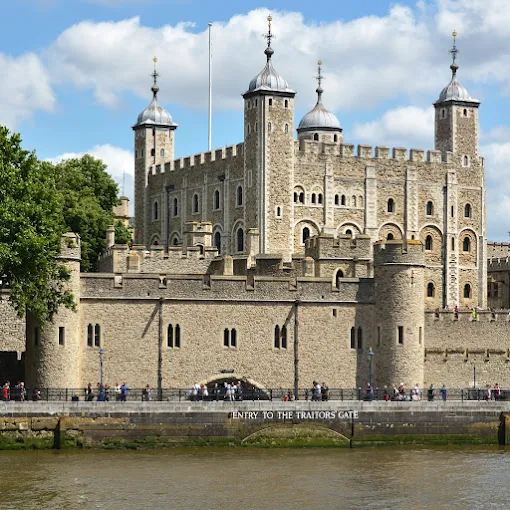
Tower of London Medieval Fortress Meets Crown Jewel Majesty
The ravens croak—a guttural sound echoing across the 1.2-hectare fortress—as dawn breaks over the Thames, casting long shadows across the blood-stained cobblestones of Tower Green. You stand before the White Tower at 7:00 AM, watching mist rise from the river while the 27-meter-high keep pierces the gray sky, its Norman architecture standing unchanged since 1078. This is not merely a castle; it is a prison, a palace, an armory, and a treasury rolled into one stone behemoth that has witnessed beheadings, coronations, and conspiracies for nearly 1,000 years. The Yeoman Warders unlock the gates with the Ceremony of the Keys, a ritual performed every night since 1310, while the Crown Jewels glitter behind bulletproof glass just meters away. In 2026, as modernity encroaches on historic cities worldwide, visiting the Tower of London means stepping into a preserved timeline where medieval power dynamics still resonate through the cold stone corridors. This fortress matters now because it remains the physical anchor of British monarchy, guarding regalia worth billions while reminding visitors that power—like stone—can endure centuries if maintained with care.
Why Tower of London Embodies Royal Power and Prison History
The Tower of London solves the architectural paradox of projecting invincibility while functioning as a secure vault for the nation's most precious assets. Founded by William the Conqueror in 1066 to intimidate Londoners, the White Tower was completed in 1078 using Caen stone imported from France, creating a central keep with walls 4.5 meters thick at the base. Over the next 500 years, monarchs expanded the fortress outward, adding 13 towers along the curtain wall—including the Bloody Tower where the Princes in the Tower vanished in 1483—creating a concentric defense system that was state-of-the-art for medieval warfare. The site served as a royal mint, menagerie, and public record office, but its reputation as a prison overshadows these functions; 122 prisoners were held here between 1500 and 1750, including Anne Boleyn and Sir Walter Raleigh. Engineering-wise, the Wharf was built in 1238 to allow direct royal access from the Thames, while the Medieval Palace features a 13th-century fireplace and stained glass reconstructed from original fragments. Today, Historic Royal Palaces manages the site, employing conservationists who monitor humidity levels to protect the 23,578 gemstones in the Crown Jewels. The Tower of London remains a working palace where the Constable of the Tower retains ceremonial authority, blending tourism with living history in a way few sites achieve.
The Best Time to Experience Tower of London
For optimal visibility and manageable crowds, plan your visit between May 15–June 20 or September 10–October 15, when London's temperatures range from 15–22°C (59–72°F) and daylight lasts until 9:00 PM. Arrive exactly at 8:50 AM for the 9:00 AM opening; this allows you to head straight to the Crown Jewels before queues form, typically peaking at 11:30 AM. The Changing of the Guard at Tower Hill occurs at 10:00 AM on specific dates—check the calendar—as the morning light illuminates the White Tower's eastern facade beautifully. Avoid July 25–August 31 when summer holidays bring school groups, pushing wait times for the Jewels beyond 60 minutes despite timed entry tickets. Winter months (December–February) offer shorter queues but temperatures drop to 2–8°C (36–46°F), making the outdoor Wall Walk chilly. For a unique atmosphere, visit during the Remembrance Day period (November 11) when poppy installations often adorn the moat, though security is heightened. Verify current opening hours and ticket availability at hrp.org.uk/tower-of-london before traveling, as state occasions can close sections unexpectedly.
Approximate Budget for a 7-Day Trip (2026)
London is a premium destination, but staying in Zone 1 near Tower Hill provides immediate access to the fortress without excessive transport costs. These 2026 estimates assume a moderate travel style, accounting for approximately 3-4% annual inflation in UK hospitality and attraction pricing.
- Accommodation: £130–£280 per night for a double room in Tower Hill, Aldgate, or City of London; budget hostels from £45/night in nearby Whitechapel
- Food: £50–80 per day—breakfast £9–13 (full English or café pastry), lunch £14–20 (Borough Market street food or pub meal), dinner £27–47 (mid-range restaurant with wine); traditional pie and mash £15
- Transportation: £8.10 daily cap for Zones 1-2 using contactless/Oyster; Heathrow Express £25 one-way or Elizabeth Line £12.80; Thames Clippers river bus £9.40 single Tower to Greenwich
- Attractions: Tower of London £34.80 adult, Crown Jewels included, Westminster Abbey £29.00, St. Paul's Cathedral £23.00, Thames cruise £18.00, Sky Garden free (booking required)
- Miscellaneous: Souvenir guidebook £12, royal commemorative coins £30, rain jacket (essential) £35, travel insurance £45 for week
Total for 7 days: £1,350–1,900 per person (excluding international flights)
7 Essential Tower of London Experiences
- Crown Jewels Exhibition: View the Imperial State Crown and Sovereign's Sceptre containing the Cullinan I diamond. Enter via the Jewel House at 9:00 AM sharp to avoid queues; the moving walkway moves slowly, allowing 20 seconds to view the main display before security directs you forward—look left immediately for the best angle.
- Yeoman Warder Tour: Join a free guided tour led by a Beefeater at 10:00 AM or 2:00 PM. These guides are retired military personnel who share gruesome tales of execution and imprisonment; the tour lasts 60 minutes and covers Tower Green, the Bloody Tower, and the ravens—arrive 15 minutes early to secure a spot near the guide.
- White Tower Interior: Climb the spiral staircase to see the Line of Kings armor collection and the 11th-century Chapel of St. John the Evangelist. The stone columns date to 1080, and the air smells of old wood and polished steel; allow 45 minutes to examine the Henry VIII armor suits displayed in the central nave.
- Wall Walk Exploration: Traverse the battlements between the Bow Tower and Salt Tower for panoramic views of Tower Bridge. This outdoor section is exposed to wind, so dress warmly; you'll see the original arrow slits used by medieval archers and spot the ravens exercising on the grass below.
- Medieval Palace Restoration: Step into the recreated rooms of King Henry III and Edward I, featuring painted walls and period furniture. Located in the Inner Ward, this space uses sensory displays to simulate 13th-century life; listen for the ambient sounds of feast preparation while examining the recreated fireplace tiles.
- Raven Master Encounter: Observe the ravens being fed at 2:00 PM near the Waterloo Block. Legend states the kingdom will fall if the ravens leave; watch the Raven Master clip their flight feathers and hear the birds' distinct calls—a mix of croaks and clicks that echo off the stone walls.
- Execution Site Reflection: Stand on Tower Green where Anne Boleyn was beheaded in 1536. A memorial scaffold marks the spot; take a moment of silence to acknowledge the gravity of this space before moving to the quieter Chapel of St. Peter ad Vincula nearby for deeper historical context.
3 Hidden Gems Most Travelers Miss
- Chapel of St. Peter ad Vincula: This small church within the fortress walls contains the remains of Anne Boleyn, Catherine Howard, and Sir Thomas More. Access is included with your ticket but requires asking a Yeoman Warder for entry during specific hours (usually 10:00 AM–4:00 PM); the floor stones mark burial sites, and the atmosphere is somber and profoundly moving compared to the crowded main grounds.
- Fusilier Museum: Located in the New Barracks, this museum details the history of the Royal Regiment of Fusiliers who guarded the Tower from 1685 to 1984. Open 10:00 AM–5:00 PM (free with palace ticket), it houses Victoria Cross medals and regimental silver; most visitors bypass this building while rushing to the Crown Jewels, missing the military connection to the site.
- Broad Arrow Tower Carvings: Climb to the top of this lesser-known tower to see prisoner graffiti carved into the stone between the 16th and 18th centuries. Access requires asking security for permission as it is not on the main route; look for the initials of political prisoners who scratched messages into the limestone while awaiting trial or execution—a tangible connection to individual suffering.
Cultural & Practical Tips
- Security screening: All visitors pass through airport-style security; prohibited items include large bags (nothing over 45×35×25cm), sharp objects, and tripods. Allow 20–30 minutes for security checks during peak summer hours (10:00 AM–1:00 PM).
- Photography rules: Exterior photography is unrestricted, but interior photography is strictly prohibited in the Crown Jewels exhibition and Chapel. Phones must be silenced and stored during tours; professional cameras require prior written permission from the Historic Royal Palaces media team.
- Raven etiquette: Do not attempt to feed or touch the ravens; they are working birds cared for by the Raven Master. If a raven approaches you, step back calmly—they are wild animals despite their tame appearance.
- Local phrases: Learn "Mind the gap" (watch the step), "Cheers" (thanks), and "Queue here" (wait in line); Londoners appreciate visitors who respect pedestrian flow on the narrow battlements during busy periods.
- Weather preparedness: The Wall Walk is entirely outdoors and exposed to Thames wind; carry a compact umbrella (£10 from Boots pharmacy) and waterproof layers even in summer. Stone surfaces become slippery when wet—wear shoes with good grip.
- Accessibility: The site has step-free access to most areas via ramps and lifts; wheelchair users receive priority entry—contact access@hrp.org.uk 48 hours ahead to arrange assistance. The White Tower spiral staircase is not accessible.
- Respectful behavior: This is a site of execution and burial; keep voices lowered near the Chapel and Execution Site. Do not sit on the memorial stones or treat the grounds as a picnic area—this is a memorial to those who died here.
Conclusion: Travel with Reverence, Not Just Checklists
The Tower of London demands more than a snapshot with a Beefeater—it invites you to confront the weight of history resting on those Norman stone shoulders. When you walk the battlements in 2026, tracing the same walls that imprisoned queens and kings, you're not just ticking a sightseeing box; you're witnessing the delicate balance between preserving trauma and celebrating heritage. As overtourism pressures London's landmarks, visiting mindfully means respecting the somber nature of this institution, understanding that behind the glittering jewels, real people lost their lives within these moats. Walk slowly across Tower Green, noticing how the grass feels beneath your feet where scaffolds once stood; listen to the ravens' croaks not as background noise but as guardians of a legend. Leave only footprints on the cobblestones, take only memories of stone and steel, and carry forward the understanding that places like this endure because each generation chooses to remember them—not as theme parks, but as solemn testaments to power, sacrifice, and the enduring human story.