
Valley of the Temples, Agrigento Golden Stone Meets Ancient Silence
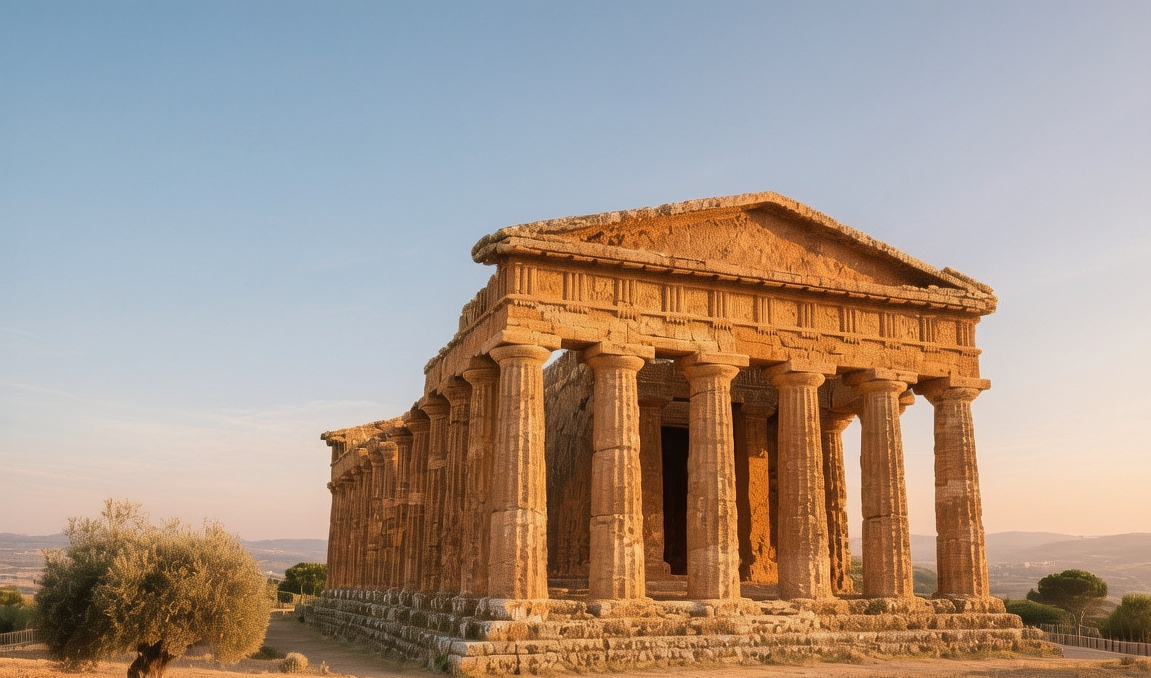
The morning sun in Sicily strikes the honey-colored travertine of the Temple of Concordia, setting its 34 Doric columns ablaze with a warm, golden glow. You hear the soft buzz of cicadas in the surrounding almond trees, the distant rustle of the wind through the ancient olive groves, and the profound silence that hangs over this sacred plain. This is the Valley of the Temples, a UNESCO World Heritage site that stretches for over 1,300 hectares (3,200 acres) along a ridge overlooking the Mediterranean Sea. Built by Greek colonists in the 5th century BC, when the city of Akragas was one of the wealthiest in the ancient world, these temples are among the best-preserved examples of Doric architecture outside of Greece [[33]]. In an age of digital noise and fleeting experiences, the Valley matters now more than ever—it is a place of elemental beauty and deep time, where you can feel the weight of history in every stone and the vast Sicilian sky puts your own life into perspective.
Why Valley of the Temples, Agrigento Embodies Timeless Grandeur
The Valley of the Temples is not just an archaeological park; it is a monumental testament to the ambition and piety of Magna Graecia. Founded in 580 BC by Greek settlers from Rhodes and Crete, the city of Akragas quickly became a powerhouse of trade and culture. At its peak in the 5th century BC, it boasted a population of over 200,000 and was famed for its wealth and beauty—so much so that the philosopher Empedocles called it “the most beautiful of mortal cities” [[33]]. The temples were built as offerings to the gods, with the Temple of Olympian Zeus once being the largest Doric temple in the world, measuring 113 by 56 meters (371 by 184 feet). Its construction even used colossal stone figures called telamones as architectural supports—a unique engineering solution that blended sculpture and structure. The Temple of Concordia, built around 440 BC, is the star of the site, its columns so perfectly preserved they seem ready to support a roof that vanished millennia ago. This grandeur “solved” a fundamental need of the ancient world: to create a physical manifestation of divine order and civic pride. Today, it fulfills a modern longing—for authenticity, scale, and a direct connection to the roots of Western civilization.
The Best Time to Experience Valley of the Temples, Agrigento
To experience the Valley in its most atmospheric and comfortable state, plan your visit for the specific windows of April 15–May 25 or September 10–October 20, 2026. During these periods, the weather in southern Sicily is ideal, with daytime temperatures ranging from a pleasant 21–26°C (70–79°F), and the intense summer crowds have yet to arrive or have already departed [[11]]. The best time of day to visit is in the early morning, between 8:30 AM and 10:30 AM, when the light is soft, the site is quiet, and you can have the temples almost to yourself. It is strongly advised to avoid the peak summer months of July and August, when temperatures can soar above 35°C (95°F) and the open archaeological site offers little shade, making exploration uncomfortable [[51]]. For the most current information on opening hours, special events like the annual Almond Blossom Festival, and guided tours, always consult the official website: valledeitempli.it.
Approximate Budget for a 7-Day Trip (2026)
This budget is calculated for a solo traveler seeking a comfortable, culturally rich experience in southern Sicily in 2026, based on current inflation trends and average regional costs.
- Accommodation: €80–€140 per night. Staying in a hotel in Agrigento’s historic center offers easy access to the Valley. Options in the seaside town of Porto Empedocle are more affordable.
- Food: €45 per day. Breakfast (€5): a cappuccino and brioche at a local bar. Lunch (€16): a plate of pasta with fresh tomato sauce at a trattoria near the site. Dinner (€24): a main course like grilled sardines with a glass of local Nero d’Avola wine.
- Transportation: €140 total. A regional train ticket from Palermo to Agrigento (€10). A weekly pass for local buses (€15). A rental car for day trips to the Scala dei Turchi or Piazza Armerina (€40/day).
- Attractions: Entry to the Valley of the Temples (€15). Guided walking tour of the site (€20). Visit to the Regional Archaeological Museum (€6).
- Miscellaneous: €95. This covers a bottle of local olive oil (€15), several gelato stops (€3 each), a cooking class featuring Sicilian recipes (€40), and souvenirs like a replica of a temple column.
Total Estimated Cost: €890–€1,010
6 Essential Valley of the Temples, Agrigento Experiences
- Witness the Sunrise at the Temple of Concordia: Arrive just after opening to see the first light strike the perfectly preserved columns of this 440 BC masterpiece. The play of shadow and light on the ancient stone is profoundly moving.
- Explore the Colossal Temple of Olympian Zeus: Walk among the massive ruins of what was once the largest Doric temple in the world. Look for the reconstructed telamon (giant stone figure) that gives a sense of the building’s original, awe-inspiring scale.
- Visit the Archaeological Museum: Located near the entrance, this museum houses artifacts from the site, including intricate votive offerings and a detailed model of ancient Akragas. It provides essential context for your visit.
- Walk the Sacred Way: Stroll along the ancient processional path that connected the temples. Imagine the religious festivals and civic ceremonies that once filled this space with life and music.
- Attend an Evening Concert: During the summer, the Valley hosts classical music concerts and performances. Sitting under the stars with the Temple of Concordia as a backdrop is an unforgettable experience.
- Picnic in the Garden of Kolymbetra: This restored ancient garden within the park is a peaceful oasis of citrus trees, pomegranates, and almonds. It’s the perfect spot to relax and reflect after exploring the ruins.
3 Hidden Gems Most Travelers Miss
- The Temple of Hephaestus (Vulcan): Located at the far end of the park, this smaller, more ruined temple is often overlooked. Its isolated position offers a sense of solitude and a stunning view back toward the main group of temples.
- The Necropolis of Montelusa: Just outside the main park, this ancient burial ground features rock-cut tombs from the 6th century BC. It’s free to visit and offers a poignant glimpse into the city’s funerary practices.
- The View from the Belvedere at Sunset: Ask a guard for directions to the unofficial viewpoint near the Temple of Juno. As the sun sets, the entire Valley is bathed in a golden light that makes the ancient stones seem to glow from within.
Cultural & Practical Tips
- Wear a hat and sunscreen: The site is completely exposed to the sun. There is very little shade, so protect yourself, especially in the warmer months.
- Bring plenty of water: Dehydration is a real risk. Carry at least 1.5 liters of water with you, particularly in summer.
- Learn a few key phrases: “Dov’è la Valle dei Templi?” (DOH-veh lah VAHL-leh deh-ee TEM-plee?) for “Where is the Valley of the Temples?”, and “Un caffè, per favore” (oon kah-FEH).
- Respect the ruins: Do not climb on the walls or touch the ancient stones. The oils from your skin can damage the surface over time.
- Combine your visit with other sites: Agrigento pairs perfectly with a trip to the Scala dei Turchi (white cliffs) or the Villa Romana del Casale. A car is recommended for these excursions.
- Tipping is appreciated but not expected: A small tip of €1–€2 for a knowledgeable guide is a kind gesture.
Conclusion: Travel with Reverence, Not Just Curiosity
The Valley of the Temples is not a backdrop for your vacation photos; it is a silent teacher of time, beauty, and human aspiration. In 2026, as we seek travel experiences that are both profound and grounding, Agrigento offers a rare gift: the chance to stand in the presence of something truly eternal. Your journey here should be one of reverence, not just curiosity. Feel the weight of the ancient stone, listen to the wind in the columns, and let the vast Sicilian sky put your own life into perspective. By traveling with this mindful respect, you honor the legacy of the Greeks who built these monuments and help preserve their power for future generations. Slow down. Sit on the grass and watch the light change on the columns. In that quiet moment of communion with antiquity, you don’t just visit the Valley—you become part of its timeless, echoing story.