
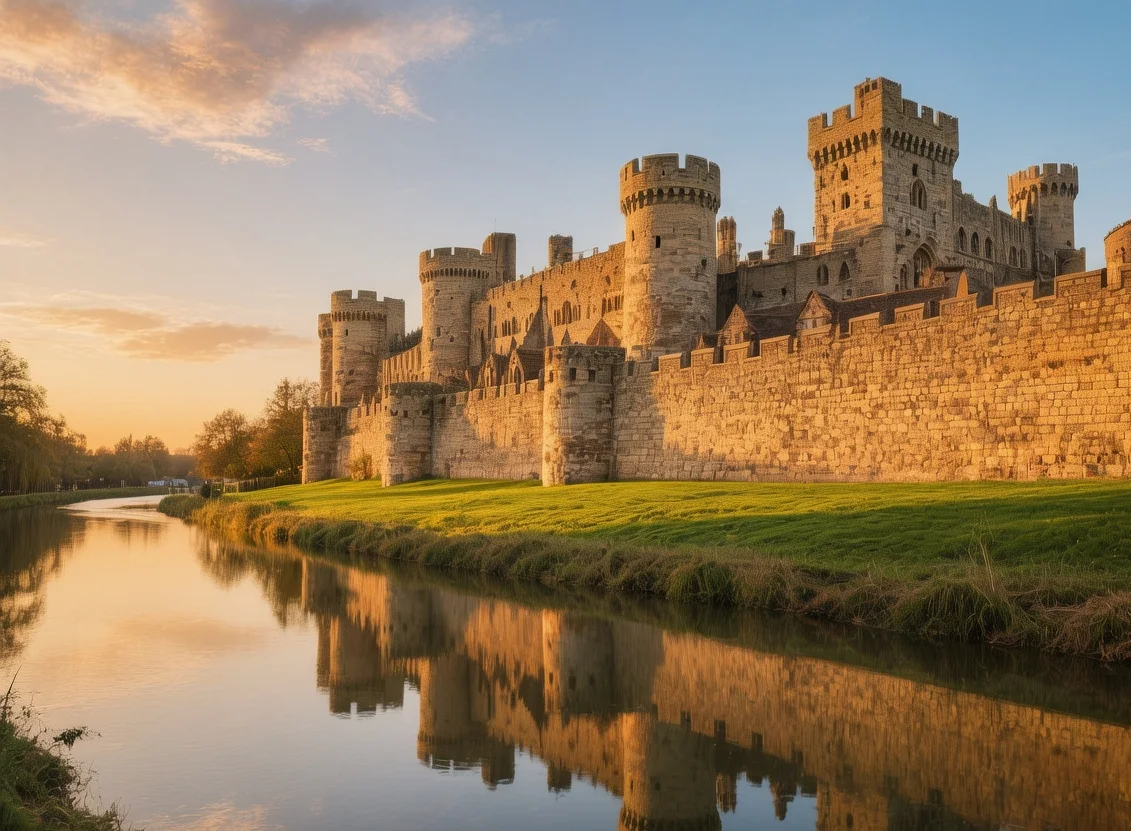
Warwick Castle Medieval Fortification Meets Living History
The portcullis groans—a heavy, metallic scrape that echoes through the gatehouse—as you step onto the drawbridge at 9:15 AM, watching mist rise from the River Avon while the sun ignites the honey-colored stone. The air smells of damp earth and woodsmoke; the silence hums with the weight of nearly 1,000 years of military history contained within these walls. Founded by William the Conqueror in 1068, Warwick Castle dominates the Warwickshire landscape with 11-meter-thick defensive walls and towers that rise 40 meters above the water. You stand before the Machicolations, where medieval defenders once poured boiling oil, while the State Rooms stretch to the east, housing treasures worth millions. Every stone tells a story: Norman soldiers patrolling the ramparts, the Earl of Warwick crowning kings, and modern families exploring the dungeons. In 2026, as heritage sites balance education with entertainment, visiting Warwick Castle means engaging with a fortress that evolved from wood to stone to spectacle. This place matters now because it remains one of the best-preserved medieval castles in the United Kingdom, challenging visitors to confront the reality of feudal power while navigating the splendor of aristocratic life.
Why Warwick Castle Embodies Medieval Military Architecture
Warwick Castle solves the defensive need for a strategic stronghold on the River Avon—a feat achieved through centuries of fortification upgrades and architectural innovation. When William the Conqueror established the wooden motte-and-bailey structure in 1068, he secured a vital crossing point, but the stone transformation began in the 12th century under Henry de Beaumont. The defensive perimeter spans 1.2 hectares, utilizing local sandstone quarried from nearby quarries, chosen for its durability against siege weaponry and weathering. Engineering-wise, Guy's Tower, completed in 1394, features 15-sided geometry designed to deflect arrow fire, while Caesar's Tower utilizes a batter base to prevent undermining by sappers. The castle's walls reach thicknesses of up to 11 meters at the base, supporting the weight of the battlements above without collapsing under bombardment. In the 19th century, the 5th Earl of Warwick converted the military fortress into a country house, adding the State Rooms with interiors designed by Anthony Salvin. Today, Merlin Entertainments manages the site, balancing conservation with interactive exhibits like the Trebuchet siege engine, which demonstrates medieval engineering principles using a 25-ton counterweight system. This unique status ensures Warwick Castle remains not merely a ruin but a living monument, blending 11th-century defense with 19th-century opulence in a manner few historic sites sustain.
The Best Time to Experience Warwick Castle
For optimal lighting and manageable crowds, plan your visit between May 15–June 20 or September 10–October 15, when temperatures range from 15–22°C (59–72°F) and daylight extends until 9:00 PM. Arrive precisely at 10:00 AM when gates open to beat the tour buses that typically converge by 11:30 AM; the morning light illuminates the stone facade beautifully without the glare of midday sun. Evening visits during summer offer a romantic atmosphere as the floodlights activate, though the castle closes at 5:00 PM except for special events. Avoid July 25–August 31 when school holidays bring peak congestion, pushing entry queues beyond 45 minutes despite timed tickets. Winter months (December–February) offer shorter lines but temperatures drop to 2–8°C (36–46°F), and the stone ramparts become uncomfortably cold and windy. For special events like the Jousting Tournament or Christmas illuminations, verify the calendar at warwick-castle.com before booking, as these attract additional crowds. Tuesday and Thursday mornings typically see the lowest visitor volume, allowing for quieter contemplation in the State Rooms.
Approximate Budget for a 7-Day Trip (2026)
Warwickshire remains a moderate destination, but staying near the castle provides immediate access without excessive transport costs. These 2026 estimates assume a moderate travel style, accounting for approximately 3-4% annual inflation in UK hospitality and attraction pricing.
- Accommodation: £110–£250 per night for a double room in Warwick, Leamington Spa, or Stratford-upon-Avon; budget B&Bs from £75/night in nearby Kenilworth
- Food: £50–80 per day—breakfast £9–13 (café pastry or full English), lunch £14–22 (pub meal or castle café), dinner £27–45 (mid-range restaurant with wine); traditional ploughman's lunch £15
- Transportation: £50.00 daily average for car rental and fuel; Train from London Marylebone to Warwick £45 return; Local bus day pass £10
- Attractions: Warwick Castle £38.00 adult (includes all attractions), Warwick Town Mill £5.00, Lord Leycester Hospital £10.00, Stratford Shakespeare House £35.00, Thames cruise £18.00
- Miscellaneous: Souvenir guidebook £15, castle postcards £5, rain jacket (essential) £35, travel insurance £50 for week
Total for 7 days: £1,350–1,900 per person (excluding international flights)
7 Essential Warwick Castle Experiences
- State Rooms Tour: Walk the grand apartments used for aristocratic entertaining. Open 10:00 AM–4:00 PM; the audio guide details the history of each room. Look for the ornate ceilings in the Great Hall and the wax figures depicting historical scenes.
- Guy's Tower Climb: Ascend the 1394 defensive tower for panoramic views. Open 10:00 AM–4:00 PM; the 145 steps are steep. The view encompasses the River Avon and the town of Warwick; the arrow slits offer perfect photo frames.
- Trebuchet Siege Engine: Watch the massive catapult demonstration in the grounds. Shows run hourly at 11:00 AM, 1:00 PM, and 3:00 PM; the 25-ton machine launches projectiles 200 meters. The sound of the release is thunderous; stand back 10 meters for safety.
- Peacock Garden Stroll: Wander the formal gardens east of the castle. Open dawn–dusk; the topiary and flower beds are meticulously maintained. The scent of roses is strongest in June; sit on the benches to enjoy the symmetry of the design.
- Castle Dungeon Experience: Descend into the underground cells for a horror attraction. Open 10:00 AM–4:00 PM; actors portray historical prisoners. The air is cold and damp; the lighting is dim to enhance the atmosphere of confinement.
- Rampart Walk: Traverse the defensive walls connecting the towers. Open 10:00 AM–4:00 PM; the path is narrow and exposed. The view down into the dry moat reveals the scale of the defenses; hold children's hands tightly near the edges.
- Horrible Histories Maze: Navigate the hedge maze designed for families. Open 10:00 AM–4:00 PM; the puzzles are based on historical trivia. The greenery provides shade during summer; it offers a playful contrast to the serious history of the fortress.
3 Hidden Gems Most Travelers Miss
- Kingmaker Garden: This secluded garden honors the Earl of Warwick who crowned kings. Access via the State Rooms exit; open during castle hours. Most tourists rush to the Trebuchet, missing the quiet herb beds and the statue depicting Richard Neville.
- Warwick Town Mill: Located 500 meters from the castle, this working water mill dates to 1788. Access via Mill Street; open 10:00 AM–4:00 PM. The wheel turns with the river current; the smell of fresh flour permeates the air, offering a glimpse into local industry.
- The Waterfront View: Stand on the bridge over the River Avon for a panoramic view of the castle reflection. Access is public; open 24 hours. The view at sunset captures the entire fortress silhouetted against the sky; this angle is rarely photographed by visitors inside the grounds.
Cultural & Practical Tips
- Dress code: Comfortable walking shoes are essential; the ramparts involve uneven stone steps. Shoulders should be covered when entering the chapel; carry a light jacket for coverage.
- Photography rules: Photography is permitted in the grounds and State Rooms for personal use without flash. Tripods require permission; respect signs indicating no photography inside the Dungeon attraction.
- Parking logistics: Paid parking is available on-site; arrive by 9:30 AM to secure a space close to the entrance during peak season. The car park is 200 meters from the gate; allow 5 minutes to walk.
- Local phrases: Learn "Mind the gap" (watch the step), "Cheers" (thanks), and "Queue here" (wait in line); locals appreciate visitors who respect pedestrian flow on the narrow paths.
- Weather preparedness: The ramparts are exposed to wind and rain; carry a compact umbrella (£10 from Boots pharmacy) and waterproof layers. Stone surfaces become slippery when wet—wear shoes with good grip.
- Accessibility: The castle offers step-free access to the State Rooms via ramps; wheelchair users receive priority entry—contact guestservices@warwick-castle.com 48 hours ahead to arrange assistance. The towers are not accessible.
- Respectful behavior: Keep voices lowered in the State Rooms and chapel; this is a historic monument. Do not touch the artifacts or lean on the historic tapestries; the materials are centuries old and fragile.
Conclusion: Travel with Reverence, Not Just Checklists
Warwick Castle demands more than a snapshot beside the towers—it invites you to contemplate the weight of history resting on that ancient stone. When you walk the ramparts in 2026, tracing the same paths worn by knights and earls for centuries, you're not just ticking a sightseeing box; you're witnessing the delicate balance between military heritage and modern entertainment. As overtourism pressures historic landmarks, visiting mindfully means respecting the preservation nature of this institution, understanding that behind the attractions, a team of conservators works tirelessly to maintain the fabric. Walk slowly across the courtyard, noticing how the light changes on the sandstone; listen to the river not as background noise but as the moat's lifeblood. Leave only footprints on the grass, take only memories of medieval grandeur, and carry forward the understanding that places like this endure because each generation chooses to protect them—not as theme parks, but as living testaments to defense, power, and the enduring complexity of British history.