
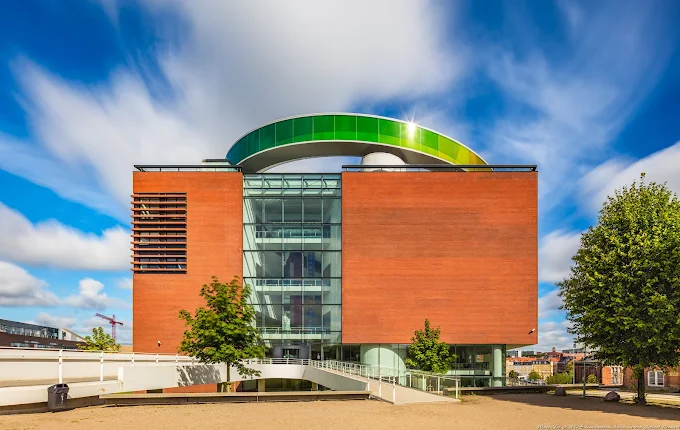
ARoS Aarhus Museum: Where Contemporary Art Meets Scandinavian Light
Golden afternoon light filters through the colored glass panels of Your Rainbow Panorama as you step onto the 150-meter circular walkway suspended thirty meters above Aarhus—ARoS Aarhus Museum reveals itself as a cathedral of contemporary creativity, where the hum of quiet contemplation mingles with the distant chatter of visitors exploring ten thousand square meters of exhibition space. You feel the subtle shift in atmosphere as you move through the spectrum of colored light—crimson warming your skin, cobalt cooling your gaze, emerald transforming the cityscape below into a dreamlike vista. This architectural landmark, designed by Schmidt Hammer Lassen and opened in its current form to house Denmark's largest art collection outside Copenhagen, spans approximately 20,000 square meters with nine floors dedicated to Danish and international art spanning two centuries [[15]][[22]]. The museum's crown jewel, Olafur Eliasson's Your Rainbow Panorama, invites you to walk among the colors of the spectrum while viewing Aarhus from every angle—a poetic fusion of art, architecture, and urban landscape. But ARoS Aarhus Museum matters because it redefines what an art museum can be: not merely a repository of objects, but an immersive experience where light, space, and creativity converge to transform how you see the world—and yourself within it.
Why ARoS Aarhus Museum Embodies Nordic Artistic Innovation
ARoS Aarhus Museum represents the pinnacle of contemporary museum design, solving a fundamental need to make art accessible and engaging while creating a cultural landmark that anchors Aarhus's identity as Denmark's city of innovation. When the museum opened in its current form, it consolidated collections dating to 1859 into a purpose-built facility designed to showcase Danish Golden Age paintings alongside cutting-edge international contemporary art—a bold curatorial vision that bridges tradition and experimentation [[15]][[20]]. The building's architecture, by Danish firm Schmidt Hammer Lassen, employs sophisticated engineering: a black volcanic stone façade that absorbs and reflects light dynamically, floor-to-ceiling glass walls that blur boundaries between interior galleries and the surrounding city, and the iconic rooftop installation—a 150-meter (492-foot) circular walkway clad in colored glass panels that create an ever-changing chromatic experience [[18]][[24]].
The museum's interior unfolds as a deliberate journey: the ground floor hosts temporary exhibitions of international contemporary art; floors two through four showcase Danish art from 1800 to present, including masterworks by Vilhelm Hammershøi and P.S. Krøyer; and the upper levels feature the innovative "9 Spaces"—nine site-specific installations by artists like James Turrell and Jenny Holzer designed to transform the museum's unique architectural volumes [[22]]. Technical innovations include climate-controlled galleries maintaining 20°C (68°F) and 50% humidity to preserve sensitive works, advanced LED lighting systems that minimize UV exposure while enhancing color accuracy, and acoustic design that creates contemplative silence without feeling sterile. ARoS fulfilled a dual purpose: culturally, it elevated Aarhus to international prominence as a destination for art lovers; educationally, it pioneered interactive approaches that invite visitors to engage with art through multiple senses. The museum's rooftop panorama—requiring structural reinforcement to support its 600-ton weight—demonstrates how engineering can serve artistic vision, creating a space where visitors literally walk through color while viewing the city from a new perspective. Today, managed by the ARoS Foundation, the museum stands as a testament to how architecture can amplify art, how light can become medium, and how a single building can transform a city's cultural landscape.
The Best Time to Experience ARoS Aarhus Museum
Timing your visit to ARoS Aarhus Museum profoundly influences both atmospheric immersion and practical accessibility. The optimal window falls between May 27 and June 23, when Aarhus enjoys extended daylight—sunset occurs around 9:50 PM—and temperatures range from 14°C to 21°C (57°F to 70°F), creating ideal conditions for exploring indoor galleries and experiencing Your Rainbow Panorama in optimal light [[68]][[72]]. During this period, the colored glass panels cast vibrant hues across the walkway, outdoor terraces offer pleasant respite, and summer crowds have not yet peaked. For photographers, visit between 6:30–8:30 AM when soft morning light illuminates the museum's volcanic stone façade, or 7:30–9:30 PM for dramatic sunset reflections on the rainbow panorama's glass panels.
The museum operates year-round with consistent hours: Tuesday–Sunday 10:00 AM–6:00 PM, Wednesdays until 9:00 PM for evening visits; closed Mondays except holidays. For current exhibitions, event schedules, and ticket reservations, visit the official ARoS Aarhus Museum website at www.aros.dk or the national tourism portal at www.visitdenmark.com [[52]][[85]]. Avoid visiting during late November through early February, when temperatures drop to -3°C to 4°C (27°F to 39°F), daylight shrinks to seven hours, and the rainbow panorama's impact diminishes in winter gloom. Also steer clear of Danish school holidays (week 7 in February, week 42 in October) when family crowds increase. Standard admission costs DKK 195 for adults (€26), DKK 95 for students and seniors (€13), with children under 18 admitted free [[24]]. The museum café, with panoramic city views, is particularly rewarding between 2:00–4:00 PM when afternoon light enhances the experience.
Approximate Budget for a 7-Day Trip
Exploring ARoS Aarhus Museum and eastern Jutland requires moderate budgeting, as Denmark maintains higher price points than many European destinations. However, strategic planning—including staying in Aarhus center and utilizing regional transit passes—can optimize your experience. The following breakdown reflects mid-range preferences with cultural immersion priorities.
- Accommodation: €72–€128 per night for a double room in Aarhus center (walking distance to ARoS); budget hostels €30–€50 per night for dorm beds; boutique design hotels €145+ per night
- Food: €41–€70 per day total
- Breakfast: €7–€11 (Danish pastry and coffee from local bakery)
- Lunch: €13–€21 (smørrebrød or seasonal salad at museum café)
- Dinner: €21–€36 (mid-range restaurant in Aarhus featuring New Nordic cuisine)
- Museum café option: €9–€14 for soup, sandwich, and coffee
- Transportation:
- Regional train (DSB) from Copenhagen to Aarhus: €36 one-way, 3 hours via InterCity
- Aarhus city bus: €3 per ride; bicycle rental €10 per day (ideal for compact city)
- Aarhus Card (24-hour): €38 includes unlimited transport and free museum entry
- Train to nearby attractions (Randers, Silkeborg): €8–€15 per trip
- Attractions:
- ARoS Aarhus Museum admission: €26 (DKK 195) adults; €13 students/seniors; under 18 free [[24]]
- Guided tour upgrade: €8 additional
- Den Gamle By open-air museum: €18
- ARoS rooftop panorama access: Included with admission
- Contemporary art workshop: €15
- Miscellaneous:
- Museum shop: Art books and design objects €12–€55
- Audio guide rental: €4
- Photography permit for professional use: €28
Total estimated budget for 7 days: €890–€1,340 per person (excluding international flights)
7 Essential ARoS Aarhus Museum Experiences
- Walk Your Rainbow Panorama at Sunset: Ascend to the rooftop walkway between 7:00–9:00 PM when the setting sun casts dramatic light through the colored glass panels. The 150-meter circular path offers 360-degree views of Aarhus; pause at each color section to observe how the spectrum transforms the cityscape. Allow 30 minutes for this contemplative circuit; the experience shifts with weather and light, making each visit unique.
- Explore the Danish Golden Age Galleries: Locate floors two through four, where masterworks by Vilhelm Hammershøi, P.S. Krøyer, and Anna Ancher showcase Denmark's artistic heritage. Observe the interplay of light and shadow in Hammershøi's interiors; the coastal scenes of Skagen painters capture Nordic light with remarkable sensitivity. Visit between 10:30 AM–12:00 PM when natural light from the museum's skylights enhances the paintings. Allow 60 minutes for full appreciation.
- Experience the 9 Spaces Installations: Seek out these nine site-specific works by international artists, each designed to transform a unique architectural volume within the museum. James Turrell's light installation creates an immersive chromatic environment; Jenny Holzer's text projections invite reflection on language and meaning. Visit between 2:00–4:00 PM when gallery lighting is optimal; allow 45 minutes to engage with multiple installations.
- Attend an Artist Talk or Workshop: Check www.aros.dk for the museum's program of curator-led tours, artist conversations, and hands-on workshops. These events typically occur on weekends at 2:00 PM; booking in advance is recommended. The experiences provide deeper context for exhibitions and opportunities to engage with the museum's intellectual community.
- Photograph the Volcanic Stone Façade: The museum's exterior, clad in black volcanic stone, creates striking photographic opportunities. Visit between 7:00–9:00 AM when morning light highlights the texture and geometric patterns. Use a polarizing filter to manage reflections; focus on how the building's angular forms interact with Aarhus's urban landscape.
- Enjoy Coffee with a View at ARoS Café: Reserve a table near the panoramic windows between 2:00–4:00 PM for the perfect pause. Order house-blend coffee (€5) and Danish pastry (€6), then watch the city unfold below while contemporary art frames the horizon. The café's menu emphasizes organic, seasonal ingredients; the afternoon light through the glass walls creates a luminous atmosphere.
- Explore Temporary Exhibitions: ARoS hosts rotating shows of international contemporary art on the ground floor. Check the website for current programming; exhibitions typically feature immersive installations, video art, and emerging artists. Allow 45 minutes; audio guides (€4) provide rich contextual narration in multiple languages.
3 Hidden Gems Most Travelers Miss
- The Rooftop Terrace Garden: Adjacent to Your Rainbow Panorama, a small landscaped terrace offers a quiet space to rest and reflect on the panoramic views. Most visitors overlook this area because it lacks prominent signage. Access: From the panorama exit, follow signs for "Terrasse"; open daily during museum hours; free with admission. Best visited between 11:00 AM–1:00 PM when the space is least crowded. The terrace features native Danish plants and seating designed by local artists, creating a contemplative extension of the museum experience.
- The Conservation Laboratory Viewing Window: A glass-walled corridor on the third floor offers glimpses into the museum's active conservation lab, where specialists treat paintings, sculptures, and contemporary installations. Most tourists walk past without noticing this educational peek behind the scenes. Access: Located near the Danish Art galleries; viewing hours 10:00 AM–4:00 PM daily; free with admission. Best visited between 1:00–3:00 PM when conservation staff are most active. Observing meticulous restoration work reveals the science and artistry behind preserving cultural heritage.
- The Museum's Architectural Details: Beyond the famous panorama, ARoS features subtle design elements that reward close observation: the interplay of natural and artificial light in gallery spaces, the acoustic engineering that creates contemplative silence, and the way circulation paths guide visitors through a curated journey. Most tourists focus on artworks without noticing the architecture that frames them. Best appreciated during a slow, unhurried visit; allow extra time to simply observe how space, light, and movement shape your experience. The building itself is a work of art—worth studying as carefully as the collections it houses.
Cultural & Practical Tips
- Photography Guidelines: Photography for personal use is permitted throughout ARoS Aarhus Museum, but flash and tripods are prohibited indoors to protect artworks. Some special exhibitions restrict photography—observe signage. The rooftop panorama and exterior façade are ideal for photography; visit during golden hour for optimal light.
- Language: While exhibition labels and staff are English-friendly, learning Danish phrases enhances your experience: tak (tahk = thank you), undskyld (oon-skool = excuse me), hej (hi = hello/goodbye). Danish pronunciation features soft consonants and melodic intonation.
- Dress Code: Comfortable walking shoes are essential—exploring ten thousand square meters of galleries involves significant walking. Layer clothing; museum interiors maintain consistent climate, but Aarhus weather can shift quickly. Bring a light jacket year-round.
- Accessibility: ARoS is fully wheelchair accessible via elevators connecting all floors, including the rooftop panorama. Wheelchairs are available free at the entrance; request assistance in advance for specialized needs. Audio guides include descriptive narration for visually impaired visitors.
- Weather Considerations: Aarhus's coastal location means rapid weather shifts. Check the forecast before visiting; the rooftop panorama is most impactful in clear conditions, though overcast skies create moody, atmospheric photography opportunities. Summer (June–August) offers the most reliable conditions; spring and fall provide fewer crowds but pack layers for variable temperatures.
- Combining with Copenhagen: ARoS is a 3-hour train ride from Copenhagen Central Station. Purchase an Aarhus Card for unlimited transport and free museum entry. Consider spending 2–3 nights in Aarhus to fully explore ARoS alongside Den Gamle By and the city's vibrant food scene.
- Museum Etiquette: ARoS encourages contemplative engagement. Speak quietly in galleries, maintain respectful distance from artworks, and allow others space to experience installations. The museum's philosophy values slow looking—resist the urge to rush; linger with works that resonate.
Conclusion: Travel with Contemplation, Not Just Consumption
ARoS Aarhus Museum invites more than passive viewing—it demands presence, patience, and a willingness to let art, architecture, and light speak in concert. When you walk that rainbow panorama with Aarhus unfolding below, you're not merely touring a museum; you're participating in a carefully choreographed experience where every turn reveals a new dialogue between human creativity and urban landscape. This isn't a place to rush through, checklist in hand, snapping photos before racing to the next attraction. Slow down. Sit with a Hammershøi painting until its quiet power settles; watch how afternoon light transforms a Turrell installation; let the spectrum of colored glass shift your perception of the city. Travel here with openness to ambiguity, to the spaces between artworks where meaning emerges, to the understanding that beauty often resides in relationship rather than isolation. Support the museum's mission by engaging deeply, by purchasing from the shop that champions artist publications, by sharing not just images but the felt experience of art in space. The most transformative journeys leave you not just with memories of what you saw, but with a renewed capacity to see—and ARoS Aarhus Museum, with its seamless fusion of contemporary art and Scandinavian light, offers precisely that invitation to those willing to wander, to wonder, and to simply be.