
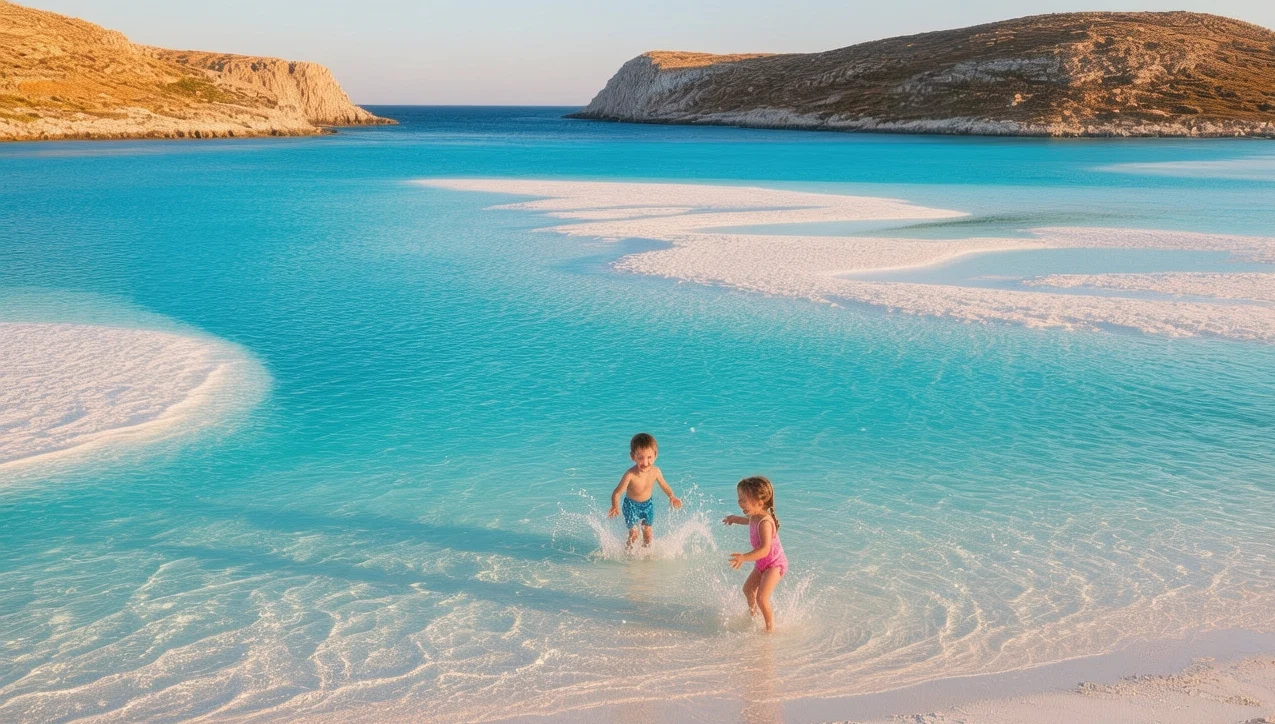
Balos Lagoon: Where Turquoise Waters Meet Cretan Wilderness
The morning sun spills across the extraordinary landscape of Balos Lagoon as you descend the rugged coastal path, where the air carries the intoxicating blend of sea salt, wild oregano, and the faint mineral scent of sun-warmed limestone cliffs. Before you unfolds one of the Mediterranean's most breathtaking natural wonders—a shallow lagoon approximately 1.5 kilometers wide where crystalline turquoise waters lap against a crescent of white sand, framed by dramatic limestone headlands that rise 100 meters above the sea. The only sounds are the gentle whisper of waves in ankle-deep water, the distant cry of seabirds nesting on the rocky islets, and the soft footsteps of travelers discovering this aquatic paradise. This extraordinary shoreline—part of Crete's protected Gramvousa Peninsula and designated as a Natura 2000 conservation area—solves a fundamental human need: the desire to experience pure, unadulterated natural beauty where land and sea blur into something magical. Standing on this pristine shore as the water warms your feet, you understand: Balos Lagoon matters because it offers a rare encounter with geological poetry—a place where marine ecology, dramatic topography, and sensory wonder converge to create an experience that transcends ordinary beachgoing and awakens profound appreciation for our planet's creative forces.
Why Balos Lagoon Embodies Natural Majesty
The Balos Lagoon represents one of the Mediterranean's most extraordinary coastal formations—a natural sanctuary that solves the fundamental challenge of creating a visually stunning destination while maintaining ecological integrity and serving as a protected habitat for rare species. Formed by the unique geological configuration of the Gramvousa Peninsula, where three small islands (Imeri Gramvousa, Agria Gramvousa, and Pontikonisi) shelter a shallow bay from open sea currents, the lagoon's distinctive turquoise coloration results from sunlight reflecting off white sand and limestone particles suspended in crystal-clear water. The shallow depth—averaging just 0.5 to 1.5 meters across most of the lagoon—creates ideal conditions for the vibrant aquamarine hues that have made this location iconic.
The lagoon's ecological significance extends beyond aesthetics: Balos serves as a critical habitat for the endangered Caretta caretta (loggerhead sea turtles) and hosts over 80 species of rare Mediterranean flora, including the protected Juniperus phoenicea (Phoenician juniper) that clings to the limestone cliffs. The white sand beach—composed primarily of crushed shells, coral fragments, and fine limestone particles—creates a soft, powdery surface that contrasts dramatically with the deep blue waters beyond the lagoon's protective barrier. The area's geological formation resulted from tectonic activity and sea-level changes over the past 5,000 years, creating a protected bay that shields the delicate ecosystem from strong wave action while allowing gentle currents to maintain water clarity.
Today, Balos Lagoon fulfills multiple roles: it serves as a natural attraction drawing visitors from around the world, a protected Natura 2000 site since 2006, and an educational resource for understanding coastal ecology and geological processes. The ongoing conservation efforts by the Greek Ministry of Environment and local authorities—including designated walking paths to protect dune vegetation, seasonal restrictions during turtle nesting season (June–September), and regular monitoring of water quality—ensure that this extraordinary shoreline continues to inspire while preserving the delicate ecosystem that creates its unique character. Every step on these white sands connects you to a landscape shaped by biological processes, geological forces, and time—a reminder that nature's most beautiful creations require both protection and respect.
The Best Time to Experience Balos Lagoon
Timing transforms a visit to Balos Lagoon from pleasant beach day to unforgettable Mediterranean experience. The optimal windows stretch from May 18–June 12 and September 15–October 20, when air temperatures hover between 22–28°C (72–82°F), water temperatures range from 20–24°C (68–75°F), and visitor numbers remain manageable enough to secure peaceful spots along the shoreline without excessive crowds. During these shoulder seasons, you'll experience comfortable conditions for swimming and sunbathing while capturing photographs in the soft, directional light that reveals the water's turquoise tones and the limestone cliffs' textured surfaces.
Arrive precisely at 8:00–9:00 AM when the first boats depart from Kissamos port—this early arrival secures the best positions closest to the lagoon's edge, provides cooler temperatures for the descent to the beach, and offers the most serene atmosphere before the midday rush. Boat excursions operate daily from Kissamos harbor during peak season (April–October), with departures at 8:30 AM, 10:30 AM, and 1:00 PM; the 1-hour crossing offers stunning coastal views. For those accessing via the dirt road from Kaliviani, arrive by 9:00 AM to secure parking and enjoy the lagoon before crowds arrive. Winter months (November–February) offer profound solitude and dramatic storm-washed skies, though boat service is suspended and the dirt road may be impassable due to weather.
Avoid July 15–August 31 unless you specifically seek maximum crowds: temperatures regularly exceed 30°C (86°F), boat excursions reach capacity by 10:00 AM, and finding available space on the beach becomes challenging without arriving before dawn. Also skip periods of strong meltemi winds (typically mid-July to mid-August) when boat service may be suspended for safety and wave action can reduce water clarity. For the most current information on boat schedules, weather conditions, and conservation updates.
Approximate Budget for a 7-Day Trip
Crete offers exceptional value for travelers seeking extraordinary natural beauty combined with authentic Mediterranean culture. The following breakdown reflects mid-range travel—comfortable boutique accommodations in Chania or nearby villages, authentic Cretan taverna dining, and comprehensive exploration of Balos Lagoon and greater western Crete—based on current pricing for a single traveler.
- Accommodation: €70–€150 per night in Chania old town or coastal villages near Kissamos (€490–€1,050 total). Budget studios start at €40; luxury sea-view suites run €200+.
- Food: €35–€55 per day total. Breakfast: €5–€8 (Greek coffee €2.50, bougatsa pastry €2, fresh fruit €3.50). Lunch: €10–€18 (Greek salad €7, dakos €9, grilled octopus €15). Dinner: €18–€30 (lamb kleftiko €16, fresh fish €20, Cretan wine €5/glass, dessert €6).
- Transportation: €130 total. Ferry from Athens: €45–€75 one-way (€90–€150 round-trip). Car rental for western Crete: €35/day. Balos boat excursion from Kissamos: €25 round-trip. Bus from Chania to Kissamos: €5 per ride.
- Attractions: €70 total. Balos Lagoon boat tour: €25. Elafonissi Beach access: free. Chania old town walking tour: free. Balos hiking path access: free. Beach equipment rental: €10.
- Miscellaneous: €100 total. Water/snacks €4/day, handmade pottery €35–€80, local honey €12, beach accessories €15, tips €20.
Total: €1,250–€1,750 for 7 days (excluding international airfare and Athens-Crete ferry)
7 Essential Balos Lagoon Experiences
- Take the boat excursion from Kissamos: Board the morning ferry at 8:30 AM from Kissamos harbor for the scenic 1-hour crossing to Balos Lagoon. The journey offers panoramic views of Crete's rugged northwestern coastline, with opportunities to spot dolphins and seabirds. Upon arrival, you'll have approximately 3 hours to explore the lagoon before the return departure. Bring water, sun protection, and a camera—the boat deck provides excellent photography opportunities during the crossing.
- Wade through the turquoise shallows: Enter the lagoon at the beach's center where the water depth averages just 0.5 to 1 meter over 300 meters. The water temperature ranges from 20°C (68°F) in May to 24°C (75°F) in August. Wade slowly to avoid stirring up the white sand; the water clarity—often exceeding 20 meters visibility—reveals the sandy bottom and small fish swimming among the limestone particles.
- Photograph the lagoon from Cape Tigani: Hike the 20-minute path from the beach to the elevated viewpoint at Cape Tigani for panoramic views of the entire lagoon. The vantage point reveals the dramatic contrast between turquoise shallows, white sand, and deep blue sea beyond the protective barrier. Visit between 10:00 AM–12:00 PM when morning light illuminates the water's color gradient most vividly. Use a wide-angle lens (24mm) to capture the full landscape harmony.
- Explore the small islets: Walk across the shallow water to the small uninhabited islets offshore (approximately 100–200 meters from the main beach). These rocky outcrops feature rare juniper trees, nesting seabirds, and panoramic views of the lagoon. Visit between 2:00–4:00 PM when afternoon light reveals the islets' vegetation most clearly. Wear water shoes for the rocky approach and respect nesting areas marked by conservation signs.
- Swim in the deeper channel: Enter the deeper swimming area beyond the lagoon's protective barrier where the water depth increases to 3–5 meters. The channel offers calm conditions ideal for swimming, with water temperatures perfect for extended periods. Swim early morning or late afternoon to avoid peak crowds; the protected location shields swimmers from strong currents while maintaining crystal-clear visibility.
- Study the lagoon's ecological features: Locate the designated walking paths and interpretive signs that explain Balos' unique ecosystem, including the endangered loggerhead turtle nesting sites and rare plant species. The conservation area features over 80 plant species adapted to the limestone cliffs. Visit between 3:00–5:00 PM when afternoon light reveals the coastal vegetation most clearly. Respect all marked protection zones and never remove sand, shells, or plants.
- Experience the lagoon at sunset: If accessing via the dirt road from Kaliviani, remain at Balos after sunset as the sky transitions through shades of pink and orange that mirror the water's colors. The cooling sand feels soft between your toes, and the gentle waves create a meditative rhythm. This peaceful time offers a completely different perspective from the daytime energy—ideal for reflection and appreciation of the lagoon's natural beauty without crowds.
3 Hidden Gems Most Travelers Miss
- The Northern Rocky Cove: Beyond the main lagoon beach, a small secluded cove accessible by walking 200 meters north along the rocky coastline offers privacy and exceptional snorkeling. The protected inlet features crystal-clear water, underwater rock formations, and marine life including small octopus and colorful fish. Access: Follow the coastal path from Balos' northern end; wear water shoes for the rocky approach. Best visited at 8:00–10:00 AM or 6:00–8:00 PM when crowds are minimal. Bring your own snorkel gear as no facilities exist in this area.
- The Ancient Juniper Grove: Tucked behind the main beach area, a small grove of ancient Phoenician juniper trees (Juniperus phoenicea) provides natural shade and a peaceful retreat from the sun. These rare, protected trees—some over 300 years old—create cool pockets perfect for afternoon reading or nap breaks. Access: Located 150 meters inland from the main beach area; look for the distinctive evergreen foliage. Best visited between 12:00–3:00 PM when sun intensity peaks. Bring a beach towel and respect the trees by not damaging branches or leaving trash.
- The Sunrise Photography Point: At the lagoon's eastern end, a small elevated rock formation provides an ideal location for sunrise photography and panoramic views of the entire bay. The eastern orientation offers unobstructed views of the sun rising over the Aegean, creating a serene atmosphere before the lagoon awakens. Access: Arrive by 6:30 AM if accessing via the dirt road; the area is marked by distinctive rock formations. Best visited May through September when sunrise occurs between 6:00–7:00 AM. Bring a tripod and water; the peaceful morning energy attracts like-minded photographers seeking tranquility.
Cultural & Practical Tips
- Beach etiquette: Balos operates as a protected natural area. Respect designated swimming zones and walking paths to protect dune vegetation. Keep noise levels reasonable. Remove all trash when leaving—use provided bins or take it with you. Never remove sand, shells, or plants—this is illegal and damages the ecosystem.
- Footwear essentials: The sand and rocky paths can become extremely hot (exceeding 45°C/113°F) during midday hours. Wear sturdy water shoes or flip-flops with good grip for both beach and hiking. The terrain includes uneven limestone surfaces; avoid smooth-soled footwear.
- Hydration and sun protection: Carry at least 2 liters of water per person; there are no vendors on the beach itself. Apply broad-spectrum sunscreen (SPF 50+) every two hours and after swimming. The beach reflects sunlight, increasing UV exposure. Seek shade between 12:00–3:00 PM when sun intensity peaks.
- Local phrases: Kalimera (kah-lee-MEH-rah) = Good morning; Kalispera (kah-lee-SPER-ah) = Good evening; Efharisto (ef-hah-REE-stoh) = Thank you; Parakalo (pah-rah-kah-LOH) = Please/You're welcome; Yassou (YAH-soo) = Hello. Using these greetings earns warm smiles from boat staff and Cretan locals.
- Transportation logistics: Balos is accessible by boat from Kissamos port (€25 round-trip, 1-hour crossing) or by car via a challenging 8-kilometer dirt road from Kaliviani village (4WD recommended, 30-minute drive). Parking at the trailhead costs €5 per day during peak season. Allow extra time for the rugged road conditions.
- Safety considerations: No lifeguards are stationed at Balos Lagoon; swim at your own risk. The shallow lagoon is generally safe, but watch for sudden depth changes beyond the protective barrier. Strong meltemi winds can suspend boat service—check weather forecasts before planning your visit.
- Environmental respect: Balos' beauty depends on preservation. Do not remove sand, shells, or stones. Avoid stepping on dune vegetation. Use reef-safe sunscreen to protect marine life. Support boat operators and facilities that follow sustainable practices and participate in regular conservation initiatives.
Conclusion: Travel with Reverence, Not Just Checklists
The Balos Lagoon demands more than a hurried photograph and a quick checkmark—it asks for your reverence, your willingness to slow down and truly experience the simple pleasure of white sand between your toes, of turquoise water cooling your skin, of sunlight warming your face. When you surrender to the rhythm of waves and the carefree spirit that defines this sacred shoreline, you participate in a tradition as old as human joy itself. This is not passive tourism; it is active celebration of life's elemental pleasures.
Responsible travel here means understanding that Balos' beauty is fragile: every piece of litter left behind mars the pristine sands, every footprint on dune vegetation accelerates erosion, every removed shell diminishes the ecosystem for future generations. Walk gently. Leave no trace. Take only memories; leave only footprints. Support sustainable tourism practices and respect the delicate balance between visitor access and preservation that keeps this paradise thriving.
This is not merely a beach to be consumed but a sanctuary to be experienced—a place where natural beauty and human wonder converge to create something transcendent. Slow down. Feel the sand. Listen to the waves. Let Balos reveal its magic gradually, as the tide reveals treasures to patient observers. The lagoon will still be here tomorrow, but your opportunity to encounter it with wonder and presence exists only in this moment. Choose joy over haste, connection over completion, and carry not just photographs but a deeper appreciation for the enduring power of simple pleasures and nature's extraordinary artistry.