
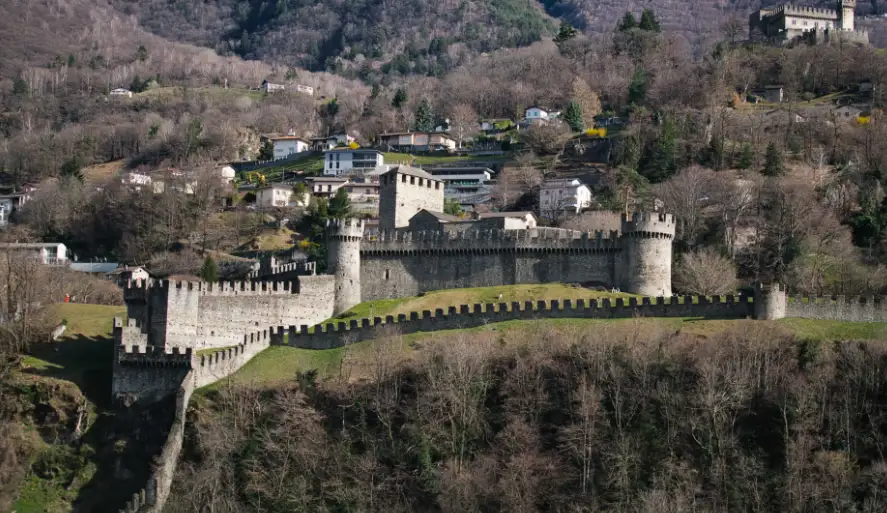
Bellinzona Castles Medieval Stone Meets Alpine Strategy
The wind whistles through the crenellations—a sharp, hollow sound that echoes across the centuries as you walk the ramparts of Castelgrande. You stand 60 meters above the valley floor, breathing air scented with wild thyme and warm limestone, watching the sun dip behind the Monte Ceneri pass to cast long shadows across the red-tiled roofs of Bellinzona. The stone beneath your boots is worn smooth by 700 years of footsteps, from medieval sentinels to modern pilgrims of history. These three fortifications—Castelgrande, Montebello, and Sasso Corbaro—form a defensive triangle that has guarded the entrance to the Gotthard Pass since the 5th century, controlling the flow of armies and merchants between northern Europe and the Mediterranean. In 2000, UNESCO recognized this unique ensemble as a World Heritage site, preserving the most complete example of medieval military architecture in the Alps. In 2026, as digital distractions fragment our attention, the Bellinzona Castles offer a rare anchor—a place where the weight of history demands physical presence, where the silence between the wind gusts reminds you that some boundaries were built to last forever.
Why Bellinzona Castles Embody Medieval Defense
The Bellinzona Castles represent a unique fusion of military engineering and geopolitical strategy, solving the historical problem of controlling the vital north-south transit route through the Alps. Constructed primarily between the 13th and 15th centuries, the three fortifications utilize local granite and gneiss, materials chosen for durability against the humid Ticino climate and harsh winter freezes. Castelgrande, the oldest, sits on a natural rocky outcrop 60 meters high, while Montebello and Sasso Corbaro perch on adjacent hills, creating a cross-fire zone that made the valley impassable to invading forces. The walls span over 1.5 kilometers in total length, with towers rising up to 25 meters to provide surveillance over the Brenno River valley.
Beyond architecture, the castles fulfill a cultural need for identity in a region that bridges German and Italian Europe. The fortifications were expanded by the Dukes of Milan in the 1400s, introducing Lombard architectural styles that distinguish them from northern Swiss castles. The Murata, a defensive wall connecting Castelgrande to the city, originally stretched 700 meters, integrating the fortress with the urban fabric. Today, the infrastructure balances preservation with access: modern funiculars and elevators were installed in 2005 to provide accessibility without damaging the historic structures, while the interiors house museums that contextualize the site. This living heritage proves that medieval defense systems can be repurposed as cultural assets while maintaining the raw authenticity of their military origins.
The Best Time to Experience Bellinzona Castles
For optimal conditions combining clear visibility, comfortable hiking weather, and active cultural programming, visit between May 15–June 10 or September 5–September 20. During these windows, daytime temperatures range from 18–25°C (64–77°F), while evenings cool to 12–16°C (54–61°F). The ideal time to walk the ramparts is 8:30–10:00 AM, when the morning light illuminates the stone without glare and tour groups haven't yet arrived from Lugano.
Winter visits (December–February) offer a stark beauty with snow-dusted walls, but temperatures drop to 2–8°C (36–46°F), and some outdoor paths can be icy without proper equipment. The Carnevale in February brings local color, while summer peak season (July 20–August 15) brings temperatures up to 28°C (82°F) but also crowds that occupy every bench along the walls. The valley breeze (la breva) provides relief, but the stone radiates heat in midday sun.
Avoid these periods: August 1 (Swiss National Day creates fireworks congestion), November 1–15 (annual maintenance shutdowns for the funicular), and late October (fog season reduces visibility to under 100 meters). For real-time opening hours and event schedules, verify conditions at castellobellinzona.ch or check the Ticino Tourism Office at ticino.ch for seasonal event calendars.
Approximate Budget for a 7-Day Trip (2026)
This budget estimate reflects mid-range travel preferences for a solo traveler or couple, based on 2026 pricing adjusted for Switzerland's 2.5% annual inflation rate (Swiss Federal Statistical Office data). Bellinzona is moderately priced compared to Lugano, but accommodation near the castles commands a premium due to limited supply. Prices assume a 7-night stay with moderate dining, public transportation, and selective paid attractions.
Accommodation:
• Budget hostel (dorm bed): CHF 55–CHF 75 per night (Youth Hostel Bellinzona, 15-minute walk from Castelgrande)
• Mid-range hotel (3-star, town center): CHF 180–CHF 270 per night (Hotel Bellinzona or Hotel Centrale)
• Upscale boutique (4-star, castle view): CHF 320–CHF 480 per night (Castello del Sole or Park Hotel Villa Aurora)
Food: CHF 75–CHF 110 per day
• Breakfast: CHF 18–CHF 28 (hotel buffet with Swiss muesli and Italian pastries)
• Lunch: CHF 28–CHF 40 (town café risotto or pizza al taglio)
• Dinner: CHF 50–CHF 70 (traditional polenta e brasato or lake fish)
• Coffee/gelato: CHF 8–CHF 14
Transportation:
• Swiss Travel Pass (8 days, 2nd class): CHF 432 (covers trains, buses, funiculars)
• Bellinzona Guest Card (free with hotel): includes local buses and discounts
• Airport transfer (Milan Malpensa to Bellinzona): CHF 30 bus or CHF 45 train
• Local bus (Line 1, 2): CHF 3.80 per ride (free with Guest Card)
Attractions:
• Three Castles Combined Ticket: CHF 15
• Castelgrande Museum: CHF 8 (included in combined ticket)
• Montebello Museum: CHF 5 (included in combined ticket)
• Sasso Corbaro Exhibition: CHF 5 (included in combined ticket)
• Guided Castle Walking Tour: CHF 35
Miscellaneous:
• Souvenirs (Wine, ceramics, chestnuts): CHF 60–CHF 150
• Travel insurance (7 days): CHF 50–CHF 80
• SIM card/data (Swisscom 10GB): CHF 45
• Emergency fund: CHF 150
Total estimated cost (mid-range): CHF 2,300–CHF 3,000 for 7 days
Budget traveler option: CHF 1,200–CHF 1,500
Luxury experience: CHF 5,500–CHF 8,000+
7 Essential Bellinzona Castles Experiences
1. Castelgrande Rampart Walk: Enter the main courtyard at 9:00 AM. Take the elevator or walk the path from the town. The view of the valley is panoramic. Walk the full length of the walls (400 meters). The stone is uneven; wear sturdy shoes. Open daily 10:00 AM–6:00 PM. Cost: CHF 8 (included in combined ticket). Allow 60 minutes.
2. Montebello Fortress Hike: Follow the marked path from Castelgrande to Montebello at 11:00 AM. The trail takes 20 minutes and gains 50 meters in elevation. The museum inside showcases medieval weapons and armor. Open Tuesday–Sunday 10:00 AM–5:00 PM. Entry: CHF 5. Best visited: Morning for light.
3. Sasso Corbaro Summit View: Take the bus or hike to the highest castle at 2:00 PM. The view extends to the San Gottardo massif. The exhibition hall features historical maps. Open Wednesday–Monday 10:00 AM–5:00 PM. Entry: CHF 5. Allow 45 minutes. The wind is stronger here.
4. The Murata Wall Walk: Walk the reconstructed defensive wall connecting Castelgrande to the town at 4:00 PM. The path is lined with cypress trees. It offers a unique perspective of the fortress integration. Free access. Open 24 hours. Best photographed: Late afternoon for shadows.
5. Castle Museum Exploration: Visit the archaeological museum inside Castelgrande at 10:30 AM. View artifacts from the 5th century onwards. The audio guide explains the construction phases. Open daily 10:00 AM–6:00 PM. Cost: CHF 8. Allow 90 minutes. Climate controlled.
6. Sunset Aperitivo: Return to the Castelgrande terrace at 6:00 PM. Order a Spritz and local cheese plate. The sun sets behind the western hills. The terrace closes at 7:00 PM. Prices: CHF 15–CHF 25. Reservations recommended for tables.
7. Night Illumination Tour: Visit during summer months for the evening light show. The castles are illuminated in gold. Guided tours available on Fridays. Open 9:00 PM–10:00 PM. Cost: CHF 20. Book 1 week in advance via +41 91 835 52 52.
3 Hidden Gems Most Travelers Miss
• San Pietro e Paolo Church: Located near Castelgrande, this 16th-century church houses frescoes often overlooked by castle visitors. Access: 5-minute walk from the castle exit. Open daily 8:00 AM–6:00 PM. Free entry. Insider tip: The ceiling frescoes depict the life of Saint Peter; look for the hidden symbols.
• Valle Morobbia Path: A hiking trail starting behind Sasso Corbaro that leads into the untouched valley. Most tourists stay on the main ridge. Access: Follow signs from Sasso Corbaro parking. Open daily dawn to dusk. Free entry. Insider tip: The path leads to a small waterfall 2 kilometers up; bring water.
• Old Town Arcades: The covered walkways in Bellinzona's old town date to the 1400s. Most visitors rush to the castles without exploring below. Access: Enter from Piazza del Sole. Open 24 hours. Free access. Best visited: Rainy days or midday heat. The shops sell local chestnuts.
Cultural & Practical Tips
• Footwear requirement: The castle paths are uneven stone and gravel. Wear sturdy hiking boots or shoes with good traction. High heels are dangerous and discouraged. In winter, the walkway is cleared but ice can form; microspikes available for rent at CHF 10.
• Language basics: The region speaks Italian. Learn these phrases: "Buongiorno" (bwon-JOR-no) for hello, "Grazie mille" (GRAT-see MEE-leh) for thank you very much, "Castello" (cah-STELL-o) for castle. English is spoken at ticket counters.
• Photography guidelines: Tripods are permitted on public paths but not inside museums without permission. Drone usage requires FOCA authorization and is rarely granted over the castles. Respect privacy; do not photograph residents' windows in the old town.
• Combined tickets: Purchase the "Three Castles" ticket at the Castelgrande ticket office. It is valid for 3 days and cheaper than individual entries. Cost: CHF 15. Keep the ticket; you need it for each location.
• Weather considerations: Bellinzona weather changes rapidly. Even in summer, evenings cool to 15°C (59°F). Carry a light jacket for evening walks. Winter visits require sturdy boots for icy paths on the castle hill.
• Accessibility information: Castelgrande is wheelchair-accessible via the modern elevator from the town. Montebello and Sasso Corbaro have steep paths and are not fully accessible. Contact the tourism office at +41 91 835 52 52 for assistance.
• Tipping customs: Service charges are included in prices. Rounding up is appreciated. For a CHF 47 meal, paying CHF 50 is appropriate. For tour guides, tip 5–10% if service was exceptional. Never tip excessively.
Conclusion: Travel with Reverence, Not Just Checklists
The Bellinzona Castles stand not merely as stone monuments, but as silent witnesses to seven centuries of conflict and cooperation—a rhythm that persisted through empires, republics, and the formation of modern Switzerland. As you walk the ramparts in 2026, listening to the wind mingle with the distant hum of the highway below, remember that these walls survive because visitors respect their fragility. Responsible travel means staying on the marked paths, purchasing tickets that fund preservation, and understanding that the silence of the ramparts is a fragile resource worth protecting. Slow down. Touch the stone. Watch the light change on the valley. Leave no trace on the historic trails. This fortress will endure long after your visit ends, carrying the stories of future generations who seek connection with history. Carry forward not just photographs, but a deeper appreciation for the balance between sharing our world's wonders and preserving them for those who will walk these stones in 2126.