
Blue Lagoon Geothermal Spa Volcanic Waters Meet Nordic Wellness
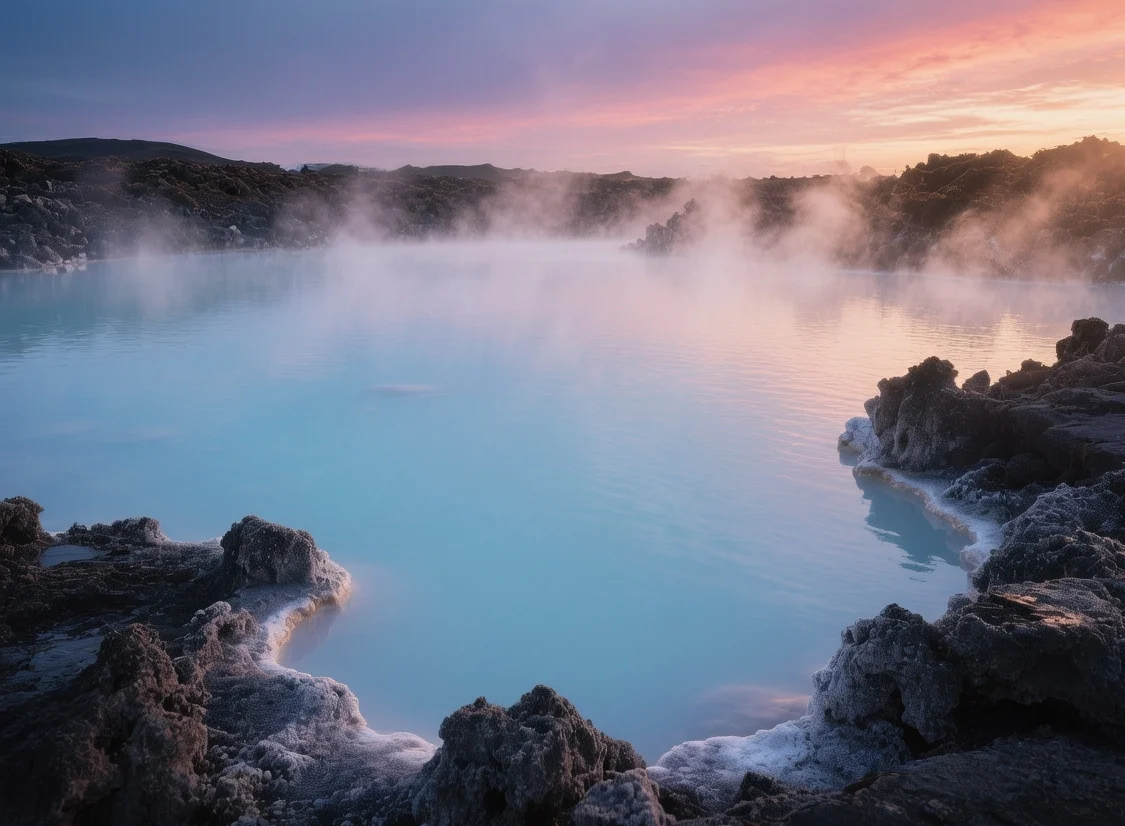
The first light of dawn breaks over the Reykjanes Peninsula—a stark, lunar landscape of black lava fields and geothermal vents. Steam rises in ethereal columns from the milky-blue waters, creating a mist that catches the pale Arctic sun. You step onto the smooth wooden deck, the temperature a perfect 37–40°C (98–104°F) welcoming your skin as you descend into the mineral-rich embrace. This isn't just a spa—it's a geological miracle born from the Svartsengi power plant's runoff in 1976, transformed from industrial byproduct into Iceland's most iconic wellness destination. The silica mud clings to your palms; the salt crystals sparkle along the lagoon's edge; the distant hum of geothermal pumps harmonizes with the whisper of wind across ancient lava. In 2026, as overtourism challenges destinations worldwide, the Blue Lagoon geothermal spa stands as both a triumph of sustainable innovation and a reminder that some places transcend their origins to become something transcendent—a sanctuary where Earth's raw power meets human need for restoration.
Why Blue Lagoon Embodies Icelandic Wellness
The Blue Lagoon geothermal spa represents more than luxury—it's a testament to Icelandic ingenuity in transforming geological necessity into cultural treasure. What began as wastewater from the Svartsengi geothermal power plant in 1976 became a phenomenon when workers noticed their skin conditions improving after bathing in the runoff. By 1987, the first formal facility opened; today, it welcomes over 1.3 million visitors annually, making it Iceland's most-visited attraction.
The lagoon's composition is extraordinary: the water contains 65% seawater mixed with 35% freshwater, heated to volcanic temperatures by underground magma chambers sitting just 2,000 meters below the surface. The signature milky-blue hue comes from silica particles suspended in the water—particles that form a protective layer on skin, scientifically proven to improve conditions like psoriasis. The mineral content includes silica (the primary healing agent), algae (which produces antioxidants), and minerals like magnesium, calcium, and potassium.
Engineered with precision, the lagoon maintains a consistent 37–40°C (98–104°F) year-round through a sophisticated system that draws 9 million liters of water daily from 2,000 meters underground. The facility sits on 800-year-old lava flows from the Hallmundarhraun eruption, creating a dramatic contrast between the smooth, baby-blue water and jagged black volcanic rock. In 2017, the Blue Lagoon geothermal spa expanded with the Lava Suites and the Silica Hotel, offering luxury accommodations carved directly into the lava field.
Beyond aesthetics, the lagoon solves a fundamental human need: connection to nature's healing forces in an increasingly digital world. The geothermal water's pH of 7.5 makes it slightly alkaline, creating an environment where beneficial bacteria thrive while harmful ones cannot survive. This isn't marketing—it's geology meeting dermatology, creating a therapeutic experience validated by the Psoriasis Treatment Center operating on-site since 1994.
The Best Time to Experience Blue Lagoon Geothermal Spa
Timing your visit to the Blue Lagoon geothermal spa requires balancing weather, crowds, and the unique phenomena only Iceland can offer. For the optimal experience, target September 15–October 31 or April 10–May 20. During these shoulder seasons, temperatures hover between 5–10°C (41–50°F) outside while the lagoon maintains its toasty 37–40°C (98–104°F)—a contrast that makes the warm water feel even more luxurious. You'll encounter 40–60% fewer visitors than peak summer, and the angle of sunlight creates spectacular photography conditions.
For Northern Lights enthusiasts, visit between September 20 and March 15, booking evening entry slots between 8:00–11:00 PM. The aurora borealis dances overhead while you soak—a bucket-list combination. However, winter brings challenges: daylight shrinks to just 4–5 hours in December, and temperatures can plummet to -5°C (23°F), making the transition from lagoon to changing room brisk.
Avoid June 15–August 15 if crowd-averse—this is peak tourist season when the lagoon operates at 120% capacity. Summer also brings the midnight sun, which, while magical, means the lagoon never truly empties. The worst period? December 20–January 5, when holiday travelers converge and prices spike 40% above standard rates.
Book your entry for first slot (8:00–9:00 AM) or last slot (after 7:00 PM) regardless of season. The lagoon opens at 8:00 AM year-round, with closing times varying from 9:00 PM (winter) to 11:00 PM (summer). For current conditions and real-time availability, verify at www.bluelagoon.com.
Approximate Budget for a 7-Day Trip (2026)
Visiting the Blue Lagoon geothermal spa anchors a larger Icelandic adventure. This budget assumes a 7-day trip centered around the Reykjanes Peninsula and Reykjavík, with the lagoon as your wellness highlight. Prices reflect 2026 rates, accounting for Iceland's 4.2% average inflation from 2024–2026 (source: Statistics Iceland).
Accommodation: €180–€350 per night
• Budget guesthouse in Reykjavík (101 district): €180–€220
• Mid-range hotel (Reykjavík Marina area): €250–€300
• Luxury (Silica Hotel at Blue Lagoon): €650–€900
Food: €65–€120 per day
• Breakfast: €15–€20 (hotel buffet or bakery pastry + coffee)
• Lunch: €20–€35 (soup + bread at Bæjarins Beztu Pylsur or casual café)
• Dinner: €30–€65 (grilled Arctic char at Fish Market or lamb at Grillmarkaðurinn)
• Groceries (if self-catering): €40/day
Transportation:
• Keflavík Airport to Blue Lagoon shuttle: €35 round-trip (Airport Direct bus)
• Reykjavík to Blue Lagoon transfer: €55 round-trip
• Rental car (compact, 7 days): €420 + €180 fuel
• Reykjavík city bus (Strætó): €3.50 per ride
Attractions:
• Blue Lagoon Comfort Package: €110 (entry + silica mud mask + towel + drink)
• Blue Lagoon Premium Package: €135 (adds robe, slippers, reservation at Lava Restaurant)
• Golden Circle tour: €95
• Reykjanes Peninsula geothermal tour: €85
• Perlan Museum: €32
Miscellaneous:
• Icelandic wool sweater (lopapeysa): €120–€200
• Blue Lagoon skincare products: €45–€95
• Travel insurance: €65
• Tips (not expected but appreciated): €30
Total for 7 days (mid-range): €2,450–€2,850 per person
Total (budget-conscious): €1,650–€1,900 per person
5 Essential Blue Lagoon Experiences
1. The Silica Mud Mask Ritual: Don't just apply it—understand it. The white silica mud, harvested from the lagoon's floor, contains microscopic particles that exfoliate and nourish. Stand waist-deep in the warm water, scoop a handful, and massage it into your skin in circular motions. Wait 10 minutes as it tightens, then rinse while watching steam rise around you. The silica stimulates collagen production—a geological facial powered by volcanic minerals.
2. In-Water Massage at the Lagoon Bar: Book the 30-minute in-water massage (€145) at the swim-up bar. As a therapist works on your shoulders, you remain submerged in 38°C (100°F) water, the buoyancy reducing pressure on joints while geothermal heat relaxes muscles. Sip a complimentary silica cocktail—vodka, blue curaçao, and mineral water—while bubbles from underwater jets pulse against your back.
3. Lava Suite Private Soak: If budget allows, reserve a Lava Suite (from €650/night). These accommodations feature private terraces with direct lagoon access, floor-to-ceiling windows overlooking the lava field, and an in-room geothermal pool. Enter the water from your suite at sunrise, when the lagoon is nearly empty and the light turns the steam golden.
4. Dining at Lava Restaurant: Reserve a table at Lava (open 11:30 AM–10:00 PM), the lagoon's fine-dining venue with panoramic windows. Order the Icelandic lamb rack with rhubarb compote (€48) and pair it with a Reyka vodka tasting. The restaurant's 200-bottle wine cellar features rare Icelandic selections. Request a window seat at sunset—the contrast between the darkening sky and glowing water is transcendent.
5. The Retreat Spa Experience: For the ultimate indulgence, book the Retreat Spa (separate from the main lagoon, €550–€850). This adults-only sanctuary includes access to private geothermal grottos, a moss meditation room carved into 800-year-old lava, and the signature "Northern Lights Ritual"—a treatment combining geothermal seaweed wraps with aurora-viewing from a private suite.
3 Hidden Gems Most Travelers Miss
• Reykjanes Peninsula Geothermal Fields (Seltún): Located just 15 km from the lagoon, Seltún offers free access to bubbling mud pots and fumaroles that smell of sulfur and ancient Earth. Walk the wooden boardwalks at 10:00–11:00 AM when morning light illuminates the yellow sulfur deposits. Most tourists rush past en route to the lagoon, but spending 45 minutes here provides context for the geothermal forces creating your spa experience. Parking: free. Access: Route 427, coordinates 63.9067° N, 22.6667° W.
• Bridge Between Continents (Miðlína): This 15-meter footbridge spans the rift between the North American and Eurasian tectonic plates—plates that drift apart 2 cm annually. Located 10 km from the lagoon on Route 420, it's often skipped by tour buses. Cross at sunset (time varies: 4:30 PM in winter, 10:00 PM in summer) for dramatic photos. The interpretive signs explain how this geological activity creates the geothermal energy powering the lagoon. Free access, open 24/7.
• Duús House Cultural Center (Grindavík): Before or after your lagoon visit, explore this 1915 merchant's house turned cultural center in nearby Grindavík. The café serves traditional Icelandic rúgbrauð (rye bread baked underground using geothermal heat) with smoked Arctic char. Open Tuesday–Saturday, 12:00–5:00 PM. Entry: €8. Most visitors miss this because they don't realize Grindavík—the town nearest the lagoon—has a charming center worth exploring. Contact: +354 420 1500.
Cultural & Practical Tips
• Shower thoroughly before entering: Icelandic hygiene standards require nude showering with soap before donning your swimsuit. This isn't optional—it's enforced by staff monitoring the showers. The rule exists because the lagoon uses minimal chemical treatment, relying instead on natural silica and algae to keep water pure. Bring flip-flops for the communal showers.
• Protect your hair: The high silica content can leave hair stiff and straw-like if not treated. Apply the complimentary conditioner (provided in showers) liberally before entering the water, and avoid submerging your head. If your hair does get stiff, use the "Silica Solution" conditioner available at the shop (€28).
• Photography etiquette: While photography is encouraged, respect other guests' privacy. No drones without written permission (contact press@bluelagoon.is). Tripods require advance approval. The lagoon's official photographer offers professional sessions (€295 for 30 minutes)—book 2 weeks ahead.
• Learn these Icelandic phrases:
— Takk (tahk): Thank you
— Góðan daginn (go-than dy-in): Good day
— Að heilsa (ath hail-sah): To greet/say hello
Icelanders appreciate effort, even if pronunciation isn't perfect.
• Weather preparedness: Iceland's weather changes every 15 minutes. Even in summer, bring a waterproof jacket, warm layers for after your soak, and a hat. Wind chill can make 10°C (50°F) feel like 2°C (36°F). The walk from lagoon to changing room is outdoors—don't underestimate it.
• Booking strategy: Reserve your Blue Lagoon geothermal spa entry at least 3 weeks in advance for summer visits, 1 week for winter. Slots sell out 4–6 weeks ahead during peak season. Choose "Comfort" package minimum—the towel rental alone costs €12 if purchased separately.
• Accessibility: The lagoon is wheelchair-accessible with water wheelchairs available free of charge (reserve 48 hours ahead). The gradient into the water is gentle (5° incline), and handrails are installed throughout. Service animals aren't permitted due to the sensitive ecosystem, but the facility offers companion care services.
Conclusion: Travel with Reverence, Not Just Relaxation
The Blue Lagoon geothermal spa isn't merely a destination—it's a dialogue between human innovation and geological power, a reminder that healing flows from understanding our planet's rhythms. As you soak in waters heated by magma chambers two kilometers below, surrounded by lava that cooled eight centuries ago, consider the responsibility that comes with accessing such wonder. Iceland welcomed 2.3 million visitors in 2024—nearly seven times its population. The lagoon's existence proves that industrial byproducts can transform into treasures, but only if we approach them with respect.
Slow down. Feel the silica particles settling on your skin like stardust. Watch how the steam catches light differently at 9:00 AM versus 8:00 PM. Understand that this blue isn't artificial—it's the result of light refracting through silica suspended in water that's been filtered through volcanic rock for decades. When you visit the Blue Lagoon geothermal spa in 2026, don't just check a box. Let the geothermal warmth seep into your bones, yes, but also let the knowledge seep into your consciousness: that preservation and pleasure aren't opposites, but partners. Iceland's landscapes are young, fragile, and fiercely alive. Treat them that way.