
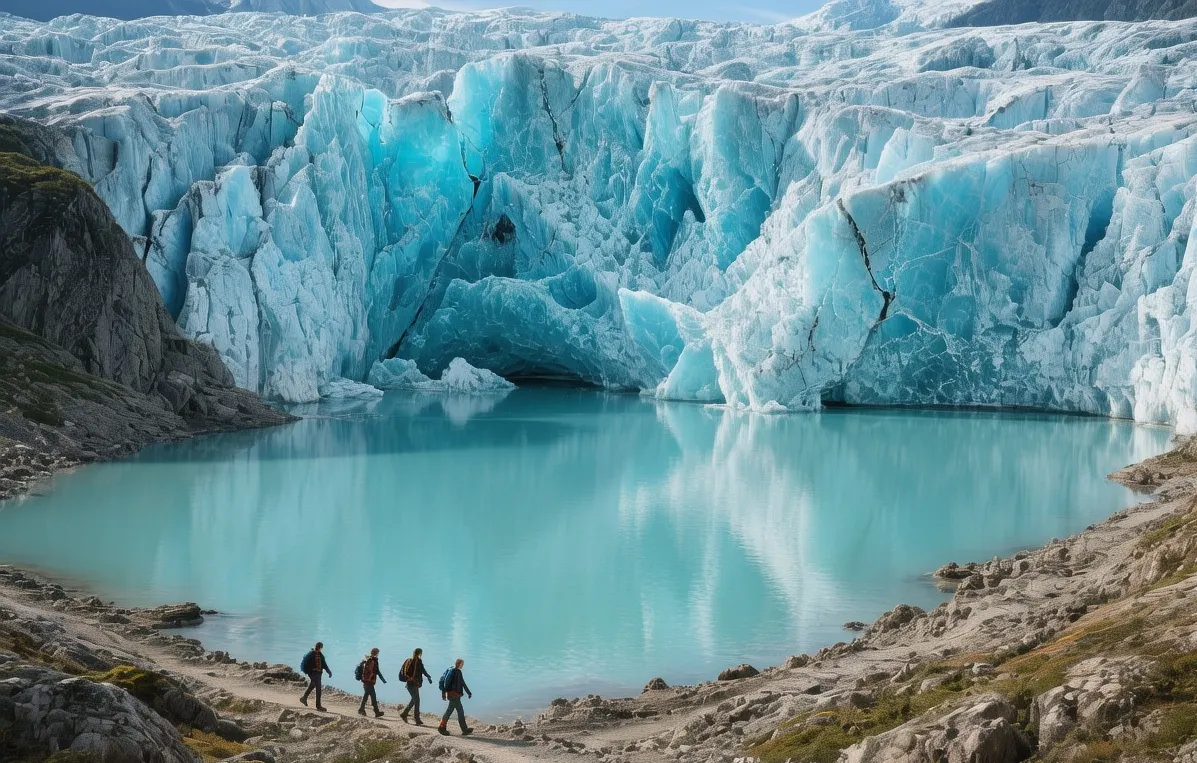
Briksdal Glacier Ancient Ice Meets Norwegian Valley Tradition
The air shivers with cold—even in July— as you stand before the towering blue wall of the Briksdal Glacier, an arm of the vast Jostedalsbreen ice cap that has sculpted this valley for millennia. Meltwater crashes into the turquoise lake below, a thunderous roar that drowns out the chatter of hikers ascending the steep, gravelly path behind you. Here, at 360 meters (1,181 feet) above sea level in the Olden valley, time moves differently; the ice retreats and advances in cycles measured not in hours but in centuries. You watch a chunk calve from the glacier tongue, sending ripples across the glacial lake that has formed in the depression carved by the same ice you now observe. The scent is distinct—ozone, wet stone, and the crisp purity of frozen water. In 2026, as climate change accelerates glacial retreat globally, the Briksdal Glacier matters because it offers a front-row seat to Earth's changing cryosphere—a place where accessibility meets awe, reminding us that some wonders are transient and demand our witness now.
Why Briksdal Glacier Embodies Accessible Wilderness
The Briksdal Glacier is not the largest arm of the Jostedalsbreen ice cap, but it is undoubtedly the most accessible, a distinction that has defined its cultural significance since the late 19th century. Tourism here began in earnest around 1890, when wealthy Europeans first traveled to witness the "blue wonder." To solve the problem of steep access— the trail gains 200 meters elevation over 1.5 kilometers—local farmers introduced horse-drawn carts in 1925, replaced by the iconic open-air "Troll Cars" in 1960. These specialized vehicles, engineered with low gears and high torque, navigate the 17% gradient slope that would stall standard buses, transporting 300,000 visitors annually to the glacier's threshold.
Geologically, Briksdal represents the dynamic nature of glacial systems. During the Little Ice Age (circa 1750), the ice extended much further down the valley; today, the toe retreats approximately 10–30 meters annually depending on winter snowfall and summer temperatures. The glacier itself is part of the Jostedalsbreen National Park, established in 1991 to protect 1,310 square kilometers of landscape. This designation balances human access with conservation; while walking directly on the ice is restricted for safety and preservation, viewing platforms allow close observation without damaging the moraine. In 2026, the Briksdal Glacier fulfills a critical educational need: it democratizes access to glacial landscapes for those unable to undertake strenuous mountaineering, serving as a gateway to understanding Norway's icy heritage.
The Best Time to Experience Briksdal Glacier
For optimal visibility and trail conditions, target June 20–August 15. During this window, temperatures range from 12–20°C (54–68°F) in the valley, and the glacier surface is most stable for viewing. The shuttle buses operate at full frequency (every 15 minutes) from 8:00 AM to 6:00 PM. For photography, arrive between 7:00–9:00 AM when morning light illuminates the ice face without casting deep shadows, and before the majority of cruise ship excursions arrive from Geiranger or Bergen.
For autumn colors and solitude, visit September 5–25. Temperatures drop to 6–14°C (43–57°F), and the surrounding birch forests turn golden amber. The shuttle service reduces to hourly departures, but crowds thin significantly. Avoid July 10–August 5 if you dislike congestion: this peak period sees 1,500+ visitors daily, creating bottlenecks on the narrow hiking trail. Additionally, avoid visiting during heavy rain; the gravel path becomes slippery, and fog often obscures the glacier entirely. For real-time shuttle status and trail conditions, check www.briksdalbreen.no or call +47 57 82 40 40. Weather forecasts are available via Yr.no.
Approximate Budget for a 7-Day Trip (2026)
Visiting the Briksdal region involves moderate costs typical of Western Norway. This budget assumes mid-range travel with 3-4% inflation adjustment from 2024 baselines. Prices are estimated in Euros (€); local currency is Norwegian Krone (NOK). Costs reflect the Olden and Stryn areas.
- Accommodation: €150–€240 per night for a double room in a 3-star hotel or guesthouse in Olden or Stryn. Budget hostels (Olden Vandrerhjem): €50–€70 per bed. Upscale options (Olden Fjordhotel): €280–€450 per night.
- Food: €70–€100 per day per person
- Breakfast: €14–€20 (hotel buffet with bread, cheese, jam)
- Lunch: €20–€30 (café sandwich €25, soup €28, or grocery picnic €18)
- Dinner: €36–€55 (restaurant main: lamb €42, fish €38, pasta €30; add €12 for beer)
- Transportation:
- Briksdal Shuttle Bus (Troll Cars): €25 round-trip adults, €12 children
- Bergen Airport Flybussen: €15 one-way, €25 round-trip
- Car rental (7 days): €500–€700 including fuel
- Local bus pass (Sogn og Fjordane): €55 weekly
- Attractions:
- Loen Skylift Cable Car: €35 round-trip
- Olden Church entry: Free (donations welcome)
- Kayak rental (Oldenfjord): €45 half-day
- Guided glacier hike (nearby Nigardsbreen): €95
- Museum entry (Nordfjord Folk Museum): €15
- Miscellaneous:
- Souvenirs: Glacier water bottle €15, wool sweater €90, postcards €5
- Glacier café waffle: €9
- Travel insurance (7 days): €40–€60
- eSIM data plan: €18–€28
Total for 7 days (mid-range, per person, double occupancy): €1,750–€2,200
Budget travelers can reduce costs to €1,100–€1,400 by camping (€30 per night), cooking meals, and hiking instead of taking shuttles. Luxury seekers should budget €3,800+ for private guides and fine dining.
6 Essential Briksdal Glacier Experiences
- Ride the Troll Car Shuttle: Board the open-air bus at the base parking lot for the 10-minute ascent. Sit on the right side for valley views. The driver narrates the history in multiple languages as the engine roars up the steep incline. Disembark at the upper terminal; the view of the glacier lake opens immediately. This saves energy for the final walk to the viewing platform. Tickets are purchased at the booth or online; arrive 15 minutes before departure.
- Hike to the Viewing Platform: From the shuttle stop, walk the 15-minute marked trail to the main viewing area. The path is gravel and steep; wear sturdy shoes. The platform offers the safest, closest view of the glacier tongue without crossing safety barriers. Listen for the ice cracking—a deep boom that resonates through the valley. This is the primary photo spot; visit early to avoid crowds blocking the vista.
- Walk the Full Trail from Base: For the fit, hike the entire 1.5-kilometer path from the parking lot to the glacier. It takes 45–60 minutes uphill and gains 200 meters elevation. The trail passes waterfalls and old farm ruins. This approach offers a deeper connection to the landscape than the shuttle. Start by 8:00 AM to beat the bus crowds. Bring water; there are no facilities on the trail itself.
- Kayak Oldenfjord: Rent a kayak from the village center for a 2-hour paddle on the fjord below. The perspective from the water looking up at the valley walls contextualizes the glacier's scale. Paddle near the mouth of the Briksdalselva river where glacial meltwater turns the fjord turquoise. Dry suits are provided; water is cold. Guides offer sunset tours in summer when the water is glass-calm.
- Visit Olden Church: Built in 1759, this white wooden church stands in the village center. It is one of the oldest in the region and features a distinctive baroque altarpiece. Open daily 10:00 AM–4:00 PM in summer. The churchyard offers a quiet contrast to the bustling glacier site. It represents the human history that coexists with the natural wonder. Entry is free; respect services in progress.
- Ride the Loen Skylift: Take the cable car from Loen village (10 minutes drive from Olden) to Mount Hoven (1,011 meters). The 5-minute ascent offers panoramic views of the entire valley including Briksdal from above. The summit has a restaurant and infinity pool. Visit at 7:00 PM for dinner reservations to watch the sunset over the ice cap. This complements the ground-level glacier view with an aerial perspective.
3 Hidden Gems Most Travelers Miss
- Kjenndalsbreen Glacier Arm: Located 20 kilometers east near Stryn, this glacier arm is less crowded than Briksdal. Access via a 1-hour walk from the Kjenndal mountain lodge. The ice tongue is often more active visually. The lodge serves traditional meals; book tables in advance (+47 57 82 40 00). It is overlooked because tour buses focus on Briksdal. The hike is quieter and offers a more intimate wilderness experience without the shuttle infrastructure.
- Traudalsetra Mountain Farm: A historic summer farm (seter) located 5 kilometers up the Briksdal valley beyond the glacier trailhead. Open June–August, Tuesdays and Thursdays 11:00 AM–4:00 PM. They serve fresh waffles and brown cheese made on-site. Access via the road past the glacier parking (check signage for public access). It is missed because most tourists turn around at the glacier. This offers cultural context on how valleys were historically utilized for grazing.
- Stolsfossen Waterfall: On the drive into Olden from Stryn, this 93-meter waterfall cascades directly beside Road 60. There is a small pull-off parking area (coordinates 61.9167°N, 6.7833°E). Most visitors drive past it en route to the glacier. Stop here for a 5-minute photo opportunity. The mist cools the air significantly. Best viewed in late spring when snowmelt maximizes flow. It is a free, accessible natural spectacle that requires no hiking.
Cultural & Practical Tips
- Safety Barriers: Respect all fencing and warning signs near the glacier. Ice calving is unpredictable; rocks and ice chunks can fly hundreds of meters. Do not climb over barriers for photos. Rangers patrol the area and will issue fines for unsafe behavior. Your safety is prioritized over the perfect shot.
- Clothing Layers: Even in summer, temperatures at the glacier are 5–8°C cooler than the valley. Wear a windproof jacket, long pants, and sturdy hiking boots. The gravel trail is slippery when wet. Gloves are recommended for handling cold railings. Dress as if you are going hiking, not sightseeing.
- Useful Phrases:
- "Takk" (tahk) = Thank you
- "Hvor er bussen?" (voor ehr buh-sen) = Where is the bus?
- "Er stien åpen?" (ehr stee-en oh-pen) = Is the trail open?
- "Jeg trenger hjelp" (yai tren-ger yelp) = I need help
- Photography Guidelines: Drones are prohibited in the national park without permission. Use a polarizing filter to cut glare off the ice and water. The dynamic range is high; expose for the highlights to retain blue detail in the ice. Do not block the trail while taking photos; step to the side to let others pass.
- Waste Management: There are no trash bins on the glacier trail to prevent littering. Pack out everything you bring in, including organic waste like apple cores. Use toilets at the base parking lot or the glacier café before starting the hike. Leave No Trace principles are strictly enforced to protect the ecosystem.
- Connectivity: Mobile coverage is good in the valley but spotty at the glacier itself. Download offline maps before arriving. Inform family of your plans before hiking. Emergency number is 112. The tourist office at the base has WiFi if needed.
- Seasonal Access: The shuttle operates May–October. In winter, the road is closed to vehicles but open for skiing. Winter visits require specialized gear and knowledge of avalanche risk. For most tourists, summer access is the only viable option. Check opening dates annually as they shift with snow conditions.
Conclusion: Travel with Reverence, Not Just Checklists
The Briksdal Glacier is not a backdrop for selfies; it is a living entity that demands respect. In 2026, as we witness the rapid transformation of our planet's ice, visiting this site requires more than a ticket—it requires mindfulness. Travel here not to conquer the trail but to witness the scale of nature's power. Listen to the meltwater; feel the cold radiating from the ice; understand that this landscape is transient. Leave only footprints; take only memories that inspire stewardship. When you descend back to the green valley, carry the glacier's silence with you. For in the end, the true value of this journey is not the photo you post, but the understanding you gain: that we are guests in a landscape that will endure long after we are gone, provided we treat it with the reverence it deserves.