
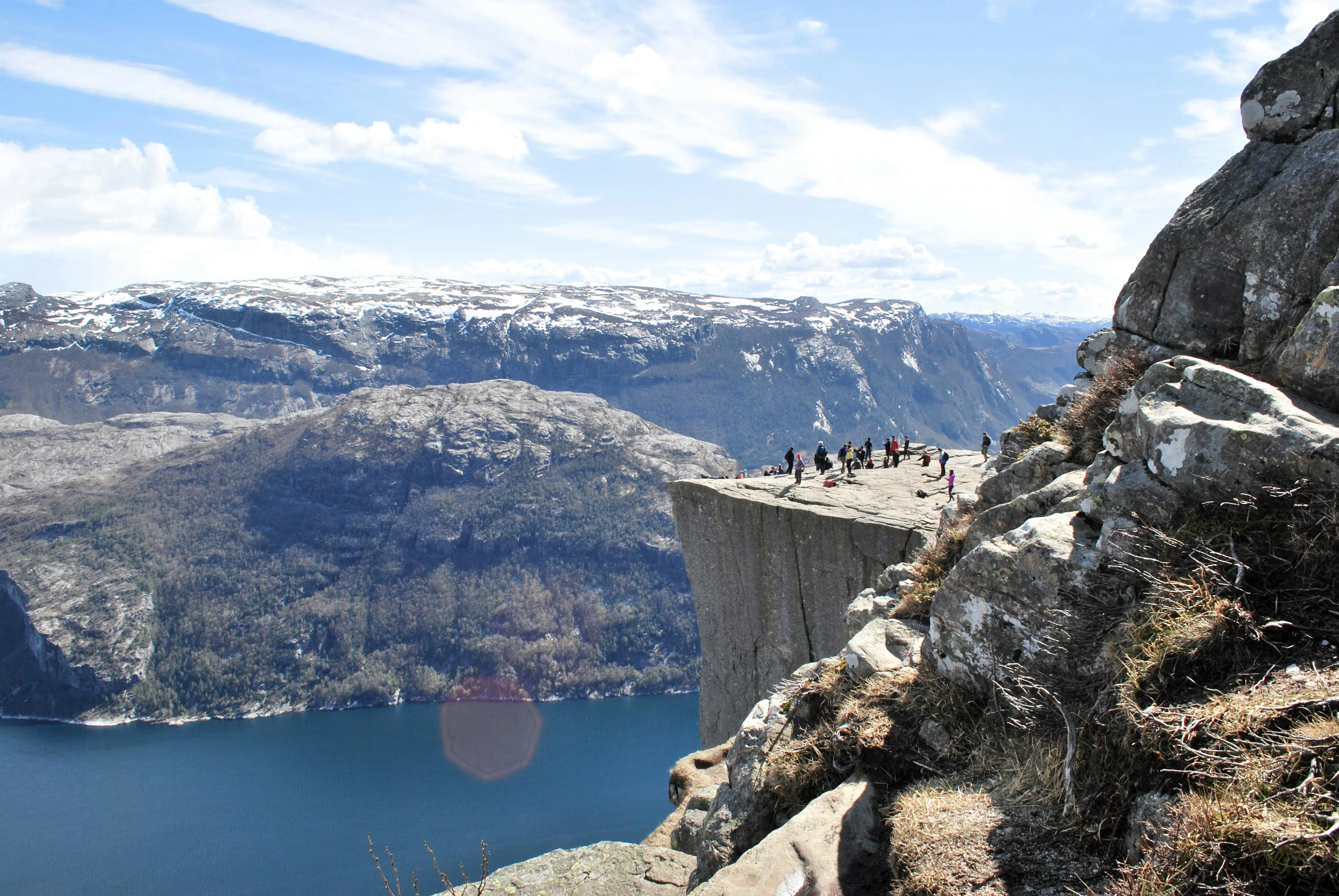
Preikestolen Granite Cliff Meets Lysefjord Depths
The wind howls softly across the flat plateau, carrying the scent of heather and salt spray from the North Sea 604 meters (1,982 feet) below. You stand on Preikestolen, the Pulpit Rock, a square granite throne carved by Ice Age glaciers over 10,000 years ago, staring into a void that swallows sound and light alike. The rock surface is cool under your boots, textured with lichen that has clung to the stone since before written history began. Around you, other hikers sit with legs dangling over the precipice—a nerve-wracking spectacle that defies logic yet feels entirely safe on this 25-by-25-meter platform. The Lysefjord stretches out like a dark blue ribbon, flanked by vertical walls that rise 1,000 meters on the opposite side. Silence dominates here, broken only by the cry of a white-tailed eagle circling the thermal updrafts. In 2026, as digital distractions fragment our attention spans, Preikestolen matters because it demands absolute presence; it is a place where the only notification that counts is the instinctual awareness of the edge, reminding us that nature's grandeur requires nothing but our witness.
Why Preikestolen Embodies Norwegian Outdoor Culture
Preikestolen is not merely a geological formation; it is the physical embodiment of friluftsliv—the Norwegian philosophy of open-air life. While the cliff itself is millions of years old, its status as a tourist destination is relatively modern. The Norwegian Trekking Association (DNT) began maintaining the trail in the 1950s, transforming a shepherd's path into a structured route capable of handling 300,000 visitors annually. This infrastructure solves a critical problem: how to allow mass access to a fragile ecosystem without destroying it. The trail is engineered with stone steps, boardwalks over boggy sections, and drainage systems to prevent erosion, ensuring the mountain remains stable under heavy foot traffic.
Geologically, the platform is a result of frost wedging. Water seeped into vertical cracks in the Precambrian gneiss rock, froze, expanded, and eventually cleaved off a massive block that settled horizontally. This process created the flat surface you walk on today, distinct from the rounded peaks surrounding it. The cliff's stability is monitored regularly by geologists from NGU (Geological Survey of Norway), who measure micro-movements in the rock face. While the main block is stable, loose stones on the edge are a constant hazard, necessitating strict safety guidelines. In 2026, Preikestolen fulfills a cultural need for connection to the wild; it serves as a rite of passage for visitors to Norway, symbolizing the country's commitment to preserving access to nature while respecting its inherent dangers.
The Best Time to Experience Preikestolen
For optimal trail conditions and visibility, target June 15–August 25. During this window, temperatures range from 12–20°C (54–68°F) at the summit, and snow patches on the trail have mostly melted. Daylight extends to 18 hours, allowing for early morning or late evening hikes when crowds are thinner. The best light for photography occurs between 6:00–8:00 AM when the sun illuminates the fjord below without creating harsh shadows on the rock face. Ferry connections from Stavanger operate at full frequency, with departures every 30 minutes during peak season.
For winter solitude, visit March 1–April 15. Temperatures drop to -5 to 5°C (23–41°F), and the trail requires crampons and ice axes. Guided winter hikes are mandatory during this period due to avalanche risk and slippery conditions. Avoid July 10–July 25 if you dislike congestion: this period coincides with European school holidays and peak cruise ship arrivals in Stavanger. Queue times for the ferry can exceed 45 minutes, and the summit becomes crowded. Also avoid visiting during high winds (>20 m/s) or heavy rain, which make the exposed sections dangerous. For real-time trail status, check www.preikestolen.no or call +47 51 51 50 50. Weather forecasts are available via Yr.no.
Approximate Budget for a 7-Day Trip (2026)
Traveling to the Preikestolen region involves moderate-to-high costs typical of Western Norway. This budget assumes mid-range travel with 3-4% inflation adjustment from 2024 baselines. Prices are estimated in Euros (€); local currency is Norwegian Krone (NOK). Costs reflect Stavanger and Forsand areas.
- Accommodation: €160–€250 per night for a double room in a 3-star hotel in Stavanger or near the trailhead. Budget hostels (STA Hostel): €55–€75 per bed. Upscale options (Clarion Hotel Stavanger): €300–€480 per night.
- Food: €75–€110 per day per person
- Breakfast: €15–€22 (hotel buffet with bread, cheese, jam)
- Lunch: €22–€35 (trailside café sandwich €28, soup €30, or grocery picnic €20)
- Dinner: €38–€60 (restaurant main: lamb €45, fish €42, pasta €32; add €14 for beer)
- Transportation:
- Ferry (Stavanger–Tau): €12 one-way, €24 round-trip
- Bus (Tau–Preikestolen): €10 one-way, €20 round-trip
- Bergen Airport Flybussen: €15 one-way, €25 round-trip
- Car rental (7 days): €550–€750 including fuel
- Attractions:
- Preikestolen Mountain Lodge: Free (entry), €20 (parking)
- Lysefjord Cruise: €65–€95
- Norwegian Petroleum Museum: €18
- Kjeragbolten Hike Guide: €120
- Stavanger Cathedral Tour: €12
- Miscellaneous:
- Souvenirs: Troll figurine €20, wool sweater €95, postcards €5
- Hiking gear rental: €30
- Travel insurance (7 days): €45–€65
- eSIM data plan: €20–€30
Total for 7 days (mid-range, per person, double occupancy): €1,850–€2,350
Budget travelers can reduce costs to €1,200–€1,500 by camping (€30 per night), cooking meals, and using public transport. Luxury seekers should budget €4,000+ for private guides and fine dining.
6 Essential Preikestolen Experiences
- Hike the Main Trail: Start at the Preikestolen BaseCamp at 8:00 AM to beat the crowds. The 4-kilometer (2.5-mile) trail takes 2 hours one-way and gains 330 meters elevation. The path is well-marked with red T-paint. Expect rocky sections and stairs built into the bedrock. The final ascent reveals the plateau suddenly. Spend at least 30 minutes on the rock to absorb the view. Bring 2 liters of water; there are no sources on the trail.
- Take the Lysefjord Cruise: Complement the hike with a boat perspective. Depart from Stavanger harbor at 10:00 AM for a 2-hour rib boat safari. You will see the cliff from below, appreciating the 604-meter vertical drop. The speedboat ride is exhilarating, with waves splashing over the bow. Guides explain the geology and history. Wear waterproof gear; you will get wet. This dual perspective—top and bottom—provides a complete understanding of the scale.
- Stay at Preikestolen Mountain Lodge: Book a bed at the lodge located at the trailhead. It offers dormitory and private rooms with views of the fjord. Dinner is served at 6:00 PM featuring local ingredients. Staying overnight allows you to hike at sunrise or sunset when day-trippers have left. The atmosphere is communal; hikers share stories in the lounge. It is the most convenient base for early starts.
- Explore Stavanger Old Town: After the hike, wander the wooden streets of Gamle Stavanger. This preserved district features 173 white wooden houses from the 18th and 19th centuries. Visit the Norwegian Canning Museum to understand the city's industrial history. Cafés serve fresh pastries and coffee. It offers a cultural counterpoint to the wilderness experience. Entry to the area is free; museum tickets are separate.
- Visit the Vagabond's Cave: On the hike up, look for a small cave on the left side of the trail (coordinates 58.9833°N, 6.1833°E). Legend says a vagabond lived here in the 1800s. It is often overlooked by rushing hikers. Step inside for a moment of shelter and reflection. The acoustics are unique; whispering echoes loudly. It adds a human element to the geological landscape. No signage marks it; ask guides for location.
- Watch the Sunset from the Plateau: If staying at the lodge, hike up in the evening. The sun sets behind the mountains around 10:00 PM in summer. The light turns the granite gold, then purple. Crowds dissipate significantly after 7:00 PM. Bring a headlamp for the descent. The silence at dusk is profound. This experience transforms the site from a tourist attraction to a spiritual space. Safety is paramount; do not approach the edge in low light.
3 Hidden Gems Most Travelers Miss
- Flørli 4444 Steps: Located 30 kilometers south of Preikestolen, accessible by ferry from Stavanger. This is the longest wooden staircase in the world, climbing 740 meters elevation. The hike takes 3–4 hours round-trip. It is overlooked because it requires a separate ferry ticket. The view from the top rivals Preikestolen but with fewer people. Check ferry schedules at www.lysefjorden.no. The village at the bottom has a small café open in summer. It offers a more strenuous but rewarding alternative.
- Dalsnuten Peak: Near the Preikestolen trailhead, this summit offers panoramic views of the entire Lysefjord region. The hike is 6 kilometers round-trip and gains 550 meters. It is steeper than Preikestolen but sees 10% of the foot traffic. Access via the marked trail from the parking lot. The summit has a triangulation point. Best visited on weekdays when Preikestolen is busy. It provides solitude and a different perspective of the fjord system. No facilities exist; bring all supplies.
- Hengjanefossen Waterfall: Visible from the Lysefjord cruise but rarely visited on foot. A small boat taxi can drop you near the base (arrange via cruise operator). The 300-meter waterfall thunders into a pool. You can hike partway up the side for photos. It is missed because most boats just pass by. The mist creates rainbows in the afternoon sun. Access requires coordination with boat drivers. It is a raw, wet, and powerful experience away from the main trails.
Cultural & Practical Tips
- Safety First: There are no railings on Preikestolen. The edge is unstable in places. Do not run or jump on the rock. Keep a safe distance from the precipice, especially in wind. Children must be supervised closely. Rangers patrol the area during summer. Your safety is your own responsibility; rescue operations are costly and dangerous.
- Footwear: Wear sturdy hiking boots with ankle support. Sneakers are insufficient for the rocky terrain. The trail can be slippery when wet. Rent boots in Stavanger if you don't have them. Proper gear prevents injuries and increases enjoyment. Do not hike in flip-flops or sandals; it is dangerous and frowned upon.
- Useful Phrases:
- "Takk" (tahk) = Thank you
- "Hvor er stien?" (voor ehr stee-en) = Where is the trail?
- "Er det trygt?" (ehr deh trygt) = Is it safe?
- "Jeg trenger hjelp" (yai tren-ger yelp) = I need help
- Photography Guidelines: Drones are prohibited without permission from the Norwegian Environment Agency. Respect other visitors; do not block the view for extended periods. The dynamic range is high; expose for the shadows to retain detail on the rock. Do not risk your life for a photo; edges crumble. Use a wide-angle lens to capture the scale of the fjord.
- Waste Management: Pack out all trash. There are no bins on the mountain. Use toilets at the base before starting. Leave No Trace principles are strictly enforced. Organic waste like fruit peels must also be packed out. This protects the fragile vegetation and wildlife. Keep the mountain clean for future visitors.
- Connectivity: Mobile coverage is good at the summit but spotty on parts of the trail. Download offline maps before arriving. Inform someone of your plans before hiking. Emergency number is 112. The BaseCamp has WiFi if needed. Do not rely on phone GPS for navigation on the rock itself.
- Seasonal Access: The trail is open year-round but winter requires guides. Summer (June–August) is accessible for independent hikers. Spring and Autumn can be muddy and slippery. Check weather forecasts daily. Storms can roll in quickly; turn back if conditions deteriorate. Plan accordingly to avoid being caught in the dark.
Conclusion: Travel with Reverence, Not Just Checklists
Preikestolen is not a backdrop for selfies; it is a monument to geological time that demands respect. In 2026, as tourism pressures mount on natural landmarks, visiting this cliff requires more than a ticket—it requires mindfulness. Travel here not to conquer the height but to witness the depth. Listen to the wind; feel the stone; understand that this landscape is transient on a geological scale. Leave only footprints; take only memories that inspire stewardship. When you descend back to the fjord, carry the mountain's silence with you. For in the end, the true value of this journey is not the photo you post, but the understanding you gain: that we are guests in a landscape that will endure long after we are gone, provided we treat it with the reverence it deserves.