
Chania Venetian Harbor: Where Ottoman Minarets Meet Cretan Sunlight
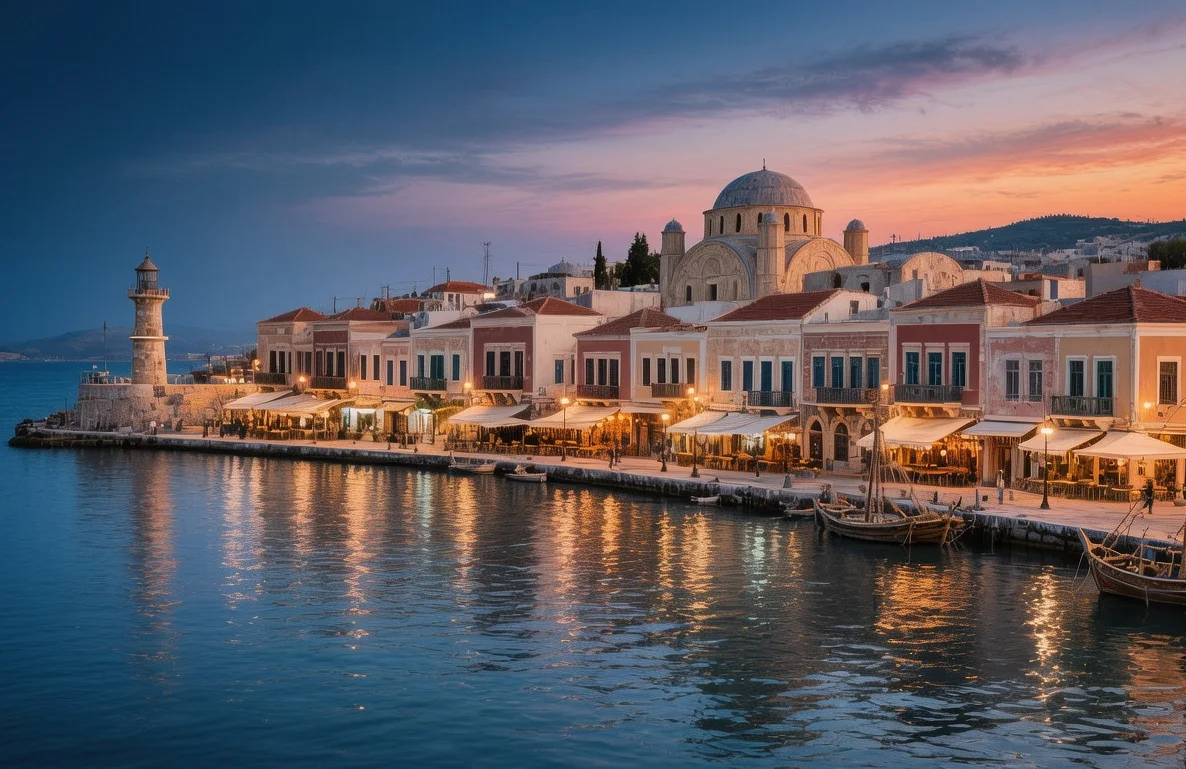
The late afternoon sun bathes the Chania Venetian harbor in liquid gold as you stroll the stone quay, where the air carries the intoxicating blend of sea salt, wild oregano, and the faint mineral tang of ancient limestone buildings. Before you unfolds a living postcard of Mediterranean history—a horseshoe-shaped harbor approximately 300 meters across, where Venetian arsenals stand beside Ottoman mosques, where colorful neoclassical facades reflect in calm turquoise waters, and where fishing boats bob alongside luxury yachts in peaceful coexistence. The only sounds are the gentle lap of water against stone foundations, the distant chime of church bells echoing through narrow alleyways, and the soft murmur of travelers sharing mezze at waterfront tavernas. This extraordinary maritime enclave—constructed between 1320 and 1350 during Venetian rule and expanded under Ottoman administration—solves a fundamental human need: the desire to experience layered history where architecture, culture, and natural beauty converge into something magical. Standing on this ancient quay as light illuminates the iconic lighthouse, you understand: Chania Venetian harbor matters because it offers a rare encounter with cultural synthesis—a place where East meets West, where past meets present, and where every stone whispers stories of merchants, sailors, and dreamers who shaped this timeless Mediterranean jewel.
Why Chania Venetian Harbor Embodies Cultural Synthesis
The Chania Venetian harbor represents one of the Mediterranean's most successful examples of cultural layering—a maritime quarter that solved the fundamental challenge of creating a functional port while accommodating successive civilizations that left their architectural and cultural imprint. Originally constructed by the Venetians between 1320 and 1350 to protect their Cretan holdings, the harbor was expanded under Ottoman rule (1645–1898) with the addition of mosques, baths, and administrative buildings, then refined during the Egyptian occupation (1830–1840) and Greek independence, creating a unique architectural palimpsest where Gothic arches frame Islamic minarets and neoclassical facades overlook Byzantine foundations.
The harbor's visual impact stems from precise geographical alignment: the horseshoe-shaped basin—measuring approximately 300 meters across and 150 meters deep—creates a natural amphitheater where buildings rise in tiers from the water's edge, maximizing both defensive positioning and panoramic sea views. The iconic lighthouse, rebuilt by the Egyptians in 1830 on Venetian foundations, stands 21 meters tall and features a distinctive octagonal design that blends Islamic architectural elements with Venetian engineering. The waterfront buildings—painted in vibrant shades of ochre, coral, and azure—were constructed using local limestone and feature traditional Cretan elements like wooden balconies (sachnisi) and tile roofs that reflect both Venetian and Ottoman building traditions.
Today, Chania harbor fulfills multiple roles: it serves as a functional marina for fishing vessels and pleasure craft, a cultural landmark that anchors Crete's visual identity, and a contemplative space where visitors confront the enduring human capacity for cultural adaptation. The ongoing preservation efforts by the Greek Ministry of Culture—using traditional materials and techniques to maintain the historic facades while upgrading infrastructure for modern use—ensure that this iconic waterfront continues to inspire while honoring its layered heritage. Every glance across these calm waters connects you to generations of sailors, merchants, and administrators who believed that beauty and function could coexist—a reminder that cultural synthesis has deep, remarkable roots in the Mediterranean experience.
The Best Time to Experience Chania Venetian Harbor
Timing transforms a visit to Chania Venetian harbor from pleasant waterfront stroll to immersive encounter with Mediterranean history. The optimal windows stretch from May 18–June 12 and September 15–October 20, when temperatures hover between 18–25°C (64–77°F), atmospheric clarity allows exceptional viewing of the harbor's architectural details, and visitor numbers remain manageable enough for unhurried exploration of the waterfront and adjacent old town. During these shoulder seasons, you'll experience comfortable conditions for walking the stone quay while capturing photographs in the soft, directional light that reveals the vibrant building facades and the lighthouse's distinctive silhouette.
Arrive precisely at 6:30–7:30 PM for sunset—the golden hour when the harbor's colorful buildings glow amber, the calm waters reflect the sky's changing palette, and the iconic lighthouse stands silhouetted against the colorful horizon. The harbor operates as a public space 24 hours, but the most atmospheric experiences occur during early morning (7:00–9:00 AM) when fishermen return with their catch and evening (6:00–8:00 PM) when tavernas fill with locals and travelers sharing dinner. Winter months (November–February) offer profound solitude and dramatic storm-washed skies that create atmospheric photography conditions, though temperatures drop to 10–14°C (50–57°F) with increased rainfall that can make the stone pathways slippery.
Avoid July 15–August 31 unless absolutely necessary: temperatures regularly exceed 30°C (86°F), humidity climbs above 70%, and cruise ship excursions create crushing crowds along the waterfront, making leisurely exploration nearly impossible. Also skip Greek Orthodox Easter week and major public holidays when domestic tourism swells visitor numbers. For the most current information on ferry schedules, weather conditions, and special events, always check the official Greek tourism portal at www.chaniatourism.gr before your visit.
Approximate Budget for a 7-Day Trip
Crete offers exceptional value for travelers seeking profound cultural experiences combined with Mediterranean beauty. The following breakdown reflects mid-range travel—comfortable boutique accommodations in Chania old town or nearby villages, authentic Cretan taverna dining, and comprehensive exploration of Chania Venetian harbor and greater western Crete—based on current pricing for a single traveler.
- Accommodation: €70–€150 per night in Chania old town or harbor area (€490–€1,050 total). Budget studios start at €40; luxury sea-view suites run €200+.
- Food: €35–€55 per day total. Breakfast: €5–€8 (Greek coffee €2.50, bougatsa pastry €2, fresh fruit €3.50). Lunch: €10–€18 (Greek salad €7, dakos €9, grilled octopus €15). Dinner: €18–€30 (lamb kleftiko €16, fresh fish €20, Cretan wine €5/glass, dessert €6).
- Transportation: €120 total. Ferry from Athens: €45–€75 one-way (€90–€150 round-trip). Local bus day pass: €9. Car rental: €35/day. Occasional taxi rides: €12–€25 each.
- Attractions: €65 total. Chania Venetian harbor access: free. Maritime Museum of Crete: €6. Chania Archaeological Museum: €4. Day trip to Balos Lagoon: €25. Harbor boat tour: €15.
- Miscellaneous: €100 total. Water/snacks €4/day, handmade pottery €35–€80, local honey €12, harbor souvenirs €15, tips €20.
Total: €1,200–€1,700 for 7 days (excluding international airfare and Athens-Crete ferry)
7 Essential Chania Venetian Harbor Experiences
- Walk the harbor at sunrise: Begin at 7:00 AM when the harbor is quiet and follow the stone quay from the lighthouse toward the old Venetian shipyards. Morning light illuminates the colorful facades from the east, revealing the textured limestone and vibrant paint details. The 300-meter circuit offers constantly shifting perspectives as you circle the horseshoe-shaped basin. Carry water and wear sturdy shoes with grip for the uneven stone pathway.
- Photograph the iconic lighthouse at golden hour: Position yourself at the harbor's western end at 6:30–7:30 PM when the setting sun casts warm light across the distinctive octagonal tower. The low angle creates dramatic shadows that emphasize the lighthouse's Islamic-Venetian architectural fusion. Use a telephoto lens (70–200mm) to compress the scene with colorful buildings, or a wide-angle (24mm) to include the calm harbor waters reflecting the sky.
- Explore the Venetian shipyards (Neoria): Enter the covered dry docks built between 1320–1350 to construct and repair Venetian galleys. The massive stone arches—each spanning 15 meters wide and 20 meters high—demonstrate medieval engineering prowess. Visit between 10:00 AM–12:00 PM when natural light filters through the openings, illuminating the ancient stone craftsmanship. Allow 20 minutes to appreciate these remarkable structures that once protected Venetian maritime power.
- Dine at a waterfront taverna: Reserve a table at one of the charming restaurants lining the harbor for sunset dinner. Order traditional Cretan meze: dakos (barley rusk with tomato and feta, €9), grilled octopus (€15), and local lamb kleftiko (€16). Request a table near the water's edge for the best ambiance. The elevated wooden terraces provide shade and panoramic harbor views while you dine.
- Visit the Maritime Museum of Crete: Located in the Firkas Fortress at the harbor entrance, this compact museum displays artifacts from Crete's naval history, including ship models, navigational instruments, and photographs documenting the island's maritime heritage. Allow 45 minutes to appreciate the collection; the English-language audio guide (€3) provides essential context for understanding Chania's strategic importance.
- Wander the adjacent old town: After exploring the harbor, lose yourself in the labyrinthine streets of Chania's old town that rise behind the waterfront. The 15-minute walk reveals whitewashed alleyways, boutique shops, and traditional Cretan architecture that echoes the harbor's aesthetic. Visit between 4:00–6:00 PM when afternoon light creates dramatic shadows on the stone buildings.
- Experience the harbor at blue hour: Remain at the waterfront for 20–30 minutes after sunset—the sky often produces its most ethereal colors during this transition. The colorful facades silhouette beautifully against the deepening blue sky while harbor lights begin to sparkle on the water. Use a tripod for long exposures that capture both the illuminated architecture and the fading sky.
3 Hidden Gems Most Travelers Miss
- The Ottoman Bathhouse (Külliye): Tucked behind the harbor's eastern waterfront, a restored 17th-century Ottoman bathhouse now serves as a cultural center hosting exhibitions and performances. The building's distinctive domed architecture and original stone basins reveal Chania's Islamic heritage. Access: Located 100 meters east of the main harbor; open Tuesday–Sunday 10:00 AM–6:00 PM; admission €4. Most visitors focus on the waterfront and miss this intimate glimpse into Ottoman daily life. Allow 30 minutes to appreciate the architectural details and current exhibitions.
- The Jewish Quarter (Ovriaki): Behind the harbor's northern edge, the historic Jewish quarter features narrow alleyways, restored synagogues, and traditional Cretan-Jewish architecture that tells the story of Chania's diverse cultural heritage. The area includes the Etz Ahayim Synagogue (17th century) and traditional Jewish-Cretan restaurants. Access: Follow signs for "Ovriaki" from the harbor; accessible 24 hours. Best visited at 5:00–7:00 PM when evening light illuminates the stone buildings. Respect the sacred spaces and speak softly in residential areas.
- The Harbor's Fishing Fleet at Dawn: At 6:00–7:00 AM, traditional caique fishing boats return to the harbor with their overnight catch, creating a vibrant scene of fishermen sorting fish, locals purchasing fresh seafood, and the rhythmic activity of a working port. This authentic glimpse into Chania's maritime culture offers exceptional photography opportunities and the chance to purchase ultra-fresh fish for your accommodation. Access: Arrive at the eastern quay by 6:00 AM; no special access required. Best visited May through September when fishing activity peaks. Bring cash for purchasing fish directly from fishermen.
Cultural & Practical Tips
- Photography etiquette: Personal photography is permitted throughout the harbor. Respect private property—many waterfront terraces belong to restaurants and hotels. The best light for harbor photography occurs during the first and last hours of daylight; avoid shooting directly into the sun to prevent lens flare on the water. Use a polarizing filter to enhance sky colors and reduce water glare.
- Footwear and terrain: The harbor quay features uneven limestone, loose gravel, and occasional steps. Wear sturdy, closed-toe shoes with excellent grip—avoid sandals or smooth-soled footwear. The exposed location can be windy; secure hats and loose clothing.
- Hydration essentials: Carry at least 1.5 liters of water per person for waterfront walks; there are limited vendors along the quay during peak hours. Fill bottles at public fountains in Chania old town—Crete tap water is safe and excellent quality.
- Local phrases: Kalimera (kah-lee-MEH-rah) = Good morning; Kalispera (kah-lee-SPER-ah) = Good evening; Efharisto (ef-hah-REE-stoh) = Thank you; Parakalo (pah-rah-kah-LOH) = Please/You're welcome; Yassou (YAH-soo) = Hello. Using these greetings earns warm smiles from harbor staff and Cretan locals.
- Crowd management strategy: Popular viewpoints become crowded 90 minutes before sunset. Arrive early to secure positioning, or choose alternative angles from the Firkas Fortress for equally stunning views with fewer people. Bring a light layer—winds increase significantly at the exposed waterfront after sunset.
- Weather awareness: Chania harbor's waterfront location is exposed to strong meltemi winds, especially July–August. Secure hats, loose clothing, and camera equipment. Check wind forecasts before planning sunset viewing; gusts can exceed 40 km/h. Winter visits may experience sudden rain—limestone becomes extremely slippery when wet.
- Respectful tourism: Chania harbor's beauty depends on preservation. Stay on marked paths to prevent erosion of the stone foundations. Do not climb the historic buildings or attempt to enter restricted areas. Support local businesses in Chania old town rather than international chains.
Conclusion: Travel with Presence, Not Just Checklists
The Chania Venetian harbor demands more than a hurried photograph and a quick checkmark—it asks for your presence, your patience, your willingness to stand on an ancient quay and let the story of cultural synthesis unfold gradually. When you watch the sun paint the colorful facades in colors no pigment can replicate, or feel the sea breeze carry the scent of wild oregano across the water, you participate in a moment as old as Mediterranean culture itself. This is not passive tourism; it is active communion with a landscape shaped by history, architecture, and time.
Responsible travel here means understanding that this iconic waterfront is fragile: every footprint on unmarked paths accelerates erosion, every discarded item mars the pristine vistas, every disrespectful action diminishes the experience for those who follow. Walk gently. Speak softly. Take only images; leave only gratitude. Support conservation efforts by respecting site guidelines and choosing eco-conscious accommodations that honor Chania's delicate balance between tourism and preservation.
This is not a backdrop to be consumed but a meditation to be experienced—a place where architectural heritage and natural beauty converge to create something transcendent. Slow down. Sit on a sun-warmed stone. Watch light change across colorful facades. Let Chania harbor reveal its story gradually, as weathered stone reveals its history to patient observers. The view will still be here tomorrow, but your opportunity to encounter it with wonder and respect exists only in this moment. Choose presence over haste, connection over completion, and carry not just photographs but a deeper appreciation for the enduring power of cultural synthesis and human adaptation to natural forces.