
Delos Sacred Island: Where Ancient Sanctuaries Meet Aegean Serenity
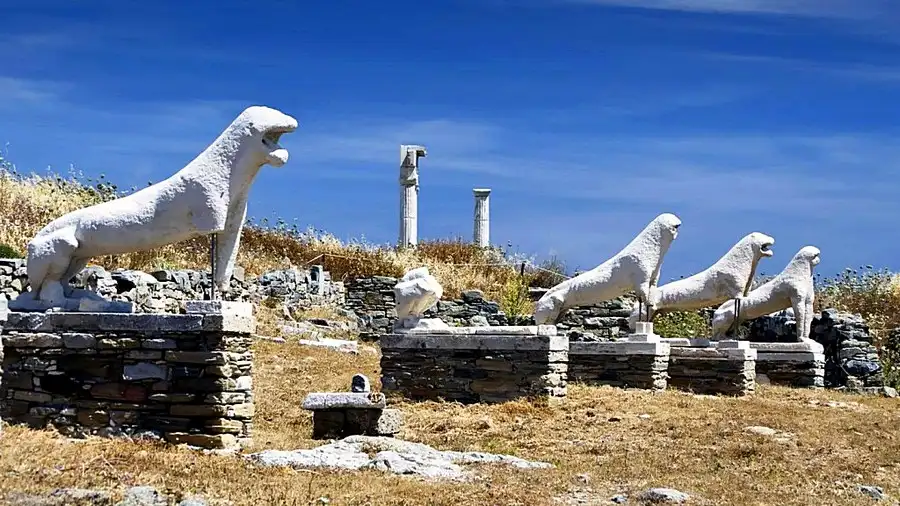
The morning sun spills across the sacred landscape of Delos as you step onto the archaeological site, where the air carries the crisp scent of wild thyme mingled with sea salt and the faint mineral tang of sun-warmed marble. Before you unfolds one of the Mediterranean's most significant archaeological treasures—a 3.5-square-kilometer island sanctuary where ancient Greeks believed Apollo and Artemis were born, where marble pathways still trace the routes of pilgrims who walked these stones over two millennia ago. The only sounds are the gentle lap of waves against the rocky shore, the distant cry of seabirds circling overhead, and the soft footsteps of travelers moving respectfully among ruins that whisper stories of oracles, festivals, and divine encounters. The iconic Terrace of Lions—seven marble guardians carved in the 7th century BCE—stands sentinel along the Sacred Lake, their weathered forms gazing eternally toward the sea that once carried worshippers from across the Aegean. Standing on this hallowed ground as light illuminates ancient foundations, you understand: Delos sacred island matters because it offers an unparalleled window into the spiritual heart of classical civilization—a place where mythology, archaeology, and natural beauty converge to create an experience that transcends ordinary tourism and awakens profound reverence.
Why Delos Sacred Island Embodies Spiritual Heritage
The Delos sacred island represents one of antiquity's most profound religious centers—a sanctuary that solved the fundamental human need to create a dedicated space for divine communion while establishing a model for sacred geography that influenced worship across the ancient world. According to mythology, Delos was the floating island that Leto clung to while giving birth to Apollo and Artemis; Zeus then anchored it with four diamond pillars, transforming it into a fixed sanctuary where no one could be born or die, preserving its ritual purity. Archaeological evidence confirms continuous worship from the 9th century BCE through the Roman period, with the island reaching its zenith as a Panhellenic religious and commercial hub between the 3rd and 1st centuries BCE.
Delos' archaeological significance lies in its exceptional preservation: over 300 structures have been excavated across the 3.5-square-kilometer site, including the Temple of Apollo (measuring 28 meters long by 13 meters wide), the monumental Terrace of Lions (featuring seven original marble lions, each 1.3 meters tall), and the Sacred Lake surrounded by stoas where pilgrims gathered for rituals. The island's urban planning demonstrates sophisticated engineering: a complex water management system with cisterns and channels ensured fresh water for thousands of visitors, while the Sacred Harbor—protected by breakwaters extending 150 meters into the sea—accommodated vessels from across the Mediterranean. The famous House of the Dolphins, with its exquisite mosaic floor depicting marine life, showcases the artistic refinement that flourished alongside religious devotion.
Today, Delos fulfills multiple roles: it serves as an open-air museum of unparalleled historical importance, a UNESCO World Heritage Site since 1990, and a contemplative space where visitors confront the enduring human quest for meaning. The ongoing conservation efforts by the Greek Archaeological Service—using traditional techniques and minimal intervention to preserve fragile mosaics and marble—ensure that this sacred landscape continues to inspire while honoring its ancient purpose. Every step along the marble pathways connects you to generations of pilgrims who sought divine connection on this hallowed ground—a reminder that spiritual aspiration has deep roots in the human experience.
The Best Time to Experience Delos Sacred Island
Timing transforms a visit to Delos sacred island from archaeological tour to transcendent spiritual encounter. The optimal windows stretch from May 18–June 12 and September 15–October 20, when temperatures hover between 18–25°C (64–77°F), atmospheric clarity allows exceptional visibility of distant Cycladic islands, and visitor numbers remain manageable enough for contemplative exploration of the extensive ruins. During these shoulder seasons, you'll experience comfortable conditions for walking the 3.5-kilometer archaeological circuit while capturing photographs in the soft, directional light that reveals marble textures and mosaic details.
Arrive precisely at 8:30–9:30 AM on the first ferry from Mykonos—this early departure delivers cooler temperatures, minimal crowds, and the most dramatic shadows cast by ancient columns. Ferries operate daily from Mykonos' old port, with departures at 8:30 AM, 10:00 AM, and 12:00 PM during peak season; the 30-minute crossing offers stunning views of the Cyclades. The site operates from 8:00 AM year-round, closing at 8:00 PM during summer (April–October) and 5:00 PM in winter (November–March), with last entry 30 minutes before closing. Winter months (November–February) offer profound solitude and storm-washed skies that create atmospheric photography conditions, though temperatures drop to 10–14°C (50–57°F) and ferry schedules may be reduced due to weather.
Avoid July 15–August 31 unless absolutely necessary: temperatures regularly exceed 30°C (86°F), the exposed island offers minimal shade, and cruise ship excursions create midday crowds that diminish the site's contemplative atmosphere. Also skip periods of strong meltemi winds when ferry service may be suspended for safety. For the most current information on ferry schedules, site hours, and weather conditions,.
Approximate Budget for a 7-Day Trip
Mykonos serves as the gateway to Delos sacred island, offering exceptional value for travelers seeking profound cultural experiences combined with Cycladic beauty. The following breakdown reflects mid-range travel—comfortable boutique accommodations, authentic taverna dining, and comprehensive exploration of Delos and greater Mykonos—based on current pricing for a single traveler.
- Accommodation: €120–€300 per night in Mykonos Town or near the old port (€840–€2,100 total). Budget studios start at €60; luxury sea-view suites run €500+.
- Food: €50–€80 per day total. Breakfast: €8–€12 (Greek coffee €4, bougatsa pastry €3.50, fresh fruit €4.50). Lunch: €15–€25 (Greek salad €10, grilled octopus €18, moussaka €14). Dinner: €25–€45 (seafood platter €35, lamb kleftiko €22, Assyrtiko wine €8/glass, dessert €8).
- Transportation: €150 total. Ferry from Athens: €45–€75 one-way (€90–€150 round-trip). Delos ferry from Mykonos: €20 round-trip. Local bus day pass: €9. ATV rental: €30/day.
- Attractions: €100 total. Delos archaeological site entry: €12. Mykonos Archaeological Museum: €6. Delos Museum entry: included with site ticket. Guided tour of Delos: €35 (optional but highly recommended).
- Miscellaneous: €130 total. Water/snacks €6/day, handmade jewelry €60–€150, local honey €15, archaeological guidebooks €20, tips €30.
Total: €1,800–€2,800 for 7 days (excluding international airfare and Athens-Mykonos ferry)
7 Essential Delos Sacred Island Experiences
- Walk the Sacred Way at sunrise: Disembark the first ferry at 8:30 AM and follow the ancient processional route from the Sacred Harbor toward the Temple of Apollo. Morning light illuminates the marble pathway from the east, revealing inscriptions and foundation stones that guided pilgrims for centuries. Allow 20 minutes to traverse this 300-meter sacred corridor; the audio guide (€4) provides essential context for understanding ritual practices.
- Contemplate the Terrace of Lions: Approach the iconic row of seven marble lions—carved around 600 BCE to guard the Sacred Lake—at 9:00 AM when soft light reveals the weathered details of their powerful forms. Each lion measures 1.3 meters tall and originally faced the lake where sacred rituals occurred. Notice how erosion has softened their features while preserving their eternal vigilance. Spend 15 minutes in quiet reflection at this spiritually charged location.
- Explore the House of the Dolphins: Enter this remarkably preserved 2nd-century BCE residence to view the exquisite mosaic floor depicting dolphins, tridents, and marine motifs. The artwork, created with tiny tesserae measuring 5–10 millimeters, demonstrates the artistic refinement that flourished alongside religious devotion. Visit between 10:00–11:00 AM when natural light through the open roof illuminates the mosaic's vibrant colors most clearly.
- Climb Mount Kynthos for panoramic views: Ascend the 112-meter peak at the island's center via the ancient stone path (approximately 15 minutes climb). The summit offers 360-degree views of the Cyclades: Mykonos to the north, Naxos to the east, and the open Aegean to the south. Visit at 11:00 AM when morning haze has cleared for optimal visibility. Bring water and wear sturdy shoes for the uneven stone steps.
- Study the Temple of Apollo foundations: Stand before the remaining columns of Apollo's temple—originally featuring 6 columns on the facade and 13 on the flanks—and imagine the grandeur of this 28-by-13-meter sanctuary. The temple's orientation toward the east ensured that sunrise illuminated the cult statue during important festivals. Visit between 9:30–10:30 AM when shadows accentuate the architectural details.
- Visit the Delos Archaeological Museum: After exploring the outdoor site, enter the small but rich museum near the entrance to view original sculptures, mosaics, and artifacts excavated from the island. Highlights include the famous Apollo cithara statue and delicate Hellenistic jewelry. Allow 30 minutes to appreciate the collection; the English-language audio guide (included with admission) illuminates the island's layered history.
- Photograph the Sacred Lake at golden hour: Return to the lake area at 6:00–7:00 PM when the setting sun casts warm light across the water and surrounding stoas. The reflective surface creates stunning compositions with the Terrace of Lions and ancient columns. Use a polarizing filter to reduce water glare and capture the serene atmosphere that once welcomed pilgrims seeking divine connection.
3 Hidden Gems Most Travelers Miss
- The Sanctuary of the Egyptian Gods: Tucked into the island's western slope, this small complex dedicated to Isis, Serapis, and Anubis reveals Delos' role as a cosmopolitan religious center where Greek, Egyptian, and Near Eastern traditions intersected. The sanctuary's foundation stones and fragmentary statues offer insight into the island's diverse spiritual landscape. Access: Located 200 meters west of the main archaeological path; follow signs for "Egyptian Sanctuary." Best visited at 4:00–5:00 PM when afternoon light illuminates the stone carvings most clearly. Most visitors focus on the central ruins and miss this fascinating example of religious syncretism.
- The Ancient Theater of Delos: Carved into the hillside near the Sacred Harbor, this 2nd-century BCE theater seated approximately 5,500 spectators and hosted dramatic performances during religious festivals. The stone seating tiers and orchestra area remain remarkably intact, offering exceptional acoustics and views of the Aegean. Access: Located just north of the main entrance path; visible from the Sacred Way. Visit between 10:00 AM–12:00 PM when natural light reveals the theater's architectural precision. Stand in the orchestra and clap once—the acoustics carry sound to the highest seats, just as they did for ancient audiences.
- The Kynthos Cave Sanctuary: Near the summit of Mount Kynthos, a small natural cave served as a sanctuary dedicated to Hercules and Apollo, with votive offerings and inscriptions dating to the Hellenistic period. The cave's cool interior and panoramic views create a contemplative atmosphere rarely experienced by casual visitors. Access: Follow the path from the Kynthos summit; allow 10 minutes extra. Best visited at 3:00–4:00 PM when sunlight filters through the cave entrance most dramatically. Bring a small flashlight to illuminate inscriptions on the cave walls.
Cultural & Practical Tips
- Respectful exploration: Delos remains a sacred site; speak softly, avoid touching fragile mosaics or marble surfaces, and stay on marked pathways to protect archaeological layers. Photography is permitted without flash; tripods require advance permission from site staff (+30 22890 71401).
- Footwear essentials: The archaeological site features uneven marble pathways, loose gravel, and ancient stone steps. Wear sturdy, closed-toe shoes with excellent grip—avoid sandals or smooth-soled footwear. The exposed island offers minimal shade; wear a wide-brimmed hat and apply sunscreen regularly.
- Hydration and provisions: Carry at least 2 liters of water per person; there are no vendors on Delos itself. Pack snacks and a light lunch, as the island has no restaurants. Fill bottles before departing Mykonos—tap water is safe for brushing teeth but bottled water is recommended for drinking.
- Local phrases: Kalimera (kah-lee-MEH-rah) = Good morning; Efharisto (ef-hah-REE-stoh) = Thank you; Parakalo (pah-rah-kah-LOH) = Please/You're welcome; Signomi (see-GNO-mee) = Excuse me. Using these greetings earns warm smiles from ferry staff and site personnel.
- Ferry logistics: Book Delos ferry tickets in advance during peak season (June–September) via the Mykonos port office or your accommodation. Ferries depart from Mykonos' old port (not the new port); allow 15 minutes to locate the correct dock. Return ferries leave Delos at 1:00 PM, 3:00 PM, and 5:00 PM—confirm times with staff upon arrival.
- Weather awareness: Delos is completely exposed to Aegean winds and sun. Check weather forecasts before visiting; strong meltemi winds can suspend ferry service. Summer temperatures on the island can feel 5–7°C hotter than Mykonos due to minimal shade; plan exploration for morning hours.
- Accessibility considerations: The archaeological site features uneven terrain not suitable for wheelchairs or strollers. Visitors with mobility challenges may view select areas from the harbor vicinity; contact the site office in advance for specific accommodations (+30 22890 71401).
Conclusion: Travel with Reverence, Not Just Checklists
The Delos sacred island demands more than a hurried photograph and a quick checkmark—it asks for your reverence, your reflection, your willingness to stand where ancient pilgrims sought divine connection and let the weight of spiritual history settle around you. When you trace the Sacred Way with your eyes or contemplate the eternal gaze of the Terrace of Lions, you participate in a dialogue across millennia: the ongoing human quest for meaning, beauty, and transcendence. This is not passive tourism; it is active communion with the sacred.
Responsible travel here means understanding that Delos' preservation depends on careful stewardship: every footprint off marked paths risks damaging irreplaceable archaeological layers, every touch accelerates deterioration of ancient mosaics, every careless action diminishes the experience for future generations. Walk gently. Speak softly. Take only images; leave only gratitude. Support ongoing conservation by purchasing official tickets and respecting site guidelines that protect this UNESCO World Heritage treasure.
This is not a ruin to be consumed but a sanctuary to be experienced—a place where mythology, history, and natural beauty converge to create something transcendent. Slow down. Sit on a sun-warmed stone. Watch light move across ancient marble. Let Delos reveal its story gradually, as archaeological layers reveal their secrets to patient observers. The island will still stand tomorrow, but your opportunity to encounter it with wonder and respect exists only in this moment. Choose reverence over haste, understanding over completion, and carry not just photographs but a deeper appreciation for the enduring power of human spiritual aspiration.