
Egilsstaðir East Capital Highland Wilderness Meets Coastal Culture
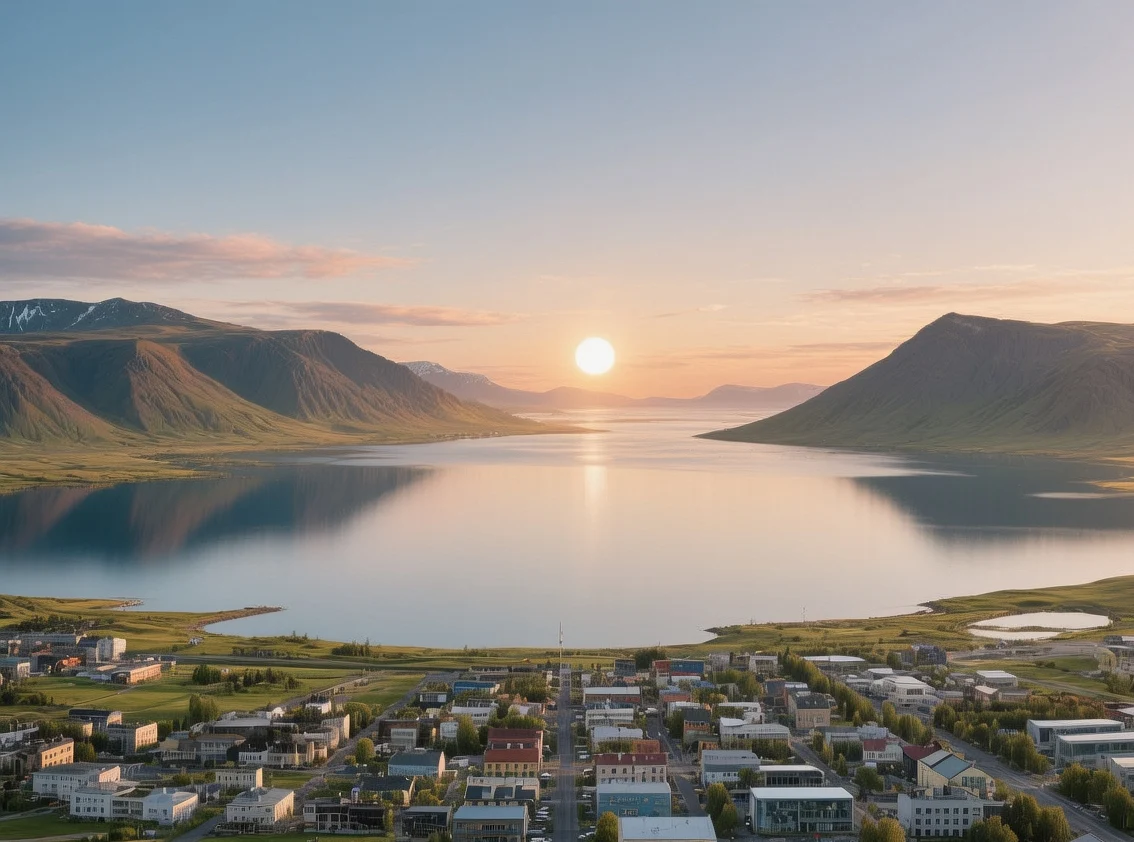
The wind whispers across the surface of Lagarfljót lake—a vast, dark mirror stretching 25 kilometers (15.5 miles) through the valley. You stand on the waterfront promenade in Egilsstaðir east capital, watching the water ripple under the midnight sun that refuses to set at 11:30 PM. The air smells of pine needles from the nearby Hallormsstaðaskógur forest and the distant salt of the Atlantic, carried on a breeze that has traveled over highland plateaus. This isn't just a town; it's a hub of 2,300 residents founded officially in 1947, serving as the commercial heartbeat of Iceland's remote Eastfjords. Streetlights hum softly; the distant sound of a plane landing at Egilsstaðir Airport echoes across the water. In 2026, as travelers seek authenticity beyond the crowded South Coast, the Egilsstaðir east capital matters now more than ever—a gateway to wilderness where regional identity thrives against the homogenizing pressure of mass tourism, offering a chance to connect with a landscape that demands patience rather than speed.
Why Egilsstaðir East Capital Embodies Regional Resilience
The Egilsstaðir east capital represents far more than a service station—it is Iceland's most successful experiment in regional decentralization and cultural preservation. Established as a municipality in 1947, the town was designed to consolidate scattered farmsteads into a functional center capable of supporting the Eastfjords' fishing and agricultural industries. Today, it serves a population of approximately 2,300 people within the town and over 5,000 in the wider municipality. This concentration solves a critical logistical need: providing healthcare, education, and transport links to a region separated from Reykjavík by 700 kilometers (435 miles) of rugged terrain. The town's infrastructure includes the only major airport outside the capital region, opened in 1947 and upgraded in 2019 to handle larger aircraft.
Technical specifications highlight the engineering required to sustain life in this valley. The Lagarfljót river system drains 1,400 square kilometers of highland catchment, providing hydroelectric power to the region since 1950. The nearby Hallormsstaðaskógur forest, planted starting in 1905, covers 740 hectares (1,830 acres), making it Iceland's largest woodland—a testament to decades of reforestation efforts in a treeless landscape. Designated as the cultural capital of the East in 2020, the site draws 150,000+ visitors annually. The Egilsstaðir east capital fulfills a human need for connection to community scale, offering a visual link to how Icelanders survive and thrive in isolation. It proves that regional hubs can maintain identity without sacrificing modern convenience, creating a legacy that outlasts generations of economic shift.
The Best Time to Experience Egilsstaðir East Capital
Timing your visit to the Egilsstaðir east capital requires balancing daylight, weather stability, and cultural events. For optimal hiking with maximum daylight, target June 15–July 31. During these summer months, temperatures range from 10–18°C (50–64°F), and daylight stretches 21 hours, allowing visits between 8:00–10:00 PM when the light is soft and crowds thin. The forest trails are free of snow, and the lake is calm. However, this is peak season; book accommodation 3 months in advance. For winter photography and northern lights, visit between November 1 and March 31. Temperatures drop to -5–5°C (23–41°F), and the dark skies offer aurora visibility above the valley. Plan your visit between 11:00 AM–3:00 PM for maximum daylight. However, avoid December 20–January 10 unless prepared for extreme weather; storms can close Route 1 temporarily, and daylight shrinks to 4–5 hours. Also skip July 1–10 if you dislike congestion during the Eist Flug air show. For real-time road conditions and weather
Approximate Budget for a 7-Day Trip (2026)
Exploring the Egilsstaðir east capital anchors a week-long East Iceland adventure. This budget assumes a 7-day trip based in Egilsstaðir with day trips to the Eastfjords and highlands. Prices reflect 2026 rates, accounting for Iceland's average 3.8% annual inflation from 2024–2026 (source: Statistics Iceland). All amounts shown in euros; multiply by 1.08 for USD equivalents. Note that Iceland uses ISK, but € is provided for international comparison.
Accommodation: €150–€320 per night
• Budget guesthouse in Egilsstaðir (town center): €150–€200
• Mid-range hotel (Lake view): €230–€290
• Luxury (Hotel Edda or similar): €380–€500
• Camping (seasonal, Egilsstaðir): €25 per person
Food: €60–€100 per day
• Breakfast: €15–€20 (hotel buffet or bakery pastry + coffee)
• Lunch: €20–€30 (fish soup, lamb sandwich, or hot dog)
• Dinner: €35–€50 (pan-fried Arctic char or traditional lamb)
• Groceries (self-catering): €40/day
Transportation:
• Keflavík Airport to Egilsstaðir Flight: €150 round-trip
• Rental car (4x4 SUV, 7 days): €450 + €180 fuel
• East Fjords day tour: €120
• Local bus (Strætó): €3.50 per ride
• Parking: Free
Attractions:
• Hallormsstaðaskógur Forest: Free
• Hengifoss Waterfall: Free
• East Iceland Heritage Museum: €15
• Perlan Museum: €30
• Blue Lagoon day trip: €110
• Golden Circle tour: €95
• Boat tour Lagarfljót: €50
Miscellaneous:
• Icelandic wool sweater (lopapeysa): €120–€190
• Thermal base layers: €90
• Travel insurance: €60
• Souvenirs (local art, handicrafts): €50
• Tips (not expected but appreciated): €30
Total for 7 days (mid-range): €2,400–€2,750 per person
Total (budget-conscious): €1,600–€1,850 per person
6 Essential Egilsstaðir East Capital Experiences
1. Walk the Lagarfljót Promenade: Start at the town center and follow the paved path along the lake shore. The walk is 3 kilometers (1.8 miles) one-way and takes 45 minutes. Visit at 8:00–9:00 PM for sunset reflections. Watch for the mythical Lagarfljót Worm rumored to inhabit the depths. This approach offers the most iconic views of the town against the water.
2. Explore Hallormsstaðaskógur Forest: Drive 5 kilometers south to Iceland's largest forest. The trails wind through birch and planted conifers. Visit at 10:00 AM–12:00 PM when bird activity is highest. Use the arboretum to identify 70+ tree species. Bring a picnic; there are designated tables. This is the only place in Iceland to experience dense woodland.
3. Visit the East Iceland Heritage Museum: Located in the old hospital building on Tjarnarbraut. Open 1:00–5:00 PM (weekdays). Entry: €15. The exhibits detail settlement history and fishing industry evolution. Use the restrooms and get trail maps here. This context transforms the visit from tourism to education about regional resilience.
4. Drive the East Fjords Loop: Take Route 92 and 93 to explore the fjords. The drive is 150 kilometers and takes 4 hours without stops. Visit at 9:00–10:00 AM for clear visibility. The contrast between steep mountains and deep water is striking. This journey reveals the isolation that defines East Iceland culture.
5. Hike to Hengifoss Waterfall: Drive 30 kilometers south to the third highest waterfall in Iceland. The hike is 3 kilometers round-trip. Visit at 2:00–4:00 PM for optimal lighting. The red basalt layers are visible in the cliff face. This experience highlights the geological diversity beyond the town limits.
6. Attend a Concert at Tónlistarhúsið: The music hall hosts local and international acts. Check the schedule online. Visit at 8:00–10:00 PM during event dates. The acoustics are excellent. This experience highlights the town's commitment to arts despite its remote location.
3 Hidden Gems Most Travelers Miss
• Valþjófsstaður Church: Located 10 kilometers south of Egilsstaðir on Route 1. This wooden church dates back to 1896 and features medieval carved doors. Open 9:00 AM–5:00 PM (summer). Entry: Free. Why overlooked: Tourists focus on the town; this requires a short detour. Insider tip: Look for the dragon carvings on the door; they tell a knight's legend.
• Eiðar Village: Located 15 kilometers east on Route 92. This small fishing village offers a quiet harbor without the crowds of Seyðisfjörður. Access via paved road. Why overlooked: Often skipped for larger fjord towns. Coordinates: 65.2667° N, 14.6333° W. Best visited at 7:00–8:00 AM for sunrise. The silence is profound.
• Skriðuklaustur Manor: Located 20 kilometers south on Route 923. This historic estate was home to writer Gunnar Gunnarsson. Open 10:00 AM–5:00 PM (summer). Entry: €15. Why overlooked: Requires a specific turn off Route 1. Insider tip: Walk the ruins of the medieval monastery nearby; it dates back to the 15th century.
Cultural & Practical Tips
• Respect the forest: The Hallormsstaðaskógur is fragile. Stay on marked trails. Straying from the path damages vegetation and destabilizes soil. Fines apply for off-trail hiking. This ensures the forest remains accessible for future visitors.
• Weather preparation: East Iceland experiences rapid weather changes. Even in summer, bring waterproof layers and windproof jackets. Temperatures at the lake average 3–5°C cooler than inland. Check www.vedur.is for forecasts before hiking.
• Learn these Icelandic phrases:
— Takk (tahk): Thank you
— Góðan daginn (go-than dy-in): Good day
— Egilsstaðir (ey-il-sta-thir): The town's name
— Fallegt (fah-lekt): Beautiful
Icelanders appreciate effort; pronunciation matters less than attempting the language.
• Photography guidelines: Tripods permitted on public land but cannot block paths. Drone use requires special permit from the Icelandic Transport Authority. Best light: Morning (8:00–10:00 AM) or evening (8:00–10:00 PM). Respect other visitors; don't monopolize the railing.
• Driving etiquette: Route 1 is paved but narrow. Use pull-outs to let faster traffic pass. Speed limits are strictly enforced (90 km/h). In winter, ensure your vehicle is secured against wind; doors can slam shut violently. Gravel roads in fjords require caution.
• Folklore respect: Locals believe in the Lagarfljót Worm. Do not mock the legend openly. It is part of the cultural fabric. Treat the lake with reverence. This ensures good relations with the community.
Conclusion: Travel with Connection, Not Just Transit
The Egilsstaðir east capital demands more than a quick fuel stop—it asks for connection. As you stand before that dark lake and surrounding highlands, recognize that you're not just visiting a town; you're entering a community that thrives on isolation and resilience. In 2026, as tourism concentrates in the South, Egilsstaðir offers both refuge and lesson: that regional economies need support, that silence is valuable, and that future generations deserve to experience this landscape safely. Slow down. Listen to the wind across the water. Feel the cold that preserves the forest. Understand that this town exists as both hub and home. When you visit the Egilsstaðir east capital in 2026, don't just capture the lake for social media—contemplate the people who live here. Don't just check a box—honor the community that sustains it. Iceland preserves this site not as a theme park, but as a living region. Learn. Reflect. Carry this connection home. The world needs more supporters of local economies, not just consumers of scenery.