
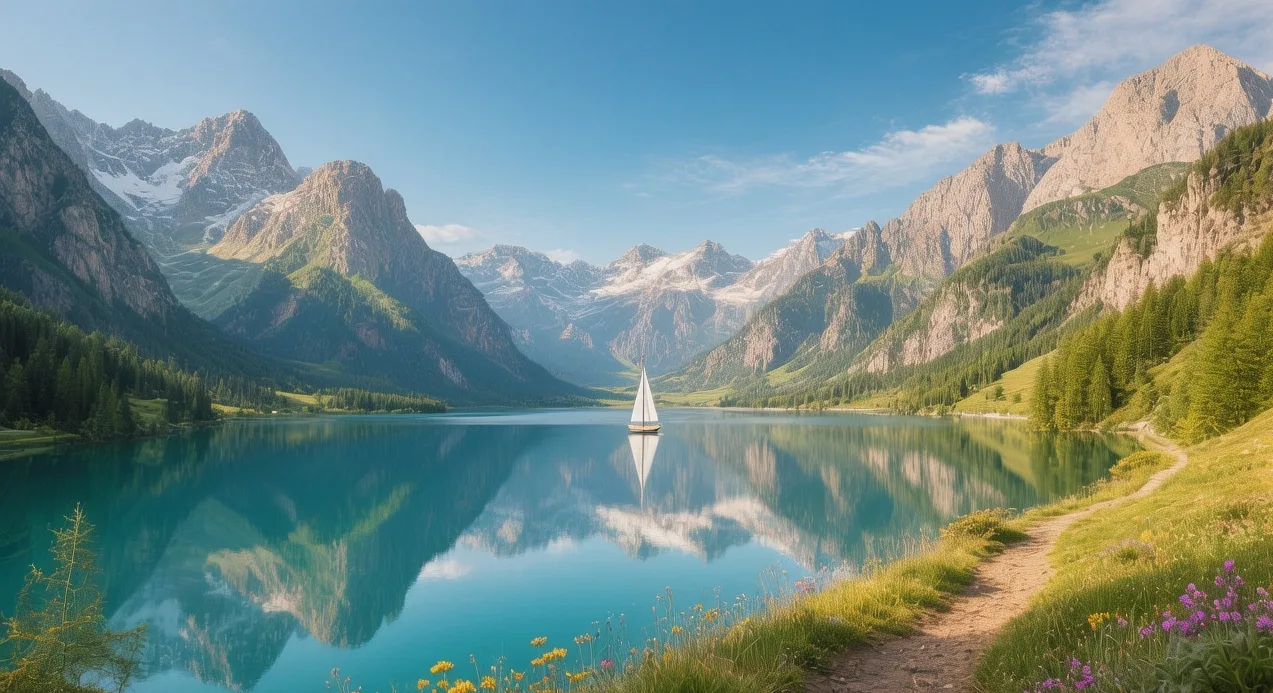
Engadine Valley Alpine Light Meets Romansh Heritage
The sun rises at 7:23 AM over the Engadine valley, casting long shadows across sgraffito-decorated facades that have stood sentinel for three centuries. You hear it before you see it—the crisp crunch of frost underfoot, the distant chime of cowbells echoing through the high Alpine air at 1,800 meters elevation. This is Switzerland's highest inhabited valley, a 100-kilometer ribbon of turquoise lakes and larch forests where the light possesses an almost supernatural clarity that drew painter Giovanni Segantini in the 1890s and continues to captivate visitors today. The Engadine—meaning "valley of the Inn River" in Romansh—stretches from the Maloja Pass to the Austrian border, preserving Europe's smallest living Romance language alongside some of the continent's most pristine wilderness. In 2026, as overtourism reshapes Alpine destinations, this remote corner of Graubünden canton matters more than ever: it represents a model of sustainable mountain culture where tradition isn't performative but lived, where the Swiss National Park protects 174 square kilometers of untouched ecosystem, and where you can still ski from glacier to palm trees on the same day.
Why Engadine Valley Embodies Authentic Alpine Preservation
The Engadine valley solves a problem most Alpine regions face: how to modernize without erasing identity. Since the first tourist hotel opened in St. Moritz in 1864—transforming a remote mountain village into the birthplace of Alpine winter tourism—this region has balanced preservation with progress. The valley's 25,000 residents speak Romansh, a Rhaeto-Romance language dating to 15 BC when Roman legions occupied Raetia; today, only 40,000 speakers remain worldwide, making every conversation in Putèr (the local Engadine dialect) an act of cultural resistance.
The architecture tells its own story of preservation. Traditional Engadiner houses feature thick stone walls—often 60-80 centimeters—constructed from local granite and gneiss, topped with characteristic gabled roofs designed to shed heavy snowfall (the valley receives 2.5-3 meters annually). The sgraffito decorations you see on facades aren't mere ornament: these incised plaster designs, created by scratching through a dark top layer to reveal white beneath, depict biblical scenes, heraldic symbols, and dates that chronicle family lineages back to the 1500s. The technique requires mastery of lime mortar mixed with marble dust, a craft passed through generations.
Beyond aesthetics, the Engadine valley addresses a deeper need: the human craving for altitude-induced clarity. At 1,800 meters above sea level, the air contains 20% less oxygen than at sea level, triggering physiological responses that sharpen perception. Scientists have documented how this elevation, combined with the valley's unique atmospheric conditions—low humidity, minimal pollution, and 322 days of sunshine annually—creates what locals call "Engadiner Licht" (Engadine Light), a quality of illumination so distinctive it launched an entire art movement. Segantini's pointillist masterpieces, painted here between 1886 and 1899, captured this luminosity; his studio in Maloja remains open to visitors, preserving the exact north-facing light he required.
The Best Time to Experience Engadine Valley
For hikers and photographers: June 15–September 30 offers optimal conditions. Daytime temperatures range from 18–24°C (64–75°F), while nights drop to 5–8°C (41–46°F). The larch forests turn golden in late September—a two-week phenomenon usually occurring September 22–October 6. For winter sports: December 10–April 15 provides reliable snow coverage across 350 kilometers of groomed trails. St. Moritz's ski season officially opens December 8, 2026, weather permitting.
Avoid May 1–June 10 and October 15–December 5—these shoulder seasons bring unpredictable weather: melting snow creates muddy trails, many mountain huts close, and cable cars undergo maintenance. The famous Muottas Muragl funicular shuts down October 23–December 12, 2026, for annual overhaul.
For specific experiences: arrive at Lake Sils by 7:00–8:30 AM to witness morning mist rising off the water before winds pick up. The Engadin Museum in St. Moritz offers free admission first Sunday of each month. For the Bernina Express panoramic train, book the 8:32 AM departure from St. Moritz to Chur—this timing ensures you cross the Bernina Pass (2,253 meters) at midday when mountain views are clearest.
Verify current conditions at engadin.ch or call the tourist office at +41 81 830 00 01.
Approximate Budget for a 7-Day Trip (2026)
Pricing methodology: Costs reflect mid-range travel (3-star hotels, mix of restaurant dining and self-catering, public transportation) during peak summer season (July–August 2026). Winter prices run 15–20% higher for accommodation; spring/fall offer 25–30% discounts. All prices include Switzerland's 7.7% VAT.
Accommodation: €180–€320 per night for double room in 3-star hotel in St. Moritz or Silvaplana; €120–€200 in smaller villages like Zuoz or Samedan. Budget hostels: €45–€65 per person.
Food: €65–€95 per day per person
- Breakfast: €12–€18 (hotel buffet or café with Birchermüesli and coffee)
- Lunch: €22–€35 (mountain hut pizza €18, restaurant salad with Bündnerfleisch €28)
- Dinner: €35–€55 (traditional Capuns €24, Pizokel pasta €22, main course at mid-range restaurant)
Transportation:
- Engadin Card (included with most hotels): free local buses, cable cars, museum entry
- Bernina Express (St. Moritz to Tirano): €82 one-way in 2nd class
- Swiss Travel Pass (8 days): €418 for unlimited trains/buses
- Muottas Muragl funicular: €38 round-trip (free with Engadin Card)
Attractions:
- Engadin Museum: €12
- Segantini Museum: €10
- Swiss National Park guided tour: €35
- Cable car to Piz Nair (3,057m): €52 round-trip
Miscellaneous:
- Souvenir: hand-carved wooden cowbell €25–€45
- Bündnerfleisch (air-dried meat) 200g: €18
- Local wine (Bündner Pinot Noir): €22–€35 per bottle
- Travel insurance (7 days): €45–€80
Total for 7 days (mid-range): €1,680–€2,340 per person (excluding international flights)
7 Essential Engadine Valley Experiences
- Hike the Segantini Trail at sunrise: Begin at 6:30 AM from the Maloja Palace parking area. This 8-kilometer loop follows the path Segantini walked daily to his studio. The trail climbs 400 meters through larch forest to the Segantini Hutte (2,201m), where the artist painted La Natura. Carry a thermos of coffee—the alpine meadows glow amber in early light, and you'll likely encounter marmots before other hikers arrive. Allow 3 hours; wear sturdy boots as sections remain muddy until mid-July.
- Sail Lake Silvaplana with thermal winds: Between 1:00–5:00 PM daily from June–September, the "Maloja Wind" creates world-class conditions. Book a lesson at the Surfschool Silvaplana (+41 81 838 55 55) for €85 (2 hours, equipment included). Even beginners can windsurf in the protected bay. The turquoise water—colored by glacial flour—contrasts dramatically with 4,000-meter peaks. On clear days, you see Piz Bernina (4,048m), the highest peak in the Eastern Alps.
- Ride the Bernina Express at golden hour: Board the 2:32 PM train from St. Moritz to experience the UNESCO World Heritage route as light shifts across glaciers. The 4-hour journey to Tirano, Italy, crosses 55 tunnels and 196 bridges, including the spiral viaduct at Brusio. Sit on the right side for best views. The train climbs from 1,775m to 2,253m without rack-and-pinion assistance—remarkable engineering from 1910. Book window seats (€82) or splurge on Excellence Class (€290) for gourmet lunch and panoramic dome car.
- Explore Zuoz's sgraffito village: Wander this preserved medieval town 8 kilometers east of St. Moritz. The 15th-century Chaschauna Tower anchors the main square, surrounded by houses bearing dates like "1587" and "1623" in their facade decorations. Enter the Planta Tower (open Tuesday–Friday, 2:00–5:00 PM, €8) to see original 16th-century wall paintings. Don't miss the fountain at Plaun da la Fuontana, where locals still gather—strike up conversation in German or Romansh; few tourists venture beyond St. Moritz.
- Swim in alpine lakes: Lake St. Moritz maintains 18–20°C (64–68°F) in July–August despite its 1,775m elevation. The public beach at Via dal Mulin offers free access, changing rooms, and a restaurant. For wilder swimming, hike 45 minutes to Lake Champfèr's secluded northern shore. The water is colder (14–16°C) but clearer, with underwater visibility exceeding 10 meters. Bring water shoes—granite rocks line the shore.
- Dine on traditional Engadine cuisine: Reserve at Restaurant Chesa Veglia in Zuoz (+41 81 850 20 20), a 16th-century building with beamed ceilings. Order Capuns (chard rolls filled with spätzli dough and dried meat, CHF 28) and Pizokel (buckwheat noodles with cheese and apples, CHF 24). Finish with Nusstorte (walnut tart)—the Engadine's signature dessert. The restaurant sources ingredients within 30 kilometers; their Bündnerfleisch comes from a farm in Samedan you can visit by arrangement.
- Stargaze from Muottas Muragl: Take the last funicular up at 5:45 PM (check seasonal schedule), bringing a warm jacket even in summer—temperature drops to 4–6°C after sunset. The viewpoint terrace at 2,456m offers unobstructed 360° panoramas. On moonless nights, the Milky Way arcs overhead with startling clarity; the valley's minimal light pollution earned it recognition from the International Dark-Sky Association. Stay at the Muottas Muragl hotel (rooms from €280) or descend at 9:30 PM on the special star-gazing train.
3 Hidden Gems Most Travelers Miss
- Val Rosegg's predator sanctuary: While crowds flock to St. Moritz, this valley 12 kilometers west houses a wildlife park where you can observe wolves, bears, and lynx in semi-natural enclosures. The 4-kilometer walking path is flat and stroller-friendly. Entry: €18 adults, €9 children. Open daily 9:00 AM–5:00 PM (May–October). The adjacent Rosegg Palace restaurant serves lunch on a terrace overlooking the valley—try the venison ragù. Access: Bus 751 from St. Moritz to "Rosegg" stop (25 minutes, free with Engadin Card).
- Chapel San Gian in Celerina: This 15th-century wayside chapel sits 2 kilometers below St. Moritz, yet 90% of tourists never visit. The interior preserves original frescoes from 1480 depicting Saint John the Baptist—remarkably vibrant given their age. The chapel opens only for Sunday mass at 9:00 AM or by appointment (call +41 81 833 12 12). Walk the 30-minute path from Celerina station through meadows; bring a flashlight to examine the frescoes' details. Locals believe the spring beside the chapel has healing properties—fill a bottle to take home.
- Alp Laret cheese dairy: At 2,050 meters near Sent (the valley's western end), this working alpine dairy produces Engadiner Alpkäse using methods unchanged since 1780. Visit between 7:00–9:00 AM to watch morning milking of 40 Brown Swiss cows, then observe cheesemaking in the copper cauldron. The Scharfe family welcomes visitors; purchase cheese aged 6–18 months (€35 per kilogram). Access requires a 45-minute uphill hike from Sent or booking the Alp Laret taxi (+41 81 861 15 15, €65 round-trip). Open June 15–September 30 only. The cheese matures in a natural cave—you can taste samples still warm from production.
Cultural & Practical Tips
- Language etiquette: While German is widely spoken, learning Romansh greetings earns respect. Practice: "Allegra" (ah-LAY-grah) = hello; "Graziella" (grah-tsi-EL-lah) = thank you; "Bun di" (boon DEE) = good day. Locals appreciate the effort even if you switch to German or English afterward.
- Altitude acclimatization: The valley floor sits at 1,600–1,850 meters. Spend your first 24 hours hydrating (3+ liters daily) and avoiding alcohol. Symptoms of altitude sickness (headache, nausea) affect 20% of visitors. Descend 300 meters if symptoms persist. Most hotels provide oxygen-enriched rooms upon request.
- Photography guidelines: Drones require permits from the Federal Office of Civil Aviation (FOCA)—apply 4 weeks in advance at admin.ch. Never photograph private homes' sgraffito facades from inside courtyards without permission. The Engadin Museum prohibits flash photography to protect 16th-century textiles.
- Weather preparedness: Even in July, pack layers: temperatures swing 15°C between day and night. Afternoon thunderstorms develop rapidly June–August—start hikes before 8:00 AM and descend by 2:00 PM. Carry a rain shell (not umbrella—winds exceed 60 km/h on ridges).
- Tipping culture: Service charge is included, but rounding up 5–10% is customary. In mountain huts, leave CHF 2–5 per person for hut keepers who maintain trails. For tour guides, tip 10–15% for exceptional service.
- Swiss National Park rules: The park (established 1914, Switzerland's oldest) prohibits: leaving marked trails, picking plants, feeding wildlife, or bringing dogs. Violations incur CHF 200 fines. The park closes November 1–April 30 for wildlife protection. Guided tours (€35) run daily July–September—book at nationalpark.ch.
- Winter driving requirements: If renting a car November–April, winter tires are mandatory (not just recommended). Snow chains must be carried. Many hotels offer guest cars or shuttles—often cheaper than parking fees (CHF 25–35/day in St. Moritz).
Conclusion: Travel with Reverence, Not Just Reservations
The Engadine valley doesn't need more visitors—it needs the right visitors. Those who pause to learn why the sgraffito on a 400-year-old house depicts a peacock (symbol of resurrection) rather than snapping a photo and moving on. Those who understand that ordering Capuns isn't just dinner but participation in a culinary tradition that sustained mountain communities through harsh winters. Those who recognize that the silence of the Swiss National Park isn't emptiness but fullness—the presence of wolves, chamois, and golden eagles reclaiming territory.
In 2026, as climate change shrinks Alpine glaciers and overtourism strains fragile ecosystems, the Engadine offers a different model: one where tourism supports preservation rather than extract from it. Your €18 hotel tax funds trail maintenance; your purchase of local cheese keeps alpine dairies viable; your choice to visit in June rather than August reduces pressure on water resources. This is travel as reciprocity, not consumption.
So when you stand at Muottas Muragl watching sunset paint the Bernina massif in alpenglow, remember: this light has illuminated Romansh poets, Italian painters, and Engadine farmers for two millennia. You're not just observing a view—you're entering a conversation between landscape and culture that demands your respect. Slow down. Learn three words of Romansh. Hike the trail less traveled. The Engadine valley will still be here in 2036, 2046, beyond—preserved not despite tourism but because of travelers who chose reverence over rushing, connection over checklist.